Loading this page…

Loading this page…
Sailing club
Lourdes Hill College Sailing Club is the school sailing program of Lourdes Hill College (86 Hawthorne Road, Hawthorne QLD). Operating from the college’s riverfront precinct, the club runs a dinghy-based programme historically centred on Australian 125 two-person training/racing boats and forms part of the school’s broader water-sports offering alongside rowing and kayaking.
About
Lourdes Hill College Sailing Club is the school sailing program of Lourdes Hill College (86 Hawthorne Road, Hawthorne QLD). Operating from the college’s riverfront precinct, the club runs a dinghy-based programme historically centred on Australian 125 two-person training/racing boats and forms part of the school’s broader water-sports offering alongside rowing and kayaking.
Service area: Hawthorne–Bulimba reach, Brisbane River (inner‑east Brisbane)
Keep exploring
A school-based sailing club run by Lourdes Hill College in Hawthorne, QLD. The club appears as a co-curricular activity for students of the college (Years 5–12 are served by the school) and is listed among the college’s extracurricular offerings.
What sets this program apart from a typical suburban club is its floating heritage: students learn in Australian 125s, a two-person training and racing dinghy long favoured by school sailing programs, and at least four of those hulls were built in or for the school itself. The 125 register lists ENID, No Man's Land, Leeward Behaviour, Xhiller8 and Roche Racer under the Lourdes Hill College Sailing Club name, so a beginner rigging up on a weekday afternoon is quite possibly sailing a boat her predecessors assembled decades earlier.
Competitive outlets run through school sport rather than open club racing. The college has contested the Royal Queensland Yacht Squadron's Schools Racing, a teams-racing format, and appears in RQYS's 2023 schools racing report alongside Iona College and Brisbane Grammar School. On campus, sailing sits within a water-sports operation based at Tugulawa, the college's riverfront precinct, home to a fully equipped training and conditioning gym; the associated rowing program, which commenced officially in 1999 and now races under the Brisbane Schoolgirls' Rowing Association, shares that precinct and gives some sense of the infrastructure wrapped around river sports at the school.
Land-based sport is supported by the Good Samaritan Centre's indoor courts and the covered Stella Centre.
Prospective families should know that the finer detail of the current sailing offering — session times, learn-to-sail accreditation, any Tackers-style junior pathway — is best checked directly with the college, as it isn't published and no Discover Sailing Centre listing exists for the club. What can be said with confidence is that sailing is an established representative sport at the college, that the club owns a registered fleet of 125 dinghies purpose-suited to instruction and school racing, and that the national affiliation record for the club remains on file. Families considering the sport are best served by contacting the college directly on (07) 3399 8888.
Few school sports programs anywhere in Australia operate from a setting like this one. By the college's own description it is one of the few Brisbane schools enjoying direct river access, putting rowing, sailing and kayaking just minutes from the classroom, and the geography backs the claim: Hawthorne sits on a bend of the river in the inner east, about three kilometres from the CBD, with New Farm Park on the opposite bank. The sailing program works the Hawthorne–Bulimba reach, a wide, city-fringed stretch of tidal river where dinghy sailors share the water with CityCats, rowing eights and weekend traffic — busy, yes, but also an education in boat handling that a quiet suburban lake cannot replicate.
The on-water hub is Tugulawa, the college's riverfront water-sports precinct, housing the rowing, sailing and kayaking programs together with a fully equipped training and conditioning gym. Back on the main campus at 86 Hawthorne Road, co-curricular sport draws on the indoor courts of the Good Samaritan Centre and the covered courts of the Stella Centre, so sailing is one strand of a much larger school sport structure rather than an isolated weekend activity.
For sailors, the practical appeal of the reach is its accessibility: no travel beyond the suburb is needed to get afloat, and racing opportunities sit close by, with the Royal Queensland Yacht Squadron's schools competition connecting the college to the wider Brisbane River sailing scene. Hawthorne itself is a small, settled suburb — the college is the only school within it — and the river here functions simultaneously as playground, classroom and thoroughfare. A girl who joins the sailing club learns her craft in genuine working-river conditions: tidal flow, ferry wash and shifting breezes funnelled between the banks, all within sight of the city skyline.
The sailing club's story begins inside the school gates rather than on the water. Lourdes Hill College was brought into being by the Sisters of the Good Samaritan in 1916 and grew into one of Brisbane's established independent girls' schools, but its sailing chapter opened in 1977, when teacher Enid Ginn led students in building a timber 125-class dinghy. The boat cost the school roughly $800, was christened ENID after her builder-teacher, and survives in the club shed today — sail number 613 on the Australian 125 National Association register, a rare documented link between a school club's origins and its present-day fleet.
Boat building became something of a tradition. In August 1999 the club added two more 125s, No Man's Land and Leeward Behaviour, constructed by Kenny Webber with the help of school sailors, followed on the register by Xhiller8 and Roche Racer, both attributed to Lourdes Hill College Sailing Club, Hawthorne. That register trail is, in effect, the club's archive: no formal founding or incorporation date earlier than that 1977 first boat has been published, and the names of those who shaped the early program other than Ginn have not surfaced publicly.
The broader water-sports context filled in around the sailing program. The college's rowing arm commenced officially in 1999 and now races under the Brisbane Schoolgirls' Rowing Association from Tugulawa, the riverfront precinct shared by the sailing and kayaking programs. On the racing side, the college's appearance in the Royal Queensland Yacht Squadron's 2023 schools racing report — named alongside Iona College and Brisbane Grammar School in teams racing — confirms the sailing club remains an active competitor in the school sailing scene nearly half a century after a teacher and her students first lofted a timber hull out of a school workshop.
Batemans Bay and the Clyde River form a classic NSW South Coast cruising region where a sheltered, tidal estuary meets a short, island‑dotted entrance to the Tasman Sea. It’s distinctive for easy access from Canberra, a mix of river and bay sailing, a compact marina and mooring network, and a river entrance (the Clyde River bar) that can change rapidly. The area suits day sails, weekend cruising, trailer‑boat exploration and sheltered coastal passages; offshore or long‑passage plans require careful timing and local knowledge. Preparation for tidal flow, variable southerly swells and shallow, s

Pick a stable, simple, forgiving dinghy with a single sail or basic sloop rig, affordable handling and easy maintenance—ideally one with a local class or school nearby so you can access coaching and spare parts.
Explore →
Pick a protected bay, estuary or river reach where you can rig, launch and arrive on calm water within a short, sheltered transit; choose a site with a good ramp or jetty, clear recovery options and a nearby sailing club, marina or commercial operator for local knowledge and help.
Explore →
Late spring to summer is usually the best time for beginners to start learning to sail in Tasmania because the weather is generally warmer, days are longer and conditions are often more settled. Expect lighter to moderate winds with regular afternoon sea breees in summer, while spring and autumn bring more changeable and sometimes stronger conditions; winter is colder, wetter and typically windier with more fronts and swell.
Explore →
Learn boat-handling basics (steering, points of sail and sail trim), safety and seamanship (personal flotation, wind awareness, man-overboard procedure), and simple anchoring/mooring — these give you the core skills to sail safely and enjoyably.
Explore →A concise, practical introduction to the essential parts of a recreational sailing boat for beginners in Australia. Covers hull, deck, rigging, sails, steering, below-decks spaces and safety equipment, with simple explanations, common mistakes and a pre-decast checklist to help new sailors communicate and get underway.
Explore →
A practical guide for new sailors on picking the right Australian sailing club: training, boat access, racing, social fit, costs and the key questions to ask before joining.
Explore →
Buying a Sailing Boat
Explore →
A practical, Australia‑focused introduction to sailing: key terms, common boat types, basic manoeuvres, where to learn, licence and club options, and planning your first trips with safety and local conditions in mind.
Explore →Burke Yachtsman Gear Bag 40L - Shop Now Zip Pay | Tamar Marine Skip to content 59 – 63 Holbrook Street, Invermay Online Shop Open 24/7 Products search Contact us 1300 MARINE $ 0.00 0 Cart Burke Yachtsman Gear Bag 40L $ 79.90 Colour Choose an option Black Blue Black Blue Clear - Burke Yachtsman Gear Bag 40L quantity + Add to cart Enquire about this product SKU BAGB-Y24/BLACK* Category Bags - Sail & Gear A Burke classic and customer favourite, the Yachtsman’s Gear Bag is built tough to handle wet, salty conditions while keeping your gear dry and protected. Made from double coated waterproof…
Explore →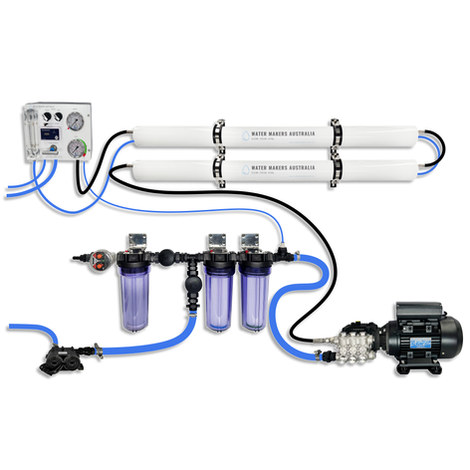
A two-membrane modular watermaker with 140 L/h nominal output, aimed at families and liveaboards that want more water per run.
Explore →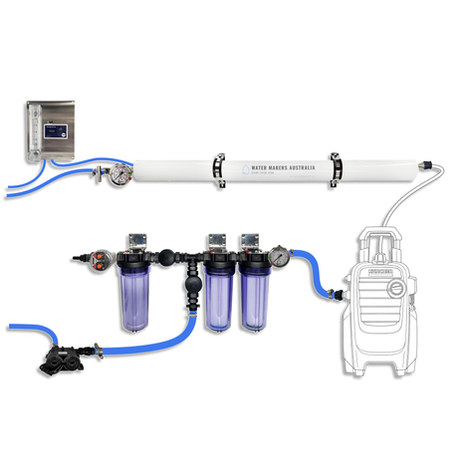
A one-membrane modular marine watermaker with 80 L/h nominal output, remote stainless control panel, standard consumables and direct Australian support.
Explore →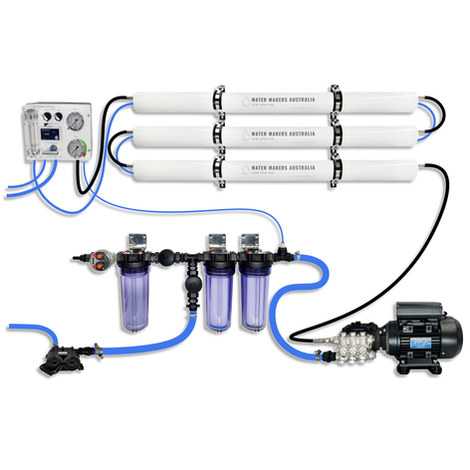
A three-membrane modular watermaker with 200 L/h nominal output and up to 240 L/h family-level marketing, for larger crews and heavy use.
Explore →