Loading this page…

Loading this page…
Sailing club
Manly 16ft Skiff Sailing Club is a long-established skiff-focused sailing club based on the eastern edge of Manly Cove, Sydney. The club operates an integrated junior-to-senior development ladder that runs Manly Juniors, Flying Elevens, 13ft skiffs and the 16ft skiff fleet, and supports regular Saturday racing on Sydney Harbour throughout the season. The clubhouse is a licensed waterfront venue with dining and event facilities that also underpins the club’s sailing programme.
About
Manly 16ft Skiff Sailing Club is a long-established skiff-focused sailing club based on the eastern edge of Manly Cove, Sydney. The club operates an integrated junior-to-senior development ladder that runs Manly Juniors, Flying Elevens, 13ft skiffs and the 16ft skiff fleet, and supports regular Saturday racing on Sydney Harbour throughout the season. The clubhouse is a licensed waterfront venue with dining and event facilities that also underpins the club’s sailing programme.
Service area: Manly Cove, Sydney Harbour
Keep exploring
Manly 16ft Skiff Sailing Club is a waterfront sailing club and public harbourside venue on Manly Cove (corner East Esplanade & Stuart Street, Manly NSW). The club hosts the Manly 16s fleet and junior skiff programs, runs Saturday racing during the season, and offers membership with access to sailing programs. The venue also operates a full brasserie and bars, hosts weekly events and waterfront functions (weddings, corporate events and private bookings), offers a shuttle bus service within a local radius, and is open to the public seven days a week.
Most clubs inherit their training boats; Manly designed one of its own. The 13ft skiff was developed through the club over two years and formally introduced in 2002–03 expressly to bridge the gap between Flying Elevens and the sixteens, giving teenage crews a two-person high-performance stepping stone that the 16ft Skiff Association now manages and supports as a national youth pathway. It is the clearest expression of how this club thinks about development: identify the gap in the ladder, then build the rung.
The ladder itself has four steps and no more. Young sailors begin in Manly Juniors — learn-to-sail classes for prospective juniors have run in club-owned MJs since 2005–06, removing the need for families to buy a boat up front — then progress to Flying Elevens, on to the 13ft skiffs and finally into the sixteens. The club attributes part of its sustained success to exactly this limited menu and clear progression, and the results support the claim: in 2007–08 every one of the four club classes took out its Australian Championship, something the club had never achieved before.
Individual honour boards run deep as well, from 16ft skiff national champions Trevor Barnabas, Gavin Jones and Greg Hyde to a long roll of Flying 11 and Manly Junior national titleholders that includes Malcolm Page.
Racing every Saturday from the first weekend of September to Easter keeps roughly 300 sailors in regular competition through the summer, and many members also campaign other classes at events around Australia and overseas, bringing the experience home. The junior division's gender balance — about fifty-fifty, sometimes tipping female — is a point of quiet pride and a pipeline the club watches carefully.
The club occupies a prime slice of East Esplanade on Manly Cove, in North Harbour inside Sydney Harbour's northern arm, on a site the Sydney Harbour Trust first leased to the club back in January 1928. Security of tenure came late but emphatically: after nine years of negotiation, a long-term lease with NSW Maritime was signed in late 2009, running to 30 April 2042.
The sailing water is famous for its temperament. The club's own history warns that few places test a sailor like the waters off Manly, where black nor'easters — sudden, gusty sea breezes that arrive without warning on hot summer days — can flatten an unprepared fleet, and September's spring westerlies play their own havoc. Saturday harbour congestion from the big yacht fleets has been an occasional headache since the 1970s, when the club briefly flirted with returning to Sunday racing before thinking better of it.
Watching the sixteens wrestle these conditions is a spectator sport in itself, and the club caters for it properly: the decks overlook the course, big screens carry the racing inside, and a live YouTube channel broadcasts the action.
Ashore, the facilities reflect a century of incremental building. A concrete deck went down in 1963 as the first stage of a rebuilding program, with a timber deck added in 1966, and the main premises were extensively reconstructed in 1992. The boat storage strip shared with Manly Yacht Club next door was redeveloped in 2000 at a cost of $660,000, delivering a new shed and ramp for the junior fleets. Bar, bistro and function facilities complete the licensed-club model that underwrites the whole operation.
The club traces its beginnings to the 1921–22 season, when a group from the Delwood Canoe Club joined forces to race on Sunday afternoons, and it was formally constituted as the Manly Sailing Club on Friday 23 February 1923. Early fleets were a mixed bag until several more 16ft skiffs appeared in 1925–26 and settled the single-class argument; everything else became a B class. On the site leased in January 1928, a shed for ten boats went up at a cost of £298.
Survival came first. By 1931 the Depression had shrunk the fleet to just three boats, yet a small group kept it alive, and by 1934 the clubhouse was extended for ten more boats. Easter 1935 brought the breakthrough: Lightning, sailed by Russell Slade, gave the club its first NSW 16ft Skiff State Championship at Toronto. A switch from Sunday to Saturday sailing followed in 1936–37 and has stuck. Through the Second World War — more than half the membership in the forces — six sixteens and four B class boats still raced on an average weekend.
The modern club took shape in stages: a new name in 1952 — Manly 16ft Skiff Sailing Club — a liquor licence in 1960, incorporation in 1972, then near-disaster on 26 May 1974, when a storm on an exceptionally high tide sent waves over both decks, the same tempest that destroyed North Harbour Sailing Club outright. Members rebuilt voluntarily, and the 1974–75 season brought the club's first hosting of both the State and Australian championships; in 1976 Bill McMahon's Matana delivered a first national 16ft title in Perth.
Hugh Cooke — five JJ Giltinan 18ft skiff world titles, then 14 years as Commodore from 1992 — personified the club's standing. The 75th season in 1997–98 fielded 29 skiffs and 2005–06 a record 33, while the 2010 amalgamation with St George Sailing Club secured the class in southern Sydney.
Bernier Island is a remote, conservation-focused island on the north-west edge of the Shark Bay World Heritage Area. It offers quiet, wildlife-rich cruising close to Dorre Island and the Shark Bay entrance, but the place is conservation-sensitive, has restricted visitor access and limited facilities — making it best for experienced cruising sailors planning day visits or short anchorage stops from Denham rather than casual overnight island-hopping.

Look for consistent, verifiable detail across multiple photos and reviews, check timestamps, reviewer credibility and metadata where possible, and cross‑check with independent sources — treat overly perfect images or identical language with caution.
Explore →
Write a one‑page plan with the who/what/when/where/how of your trip, keep a copy on board and leave the main copy with a responsible person ashore (and optionally with your club, marina office or local volunteer rescue service).
Explore →
Pick a protected bay, estuary or river reach where you can rig, launch and arrive on calm water within a short, sheltered transit; choose a site with a good ramp or jetty, clear recovery options and a nearby sailing club, marina or commercial operator for local knowledge and help.
Explore →
Practise early, repeatable depowering (reefing and flattening), controlled sail-trim changes and deliberate, crew-led tacks/gybes so you keep heel, steerage and speed in a safe window as the Fremantle Doctor builds. Rehearse routines in sheltered water until they are second nature—clear commands, disciplined weight moves to windward and aft, and a quick, practised reef routine will prevent panicked mistakes.
Explore →
A practical guide for new sailors on picking the right Australian sailing club: training, boat access, racing, social fit, costs and the key questions to ask before joining.
Explore →A concise, practical introduction to the essential parts of a recreational sailing boat for beginners in Australia. Covers hull, deck, rigging, sails, steering, below-decks spaces and safety equipment, with simple explanations, common mistakes and a pre-decast checklist to help new sailors communicate and get underway.
Explore →Practical guide for recreational sailors planning a coastal cruise from Sydney north to the Queensland border. Covers route options, weather and tidal considerations, planning checklists, common hazards, anchorages and practical examples for a safe, enjoyable trip.
Explore →A practical guide to the coastal weather systems that affect sailing along Western Australia's coast, focusing on the Fremantle Doctor, local sea breezes, and linked coastal phenomena. Explains how these systems form, when they tend to occur, how they influence boat handling and passage planning, common mistakes, and a
Explore →Burke Yachtsman Gear Bag 40L - Shop Now Zip Pay | Tamar Marine Skip to content 59 – 63 Holbrook Street, Invermay Online Shop Open 24/7 Products search Contact us 1300 MARINE $ 0.00 0 Cart Burke Yachtsman Gear Bag 40L $ 79.90 Colour Choose an option Black Blue Black Blue Clear - Burke Yachtsman Gear Bag 40L quantity + Add to cart Enquire about this product SKU BAGB-Y24/BLACK* Category Bags - Sail & Gear A Burke classic and customer favourite, the Yachtsman’s Gear Bag is built tough to handle wet, salty conditions while keeping your gear dry and protected. Made from double coated waterproof…
Explore →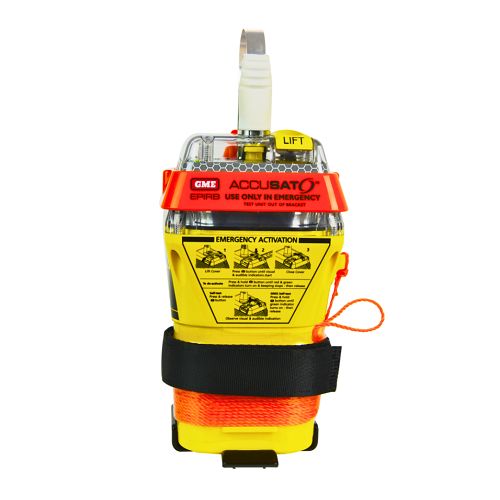
A 10‑year battery EPIRB with integrated GNSS (supports GPS and Galileo), infrared strobe and 121.5 MHz homing signal. Approved for worldwide COSPAS‑SARSAT operation.
Explore →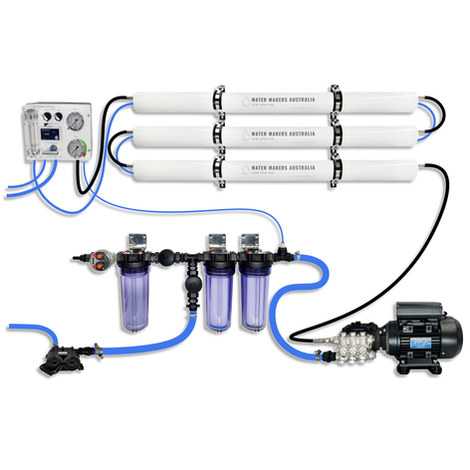
A three-membrane modular watermaker with 200 L/h nominal output and up to 240 L/h family-level marketing, for larger crews and heavy use.
Explore →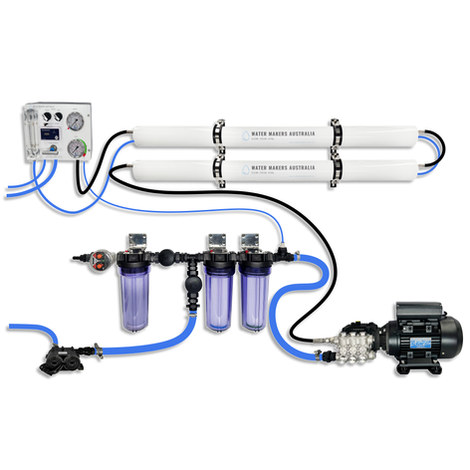
A two-membrane modular watermaker with 140 L/h nominal output, aimed at families and liveaboards that want more water per run.
Explore →