Loading this page…

Loading this page…
Sailing club
Maroochy Sailing Club is a volunteer-run, family-oriented dinghy and catamaran club based on Chambers Island in the Maroochy River at Maroochydore, Queensland. The club operates a Discover Sailing Training Centre offering Tackers and Start Sailing courses, runs an active Sunday sailing program (late August/September to early May) and hosts club racing and occasional regattas on nearby open water off Mooloolaba.
About
Maroochy Sailing Club is a volunteer-run, family-oriented dinghy and catamaran club based on Chambers Island in the Maroochy River at Maroochydore, Queensland. The club operates a Discover Sailing Training Centre offering Tackers and Start Sailing courses, runs an active Sunday sailing program (late August/September to early May) and hosts club racing and occasional regattas on nearby open water off Mooloolaba.
Service area: Maroochydore / Sunshine Coast (Maroochy River)
Keep exploring
Volunteer-run, family-oriented sailing club based on Chambers Island in Maroochydore (Sunshine Coast). The club sails dinghies and catamarans on the Maroochy River (generally between Picnic Point and the Sunshine Coast Motorway Bridge) and sometimes hosts regattas off Mooloolaba. Main activity day is Sunday and the regular sailing year runs from late August to early May. The club is a certified Australian Sailing Discover Sailing training centre offering Tackers for juniors and Start Sailing programs for adults and teenagers, plus afternoon course racing. The club also provides Australian Sailing membership support to the Mooloolaba Sailability Group.
The most telling item on the program sheet is not a course but a philosophy: alongside afternoon course racing, the club runs a non-competitive format called Adventure Sailing, deliberately built as a pathway for children and adults who want time afloat without a scoreboard. It says much about a club whose motto leads with friendship.
Formal instruction runs through the club's accredited Discover Sailing Training Centre status. The junior arm follows the standard national sequence — Tackers for children around seven to twelve, starting with Tackers 1 Having Fun, a four-day school-holiday course priced at $390 in 2026, then Tackers 2 Tricks and Techniques, where sailors go solo — before graduates move into Green Fleet racing.
Adults and teenagers learn through Start Sailing 1 and 2 in the club's two-person Pacer dinghies, typically across three-day courses that include capsize drills and instruction supported by rigid inflatable boats. The club has also hosted an Australian Sailing Dinghy Instructor course, feeding qualified coaches back into the system.
Racing covers the classic off-the-beach spread: Optimists, Sabots, Pacers, Sabres and Lasers, with catamarans alongside, and several State Laser River Titles have been sailed over the club's own course down the years. The season spans late August or September through to early May, Sundays being the heart of the week, and a free Sail Pass lets the curious try up to three sailing days before committing.
Fees for 2025–26 run to $400 for adult racing members, $230 for youth racing and $25 for social membership, with state Fair Play and Play On vouchers welcome. In a further community role, the club backs the Mooloolaba Sailability Group with Australian Sailing membership support, enabling sailors with disability to compete in regattas around Australia.
Chambers Island gives this club a setting no car can spoil. The clubhouse occupies the western end of the island in the Maroochy River, and with no road frontage at all, members and guests arrive across a pedestrian bridge from Bradman Avenue — the same crossing, in modern form, that the Maroochy Shire Council built as a 100-metre footbridge back in 1963. The island site holds a clubhouse hall available for hire for functions of up to 100 guests, boat storage, showers and toilets, a canteen, a rigging lawn and sandy-beach launching, with a fleet of RIBs serving as support boats.
The sailing water is the Maroochy River itself, mostly the reaches between Picnic Point and the Sunshine Coast Motorway Bridge — that is, between the river mouth and Petrie Creek. It is a protected tidal estuary ideally matched to beach-launched dinghy and catamaran sailing: sheltered enough for a seven-year-old's first solo tack, tidal enough to teach older sailors about current, and compact enough that a support boat is never far away. River sailing here has genuine pedigree, with several State Laser River Titles decided on the club's course.
When the club wants bigger water, it goes to sea: major regattas have been hosted on open water off Mooloolaba, a short run south where the coastline opens to the ocean. That dual personality — estuary club with an ocean outlet — has shaped the sailing program for decades. The island venue does double duty as a function space, with weddings and events held on the site and hall hire providing a useful revenue stream that helps keep a volunteer club's finances afloat. Maroochydore's beaches, the river mouth and the bustle of Bradman Avenue lie all around, yet on the island itself the loudest sounds on a Sunday are halyards and starting signals.
The club's founding scene could hardly be more Australian: in 1959 a group of sailing enthusiasts met under a tree at Cotton Tree and resolved to form the Maroochy All Boats Sailing Club, bringing organised sailing to the Maroochy River for the first time. Graeme Fresser served as first president and Ray Cassidy as first sailing commodore for the 1959–60 season, per the club honour board, and early racing at Cotton Tree drew Moths, Trainees, Sabots, Gwen 12s and a modified wide-beam 14-foot dinghy remembered as the Darkie Mystery.
Within two years the name had shortened to Maroochy Sailing Club and racing had shifted upstream to The Oaks on the southern shore, between Picnic Point and the Cod Hole. The decisive move came in 1963, when Maroochy Shire Council approved a club site on the island's western end and built a footbridge 100 metres long to reach it. Members built the clubhouse with voluntary labour, barrowing materials — concrete included — across the bridge on cane-train tracks laid over the span.
By 1970 the club had added boat storage and a time-keepers box, and Maroochy sailors were appearing at national regattas; the Trainee class was becoming the Thorpe 12 while Moths kept their following. A hall above the boat storage, supervised in construction by Ian Keal, opened in November 1979.
The club's competitive peak followed fast: in 1978–79 it hosted the 12th Australian Thorpe 12 Championships, and home sailors David Etherton and Mike Rimmington took the title, with Ian O'Rourke and John Cash in third place. For years afterward, Maroochy crews dominated that class's championships. The 1980s brought leaner times as beach and surfing culture drew young people away, though a partnership with Burnside High School put the facilities to use for Marine Studies, an OK Dinghy fleet was established and catamarans thrived.
The 1990s saw a club-run sailing school created to attract juniors, Lasers replacing the OK Dinghies, and the Sunshine Coast Rowing Club becoming sub-tenants with an annex on the clubhouse. Historical records were first compiled for the 50th Jubilee in 2009, when club boats were named for stalwart members; the honour board records presidents and commodores unbroken since 1959, with life members at the 40th Jubilee in 1999 including Charlie Smith, Noel Etherton, Shirley McDonald, Fred Downes and Keith Campbell.
American River (Kangaroo Island, SA) is a small, sheltered inlet and township on the north‑eastern side of Kangaroo Island that acts as a calm staging point for cruising the eastern part of the island and for short hops through Backstairs Passage. It’s distinctive for its protected anchorage inside Eastern Cove and the adjacency of Pelican Lagoon — a shallow, ecologically important lagoon with sanctuary zoning — which shapes how and where boats can move. The area suits sheltered day sailing, weekend cruising and short coastal passages; it’s appropriate for trailer sailors, small cruisers and a

Look for a friendly club with beginner-focused training, accessible facilities and boats, a supportive community, clear safety practices, and opportunities to progress at your own pace.
Explore →
Late spring to summer is usually the best time for beginners to start learning to sail in Tasmania because the weather is generally warmer, days are longer and conditions are often more settled. Expect lighter to moderate winds with regular afternoon sea breees in summer, while spring and autumn bring more changeable and sometimes stronger conditions; winter is colder, wetter and typically windier with more fronts and swell.
Explore →
Pick a protected bay, estuary or river reach where you can rig, launch and arrive on calm water within a short, sheltered transit; choose a site with a good ramp or jetty, clear recovery options and a nearby sailing club, marina or commercial operator for local knowledge and help.
Explore →
A good float plan and a well-stocked emergency kit significantly improve your chances of a safe outcome when cruising remote parts of South Australia’s coastline. The float plan should give someone ashore all the information they need to find you and raise help if you don’t return; the emergency kit should allow you to stabilise the boat, care for injuries, signal for rescue and survive until help arrives.
Explore →
A practical guide for new sailors on picking the right Australian sailing club: training, boat access, racing, social fit, costs and the key questions to ask before joining.
Explore →Practical guide for recreational sailors planning passage on the Hawkesbury River: how to plan around tides, choose anchorages, read local conditions and prepare the boat and crew for a safe, comfortable trip.
Explore →
A practical, Australia-focused guide for planning and sailing around the Whitsunday Islands: weather and seasons, navigation and anchoring, moorings and parks, provisioning and charters, safety and common mistakes, plus checklists and next steps.
Explore →A practical guide for recreational sailors planning visits to Albany and King George Sound. Covers the main anchorage areas, typical local weather patterns, tidal and current considerations, navigational hazards, on-the-water etiquette and a pre-departure checklist to help you plan a safe passage and enjoyable stopover
Explore →Burke Yachtsman Gear Bag 40L - Shop Now Zip Pay | Tamar Marine Skip to content 59 – 63 Holbrook Street, Invermay Online Shop Open 24/7 Products search Contact us 1300 MARINE $ 0.00 0 Cart Burke Yachtsman Gear Bag 40L $ 79.90 Colour Choose an option Black Blue Black Blue Clear - Burke Yachtsman Gear Bag 40L quantity + Add to cart Enquire about this product SKU BAGB-Y24/BLACK* Category Bags - Sail & Gear A Burke classic and customer favourite, the Yachtsman’s Gear Bag is built tough to handle wet, salty conditions while keeping your gear dry and protected. Made from double coated waterproof…
Explore →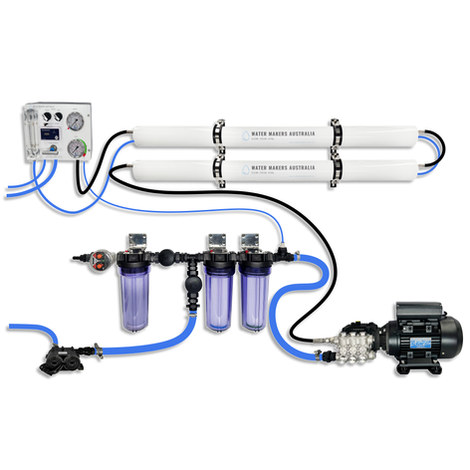
A two-membrane modular watermaker with 140 L/h nominal output, aimed at families and liveaboards that want more water per run.
Explore →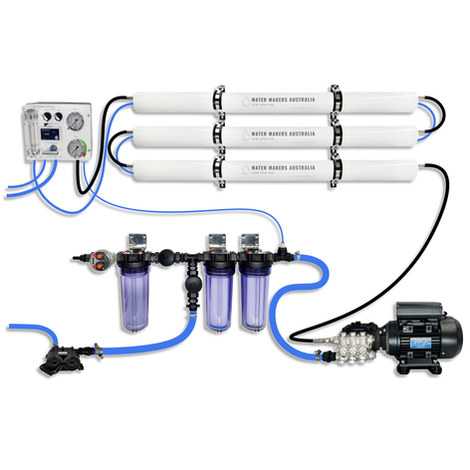
A three-membrane modular watermaker with 200 L/h nominal output and up to 240 L/h family-level marketing, for larger crews and heavy use.
Explore →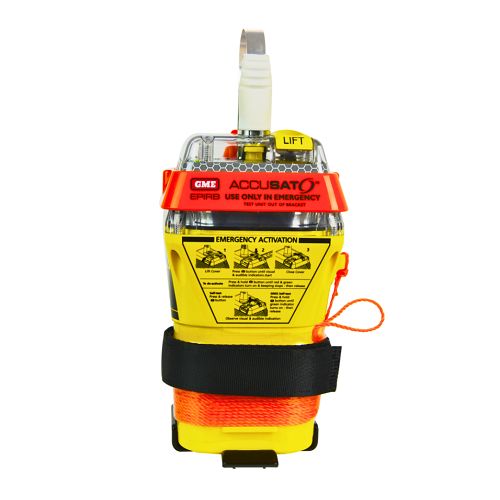
A 10‑year battery EPIRB with integrated GNSS (supports GPS and Galileo), infrared strobe and 121.5 MHz homing signal. Approved for worldwide COSPAS‑SARSAT operation.
Explore →