Loading this page…

Loading this page…
Sailing club
Maylands Yacht Club is a community sailing club on the Swan River in Maylands (Perth), WA. The club runs organised dinghy sailing activities including competitive racing (summer and winter series), coaching and a Learn to Sail program (Discovery Sailing Centre) with Dinghy, Tackers and school-holiday junior courses. Club boats and buoyancy vests are provided for training. The club also runs junior and training fleets and lists contacts for general enquiries and hall/venue hire.
About
Maylands Yacht Club is a community sailing club on the Swan River in Maylands (Perth), WA. The club runs organised dinghy sailing activities including competitive racing (summer and winter series), coaching and a Learn to Sail program (Discovery Sailing Centre) with Dinghy, Tackers and school-holiday junior courses. Club boats and buoyancy vests are provided for training. The club also runs junior and training fleets and lists contacts for general enquiries and hall/venue hire.
Service area: Maylands, WA
Keep exploring
Every junior sailing club has a workhorse training boat, but very few can claim one of their own invention. Maylands Yacht Club is the home of the Mudlark, a junior class designed and built by Wally Gaunt — foundation commodore, driving force behind the club's postwar clubhouse and father of longtime Club Patron Terry Gaunt Snr. That single lineage captures the flavour of the place: a small, self-reliant river club where members have always made what they needed, from boats to buildings.
The club's own tagline declares it the sailing club "at the top of the river", and the geography is no small part of its charm. Perched on the Swan River foreshore at Maylands, it sits less than five kilometres from the Perth CBD yet roughly twenty-five kilometres upriver from Fremantle — a fresh-feeling, tree-lined stretch of water far removed from the big-fleet scene downstream. The clubhouse itself is heritage-listed on the State Heritage Office inHerit database, recognition of more than a century of organised sailing from this shoreline.
Competitive sailing here reaches back to 1913-14, when the original Maylands Sailing Club began racing from the old East Street jetty, and the formally constituted club dates from 1946. In the decades since, it has produced State, National and International champions — names such as Brian Plumb, Cliff Burton, Rob O'Sullivan and Terry Gaunt Snr — while remaining firmly a community club.
As an accredited Australian Sailing Discover Sailing Centre it feeds new sailors into the sport each season, and its Mirror fleet is, by the club's own account, the largest in Western Australia. There is even a published history, "Top of the River", written by Chris Holyday with Terry Gaunt Snr, on sale at the bar for anyone curious about how this pocket of the Swan became a sailing stronghold.
The Mudlark sets the tone for training at Maylands: homegrown, junior-focused and practical. The class was created here precisely to give young sailors a suitable first boat, and that same philosophy runs through the club's modern program as an accredited Discover Sailing Centre. Learn to Sail offerings span dinghy courses and the national Tackers program for children, backed by coaching and courses held through the school holidays, and every course supplies club boats and life vests, so families need bring nothing but enthusiasm.
The standout commitment is the five-day Introduction to Sailing course run during school holidays. It welcomes school-aged youngsters — the club suggests a minimum age of roughly ten — and gives beginners an immersive week on the river rather than a scatter of short lessons. Once the basics are in place, a sunset coaching fleet on Wednesday evenings, run by a qualified Australian Sailing coach and free to members, carries sailors beyond the beginner stage, bridging the gap between course completion and confident club racing.
The training fleet is chosen with care. Beginners generally start in Mirror dinghies, sailing two to a boat, or in Optimists; those pushing on can step into the club's Lasers, Pacers and Minnows. Better still, club boats are not locked away between courses — sailing members may take them out for casual sailing whenever the training program is not using them, which keeps skills fresh and the river busy. It is a complete pathway: learn in a club boat, refine under a coach on Wednesday evenings, then race on Sundays through summer.
For a modest volunteer club at the top of the river, the structure rivals that of far larger metropolitan centres, and the production line of champions over the decades suggests it works.
Maylands enjoys a distinction no other Perth sailing club can take from it: position at the top of the Swan River. The clubhouse and jetty stand on the Maylands foreshore, where the river has long since narrowed from the broad basins of Crawley and Nedlands into a gentler, more intimate waterway. Sailing here is nothing new — recreational sailing on this reach of the Swan has been pursued since the nineteenth century, and organised racing has run from this shoreline since the years just before the First World War.
The modern racing rhythm is simple and dependable: competitive racing every Sunday through the summer season. The class mix reflects the club's dual personality as both training nursery and racing club — ILCA dinghies, Sabres and that notably large Mirror fleet, alongside Pacers, the ever-popular Hartley TS16 trailer-sailer and Bics. On Saturday afternoons, an entirely different kind of skipper takes over: radio-control sailors racing their one-metre boats from the club, a long-running fixture that keeps the foreshore lively outside the main season's big day.
What the location lacks in scale it repays in accessibility. Sitting less than five kilometres from the city centre, the club draws members from across the inner eastern suburbs, and the sheltered river water suits junior training perfectly — no swell, easy rescues, steady summer breezes. The heritage-listed clubhouse, available for hall hire when not serving sailors, anchors the club in its neighbourhood.
And because Maylands sits some twenty-five kilometres above the port, the river here retains a quieter, greener character that downstream clubs surrendered to progress long ago. For the sailors who grew up on this reach — champions among them — the top of the river is simply where sailing lives.
Organised racing from the Maylands foreshore began in 1913-14, when the Maylands Sailing Club started sending fleets around the buoys from the long East Street jetty that then reached into the river. It was not quite the first: the East Perth Sailing Club had been racing comparable courses as early as 1910, but with the two clubs so close together, East Perth folded around the time of the First World War and Maylands carried the local torch alone.
The early decades were spartan. Until the 1940s the club made do with a corrugated-iron shed on the bank, before a fundraising drive allowed members to buy surplus army barracks buildings and erect them under foundation commodore Wally Gaunt's leadership — the same man who would design and build the Mudlark junior trainer that still bears the club's stamp. Formal establishment of Maylands Yacht Club on the foreshore followed in 1946, and the present clubhouse buildings were completed in 1971 with help from the City of Stirling; the club now leases them from the City of Bayswater.
The honour roll tells the rest. Since 1946 the club has produced champions at State, National and International level, among them Cliff Burton, Terry Gaunt Snr — son of Wally and for many years Club Patron — Rob O'Sullivan and Brian Plumb. The depth of that story eventually demanded a book, and Chris Holyday and Terry Gaunt Snr supplied it: "Top of the River", a history of sailing at Maylands, available at the club bar. Heritage listing on the state's inHerit database now formally recognises what members have always known — that this modest strip of foreshore holds more than a century of continuous sailing culture, from the jetty races of 1913 to today's Learn to Sail fleets.
Adelaide’s metropolitan coast fronts the eastern side of Gulf St Vincent and mixes short, sheltered bay sailing around Holdfast Bay and the Patawalonga with more exposed, open-water sailing north toward Outer Harbour and along the Le Fevre Peninsula. The area suits a wide range of activity — sheltered day sails, club and trailer-sailer racing, short coastal cruising into the Fleurieu and Yorke Peninsula, and launch-and-home-port racing — but demands local knowledge about shipping channels, tidal flows in the Port River/Outer Harbour approaches, and seasonal wind patterns.

Pack sun protection and lightweight, quick-drying layers for summer; insulation, waterproof outer layers and warm accessories for winter — plus basic safety and comfort gear for both seasons.
Explore →
Expect very different seasonal systems across Western Australia: the south‑west (Perth to Albany) has a strong summer afternoon sea breeze (the “Fremantle Doctor”) and winter westerly fronts, while northern WA follows a wet/dry monsoonal cycle with strong seasonal onshore winds, thunderstorms and cyclone risk in the wet season. Local headlands, estuaries and tidal flows often change what you actually feel on the water, so learn the local timing and sheltered venues first.
Explore →
Late spring to summer is usually the best time for beginners to start learning to sail in Tasmania because the weather is generally warmer, days are longer and conditions are often more settled. Expect lighter to moderate winds with regular afternoon sea breees in summer, while spring and autumn bring more changeable and sometimes stronger conditions; winter is colder, wetter and typically windier with more fronts and swell.
Explore →
Before your first sail in South Australian waters check the weather and tide, make sure the boat and safety equipment are fit for the trip, confirm local rules and any area-specific hazards, and tell someone your plan.
Explore →Practical guide for recreational sailors navigating the Swan River and coastal waters around Perth. Covers local weather patterns, tides and currents, river navigation, launching and berthing options, safety equipment, common hazards, and step-by-step pre-departure and on-water checklists tailored to Western Australian
Explore →
A practical guide for new sailors on picking the right Australian sailing club: training, boat access, racing, social fit, costs and the key questions to ask before joining.
Explore →Practical guide for recreational sailors planning passage on the Hawkesbury River: how to plan around tides, choose anchorages, read local conditions and prepare the boat and crew for a safe, comfortable trip.
Explore →A practical guide for recreational sailors planning visits to Albany and King George Sound. Covers the main anchorage areas, typical local weather patterns, tidal and current considerations, navigational hazards, on-the-water etiquette and a pre-departure checklist to help you plan a safe passage and enjoyable stopover
Explore →Burke Yachtsman Gear Bag 40L - Shop Now Zip Pay | Tamar Marine Skip to content 59 – 63 Holbrook Street, Invermay Online Shop Open 24/7 Products search Contact us 1300 MARINE $ 0.00 0 Cart Burke Yachtsman Gear Bag 40L $ 79.90 Colour Choose an option Black Blue Black Blue Clear - Burke Yachtsman Gear Bag 40L quantity + Add to cart Enquire about this product SKU BAGB-Y24/BLACK* Category Bags - Sail & Gear A Burke classic and customer favourite, the Yachtsman’s Gear Bag is built tough to handle wet, salty conditions while keeping your gear dry and protected. Made from double coated waterproof…
Explore →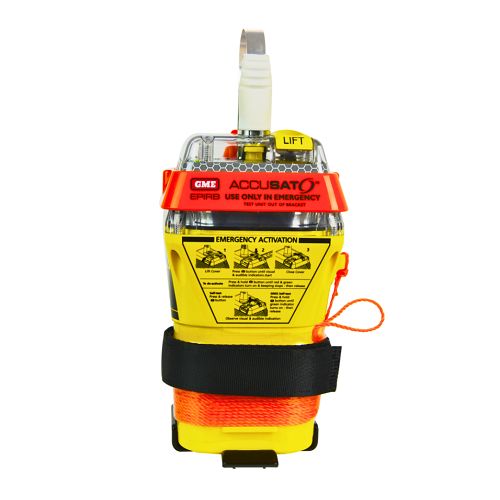
A 10‑year battery EPIRB with integrated GNSS (supports GPS and Galileo), infrared strobe and 121.5 MHz homing signal. Approved for worldwide COSPAS‑SARSAT operation.
Explore →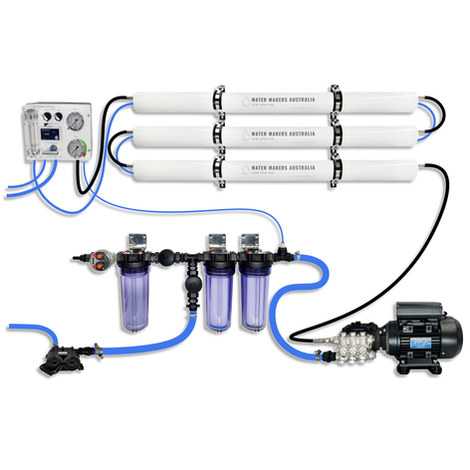
A three-membrane modular watermaker with 200 L/h nominal output and up to 240 L/h family-level marketing, for larger crews and heavy use.
Explore →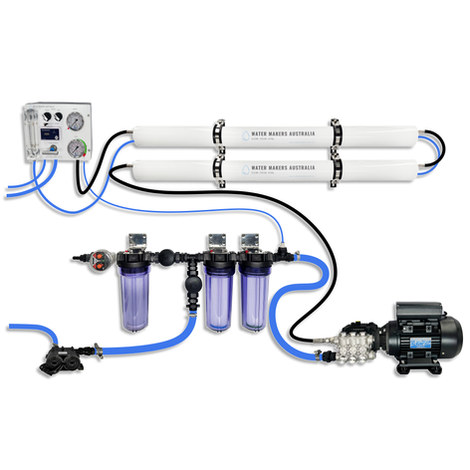
A two-membrane modular watermaker with 140 L/h nominal output, aimed at families and liveaboards that want more water per run.
Explore →