Loading this page…

Loading this page…
Sailing club
Melbourne Trailable Yacht Club (MTYC) is a family-oriented sailing club, formed 28 June 1973, dedicated to the promotion and participation in trailable yachting. The club runs organised sailing activities including racing and cruising, social events, and membership programs. It notes that boat ownership is not required to join and crew are frequently in demand.
About
Melbourne Trailable Yacht Club (MTYC) is a family-oriented sailing club, formed 28 June 1973, dedicated to the promotion and participation in trailable yachting. The club runs organised sailing activities including racing and cruising, social events, and membership programs. It notes that boat ownership is not required to join and crew are frequently in demand.
Service area: St Kilda West, VIC
Keep exploring
Ask a Melbourne Trailable Yacht Club member where the clubhouse is and the honest answer is: wherever the boats happen to be. MTYC is a family-orientated club for trailer-sailer sailors, with no fixed home of its own — its fleet lives on trailers, its racing happens on Port Phillip and its members are drawn from across Melbourne, around Victoria and even interstate. Boats in the fleet range from four to eight metres, taking in everything from compact weekender-style pocket cruisers to quick sports-style trailer yachts.
The club's welcoming posture is practical rather than rhetorical. Boat ownership is not required to belong, and the club is plain about why: social activities fill the calendar and crew are always in demand. For anyone weighing up a first trailer yacht — or simply wanting regular sailing without the cost of a boat — that crewing culture is the real product. A skipper gets willing hands; a newcomer gets sea time, tuition by osmosis and a front-row education in how these versatile little yachts are rigged, launched and raced.
Competition is organised around four series across the year — Summer, Winter, Twilight and a dedicated Women's Sailing Series — with handicap scoring that rewards both the boat's class performance and the individual skipper's improvement. The Four Points Race, a lap of northern Port Phillip open to all trailable yachts, serves as the club's invitation to the wider trailer-sailer world, drawing twenty-one entrants in 2025 across classes from Castle 650s and RL24s to Noelex 25s and Careel 18s. Born from the home-built Hartley TS16 movement of the early 1970s, the club celebrated its fiftieth year in 2023 — a half-century of racing boats that live on the road.
The Women's Sailing Series is MTYC's most distinctive program — a dedicated racing series that exists, in the club's own framing, to promote, encourage and recognise the skills and participation of women in sailing. Rather than folding women into the general fleet and hoping for the best, the club gives female skippers and crews their own scored series within the annual calendar, sitting alongside the Summer, Winter and Twilight series as one of the four pillars of the racing year.
The Summer Sailing Series itself is more sophisticated than its name suggests. It splits into long-course and short-course sub-series, with results scored on both Class Based Handicap — rating the boat — and Personal Handicap, which tracks the individual skipper's form, before combining for an overall champion. That dual-handicap structure is the club's quiet coaching tool: a newcomer on a modest boat can win on personal handicap while learning, long before their boat is competitive on class terms.
The club even runs online seminars to explain the handicap system, so members understand exactly how their results are built. Each new season opens with the Commodore's Cup, raced on Class Based Handicap, and closes toward the Four Points Race, the club's open event around the northern bay and the final leg of the Australian Sailing Victorian Trailable Yacht Division's Travellers Series.
There is no Tackers program, junior squad or accredited Discover Sailing Centre here — this is an adult-oriented trailer-sailer club, and newcomers are pointed toward Discover Sailing for their first formal instruction. Once afloat, the pathway into club racing is deliberately low-friction: skippers need to belong to a club affiliated with Australian Sailing, hold an active Australian Sailing Number, and lodge a Category 5 safety declaration each season, and the same requirements cover the cruising program that runs in parallel with the racing for those who prefer their weekends slower.
MTYC's sailing water is Port Phillip — the whole of it, in principle, and its northern reaches in particular. The club's signature Four Points Race circumnavigates the northern part of the bay, and the club publishes a set of Port Phillip racing marks for members, effectively treating the bay's northern basin as its home course. Club communications also reference Corio Bay navigation notices, a sign that members take their trailers down the Princes Freeway to sail Geelong's water as well. That is the essence of a trailer-sailer club: the venue is wherever the ramp and the breeze look best on a given weekend.
The absence of a fixed clubhouse is a deliberate feature of the format rather than a gap. Boats launch at ramps around the bay, and the club's historic sailing bases give a flavour of its footprint — Altona, Werribee and St Kilda all served as launch points in the early years, reflecting the western-suburbs origins of the founding group. For trailer-sailer sailors, that mobility is the point: a boat on a trailer can chase the season, dodge a foul forecast, explore Western Port or the Gippsland Lakes on a long weekend, and still front a club race on the bay the following Saturday.
The bay itself is well matched to the fleet. Northern Port Phillip offers open water, reliable sea breezes through the warmer months and enough room for the long courses that the Summer Series and Four Points Race demand, while remaining largely protected from ocean swell. Category 5 safety declarations — the standard for racing in partially smooth water — frame how the club prepares its crews for bay conditions. Twilight racing adds another dimension, with evening sails in the long daylight of a Melbourne summer.
For a crew weighing up membership, the practical promise is simple: pick up your boat from the driveway, meet the fleet at a ramp, and race one of the most varied trailer-sailer calendars in the state.
The club's roots lie in one of Australian sailing's great democratic movements — the home-built Hartley TS16. In the early 1970s the plywood sixteen-footer was the most popular trailer sailer in the country, and the TS16 Association's monthly meetings at Sandringham Yacht Club drew ninety to a hundred members. For a group of skippers from Melbourne's western suburbs, though, every meeting meant an hour's drive each way. Their solution was to organise locally: the Western TS Group held its first meeting in an Altona engineering workshop, nineteen members strong, with boats launched from Altona, Werribee and St Kilda.
The club dates its formal formation to 28 June 1973. Later in the decade, as fleets diversified beyond the Hartley, the name broadened to Western Trailable Yacht Club — a well-intentioned choice that promptly confused people, who assumed the club was based on Western Port Bay or, worse, in Western Australia. The geographically vague label stuck for over two decades until the AGM of May 2001, when members voted to become the Melbourne Trailable Yacht Club Inc, a name that finally says plainly what and where the club is.
Through those decades the membership footprint spread well beyond Melbourne's west — at times reaching as far as Yarrawonga on the New South Wales border and into Sydney itself — testimony to how portable trailer-sailer allegiances can be. The racing calendar matured alongside, growing from informal TS16 gatherings into today's four-series structure with class and personal handicap scoring, and the Four Points Race earned a place as the closing leg of the Victorian Trailable Yacht Division's Travellers Series. The club marked its fiftieth anniversary in 2023, five decades after those first Altona meetings — and the homemade-plywood spirit of its founding still shows in a fleet where a lovingly maintained older design races alongside modern sports boats on level handicap terms.
Introductory paragraphs for a sailing guide to the Molle Islands in the Whitsundays, describing what makes the area distinctive from the water, the sailing experience, suitability and preparation, sheltered vs exposed waters, and connections to nearby cruising grounds.

Use ramps and beaches with respect for local conditions: check ramp layout, tide and swell, wind direction, vehicle access and crowding; prepare boat and crew before you launch or retrieve; and follow local signage, courtesy and safety practices. Specifics vary by ramp and beach, so confirm details for the exact site before you go.
Explore →
Write a one‑page plan with the who/what/when/where/how of your trip, keep a copy on board and leave the main copy with a responsible person ashore (and optionally with your club, marina office or local volunteer rescue service).
Explore →
Before your first sail in South Australian waters check the weather and tide, make sure the boat and safety equipment are fit for the trip, confirm local rules and any area-specific hazards, and tell someone your plan.
Explore →
Late spring to summer is usually the best time for beginners to start learning to sail in Tasmania because the weather is generally warmer, days are longer and conditions are often more settled. Expect lighter to moderate winds with regular afternoon sea breees in summer, while spring and autumn bring more changeable and sometimes stronger conditions; winter is colder, wetter and typically windier with more fronts and swell.
Explore →
A practical guide for new sailors on picking the right Australian sailing club: training, boat access, racing, social fit, costs and the key questions to ask before joining.
Explore →A practical guide for recreational sailors planning visits to Albany and King George Sound. Covers the main anchorage areas, typical local weather patterns, tidal and current considerations, navigational hazards, on-the-water etiquette and a pre-departure checklist to help you plan a safe passage and enjoyable stopover
Explore →A practical guide for recreational sailors planning voyages to Esperance and the Recherche Archipelago: what to expect, key planning considerations, common anchorages, safety and communications, equipment recommendations and sensible steps for a successful trip in this remote southern WA cruising area.
Explore →
A practical step‑by‑step guide to planning a safe, realistic coastal sailing passage in Australian waters: choosing a route, estimating distance and time, checking weather and tides, fuel and daylight planning, identifying safe harbours and anchorages, and preparing backup plans.
Explore →Burke Yachtsman Gear Bag 40L - Shop Now Zip Pay | Tamar Marine Skip to content 59 – 63 Holbrook Street, Invermay Online Shop Open 24/7 Products search Contact us 1300 MARINE $ 0.00 0 Cart Burke Yachtsman Gear Bag 40L $ 79.90 Colour Choose an option Black Blue Black Blue Clear - Burke Yachtsman Gear Bag 40L quantity + Add to cart Enquire about this product SKU BAGB-Y24/BLACK* Category Bags - Sail & Gear A Burke classic and customer favourite, the Yachtsman’s Gear Bag is built tough to handle wet, salty conditions while keeping your gear dry and protected. Made from double coated waterproof…
Explore →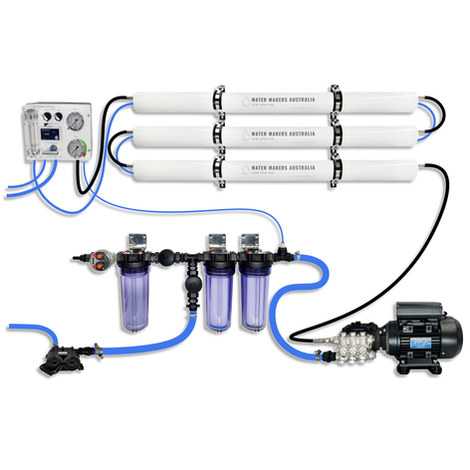
A three-membrane modular watermaker with 200 L/h nominal output and up to 240 L/h family-level marketing, for larger crews and heavy use.
Explore →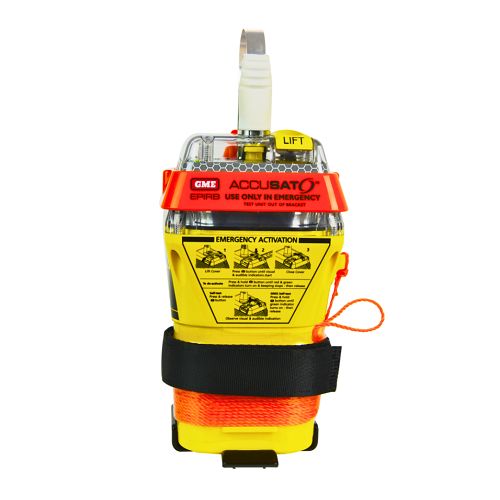
A 10‑year battery EPIRB with integrated GNSS (supports GPS and Galileo), infrared strobe and 121.5 MHz homing signal. Approved for worldwide COSPAS‑SARSAT operation.
Explore →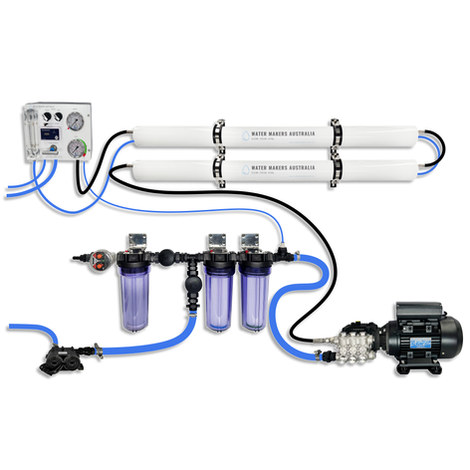
A two-membrane modular watermaker with 140 L/h nominal output, aimed at families and liveaboards that want more water per run.
Explore →