Loading this page…

Loading this page…
Sailing club
Meningie Sailing Club sails on Lake Albert at Meningie, on the edge of the Coorong in South Australia's Lower Lakes. It runs Come and Try Sailing for beginners, club and team racing, a Winter Series and the annual Goolwa to Meningie Sailing Classic, with SailPass registration for newcomers.
About
Meningie Sailing Club sails on Lake Albert at Meningie, on the edge of the Coorong in South Australia's Lower Lakes. It runs Come and Try Sailing for beginners, club and team racing, a Winter Series and the annual Goolwa to Meningie Sailing Classic, with SailPass registration for newcomers.
Service area: Meningie, South Australia
Keep exploring
Meningie Sailing Club is based at 1 Princes Highway, Meningie, on the shores of Lake Albert in South Australia's Lower Lakes region, about two hours south-east of Adelaide. The club offers Come and Try Sailing for beginners, club racing, team sailing and a Winter Series, and its signature event is the Goolwa to Meningie Sailing Classic.
It's a remarkable little club. Meningie sits on the edge of the Coorong, more than 150 kilometres by road from the nearest other sailing club, yet the club has slightly more junior members than seniors. That's thanks to a strong partnership with the local school and a genuine welcome for families. All classes are welcome, from Pacers, 125s, Sabres, NS14s and Mirrors to A Class and Nacra catamarans and trailable yachts like the Hartley TS16 and RL24. The club also owns six refurbished Pacers for learners.
New sailors can register through SailPass, and membership forms, sailing instructions, the event calendar and newsletters are on the club website. Volunteers help run races through the race officer roster. Contact the club at meningiesc@internode.on.net. See our Meningie sailing clubs page for more.
Come and Try Sailing days are the easiest way to start at Meningie, giving beginners a taste of sailing with experienced members on hand. There are also annual Discover Sailing Days, and new sailors can register through SailPass and join club racing when they're ready.
Young people are a big focus. Wednesday twilight sessions cater for school children, and a partnership with the local school provides sailing instruction in terms 1 and 4. The club's six refurbished Pacers, each with its own trailer, give learners a stable, forgiving boat to start in.
The club also runs team sailing events and a Winter Series, and volunteers are always needed on the race officer roster, which is a good way to learn how racing works from the shore. Before heading out on the lake, check the forecast; our guide to reading marine weather forecasts explains what to look for.
The club is at 1 Princes Highway, Meningie, on the eastern shore of Lake Albert, part of the Lower Lakes at the end of the River Murray and on the doorstep of Coorong National Park. Lake Albert is a large, shallow freshwater lake with plenty of room for racing, though conditions can build quickly on open water.
The Goolwa to Meningie Sailing Classic links the club with Goolwa Regatta Yacht Club across Lake Alexandrina, and Milang Regatta Club is nearby on the western shore of Lake Alexandrina.
The club's calendar makes the most of the Lower Lakes. Besides the 70-kilometre Goolwa to Meningie, members race the 55-kilometre Narrung Race, the 20-kilometre Campbell Park Race and the 30–40-kilometre Lake Albert Classic. Because the lakes are shallow, a strong wind can raise a steep, short chop quickly, which is part of what makes the long-distance races such a test.
Meningie Sailing Club was established in 1964, and its great race is even older than the club. The Goolwa to Meningie Sailing Classic celebrated its 50th anniversary on 16 November 2013. It runs about 70 kilometres from Goolwa through the Goolwa channel, across Lake Alexandrina and into Lake Albert. Locals call it "the sailors' challenge", and simply finishing earns bragging rights for a sailing lifetime. It's often described as Australia's longest freshwater race.
The club has been tested hard. The Millennium Drought, from around 2006 to 2010, dropped the Lower Lakes so far that the club had to rebuild its membership almost from scratch. Later floods brought their own challenges. Each time, the club has come back, and today its junior-heavy membership shows how well that rebuild worked.
Batemans Bay and the Clyde River form a classic NSW South Coast cruising region where a sheltered, tidal estuary meets a short, island‑dotted entrance to the Tasman Sea. It’s distinctive for easy access from Canberra, a mix of river and bay sailing, a compact marina and mooring network, and a river entrance (the Clyde River bar) that can change rapidly. The area suits day sails, weekend cruising, trailer‑boat exploration and sheltered coastal passages; offshore or long‑passage plans require careful timing and local knowledge. Preparation for tidal flow, variable southerly swells and shallow, s

Legal safety equipment for recreational boats in South Australia depends on the type, size and where you operate; you must check the current SA government requirements for your vessel. Independently of legal minimums, carry a sensible set of recommended items (lifejackets, means of communication, signaling, fire protection, anchor and basic tools) and make them usable and maintained.
Explore →
Do a seasonal inspection and servicing routine that focuses on hull and antifouling, through-hulls and seacocks, rigging and sails, engine and fuel systems, electricals and batteries, safety gear and bilge systems. Tailor exact tasks to your boat type, age and where you sail in South Australia, and follow manufacturer and marine service advice for anything technical.
Explore →
Look for a friendly club with beginner-focused training, accessible facilities and boats, a supportive community, clear safety practices, and opportunities to progress at your own pace.
Explore →
Tidal streams and local wind patterns can change trip time, fuel use, helm balance and safety margins on short coastal runs — plan your departure and route to use favourable tidal flow, allow margin for wind-driven sea and gusts, and check up-to-date local tide and weather information before you go.
Explore →
A practical guide for new sailors on picking the right Australian sailing club: training, boat access, racing, social fit, costs and the key questions to ask before joining.
Explore →A concise, practical introduction to the essential parts of a recreational sailing boat for beginners in Australia. Covers hull, deck, rigging, sails, steering, below-decks spaces and safety equipment, with simple explanations, common mistakes and a pre-decast checklist to help new sailors communicate and get underway.
Explore →A practical, Australian-focused guide explaining how sails generate drive, the points of sail, and how to trim sails for different conditions. Includes simple explanations of aerodynamic concepts, step-by-step trim checks, common mistakes and clear next steps for practice on the water.
Explore →A practical guide for recreational sailors planning day sails or short cruises on Lake Macquarie. Covers the entrance, navigation considerations, popular anchorages, local weather and tide influences, mooring etiquette, safety checks and suggested itineraries around the lake.
Explore →Burke Yachtsman Gear Bag 40L - Shop Now Zip Pay | Tamar Marine Skip to content 59 – 63 Holbrook Street, Invermay Online Shop Open 24/7 Products search Contact us 1300 MARINE $ 0.00 0 Cart Burke Yachtsman Gear Bag 40L $ 79.90 Colour Choose an option Black Blue Black Blue Clear - Burke Yachtsman Gear Bag 40L quantity + Add to cart Enquire about this product SKU BAGB-Y24/BLACK* Category Bags - Sail & Gear A Burke classic and customer favourite, the Yachtsman’s Gear Bag is built tough to handle wet, salty conditions while keeping your gear dry and protected. Made from double coated waterproof…
Explore →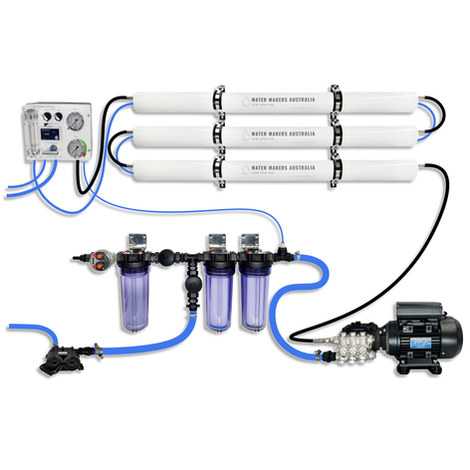
A three-membrane modular watermaker with 200 L/h nominal output and up to 240 L/h family-level marketing, for larger crews and heavy use.
Explore →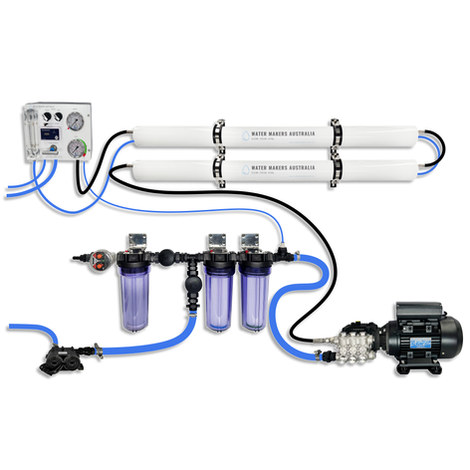
A two-membrane modular watermaker with 140 L/h nominal output, aimed at families and liveaboards that want more water per run.
Explore →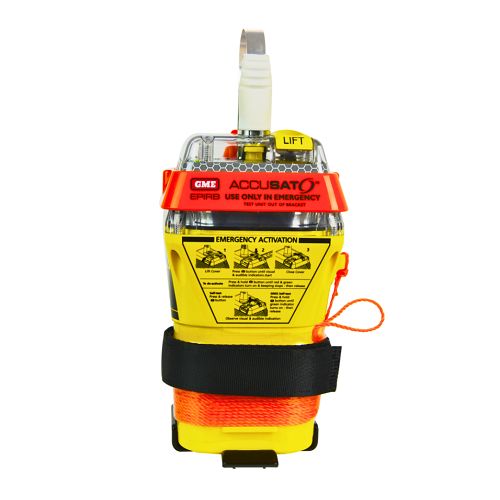
A 10‑year battery EPIRB with integrated GNSS (supports GPS and Galileo), infrared strobe and 121.5 MHz homing signal. Approved for worldwide COSPAS‑SARSAT operation.
Explore →