Loading this page…

Loading this page…
Sailing club
Mornington Yacht Club is a family-focused sailing club in Mornington, VIC offering organised club sailing, junior and adult learn-to-sail programs, keelboat and dinghy training, cruising activities and regular race and regatta events. The club web site references berths/Hidden Harbour, moorings and visiting-boat information, slipping days and member facilities.
About
Mornington Yacht Club is a family-focused sailing club in Mornington, VIC offering organised club sailing, junior and adult learn-to-sail programs, keelboat and dinghy training, cruising activities and regular race and regatta events. The club web site references berths/Hidden Harbour, moorings and visiting-boat information, slipping days and member facilities.
Service area: Mornington, VIC
Keep exploring
More than 750 members called this club home when it turned seventy in 2016, and the mix of them says plenty about the place. Juniors learn in Optimists off the beach, Etchells and Flying Fifteen crews tune up for one-design racing, keelboat owners chase offshore silverware, and Social members simply enjoy a meal at The Rocks, the licensed restaurant and bar inside the clubhouse. Family, Senior, Youth and Social membership categories keep the door open well beyond the racing set, and the club has made a genuine point of welcoming sailors with disabilities, whose program here has produced state-title winners.
The racing calendar is busy for most of the year. Division 1 and 2 keelboats and Division 3 trailerables share the harbour with off-the-beach fleets that take in S80s, Seaway 25s, Elliotts, Thompsons, Lasers, 420s and RS Fevas, while Etchells, Flying Fifteens and Optimists sail their own class starts. Mixed-fleet racing is the norm, which suits a membership with such a broad spread of boats, and a structured cruising division looks after skippers who would rather point the bow somewhere over the horizon. Thursday twilight races fill the long summer evenings, and on alternate Sundays a pursuit race throws the entire fleet into one start.
Families joining the sport, campaigners with serious keelboat ambitions and sailors who just want a Thursday night splash all fit here comfortably. A morning race can end with lunch beside the pier, and that, for many members, is precisely the point. The office keeps weekday business hours, yet the atmosphere stays unpretentious for all the silverware in the trophy cabinet.
The standout thread in this club's training fabric is Sailability. Members established the program in 1999 to put people with disabilities on the water, and it has run twice-weekly sessions through each season ever since, backed by clubhouse facilities designed to assist sailors with limited mobility. Its credibility shows in results: one participant progressed to a Victorian championship and on to international competition. For a mainstream sailing club to sustain that commitment for more than a quarter of a century is unusual anywhere in Australia.
Conventional pathways are just as well covered. Juniors work through courses in Optimists, while Pacers serve learners of every age, with qualified trainers and accredited race officials on the club's roster. School programs are a particular strength — in November 2025 the club put 145 school students through a sailing day, an effort formally acknowledged by Australian Sailing Victoria. Adult beginners are catered for alongside the kids, continuing a tradition of teaching locals to sail that reaches back to the club's earliest decades.
Racing development happens organically. Graduates step from coached fleets into Sunday morning off-the-beach racing, then on to Saturday keelboat and mixed-fleet events. The Schnapper Point Regatta each February gathers every class together with onshore displays, acting as the season's centrepiece, while the winter series keeps keen crews racing between seasons. The club has also proven it can run events at the highest level, from world championships to Optimist nationals, so ambitious young sailors grow up watching international-grade race management from their own beach.
Schnapper Point Drive puts the clubhouse almost at the water's edge, hard beside Mornington pier and about 50 kilometres south-south-east of central Melbourne. The club sails on Port Phillip out of Mornington Harbour, a deep-water harbour on the Peninsula's eastern-facing coast. The shelter pattern shapes everything here: protection from the west, south and east means the prevailing south-westerly sea breeze arrives relatively settled, while the harbour's open flank to the north turns strong northerly days lumpy and demanding.
Crews learn quickly to read forecasts, and many check the club's WeatherCam — an award-winning installation that has logged close to three million hits — before leaving home.
Shore facilities match the all-classes membership. A launching ramp serves the off-the-beach fleets, two cranes rated to two tonnes lift keelboats, and a slipway handles haul-outs. The clubhouse itself, housing The Rocks restaurant and bar, is available for private functions and doubles as the regatta nerve centre when big events come to town.
The racing water deserves respect. Port Phillip may be a bay, but its shallow northern reaches kick up a short, steep chop in any breeze, and Mornington's position on the eastern shore gives fleets open-water racing with genuine tactical interest — tide lines along the coast, shifts off the headlands and pressure bands rolling down from the city side. Summer afternoons reward patience with a reliable sea breeze, while winter fronts test the crews who stay out for the off-season series. The venue has absorbed regatta fleets of several hundred dinghies at world championship standard without strain, which says everything about the room to work here.
The club dates its beginning to February 1946, when eleven interested residents gathered to talk about forming a sailing club at Mornington — a date worth noting because Wikipedia's yacht club list records 1945 instead. The founders wanted to sail off Shire Hall beach, and in May 1946 the council leased them an ex-Army hut near the pier. Growth came quickly. The Heavyweight Sharpie arrived in 1947 and carried the fleet for a decade, with a state Sharpie championship hosted in 1951, while the Sabot came in 1956 through a home-building program and grew into what was for years Victoria's largest Sabot fleet, delivering members six state titles and two national championships.
By 1964 the roll stood at 156 members, and a grant of reclaimed land beside the pier allowed a proper clubhouse, with rapid expansion following. Incorporation followed that September, the club registering as a company limited by guarantee under the Companies Act 1961 (Vic). Class culture stayed adventurous through the 1960s, adding the Gwen 12, Cherub, Fireball and the Mirror as a family boat, and the first Flying Fifteen in Australia sailed here. Early inter-club competition ran against Black Rock, Mordialloc, Chelsea and Frankston.
From the mid-1950s a formidable ocean racing fleet emerged, and Mornington yachts went on to take division honours in the Sydney–Hobart and Melbourne–Hobart classics as well as the Queenscliff–Devonport and Sydney–Noumea races. In all, members have collected roughly 20 state titles, five national crowns and a world championship. Big-event hosting became a signature: the 1999 Europe dinghy worlds drew over 150 competitors from 17 countries, the 420 Worlds followed in January 2004, and the 2014 Optimist Australian and Open Championships brought nearly 350 boats — an event the club bills as the largest single-class regatta yet staged in the Southern Hemisphere.
A 70th anniversary "Back to Mornington" weekend in February 2016 drew the threads together.
Ashmore Reef is a remote, uninhabited oceanic reef and low-lying island group in the Timor Sea that offers a stark, conservation-led sailing environment rather than typical recreational cruising. It is distinctive for its exposed coral reef, vegetated sand islands and strong legal protections, including tightly controlled access and traditional Indonesian fishing arrangements. Visiting from a recreational yacht is logistically challenging, subject to regulatory limits, and suited only to well-prepared offshore passages or research/management charters rather than casual day sails.

Look for a friendly club with beginner-focused training, accessible facilities and boats, a supportive community, clear safety practices, and opportunities to progress at your own pace.
Explore →
Late spring to summer is usually the best time for beginners to start learning to sail in Tasmania because the weather is generally warmer, days are longer and conditions are often more settled. Expect lighter to moderate winds with regular afternoon sea breees in summer, while spring and autumn bring more changeable and sometimes stronger conditions; winter is colder, wetter and typically windier with more fronts and swell.
Explore →
Expect very different seasonal systems across Western Australia: the south‑west (Perth to Albany) has a strong summer afternoon sea breeze (the “Fremantle Doctor”) and winter westerly fronts, while northern WA follows a wet/dry monsoonal cycle with strong seasonal onshore winds, thunderstorms and cyclone risk in the wet season. Local headlands, estuaries and tidal flows often change what you actually feel on the water, so learn the local timing and sheltered venues first.
Explore →
Pick a stable, simple, forgiving dinghy with a single sail or basic sloop rig, affordable handling and easy maintenance—ideally one with a local class or school nearby so you can access coaching and spare parts.
Explore →
A practical, Australia‑focused introduction to sailing: key terms, common boat types, basic manoeuvres, where to learn, licence and club options, and planning your first trips with safety and local conditions in mind.
Explore →
A concise, practical guide to the points of sail and how to trim sails effectively for common Australian conditions. Learn the basics of wind angles, sail shape, telltales, reefing considerations and simple steps to improve boat speed and balance.
Explore →
A practical guide for new sailors on picking the right Australian sailing club: training, boat access, racing, social fit, costs and the key questions to ask before joining.
Explore →
A practical step‑by‑step guide to planning a safe, realistic coastal sailing passage in Australian waters: choosing a route, estimating distance and time, checking weather and tides, fuel and daylight planning, identifying safe harbours and anchorages, and preparing backup plans.
Explore →Burke Yachtsman Gear Bag 40L - Shop Now Zip Pay | Tamar Marine Skip to content 59 – 63 Holbrook Street, Invermay Online Shop Open 24/7 Products search Contact us 1300 MARINE $ 0.00 0 Cart Burke Yachtsman Gear Bag 40L $ 79.90 Colour Choose an option Black Blue Black Blue Clear - Burke Yachtsman Gear Bag 40L quantity + Add to cart Enquire about this product SKU BAGB-Y24/BLACK* Category Bags - Sail & Gear A Burke classic and customer favourite, the Yachtsman’s Gear Bag is built tough to handle wet, salty conditions while keeping your gear dry and protected. Made from double coated waterproof…
Explore →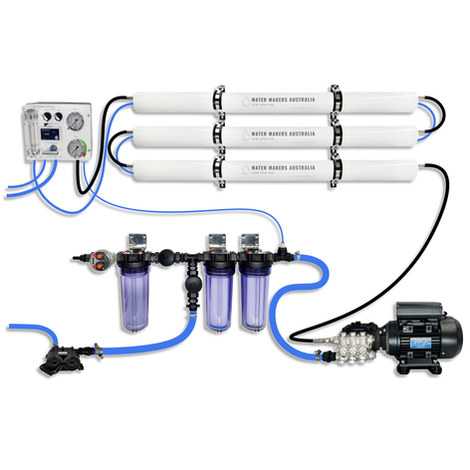
A three-membrane modular watermaker with 200 L/h nominal output and up to 240 L/h family-level marketing, for larger crews and heavy use.
Explore →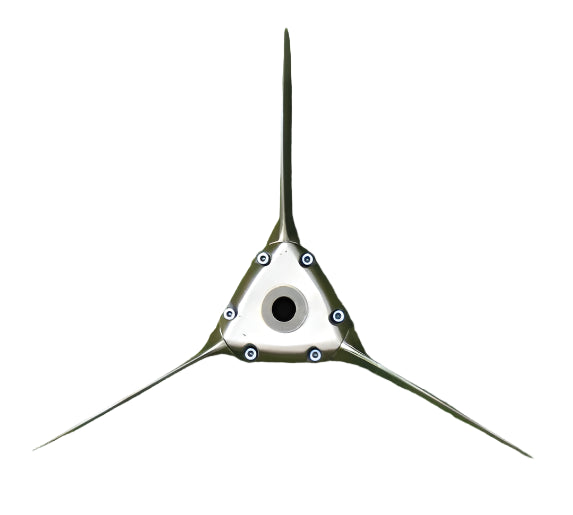
Feathering propeller designed for larger cruising yachts. Diameter range 18"–25"; shaft range 1¼"–1¾"; hub lengths 120mm or 165mm (with anode). Sail drive option available.
Explore →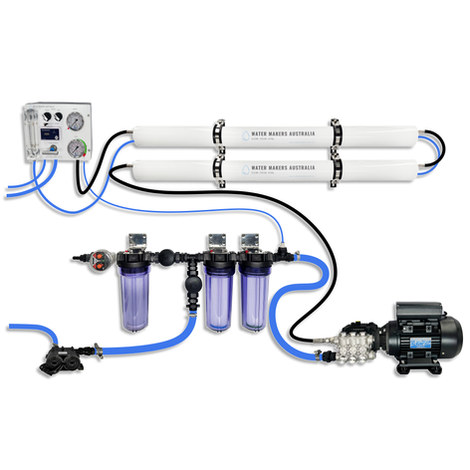
A two-membrane modular watermaker with 140 L/h nominal output, aimed at families and liveaboards that want more water per run.
Explore →