Loading this page…

Loading this page…
Sailing club
Mounts Bay Sailing Club ("The Bay") is a long-established dinghy-focused sailing club on Matilda Bay at Crawley, Perth, Western Australia. The club runs regular twilight and Sunday racing, junior and adult learn-to-sail programs as an accredited Australian Sailing Discover Sailing Centre, and hosts state, national and international regattas including the Moth World Championship. Facilities include a clubhouse with river outlook and a multi-pen jetty developed by members.
About
Mounts Bay Sailing Club ("The Bay") is a long-established dinghy-focused sailing club on Matilda Bay at Crawley, Perth, Western Australia. The club runs regular twilight and Sunday racing, junior and adult learn-to-sail programs as an accredited Australian Sailing Discover Sailing Centre, and hosts state, national and international regattas including the Moth World Championship. Facilities include a clubhouse with river outlook and a multi-pen jetty developed by members.
Service area: Matilda Bay, Crawley — Swan River foreshore, Perth, Western Australia
Keep exploring
Mounts Bay runs the full arc of sail training, and it starts young: junior learn-to-sail programs starting from age six, plus courses for adults, all taught by qualified instructors through school-holiday programs and weekly classes across the season. As an accredited Australian Sailing Discover Sailing Centre, the club delivers the national curriculum, but what distinguishes its offering is what sits around the edges of it. Learn to Windsurf courses keep a board-sailing tradition alive that many dinghy clubs have lost, and school sailing programs channel students from across Perth onto Matilda Bay during term time.
The philosophy has a name at this club: Learning and Development. Rather than treating courses as a conveyor belt that ends with a certificate, The Bay frames training as an ongoing craft, giving members the chance to hone their skills alongside some of Perth's leading sailors. Given the membership roll — which includes the man who founded foiling Moth technology and multiple national champions — that is no hollow promise. A junior graduating from an O'pen Skiff or Optimist at Crawley is quite literally sharing the water with sailors who have won world titles in the Moth class.
The breadth of classes raced at the club reinforces the pathway. Beyond the junior trainers, fleets span Flying Ant, GP14, Sharpie, Tasar, Moth, keelboats, Windfoiler and Windsurfer LT, so a developing sailor always has a next step and a fleet to grow into. Friday-evening twilight sailing and club-wide racing every Sunday in season supply the competitive rhythm, and the Member's Bar — open Fridays from five and Sundays from noon to six — ensures the debrief is taken as seriously as the start. For a sailor starting at six years old and dreaming of a Moth Worlds start line, there may be no better-connected nursery in the country.
Matilda Bay at Crawley, on Perth's Swan River, provides the stage, and the club itself calls it one of the most spectacular places to sail in the city. The claim is easy to credit: a wide, open reach of river cupped by the university foreshore, with the city skyline downstream and room enough for championship fleets. When the Moth World Championship came here in December 2019, sailors from six nations raced on this stretch of water, and the class will return for the 2026 Worlds — an endorsement few river venues worldwide can match.
The weekly pattern revolves around two fixtures. Twilight sailing on Friday evenings eases members into the weekend, while club-wide racing runs every Sunday through the season across the club's many classes. The Member's Bar keeps pace, opening from 5pm on Fridays and from midday to 6pm on Sundays to coincide with the biggest sailing days. Ashore, the clubhouse doubles as a widely known Perth venue for weddings, conferences and large events — the river outlook doing much of the decorating.
Facilities on the water have been built piece by piece by members themselves. The club's thirty-pen jetty, erected in 1979 through volunteer effort, loans from members and commitments from pen lessees, added a cruising dimension to what had been an off-the-beach racing club; the pens were doubled in 1994. Today's sailing calendar remains busy at every level: club racing each Sunday, state titles such as the 2025/26 Sharpie States, and the "Three of a Kind" regatta alongside the 2026 Moth Worlds.
Between the sheltered river, the pen facility and the deep regatta tradition, Matilda Bay serves equally the six-year-old in a training Optimist and the international foiling fleet skimming past the same foreshore.
The founders of 1897 wanted competitive sailing within reach of ordinary people, and for the club's first four decades "home" was wherever members could find it: boats stored in boatsheds along the Perth foreshore, meetings convened at venues scattered around the city. A dedicated clubhouse only arrived in 1939 — and was promptly requisitioned for the war effort, when the United States Navy used it for its Catalina flying boat operations on Matilda Bay. The present clubhouse rose in the late 1950s and early 1960s, built substantially by volunteer labour, and the jetty of 1979 and its 1994 expansion followed the same members-build-it tradition.
The racing milestones came earlier and faster. The interstate expedition of 1905 — the first by any club — signalled unusual ambition for a young organisation, and Aeolus's 1907 national crown, the first Australian Championship won by a WA yacht, confirmed it. Half a century later Basil Eugene Wright's commissioned six-pack of Cherubs created the class's first Australian fleet, and Gordon Wright's victory in the inaugural Cherub Nationals kept the silverware at home.
Into the modern era, The Bay has become synonymous with the Moth. Member John Ilett founded the foiling technology that transformed the class into the airborne spectacle it is today, and the club hosted the Moth World Championship in December 2019 before securing the 2026 edition as well. Through all of it, membership has held a distinctive shape — about 350 strong as of 2022, with forty per cent female participation — and the mission has stayed close to the founders' original brief of accessibility.
One hundred and twenty-five summers after those first races, the club that once stored its boats in other people's sheds stands as a custodian of Australian sailing's memory, still building, still racing, still opening its bar on Fridays at five.
A practical, harbour-focused cruising guide to Trial Bay on the New South Wales Mid North Coast. The guide describes the bay’s sheltered and exposed zones, headlands and islands, local seasonal wind and swell patterns, principal sailing areas and recommended anchorages, shore facilities around South West Rocks and Arakoon, navigation and arrival considerations, specific hazards such as the Macleay River entrance, sand movement and reefs, local marine park and heritage restrictions, and three realistic sailing experiences ranging from sheltered family daysails to multi-day island circuits. It’s

Expect very different seasonal systems across Western Australia: the south‑west (Perth to Albany) has a strong summer afternoon sea breeze (the “Fremantle Doctor”) and winter westerly fronts, while northern WA follows a wet/dry monsoonal cycle with strong seasonal onshore winds, thunderstorms and cyclone risk in the wet season. Local headlands, estuaries and tidal flows often change what you actually feel on the water, so learn the local timing and sheltered venues first.
Explore →
Look for a friendly club with beginner-focused training, accessible facilities and boats, a supportive community, clear safety practices, and opportunities to progress at your own pace.
Explore →
There are legal obligations in Western Australia for recreational boat owners and skippers covering vessel registration, carriage of safety equipment and general skipper responsibilities, but the exact requirements depend on vessel type, size, where you sail and whether the vessel is commercial or recreational. Check the Western Australian Department of Transport (DoT WA) and the national authority for the precise checklist that applies to your boat and voyage.
Explore →
Pick a protected bay, estuary or river reach where you can rig, launch and arrive on calm water within a short, sheltered transit; choose a site with a good ramp or jetty, clear recovery options and a nearby sailing club, marina or commercial operator for local knowledge and help.
Explore →A practical guide to the coastal weather systems that affect sailing along Western Australia's coast, focusing on the Fremantle Doctor, local sea breezes, and linked coastal phenomena. Explains how these systems form, when they tend to occur, how they influence boat handling and passage planning, common mistakes, and a
Explore →
A practical, Australia‑focused introduction to sailing: key terms, common boat types, basic manoeuvres, where to learn, licence and club options, and planning your first trips with safety and local conditions in mind.
Explore →
A practical guide for new sailors on picking the right Australian sailing club: training, boat access, racing, social fit, costs and the key questions to ask before joining.
Explore →A practical guide for recreational sailors planning visits to Albany and King George Sound. Covers the main anchorage areas, typical local weather patterns, tidal and current considerations, navigational hazards, on-the-water etiquette and a pre-departure checklist to help you plan a safe passage and enjoyable stopover
Explore →Burke Yachtsman Gear Bag 40L - Shop Now Zip Pay | Tamar Marine Skip to content 59 – 63 Holbrook Street, Invermay Online Shop Open 24/7 Products search Contact us 1300 MARINE $ 0.00 0 Cart Burke Yachtsman Gear Bag 40L $ 79.90 Colour Choose an option Black Blue Black Blue Clear - Burke Yachtsman Gear Bag 40L quantity + Add to cart Enquire about this product SKU BAGB-Y24/BLACK* Category Bags - Sail & Gear A Burke classic and customer favourite, the Yachtsman’s Gear Bag is built tough to handle wet, salty conditions while keeping your gear dry and protected. Made from double coated waterproof…
Explore →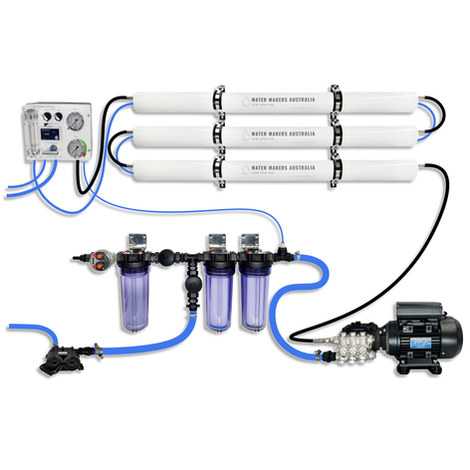
A three-membrane modular watermaker with 200 L/h nominal output and up to 240 L/h family-level marketing, for larger crews and heavy use.
Explore →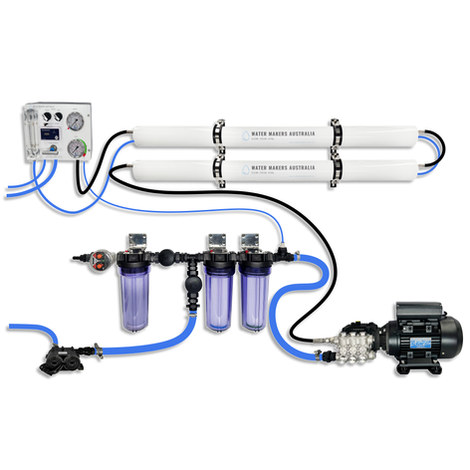
A two-membrane modular watermaker with 140 L/h nominal output, aimed at families and liveaboards that want more water per run.
Explore →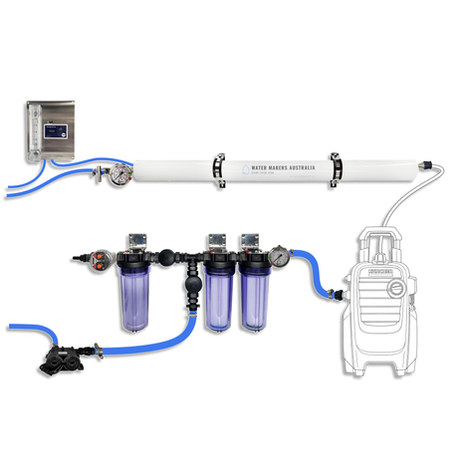
A one-membrane modular marine watermaker with 80 L/h nominal output, remote stainless control panel, standard consumables and direct Australian support.
Explore →