Loading this page…

Loading this page…
Sailing club
Multihull Yacht Club Queensland (MYCQ) is a specialist multihull club based at Manly on Brisbane's bayside. The volunteer-run club centres on racing and cruising for catamarans and trimarans, administers an Offshore Multihull Rating (OMR) system, and organises the multihull division of the Brisbane to Gladstone alongside regular bay series, cruising-in-company and social events. Meetings and clubhouse activities are held in Trafalgar Street, Manly, with club mail handled through a Wynnum PO box.
About
Multihull Yacht Club Queensland (MYCQ) is a specialist multihull club based at Manly on Brisbane's bayside. The volunteer-run club centres on racing and cruising for catamarans and trimarans, administers an Offshore Multihull Rating (OMR) system, and organises the multihull division of the Brisbane to Gladstone alongside regular bay series, cruising-in-company and social events. Meetings and clubhouse activities are held in Trafalgar Street, Manly, with club mail handled through a Wynnum PO box.
Service area: Manly and Moreton Bay (Greater Brisbane), Queensland
Keep exploring
Multihull Yacht Club Queensland is a sailing club for multihull (catamaran and trimaran) sailors based in Manly, Queensland. A website is listed for the club; the record identifies the suburb as Manly, QLD.
The club's program is built around doing rather than teaching. Its core business is organising racing for multihulls: offshore events headlined by the multihull division of the Brisbane to Gladstone, plus member participation in bay series such as those run at the Queensland Cruising Yacht Club and other Moreton Bay events. Cruising in company has been a priority for decades — club yachts have sailed the fresh water of Wivenhoe Dam west of Brisbane and trailered their boats north to the Town of 1770, spending a week exploring the Bunker Group some thirty miles offshore.
Social sailing events round out the calendar. One thing prospective members should understand up front is that this is not a training club: no learn-to-sail or Discover Sailing courses appear in the club's published material, and its racing-and-cruising orientation means newcomers generally arrive already owning, crewing on or building a multihull. In practice the learning happens afloat — crewing on another member's boat through a bay series or a coastal cruise is the customary apprenticeship, and a membership dense with designers, builders and long-distance cruisers makes for an unusually deep pool of expertise to draw on.
The national trailable multihull regattas the club instigated in 1983 continue that tradition of structured gathering, rotating through venues from Bundaberg in Queensland down to Melbourne — Lake Macquarie's Wangi Wangi among the regulars. For a sailor weighing up a first trimaran, or a family with a folding trailer-tri, the value of membership is less a course certificate than direct access to the people who design, build and race these boats for a living.
The clubhouse stands in Trafalgar Street, Manly, on Brisbane's bayside, with mail handled through a Wynnum post office box. Manly Boat Harbour and the waters of Waterloo Bay form the home racing ground — the same bay where the club's predecessor associations ran their first national titles in the 1980s, and where a storm during the January 1985 championships famously scattered the fleet and capsized boats near the harbour entrance.
Beyond the headland lies the whole of Moreton Bay, the cruising and bay-racing ground where members contest series alongside the region's other clubs, and beyond that again stretches the open east-coast passage north to Gladstone — the course for the race that brought the club into being. The geography of the club's sailing therefore works across three scales: enclosed bay racing off Manly, bay-wide events among Moreton Bay's channels and anchorages, and an offshore race each Easter that sends the multihull fleet up the coast.
The trailerable dimension matters just as much as the salt water. Members tow their boats to the freshwater expanse of Wivenhoe Dam for cruising weekends and up the highway to the Town of 1770 for expeditions to the Bunker Group, and the national regatta circuit the club created has taken its sailors from Bundaberg to Melbourne, with Lake Macquarie's Wangi Wangi a recurring venue.
Manly itself reinforces the club's identity: the suburb is the centre of gravity for south-east Queensland multihull design and building, so the expertise in the clubhouse on a race evening mirrors the industry in the streets around it.
Multihulls were still outsiders in Australian ocean racing when the Queensland Cruising Yacht Club first welcomed multihulls into the Brisbane to Gladstone back in 1963; three entered and one finished. Two years later, in 1965, twelve multihull owners banded together as a club — the seed of today's MYCQ — and organised their own multihull Brisbane to Gladstone, sailed on the same Easter Friday over a near-identical course to the monohull race. Not until 1998 did the two events merge operationally, sharing an extended start line and a common course.
The early decades of the multihull contest belonged to trimarans, with catamarans rising to prominence from the mid-1980s; Jamie Morris and his catamaran Simply the Best claimed line honours on four occasions, a tally only Syd Luxford and Brian Willey have equalled, back in the 1970s, while Cliff Fraser's Nudgee Budgie collected performance honours three times.
A parallel strand began in 1978, when the Trailertri Club was formed at Geoff and Margaret Finegan's home — Geoff becoming inaugural Commodore — growing out of the folding trimaran designs Ian Farrier had produced in the mid-1970s. That club set up the national Trailertri titles in 1983, ran a trial series off Wellington Point late that year, and saw the first official titles held on Waterloo Bay in January 1985, an event remembered for the storm that capsized Bob Peberdy's Trailertri 680 off Manly Boat Harbour, with trophies afterwards presented at the Royal Queensland Yacht Squadron.
A formal Trailertri Association of Queensland followed in 1985 and was incorporated by August 1987; national regattas ran at Bundaberg and Burnett Heads over the 1986-87 new year and at Scarborough at Easter 1988 as part of Redcliffe's Bicentennial celebrations. The Trailer Multihull Yacht Association Queensland appeared in 1998, and in 2001 the strands finally merged into Multihull Yacht Club Queensland.
A practical cruising guide for the Moyne River port at the mouth of the Moyne River on Victoria’s south-west coast. It explains harbour geometry, seasonal conditions, principal sailing zones, anchorages, visitor facilities, known local hazards (bar, reefs, strong currents, surf and commercial traffic), regulatory controls and realistic experiences for day sailors, trailer-sailors and coastal cruisers. The guide draws on local port plans, state boating authorities, the yacht club’s visiting-boat practice and regional marine management documents.

Look for a friendly club with beginner-focused training, accessible facilities and boats, a supportive community, clear safety practices, and opportunities to progress at your own pace.
Explore →
Use ramps and beaches with respect for local conditions: check ramp layout, tide and swell, wind direction, vehicle access and crowding; prepare boat and crew before you launch or retrieve; and follow local signage, courtesy and safety practices. Specifics vary by ramp and beach, so confirm details for the exact site before you go.
Explore →
Write a one‑page plan with the who/what/when/where/how of your trip, keep a copy on board and leave the main copy with a responsible person ashore (and optionally with your club, marina office or local volunteer rescue service).
Explore →
Before your first sail in South Australian waters check the weather and tide, make sure the boat and safety equipment are fit for the trip, confirm local rules and any area-specific hazards, and tell someone your plan.
Explore →
A practical guide for new sailors on picking the right Australian sailing club: training, boat access, racing, social fit, costs and the key questions to ask before joining.
Explore →A practical guide for recreational sailors planning visits to Albany and King George Sound. Covers the main anchorage areas, typical local weather patterns, tidal and current considerations, navigational hazards, on-the-water etiquette and a pre-departure checklist to help you plan a safe passage and enjoyable stopover
Explore →A practical guide for recreational sailors planning voyages to Esperance and the Recherche Archipelago: what to expect, key planning considerations, common anchorages, safety and communications, equipment recommendations and sensible steps for a successful trip in this remote southern WA cruising area.
Explore →Practical guide for recreational sailors planning passage on the Hawkesbury River: how to plan around tides, choose anchorages, read local conditions and prepare the boat and crew for a safe, comfortable trip.
Explore →Burke Yachtsman Gear Bag 40L - Shop Now Zip Pay | Tamar Marine Skip to content 59 – 63 Holbrook Street, Invermay Online Shop Open 24/7 Products search Contact us 1300 MARINE $ 0.00 0 Cart Burke Yachtsman Gear Bag 40L $ 79.90 Colour Choose an option Black Blue Black Blue Clear - Burke Yachtsman Gear Bag 40L quantity + Add to cart Enquire about this product SKU BAGB-Y24/BLACK* Category Bags - Sail & Gear A Burke classic and customer favourite, the Yachtsman’s Gear Bag is built tough to handle wet, salty conditions while keeping your gear dry and protected. Made from double coated waterproof…
Explore →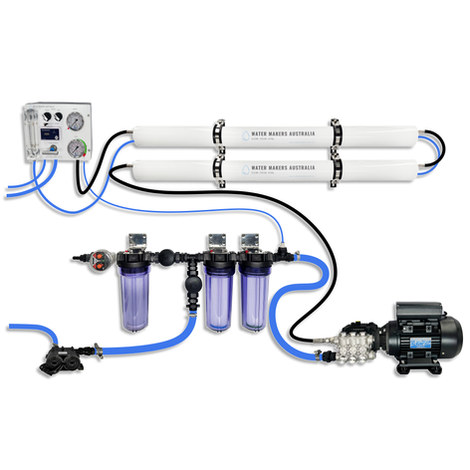
A two-membrane modular watermaker with 140 L/h nominal output, aimed at families and liveaboards that want more water per run.
Explore →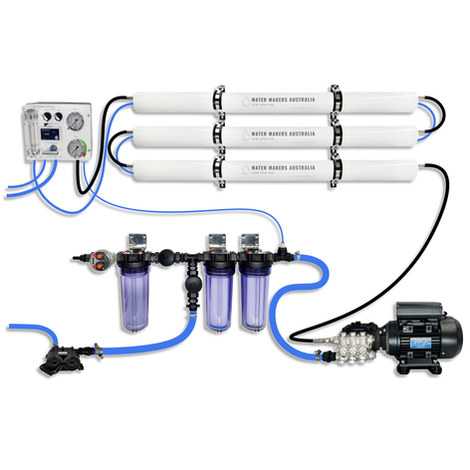
A three-membrane modular watermaker with 200 L/h nominal output and up to 240 L/h family-level marketing, for larger crews and heavy use.
Explore →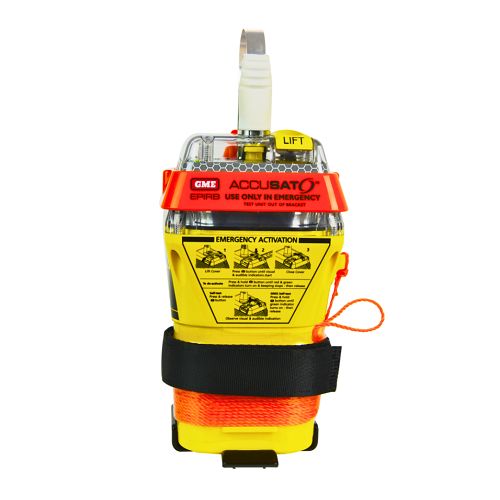
A 10‑year battery EPIRB with integrated GNSS (supports GPS and Galileo), infrared strobe and 121.5 MHz homing signal. Approved for worldwide COSPAS‑SARSAT operation.
Explore →