Loading this page…

Loading this page…
Sailing club
Newport Cruising Yacht Club is a community-focused keelboat club on the Redcliffe Peninsula (northern Moreton Bay). The club runs weekly pursuit-format racing from Scarborough and the Newport canal estate, meets at a purpose-built clubhouse on Klingner Road (Kippa Ring) after events, and promotes family participation, social sailing and cruising-in-company for a mixed keelboat fleet.
About
Newport Cruising Yacht Club is a community-focused keelboat club on the Redcliffe Peninsula (northern Moreton Bay). The club runs weekly pursuit-format racing from Scarborough and the Newport canal estate, meets at a purpose-built clubhouse on Klingner Road (Kippa Ring) after events, and promotes family participation, social sailing and cruising-in-company for a mixed keelboat fleet.
Service area: Northern end of Moreton Bay (Redcliffe Peninsula, including Deception Bay)
Keep exploring
Newport Cruising Yacht Club is a community sailing club based on the Redcliffe Peninsula (Scarborough/Newport area) north of Brisbane. The club runs regular sailing events (Wednesday and Saturday afternoons, including SAGS and WAGS pursuit races) on the northern end of Moreton Bay and Deception Bay, and meets at a clubhouse (current clubhouse access from Klingner Road, Kippa-Ring) after events for social activities and member support including crewing and cruising enquiries.
The engine of the club week is pursuit racing, and Newport runs two flavours of it: WAGS — Wednesday Afternoon Good Sailing — and SAGS, the Saturday equivalent. In a pursuit format the handicaps are applied at the start rather than the finish, so boats depart at staggered times and, when the handicapper gets it right, converge at the line together — which at Newport happens quite deliberately, so that presentations can follow in the clubhouse while the afternoon is still warm.
Around that core the club has assembled a set of traditions with memorable acronyms: the RUMS series, and Cruising At Sunset — CAS — a relaxed Friday-afternoon race every couple of months that flows straight into dinner. Cruising-in-company trips to regional destinations cater for members who prefer anchorages to buoys. The annual calendar is crowded: the NCYC Regatta, the Rolly Hill Short Handed Race, the Lucinda Bay Classic, the Lady Skippers' Yacht Race, a Single Handed Yacht Race, the NCYC Marathon, Australia Day Sailing and the Labour Day Sprints, with a spinnaker race series reintroduced in early 2024.
Handicapping runs through a performance system documented in the Members' Handbook, giving the mixed fleet fair racing across the season. What the club does not currently advertise is a formal learn-to-sail arm — no Discover Sailing accreditation or structured junior course appears in the material available — and the 2021 clubhouse project was explicitly framed by then-Commodore Bolek Sulikowski as a way to enable more formal training alongside social gatherings.
Newcomers, in other words, learn by sailing with the fleet, and the forgiving pursuit format is built to make that work.
The clubhouse stands at 166 Klingner Road, Kippa Ring, reached through the cheerfully named Dick Tosser Turner Gate at the eastern end of the Walkers Creek bridge; members gather there on Wednesdays and Saturdays from about four in the afternoon. The sailing itself starts from two nearby departure points — the Newport Waterways canal estate and Scarborough Harbour, which anchor the peninsula's northern end.
From there the fleet spreads across the club's home waters at the northern end of Moreton Bay, taking in Deception Bay, with races typically starting and finishing near the Newport Waterways Outer Leads. It is a distinctly local sailing ground: rather than ranging the length of the bay, the club has built its racing around water reachable in an afternoon, which suits the weekly WAGS and SAGS rhythm and the goal of having everyone back for presentations. The canal-estate setting shapes the club in other ways too.
The Newport Waterways give the fleet sheltered passage out to the bay, and Scarborough Harbour provides the working-harbour services a keelboat fleet needs, while the clubhouse itself sits only minutes from both departure points. For visiting sailors the practical picture is simple: berth or launch around the harbour or the canals, race the northern bay in company with a friendly mixed fleet, and finish at a licensed clubhouse where the results are read out the same afternoon.
The arrangement reflects the club's community character — nothing here depends on travel or elaborate logistics, and a sailor can leave work, race a full course and be home for dinner, which is precisely the point.
The club sails today as Newport Cruising Yacht Club, but it began life as the Moreton Bay Yacht Club, and exactly when that original club was founded is a detail the record has so far declined to surrender — the members' handbook documents the name change while leaving the founding date unstated. What can be traced clearly is the club's long hunt for a home.
For years it had no permanent base and rented space where it could; the 2018 edition of the Members' Handbook places the clubhouse at the Compass Marinas premises at Scarborough Harbour, with access off Reef Point Esplanade. The decisive move came in 2021, when the club erected its first permanent clubhouse, a $205,000 build beside the canals near Talobilla Park.
The funding package was a model of community-club resourcefulness: $127,000 from the Queensland Government's Get Going Places and Spaces program, $22,900 from the Moreton Bay Regional Council and a $50,000 interest-free council loan, with completion expected in July 2021. Bolek Sulikowski served as Commodore through the project, with Gerardine Young as treasurer, and Sulikowski framed the new building as the key to more formal training and social gatherings — the club's ambitions finally given walls and a roof.
Community partnerships have grown alongside the bricks and mortar: the club supports the Redcliffe Coast Guard onshore, receives on-water assistance from QF3, and counts local firms — the Sea Salt & Vine Café, Scarborough Pest Control and Dirty Boat Bottoms among them — as backers. For a club that spent decades renting, the Klingner Road clubhouse marks the point at which Newport Cruising Yacht Club became a permanent fixture of peninsula sailing.
Batemans Bay and the Clyde River form a classic NSW South Coast cruising region where a sheltered, tidal estuary meets a short, island‑dotted entrance to the Tasman Sea. It’s distinctive for easy access from Canberra, a mix of river and bay sailing, a compact marina and mooring network, and a river entrance (the Clyde River bar) that can change rapidly. The area suits day sails, weekend cruising, trailer‑boat exploration and sheltered coastal passages; offshore or long‑passage plans require careful timing and local knowledge. Preparation for tidal flow, variable southerly swells and shallow, s

Write a one‑page plan with the who/what/when/where/how of your trip, keep a copy on board and leave the main copy with a responsible person ashore (and optionally with your club, marina office or local volunteer rescue service).
Explore →
Use ramps and beaches with respect for local conditions: check ramp layout, tide and swell, wind direction, vehicle access and crowding; prepare boat and crew before you launch or retrieve; and follow local signage, courtesy and safety practices. Specifics vary by ramp and beach, so confirm details for the exact site before you go.
Explore →
Before your first sail in South Australian waters check the weather and tide, make sure the boat and safety equipment are fit for the trip, confirm local rules and any area-specific hazards, and tell someone your plan.
Explore →
Tidal streams and local wind patterns can change trip time, fuel use, helm balance and safety margins on short coastal runs — plan your departure and route to use favourable tidal flow, allow margin for wind-driven sea and gusts, and check up-to-date local tide and weather information before you go.
Explore →A practical guide for recreational sailors planning passages to, from or around Eden and Twofold Bay. Covers sheltered anchorages, shore facilities, local weather and tidal considerations, preparing for Bass Strait conditions and a focused equipment and safety checklist.
Explore →
A practical guide for new sailors on picking the right Australian sailing club: training, boat access, racing, social fit, costs and the key questions to ask before joining.
Explore →A practical guide for recreational sailors planning visits to Albany and King George Sound. Covers the main anchorage areas, typical local weather patterns, tidal and current considerations, navigational hazards, on-the-water etiquette and a pre-departure checklist to help you plan a safe passage and enjoyable stopover
Explore →A practical guide for recreational sailors planning day sails or short cruises around Batemans Bay, Broulee and the Clyde River. Covers local conditions, safe approaches, anchorages, launching, tides, common hazards, and checklists for trip planning and on-water decisions.
Explore →Burke Yachtsman Gear Bag 40L - Shop Now Zip Pay | Tamar Marine Skip to content 59 – 63 Holbrook Street, Invermay Online Shop Open 24/7 Products search Contact us 1300 MARINE $ 0.00 0 Cart Burke Yachtsman Gear Bag 40L $ 79.90 Colour Choose an option Black Blue Black Blue Clear - Burke Yachtsman Gear Bag 40L quantity + Add to cart Enquire about this product SKU BAGB-Y24/BLACK* Category Bags - Sail & Gear A Burke classic and customer favourite, the Yachtsman’s Gear Bag is built tough to handle wet, salty conditions while keeping your gear dry and protected. Made from double coated waterproof…
Explore →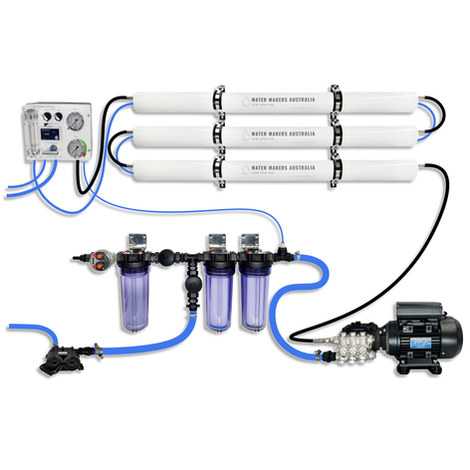
A three-membrane modular watermaker with 200 L/h nominal output and up to 240 L/h family-level marketing, for larger crews and heavy use.
Explore →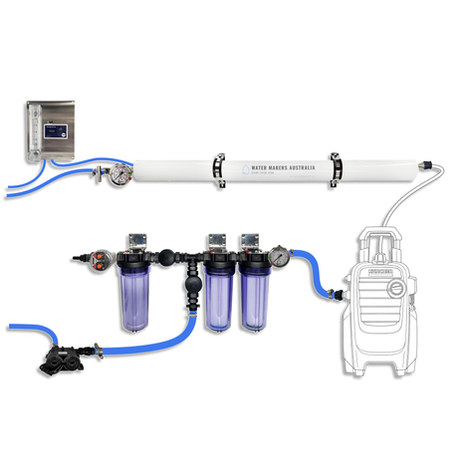
A one-membrane modular marine watermaker with 80 L/h nominal output, remote stainless control panel, standard consumables and direct Australian support.
Explore →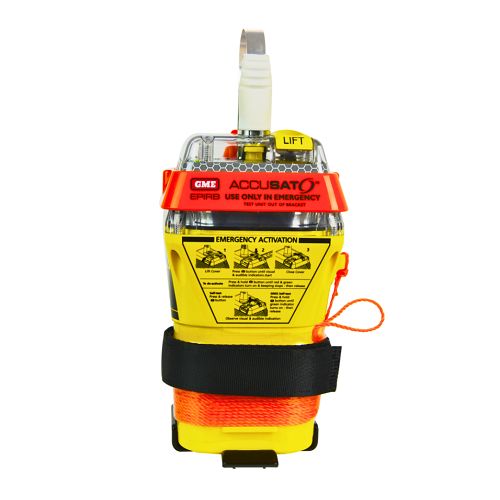
A 10‑year battery EPIRB with integrated GNSS (supports GPS and Galileo), infrared strobe and 121.5 MHz homing signal. Approved for worldwide COSPAS‑SARSAT operation.
Explore →