Loading this page…

Loading this page…
Sailing club
Sailing and rowing under one roof at 142 Gympie Terrace, Noosaville, on the Noosa River. Affiliated with Australian Sailing and known for its big children's sailing program.
About
Sailing and rowing under one roof at 142 Gympie Terrace, Noosaville, on the Noosa River. Affiliated with Australian Sailing and known for its big children's sailing program.
Service area: Noosaville, QLD
Keep exploring
On Gympie Terrace at Noosaville, where the street runs alongside the Noosa River, stands a club that decided long ago one water sport was not enough. Noosa Yacht & Rowing Club combines sailing and rowing under a single roof at 142 Gympie Terrace, and states its mission in deliberately practical terms: to remain financially viable for the long term while delivering on-water activities, facilities and training for members and the wider community alike. Affiliated with Australian Sailing, the club is a major presence in Sunshine Coast boating.
By its own account it runs Queensland's finest children's sailing program — a claim echoed in the local press — and its Sailability work for sailors with disability is, the club says, highly regarded. The scale of the community effort showed in the 2021 financial year, when the club raised $220,000 to back its YouthSail, rowing and Sailability work. The club is also willing to remake itself: in January 2026 it closed for the largest renovation in its history, stripping out gaming entirely, with reopening expected by late February 2026.
On any given week the riverfront clubhouse hosts juniors in training dinghies, school groups arriving by the busload, rowers launching octuple sculls and trailer-sailor crews preparing to travel to Queensland's coastal regattas. Club sailors compete each year in events such as the Bay to Bay, Surf to City, Sail Mooloolaba, the Pearl Challenge and the St Helena Cup, carrying the Noosa name well beyond the river. Few regional clubs anywhere operate across two sports at this breadth while keeping both halves healthy.
The program that defines the club is its children's sailing pathway, which the club describes as the best in Queensland — and which local reporting has been happy to repeat. Its engine is the Schools Program: seven local schools take part, attendances passed three thousand by 2022, and the Noosa Pengari Steiner School's Year 7 students attend an annual learn-to-sail course culminating in a week-long camp spent sailing around Moreton Bay.
Sailability, the club's program for sailors with disability, runs alongside — complete with a refurbished beach wheelchair to get sailors to the water's edge — and the training fleet is purpose-assembled: a Stratus 580 trailer sailor handles adult lessons, Sailability and school groups, four Vagabond dinghies carry the school learn-to-sail load, and two RIBs bought during 2021-22 handle safety and coaching support. Whether the club holds Discover Sailing Centre accreditation isn't stated, though the volume of delivery speaks for itself.
The rowing half of the clubhouse is equally developed, with a pathway running from Learn to Row through adult club rowing, social and recreational outings, and on to competition training. The boathouse holds everything from singles to quads, covering both sculling and sweep rowing, and the masters ranks span competitors aged from 27 into their seventies. On the water, sailors race every second Saturday all year round while rowers train on Saturday mornings and gather for a Big Boat Breakfast — octuple sculls included — on the last Sunday of each month.
The pathway shows results: NYRC sailor Sophie Honeyburne's team finished second at the 2021 Mooloolaba Women's Keelboat Regatta, and a combined Sunshine Coast team representing the club and Mooloolaba finished runner-up in the 2015 NSW Youth Match Racing Championship, held at the CYCA.
The club occupies 142 Gympie Terrace in Noosaville, at the western end of the terrace where it meets the mouth of the Noosa Waters canal — a riverfront position it has held since 1994. The Noosa River is the whole of the club's sporting world, and it suits both halves unusually well. For sailing, the river offers sheltered, enclosed water in which juniors, school groups and Sailability sailors can learn without confronting ocean conditions, and the fortnightly Saturday racing runs year-round on the same stretch.
For rowing, the river provides the flat, protected water a rowing program needs, which is why Saturday-morning training and the monthly octuple-scull outings can run so reliably. The location has a history of its own. The original clubhouse stood at 222 Gympie Terrace, just by Albert Street, and before the rowing club had its own home its boats were stored at Munna Point; the move to the present site, secured in the years before construction began, put both sports together on the riverbank.
Because the home water is a river rather than a bay, the club's more ambitious sailors travel for open-water competition — the Bay to Bay, Surf to City, Sail Mooloolaba, Pearl Challenge and St Helena Cup appear on the club's annual horizon precisely because members must leave the river to find that kind of racing. Visitors will find the clubhouse easy to reach along the Gympie Terrace strip, with the training dinghies, RIBs and rowing shells all working the water directly in front.
It is a setting that explains the club's character: two sports, one river, and a clubhouse planted exactly where the action is.
The club's roots run back to the 1950s and the Noosa River Sailing Club, in whose dinghies sailors such as Don Reed cut their teeth. The Noosa Yacht Club's first official meeting followed in 1958, held close by the Albert Street corner of Gympie Terrace, and in September 1961 the first clubhouse opened at 222 Gympie Terrace, the honours performed by Stanley Adams, chairman of the Noosa Shire Council, together with Commodore Walter Hayter. As membership grew the building was extended and the name settled as the Noosa Yacht Club.
Rowing arrived in 1981 with the formation of the Noosa Rowing Club — its boats having previously been stored at Munna Point — and in February 1984 the two clubs agreed to combine, incorporating as Noosa Yacht & Rowing Club. The present home owes its existence to four men: Don Reed, Dr Nick Kahl, Simon Newcomb and Billy Griffiths, who secured the riverfront land at 142 Gympie Terrace.
The first sod was turned by Noel Playford, the council chairman, and Peter D'Arcey, the club's Vice Commodore and Honorary Treasurer, with construction managed by Ron Slinn and building contractor Ron Scholes. The new clubhouse opened on 1 April 1994 — Easter Saturday — the ribbon cut by Steve Hoban, regional manager of the Queensland Department of Tourism, Sport and Racing, alongside Commodore John Sheriff and Honorary Secretary Bruce Whitfield, while sailors and rowers marked the day by sailing past both the old and new clubhouses.
The building's 25th anniversary, due in 2019, was delayed by Covid and finally celebrated with an open day in August 2022. In January 2026 the club closed for its largest renovation since inception, removing gaming, with reopening due by 23 February 2026. The 2025-26 committee is led by Commodore Grenville Snowdon, with Brian Knott as Vice Commodore, Kerrie Cooney as Honorary Secretary and John Edginton as Rowing Captain.
American River (Kangaroo Island, SA) is a small, sheltered inlet and township on the north‑eastern side of Kangaroo Island that acts as a calm staging point for cruising the eastern part of the island and for short hops through Backstairs Passage. It’s distinctive for its protected anchorage inside Eastern Cove and the adjacency of Pelican Lagoon — a shallow, ecologically important lagoon with sanctuary zoning — which shapes how and where boats can move. The area suits sheltered day sailing, weekend cruising and short coastal passages; it’s appropriate for trailer sailors, small cruisers and a

Before your first sail in South Australian waters check the weather and tide, make sure the boat and safety equipment are fit for the trip, confirm local rules and any area-specific hazards, and tell someone your plan.
Explore →
Write a one‑page plan with the who/what/when/where/how of your trip, keep a copy on board and leave the main copy with a responsible person ashore (and optionally with your club, marina office or local volunteer rescue service).
Explore →
Use ramps and beaches with respect for local conditions: check ramp layout, tide and swell, wind direction, vehicle access and crowding; prepare boat and crew before you launch or retrieve; and follow local signage, courtesy and safety practices. Specifics vary by ramp and beach, so confirm details for the exact site before you go.
Explore →
Increase inspection and cleaning frequency, use correctly sized and positioned sacrificial anodes or maintain impressed-current systems, select antifouling and application timing for local WA fouling pressure, and treat stainless and electrical connections proactively to break the corrosion chain.
Explore →Practical guide for recreational sailors navigating the Swan River and coastal waters around Perth. Covers local weather patterns, tides and currents, river navigation, launching and berthing options, safety equipment, common hazards, and step-by-step pre-departure and on-water checklists tailored to Western Australian
Explore →Practical guide for recreational sailors planning passage on the Hawkesbury River: how to plan around tides, choose anchorages, read local conditions and prepare the boat and crew for a safe, comfortable trip.
Explore →
A practical guide for new sailors on picking the right Australian sailing club: training, boat access, racing, social fit, costs and the key questions to ask before joining.
Explore →A practical guide for recreational sailors planning day sails or short cruises around Batemans Bay, Broulee and the Clyde River. Covers local conditions, safe approaches, anchorages, launching, tides, common hazards, and checklists for trip planning and on-water decisions.
Explore →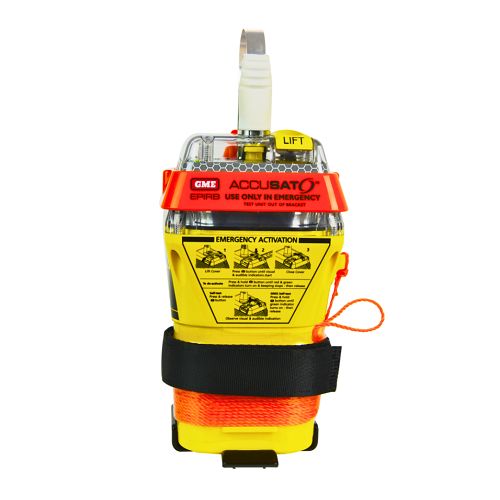
A 10‑year battery EPIRB with integrated GNSS (supports GPS and Galileo), infrared strobe and 121.5 MHz homing signal. Approved for worldwide COSPAS‑SARSAT operation.
Explore →Burke Yachtsman Gear Bag 40L - Shop Now Zip Pay | Tamar Marine Skip to content 59 – 63 Holbrook Street, Invermay Online Shop Open 24/7 Products search Contact us 1300 MARINE $ 0.00 0 Cart Burke Yachtsman Gear Bag 40L $ 79.90 Colour Choose an option Black Blue Black Blue Clear - Burke Yachtsman Gear Bag 40L quantity + Add to cart Enquire about this product SKU BAGB-Y24/BLACK* Category Bags - Sail & Gear A Burke classic and customer favourite, the Yachtsman’s Gear Bag is built tough to handle wet, salty conditions while keeping your gear dry and protected. Made from double coated waterproof…
Explore →
Self-contained, battery-powered plug‑and‑play autopilot designed for standard hydraulic steering systems.
Explore →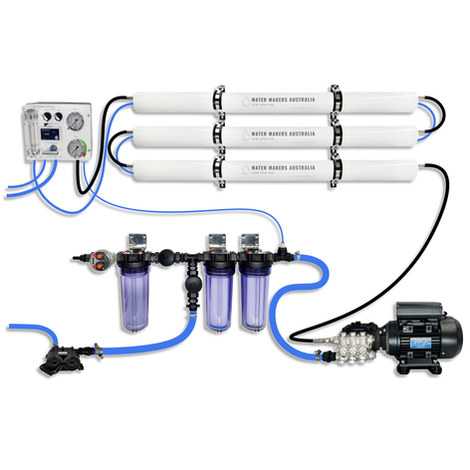
A three-membrane modular watermaker with 200 L/h nominal output and up to 240 L/h family-level marketing, for larger crews and heavy use.
Explore →