Loading this page…

Loading this page…
Sailing club
Community sailing club based in Springhurst, Victoria, running both water-sailing and land-sailing (Blokart) events and activities. The club describes itself as operating in north east Victoria, welcomes visitors, and offers opportunities such as "come and try"/temporary day membership and organised racing and championships.
About
Community sailing club based in Springhurst, Victoria, running both water-sailing and land-sailing (Blokart) events and activities. The club describes itself as operating in north east Victoria, welcomes visitors, and offers opportunities such as "come and try"/temporary day membership and organised racing and championships.
Service area: north east Victoria
Keep exploring
"We sail on land & water" — the motto is a survival story compressed into five words. When this club's lake was drained out from under it in 2010, it refused to die; it bought a land yacht instead. Today North East Windsport Club is one of the very few Australian clubs where a member can race a dinghy on a mountain lake one weekend and a Blokart at 50 km/h down a Gippsland beach the next, and it fields the biggest team in the country at the national Blokart championships.
The membership is scattered across the entire north east — Wangaratta, Benalla, Beechworth, Wandiligong, Albury, Yarrawonga, Echuca, even Paynesville on the Gippsland coast — which makes the club less a local fixture than a regional network. Commodore Ken Horne, who built the trophies for the 2025 nationals with the Wangaratta Men's Shed, typifies the hands-on culture. Fees are deliberately modest: $180 for a family, $20 social, $10 day membership for visitors, with a "remote" category for those living more than 80 kilometres away.
Hand-steered Blokarts give the club an inclusive edge that matters: people with lower-limb disabilities can compete on genuinely equal terms, one of land sailing's quiet strengths. Add the water program — social sailing deliberately aimed at lakes that have no club of their own — and you have a small incorporated association (A0000230W, dating its incorporation back to 1975) punching well above its weight in two disciplines at once. Visitors can front up on a ten-dollar day membership and sample both sides of the club before committing.
Blokarting is where this club teaches best, and its entry point is the "Discover Blokart Land Sailing" come-and-try days run at the Springhurst site. Club karts are available for members and visitors to borrow, so a first-timer can be sailing within the hour, learning sheet control and gust management with hand steering on open grass. Weekly club sailing most Saturdays at Springhurst keeps skills ticking over, while away events — interclub Blokart meets and water-sailing weekends — broaden the diet.
Racing runs under International Blokart Racing Association rules, with Production and Performance classes each split across four weight divisions from light to super-heavy, so competition stays fair regardless of body size. The club maintains a Deed of Gift governing its annual awards, and members are covered at kart events by the Australian Blokart Association's third-party liability insurance, plus Australian Sailing personal accident cover — serious governance for a small volunteer body.
On the water, the philosophy is missionary rather than routine. Rather than weekly racing at a home lake, the club takes its sailing to waterways across the north east — favouring those with no club of their own, Lake Buffalo and Lake Eildon among them — running social sailing days that introduce locals to the sport on their own water. There is no Tackers program and no accredited training centre, and the club does not pretend otherwise; its teaching strength is land sailing, where it has demonstrably produced national-level competitors.
Members chasing structured dinghy instruction are pointed toward neighbouring clubs, keeping NEWC's volunteer energy concentrated where it is genuinely distinctive.
A five-hectare block on the Springhurst Recreation Reserve, at 13 Anzac Road on the corner of Developmental Road in the Rural City of Wangaratta, serves as headquarters. The club rooms are, charmingly, modified shipping containers with attached storage — infrastructure that has moved twice and could move again. The council's Recreation Strategy 2024–2033 notes the club hosting weekly events from the site and judges the facility adequate for current and future demand, a bureaucratic blessing that reflects how lightly the club sits on its landscape.
For championship karting, though, nothing beats a beach, and the club's venue of choice is Waratah Bay in South Gippsland. There, reliable winds sweep across a wide, flat, rock-free sand platform exposed at low tide — ideal land-yacht territory where karts have touched around 50 km/h in strong south-westerlies. The club ran the 2025 Australian National Blokart Championships there and the 2026 Victorian titles.
Water sailing is deliberately nomadic. The club's original home, Lake Mokoan on the Broken River, no longer exists as a lake, so members now spread across the north east's waterways, favouring spots like Lake Buffalo and Lake Eildon that lack their own clubs. It is an unusual sailing geography — alpine-fed reservoirs one month, tidal Gippsland sand the next, mown grass at Springhurst every Saturday — but it suits a membership drawn from hundreds of kilometres around, and it means the club's "venue" is effectively the entire region between the Murray and the Dividing Range.
Springhurst's flat, mown expanse gives the karts room to accelerate in any westerly, and the container buildings keep karts and gear stored securely on site.
The story starts with water that is no longer there. Mokoan Yacht Club formed in 1975 following the creation of Lake Mokoan, a big irrigation storage on the Broken River, and its clubhouse opened on 8 March 1981. For nearly three decades the club sailed the lake with annual regattas — until the lake itself was condemned. Decommissioning was announced in 2009; in January 2010 the Winton Wetlands Committee, together with Goulburn-Murray Water, agreed to a buy-out of the yacht club, and by April the dam wall was breached. The lake returned to wetland, and the sailors lost their sea.
Reinvention came fast and slightly wonderfully. The August 2010 AGM voted the old identity out, Mokoan Yacht Club becoming North East Windsport Club; a first Blokart — a compact New Zealand-designed land yacht — was bought shortly after, and the club vacated the Mokoan site that September, banking the buy-out funds in term deposits reserved under its Strategic Plan for capital works.
November 2010 brought a lease on two hectares beside Wangaratta Airport, where the runway hosted the annual regatta and Blokart state titles; a container clubroom arrived in April 2011 and the first AGM in it followed that June. At the end of 2017 the club shifted again, to five hectares at Springhurst, officially opened on 3 March 2018 by Wangaratta's mayor, Cr Ken Clarke OEM, with the 2019 state titles its christening event.
The Blokart bet paid off. At the 2025 Australian National Blokart Championships — hosted by the club down at Waratah Bay — 39 competitors from around Australia plus a New Zealander raced, and NEWC fielded the largest team, thirteen strong, collecting multiple medals. The 2026 Victorian championships brought further wins, including Garry Percy in Performance Lightweight and Stephen Fanzi in Production Heavyweight. Few clubs anywhere have rebuilt themselves so completely.
A practical, harbour-focused cruising guide to Trial Bay on the New South Wales Mid North Coast. The guide describes the bay’s sheltered and exposed zones, headlands and islands, local seasonal wind and swell patterns, principal sailing areas and recommended anchorages, shore facilities around South West Rocks and Arakoon, navigation and arrival considerations, specific hazards such as the Macleay River entrance, sand movement and reefs, local marine park and heritage restrictions, and three realistic sailing experiences ranging from sheltered family daysails to multi-day island circuits. It’s

Expect the usual IALA-B lateral system (red and green), cardinal and isolated-danger marks, safe-water and special marks, plus harbour-specific fairway buoys, leading/transit marks and exclusion or speed‑limit buoys. Check local harbour charts and Notices to Mariners for exact positions and light characteristics before entry.
Explore →
Local rules, marine‑park zoning and permit needs vary by reserve around South Australia’s coast — check the relevant marine park zoning map and SA Department for Environment and Water (DEW) information for the exact area before you go.
Explore →
Late spring to summer is usually the best time for beginners to start learning to sail in Tasmania because the weather is generally warmer, days are longer and conditions are often more settled. Expect lighter to moderate winds with regular afternoon sea breees in summer, while spring and autumn bring more changeable and sometimes stronger conditions; winter is colder, wetter and typically windier with more fronts and swell.
Explore →
Pick a stable, simple, forgiving dinghy with a single sail or basic sloop rig, affordable handling and easy maintenance—ideally one with a local class or school nearby so you can access coaching and spare parts.
Explore →
Practical guidance for recreational sailors planning day trips or short cruises in Moreton Bay — local weather patterns, tides, safe anchorages, common hazards, equipment checklists and sensible trip planning for islands such as Moreton, North Stradbroke and the smaller bayside islands.
Explore →
A practical, Australia-focused guide for planning and sailing around the Whitsunday Islands: weather and seasons, navigation and anchoring, moorings and parks, provisioning and charters, safety and common mistakes, plus checklists and next steps.
Explore →
A practical guide for new sailors on picking the right Australian sailing club: training, boat access, racing, social fit, costs and the key questions to ask before joining.
Explore →A practical guide for recreational sailors planning visits to Albany and King George Sound. Covers the main anchorage areas, typical local weather patterns, tidal and current considerations, navigational hazards, on-the-water etiquette and a pre-departure checklist to help you plan a safe passage and enjoyable stopover
Explore →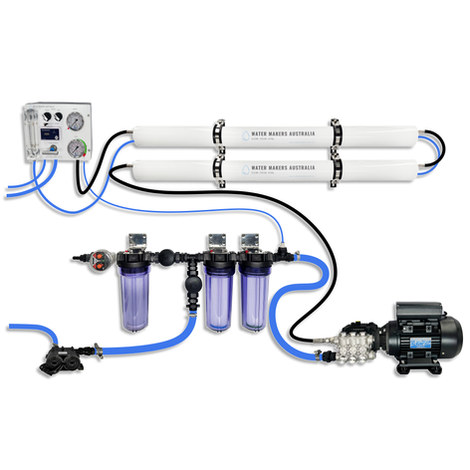
A two-membrane modular watermaker with 140 L/h nominal output, aimed at families and liveaboards that want more water per run.
Explore →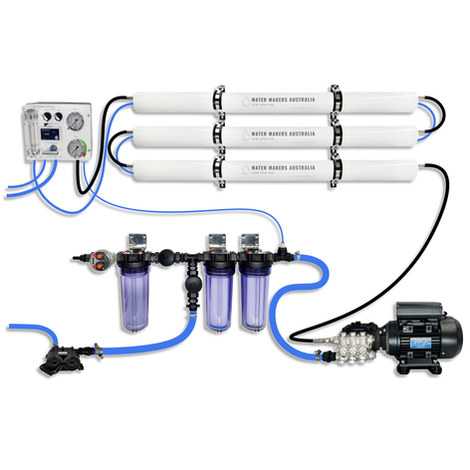
A three-membrane modular watermaker with 200 L/h nominal output and up to 240 L/h family-level marketing, for larger crews and heavy use.
Explore →Burke Yachtsman Gear Bag 40L - Shop Now Zip Pay | Tamar Marine Skip to content 59 – 63 Holbrook Street, Invermay Online Shop Open 24/7 Products search Contact us 1300 MARINE $ 0.00 0 Cart Burke Yachtsman Gear Bag 40L $ 79.90 Colour Choose an option Black Blue Black Blue Clear - Burke Yachtsman Gear Bag 40L quantity + Add to cart Enquire about this product SKU BAGB-Y24/BLACK* Category Bags - Sail & Gear A Burke classic and customer favourite, the Yachtsman’s Gear Bag is built tough to handle wet, salty conditions while keeping your gear dry and protected. Made from double coated waterproof…
Explore →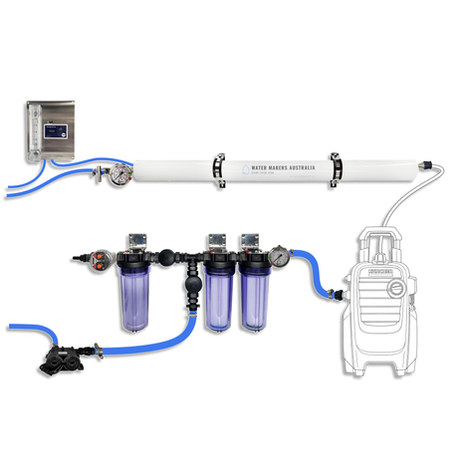
A one-membrane modular marine watermaker with 80 L/h nominal output, remote stainless control panel, standard consumables and direct Australian support.
Explore →