Loading this page…

Loading this page…
Sailing club
North Queensland Cruising Yacht Club (NQCYC) is the keelboat-focused sailing club based on Port Denison in Bowen, Queensland. Founded in 1950 as a regional cruising and offshore racing club, NQCYC remains best known for its passage racing and for co‑organising the Whitsunday Offshore Yacht Racing Circuit. The club operates from a waterfront site on Starboard Drive overlooking Port Denison and runs harbour sailing and community-facing sailing activity through the season.
About
North Queensland Cruising Yacht Club (NQCYC) is the keelboat-focused sailing club based on Port Denison in Bowen, Queensland. Founded in 1950 as a regional cruising and offshore racing club, NQCYC remains best known for its passage racing and for co‑organising the Whitsunday Offshore Yacht Racing Circuit. The club operates from a waterfront site on Starboard Drive overlooking Port Denison and runs harbour sailing and community-facing sailing activity through the season.
Service area: Bowen / Port Denison, Whitsundays region (North Queensland)
Keep exploring
When Bowen sailors gathered for a public meeting in March 1950, they set out to create something their town had never had: a dedicated cruising yacht club for North Queensland, headquartered at Bowen and affiliated with the Queensland Cruising Yacht Club. The ambition on the table that night was anything but modest — harbour contests, weekend passages across to the Whitsunday Passage, and, in time, genuine ocean racing. More than seventy years on, the North Queensland Cruising Yacht Club remains the town's keelboat and cruising institution, an Australian Sailing affiliated club that grew directly out of the post-war surge of enthusiasm for offshore competition, when the Sydney to Hobart and Brisbane to Gladstone contests had captured the imagination of coastal communities up and down the eastern seaboard.
The founding fleet tells its own story about the kind of sailing the club was built for. Alf Schultz's Empress, Stan Roberts' Amatrix and Jack Ruddle's Lorelei formed the cruising core, alongside five Linton Hope Raters, while the restricted yacht Stonehaven was being converted into a thirty-foot cruiser. These were boats meant to go somewhere, and that spirit of passage-making still anchors the club's identity today.
Based on the harbour at Bowen, looking out over Port Denison and Edgecumbe Bay towards the northern Whitsundays, NQCYC occupies a stretch of Queensland coast that rewards exactly the sort of adventurous sailing its founders imagined. Its best-known present-day role is as a co-organiser of the Whitsunday Offshore Yacht Racing Circuit, a three-day event that strings together Bowen, Airlie Beach, Hamilton Island and Mackay across a single long weekend — a modern echo of the weekend Whitsunday passages written into the club's founding resolution.
The North Queensland Cruising Yacht Club is, at heart, a keelboat and cruising organisation rather than a formal sail-training operation, and its program record reflects that focus. The MySailing national club directory classifies it as a yacht club with keelboats as its primary class, and explicitly records that no kids' learn-to-sail offering is listed. No Discover Sailing Centre accreditation or structured junior and adult tuition scheme is advertised, so families seeking coached dinghy pathways in the Bowen area should contact the club directly for current options.
What the club does deliver, and what sets its calendar apart, is genuine offshore racing in partnership with its neighbours. NQCYC is one of four clubs behind the annual Whitsunday Offshore Yacht Racing Circuit, working alongside Whitsunday Sailing Club, Mackay Sailing Club and the Cruising Yacht Club of Hamilton Island. The circuit runs over the Queen's Birthday long weekend at the start of October and unfolds in three point-to-point stages: the opening leg from Bowen to Airlie Beach, a second day from Airlie Beach across to Hamilton Island, and a closing passage from Hamilton Island to Mackay.
For a club of NQCYC's size, co-hosting a multi-day event of that geographic sweep is a serious organisational commitment, and it preserves the passage-racing DNA written into the club at its 1950 formation.
Beyond the circuit, contact the club for its current weekly racing calendar. Historically, though, the club's racing brief was clear from day one: harbour contests at Bowen, weekend events across to the Whitsunday Passage, and genuine ocean racing as the long-term goal. That founding agenda, reported by the Bowen Independent in March 1950, remains the most reliable guide to the club's sailing character — a small coastal club whose sights were always fixed beyond the heads.
Bowen sits roughly midway along Queensland's tropical coast, and the club's home ground is the harbour of Port Denison, opening onto the broad sweep of Edgecumbe Bay. Contemporary accounts place the yacht club on the waterfront stretching from the Port Denison pier towards the Flagstaff Hill lookout above Point Dalrymple, giving it a position that looks straight out at the bay and, beyond it, the island-dotted waters of the Whitsunday Passage region. It is cruising country in the truest sense: sheltered harbour water close to home for short-course sailing, and a world-famous island cruising ground within weekend reach for anything with a keel and a cabin.
The choice of Bowen as headquarters was deliberate. When the founding meeting convened in 1950, the proposal was explicit about running weekend races into the Whitsunday Passage, and the town's harbour offered the natural launching point. The sheltered anchorage between the pier and Point Dalrymple gives keelboats secure water in most conditions, while the run north-west towards Airlie Beach and the Whitsunday islands has been the club's signature sailing direction ever since — the first leg of the modern Whitsunday Offshore Yacht Racing Circuit follows exactly that line from Bowen to Airlie Beach.
The club is based at 1 Starboard Drive, Bowen; for visitor and facility enquiries, call (07) 4786 3490. Historically, one physical detail is well documented: the clubhouse established in the early 1950s was a relocated former WRAAF Mess Hall, funded by debentures raised among members, and the Queensland Heritage Register notes it as one of eleven Queensland sailing clubhouses of the 1940s and 1950s erected with donated materials and volunteer labour. Even without a current facilities list, that heritage context says much about the club's fabric — a working sailors' clubhouse on a working tropical harbour, oriented towards the Whitsundays it was founded to reach.
The club's origin story is unusually well documented for a small regional organisation, thanks largely to a surviving report in the Bowen Independent dated 10 March 1950. That account records a public meeting convened to establish a cruising yacht club for North Queensland, headquartered at Bowen and affiliated with the Queensland Cruising Yacht Club, with a program of harbour racing, weekend contests across to the Whitsunday Passage and, in time, ocean events. The timing was no accident: the immediate post-war years had seen ocean racing explode in popularity, and an earlier effort to lure a Brisbane to Bowen race north had fallen through, with the Brisbane to Gladstone event substituted in its place — a disappointment that only sharpened local resolve to build something of their own.
The founding fleet was small but real: the cruising yachts Empress, Amatrix and Lorelei, five Linton Hope Raters, and the restricted yacht Stonehaven then being rebuilt as a thirty-foot cruiser. A central figure in the early club was Henry Teitzel, editor of the Bowen Independent and later appointed OBE in 1975, who served as a founding member and first commodore. Through his role on the Harbour Board he also helped secure the club's harbourfront site — a reminder of how entwined regional sailing clubs once were with the civic life of their towns.
By 1952 the club had its own premises, achieved in the resourceful style of the era: a surplus WRAAF Mess Hall was moved onto the site and the project financed through member debentures. The Queensland Heritage Register counts that building among eleven Queensland sailing clubhouses of the 1940s–50s put up with donated materials and sweat equity. The club's story has also been formally captured in print — From Edgecumbe's Shore: A History of the North Queensland Cruising Yacht Club is catalogued by the State Library of Queensland, giving the club a published historical record that many larger organisations lack.
The present-day picture is thinner in the public record. No current commodore, membership figure or full racing calendar beyond the Whitsunday circuit is published. What is documented is continuity of purpose: a club founded to take Bowen yachts across to the islands still co-runs a three-day circuit doing precisely that each October, more than seven decades after the founders first wrote the Whitsunday Passage into their charter.
American River (Kangaroo Island, SA) is a small, sheltered inlet and township on the north‑eastern side of Kangaroo Island that acts as a calm staging point for cruising the eastern part of the island and for short hops through Backstairs Passage. It’s distinctive for its protected anchorage inside Eastern Cove and the adjacency of Pelican Lagoon — a shallow, ecologically important lagoon with sanctuary zoning — which shapes how and where boats can move. The area suits sheltered day sailing, weekend cruising and short coastal passages; it’s appropriate for trailer sailors, small cruisers and a

Use ramps and beaches with respect for local conditions: check ramp layout, tide and swell, wind direction, vehicle access and crowding; prepare boat and crew before you launch or retrieve; and follow local signage, courtesy and safety practices. Specifics vary by ramp and beach, so confirm details for the exact site before you go.
Explore →
Write a one‑page plan with the who/what/when/where/how of your trip, keep a copy on board and leave the main copy with a responsible person ashore (and optionally with your club, marina office or local volunteer rescue service).
Explore →
Before your first sail in South Australian waters check the weather and tide, make sure the boat and safety equipment are fit for the trip, confirm local rules and any area-specific hazards, and tell someone your plan.
Explore →
Plan as a chain of conservative daily legs tied to your boat’s real-world fuel and speed in the expected sea state, with confirmed primary and alternate anchorages/berths, fuel legs and back-up fuel options, and a documented emergency/diversion plan (comms, tow and med-evac). Build tidal and weather gates into each leg and carry chart and comms redundancy.
Explore →
A practical guide for new sailors on picking the right Australian sailing club: training, boat access, racing, social fit, costs and the key questions to ask before joining.
Explore →
A practical, Australia-focused guide for planning and sailing around the Whitsunday Islands: weather and seasons, navigation and anchoring, moorings and parks, provisioning and charters, safety and common mistakes, plus checklists and next steps.
Explore →Practical guide for recreational sailors planning a coastal cruise from Sydney north to the Queensland border. Covers route options, weather and tidal considerations, planning checklists, common hazards, anchorages and practical examples for a safe, enjoyable trip.
Explore →A practical guide for recreational sailors planning visits to Albany and King George Sound. Covers the main anchorage areas, typical local weather patterns, tidal and current considerations, navigational hazards, on-the-water etiquette and a pre-departure checklist to help you plan a safe passage and enjoyable stopover
Explore →Burke Yachtsman Gear Bag 40L - Shop Now Zip Pay | Tamar Marine Skip to content 59 – 63 Holbrook Street, Invermay Online Shop Open 24/7 Products search Contact us 1300 MARINE $ 0.00 0 Cart Burke Yachtsman Gear Bag 40L $ 79.90 Colour Choose an option Black Blue Black Blue Clear - Burke Yachtsman Gear Bag 40L quantity + Add to cart Enquire about this product SKU BAGB-Y24/BLACK* Category Bags - Sail & Gear A Burke classic and customer favourite, the Yachtsman’s Gear Bag is built tough to handle wet, salty conditions while keeping your gear dry and protected. Made from double coated waterproof…
Explore →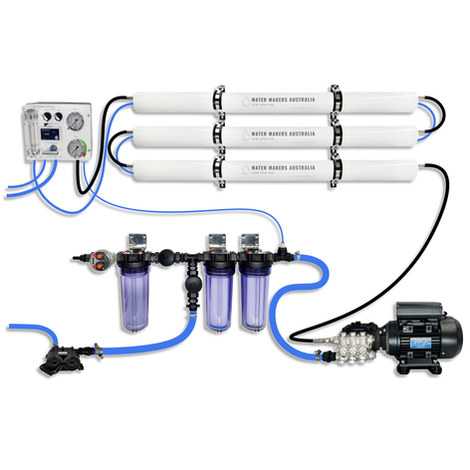
A three-membrane modular watermaker with 200 L/h nominal output and up to 240 L/h family-level marketing, for larger crews and heavy use.
Explore →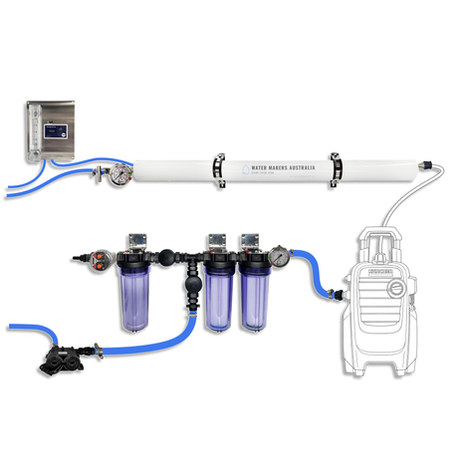
A one-membrane modular marine watermaker with 80 L/h nominal output, remote stainless control panel, standard consumables and direct Australian support.
Explore →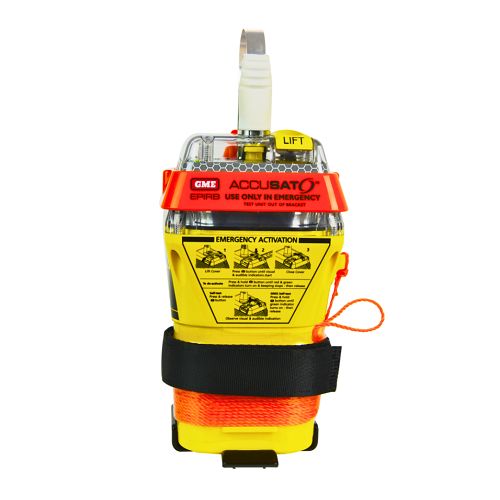
A 10‑year battery EPIRB with integrated GNSS (supports GPS and Galileo), infrared strobe and 121.5 MHz homing signal. Approved for worldwide COSPAS‑SARSAT operation.
Explore →