Loading this page…

Loading this page…
Sailing club
The Ocean Racing Club of Victoria (ORCV) is a non-profit sailing club based in Albert Park, VIC that organises ocean and bay racing programs, events and championships (e.g. Melbourne–Hobart Westcoaster, Port Fairy, Apollo Bay, Coastal Sprints and winter series). The club also runs a range of training and safety courses for skippers and crew, including Safety & Sea Survival courses, practical marine radio workshops, navigator/weather courses and the KISS (women’s) training program. Contact details listed include a clubhouse address at 3 Aquatic Drive, Albert Park VIC, a phone number and an email address.
About
The Ocean Racing Club of Victoria (ORCV) is a non-profit sailing club based in Albert Park, VIC that organises ocean and bay racing programs, events and championships (e.g. Melbourne–Hobart Westcoaster, Port Fairy, Apollo Bay, Coastal Sprints and winter series). The club also runs a range of training and safety courses for skippers and crew, including Safety & Sea Survival courses, practical marine radio workshops, navigator/weather courses and the KISS (women’s) training program. Contact details listed include a clubhouse address at 3 Aquatic Drive, Albert Park VIC, a phone number and an email address.
Service area: Albert Park, VIC
Keep exploring
Membership here is measured in sea miles rather than locker keys. The Ocean Racing Club of Victoria is a not-for-profit that draws its members from the major yacht clubs across the state and, by deliberate design, runs no clubhouse and no marina — it exists to organise ocean racing, not to compete with the clubs its members belong to. Its stated objectives are to develop and expand the sport, coordinate and control every major ocean race run within or starting from Victoria, serve as a centre of knowledge, and keep ocean racing exciting but intrinsically safe.
That remit makes the ORCV the closest thing Victorian offshore sailing has to a governing engine room. An Australian Sailing member club, affiliated through Yachting Australia to the sport's international federation, it runs a ladder of events from Category 5 bay races through Category 3 coastal sprints to Category 2 offshore passages — Melbourne to King Island, Port Fairy, Devonport and, above all, the Melbourne to Hobart Westcoaster, 435 nautical miles down Tasmania's western edge. Double-handed and shorthanded divisions, capped at four crew with autohelms welcome, run through the entire program, reflecting how offshore sailing is actually evolving.
The character is practical and sea-going rather than social-club polish. Workshops happen in borrowed rooms at Docklands and partner venues. What the club offers instead of a bar is entry into a community of passage-makers: crews who have crossed Bass Strait together, veterans of ten or more Westcoasters, and the race management expertise that keeps 100-boat fleets safe when Bass Strait turns mean.
"Beyond the Bay" is the program that defines this club's teaching, and nothing else in Victorian sailing is quite like it. Over several months, cruisers and racers work through workshops on weather, navigation and radio, put theory into practice on an overnight Port Phillip sail, and finish with a mentored passage across Bass Strait — a genuine offshore crossing with experienced guidance. ORCV membership is bundled in for non-members, so graduates land inside the club's racing community with a qualification of experience behind them. Workshops run at Docklands and partner venues including Wesley College St Kilda, the Sandringham Coastguard and Sandringham Yacht Club.
Safety education is the other pillar. The club runs Safety & Sea Survival courses under the Australian Sailing banner, plus refreshers — mandatory currency for serious offshore racing — alongside a spread of specialist offerings: the KISS Women's Training Program and its KISS Alive follow-on, a Foredeck Essentials course, Tactical Navigator sessions and even a Rip Tour of Port Phillip Heads to demystify the bay's notorious entrance.
Racing itself is structured as a development pathway. Novice races and winter passage races to Geelong and Blairgowrie ease crews in; the WHNR destination race to Queenscliff, where women take the helm, navigate and run the radio, builds skills across whole crews; three Coastal Sprints of around 55 nautical miles in Bass Strait and an end-of-summer Apollo Bay destination race step up to Category 3; and three championship series — Coastal, Offshore and Double-Handed Offshore — give ambitious campaigns something to chase. The Melbourne to Stanley race doubles as a qualifying event for the Sydney Hobart as well as both Melbourne to Hobart races, plugging Victorian crews into the national offshore circuit.
There is no clubhouse to visit, and that is the point. The ORCV's "venue" is a race management model that spreads itself across the Victorian coast: starts at Station Pier in Port Melbourne, at Queenscliff or off Portsea Pier, finish lines from Geelong to Hobart, and race officers, safety protocols and protest committees supplied as the shared infrastructure of the sport. Coastal and offshore starts happen at Drapers Reef, just inside the Heads, timed about an hour before slack water so fleets ride the tide through the Rip; offshore starts typically fall late in the afternoon or at night around public holidays, sending boats into Bass Strait with the sun behind them.
The water is the serious kind. The Westcoaster course runs 435 nautical miles from Portsea down Tasmania's west coast through Bass Strait and the Southern Ocean to a Derwent River finish. The 135-mile Port Fairy race leaves Queenscliff, tracks south-west past Torquay and Anglesea, on by Lorne and Apollo Bay, then rounds Cape Otway and turns north-west past Moonlight Head, Port Campbell and the Twelve Apostles — crossing the boundary where deep Southern Ocean swell meets the shallower Bass Strait, a junction that in one past race produced 40 to 50 knots gusting 70 and a trail of retirements.
Even the inshore work has scale. The Cock of the Bay, a roughly 21-mile dash from Station Pier past St Kilda, Elwood, Brighton and Sandringham toward Mornington or Blairgowrie, drew a record 112 yachts and 618 crew in 2020. This is a club whose facilities are the tide book, the race course and the sea itself.
A group of sailors formed the Cruising Yacht Club of Victoria in 1949; it became the Ocean Racing Club of Victoria in 1972 and incorporated in 1986. Its signature race was born that same pivotal year. The Melbourne to Hobart "Westcoaster" was conceived by ORCV Commodore Stan Gibson of Hobson's Bay Yacht Club and Dr Joe Cannon of the Derwent Sailing Squadron as an alternative for Victorian and South Australian sailors who wanted to reach Hobart without going via Sydney — or, as founding race chairman Donald Trescowthick put it, "The boys go down the east, and the men go down the west."
The first running, on Boxing Day 1972, started off Queenscliff at 1.30 pm with 15 entries at $20 a head. Peter Riddle's Mary Blair — with future Incat founder Bob Clifford aboard — took line honours in two days, sixteen hours and change, while the Heemskerk Trophy, donated by Trescowthick, went to John Marion's Ailsa on corrected time (later Sir Donald, KBE), who chaired the race until 1991 and whose companies poured more than $2 million into sponsorship.
The Sovereign Series — Cock of the Bay, Westcoaster, King of the Derwent — followed at his suggestion, and the start moved to Portsea after two years. Colour accumulated: Pro Hart hand-painted gold-plated silver ingots as prizes from 1976; Jim and Neil Searle's Hot Prospect strung together four straight handicap wins from 1977; the 25th-anniversary 1996 race drew a fleet of 74 (one club page says 65); in the brutal 1999 edition only Nigel Jones's Cadabarra 7 finished, from 20 starters; and Geoff Wood's three-masted schooner Ile Ola, complete with piano, logged 15 Westcoasters.
Justin Brenan's Alien has won overall five times between 2009 and 2025, and Matthew Short's Shortwave holds the monohull record from 2008.
The Rudder Cup lineage reaches back even further, to the nation's first ocean race from Geelong to Stanley in 1907 — while the Cock of the Bay feeder has run since 1979 and is billed by the club as perhaps the Southern Hemisphere's biggest one-day race sailed from a single start. The 50th Westcoaster ran in 2022.
Apollo Bay is a small working harbour on Victoria’s Great Ocean Road where sheltered inshore sailing meets the Southern Ocean. The character is a mix of protected harbour berths and an exposed open coast: pleasant day-sails and sheltered weekend cruising inside the bay, with demanding coastal passages immediately offshore where south‑westerly swell and strong winds from the Southern Ocean dominate. It suits coastal cruisers, trailer sailors who launch at the ramp, and experienced coastal sailors who understand bar and swell behaviour; it is not a casual open‑ocean anchorage for unprepared or

Plan passages across Spencer Gulf or to Kangaroo Island by basing fuel on your boat’s actual consumption plus a generous reserve, choosing sensible staging/stop options that match your boat and crew, and prioritising shelter and weather windows (gale fronts, strong winds and tidal streams can make the gulf uncomfortable or unsafe). Confirm fuel availability, safe anchorages or marinas on your route, and check up-to-date local weather, tide and navigation information before you go.
Explore →
Late spring to summer is usually the best time for beginners to start learning to sail in Tasmania because the weather is generally warmer, days are longer and conditions are often more settled. Expect lighter to moderate winds with regular afternoon sea breees in summer, while spring and autumn bring more changeable and sometimes stronger conditions; winter is colder, wetter and typically windier with more fronts and swell.
Explore →
Taking pets between Australian states and into marinas or national parks is governed by state and territory biosecurity/quarantine rules, local council and marina policies, and the management rules of parks. Requirements vary by jurisdiction and by the species of animal, so check the relevant state/territory biosecurity office, the park management agency and the marina operator before you travel.
Explore →
Tasmania has a mix of state marine parks, local harbour bylaws and environmental protections that affect where and how you anchor—so check the specific area’s rules before you go, aim to use designated anchorages or soft seabeds, and follow standard anchoring and biosecurity good practice.
Explore →
A practical guide for new sailors on picking the right Australian sailing club: training, boat access, racing, social fit, costs and the key questions to ask before joining.
Explore →A concise, practical introduction to the essential parts of a recreational sailing boat for beginners in Australia. Covers hull, deck, rigging, sails, steering, below-decks spaces and safety equipment, with simple explanations, common mistakes and a pre-decast checklist to help new sailors communicate and get underway.
Explore →
A practical, Australia-focused guide for planning and sailing around the Whitsunday Islands: weather and seasons, navigation and anchoring, moorings and parks, provisioning and charters, safety and common mistakes, plus checklists and next steps.
Explore →A practical guide for recreational sailors planning passages to, from or around Eden and Twofold Bay. Covers sheltered anchorages, shore facilities, local weather and tidal considerations, preparing for Bass Strait conditions and a focused equipment and safety checklist.
Explore →Burke Yachtsman Gear Bag 40L - Shop Now Zip Pay | Tamar Marine Skip to content 59 – 63 Holbrook Street, Invermay Online Shop Open 24/7 Products search Contact us 1300 MARINE $ 0.00 0 Cart Burke Yachtsman Gear Bag 40L $ 79.90 Colour Choose an option Black Blue Black Blue Clear - Burke Yachtsman Gear Bag 40L quantity + Add to cart Enquire about this product SKU BAGB-Y24/BLACK* Category Bags - Sail & Gear A Burke classic and customer favourite, the Yachtsman’s Gear Bag is built tough to handle wet, salty conditions while keeping your gear dry and protected. Made from double coated waterproof…
Explore →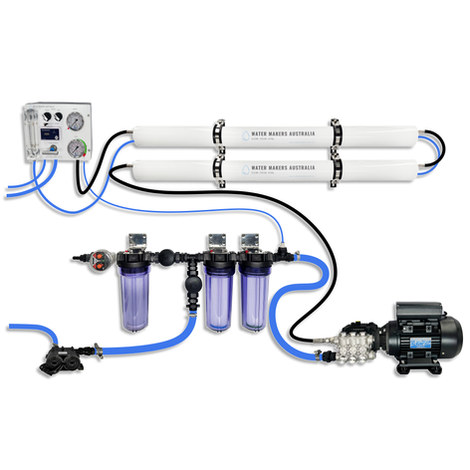
A two-membrane modular watermaker with 140 L/h nominal output, aimed at families and liveaboards that want more water per run.
Explore →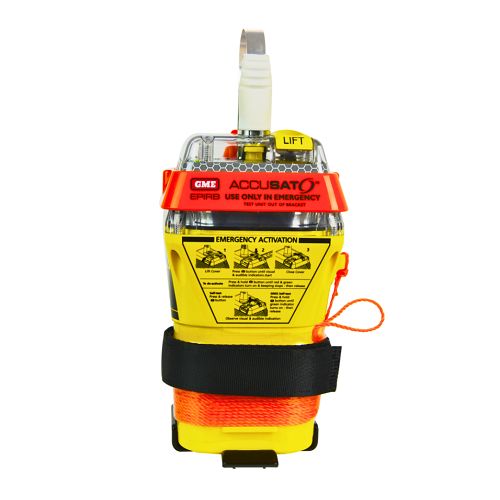
A 10‑year battery EPIRB with integrated GNSS (supports GPS and Galileo), infrared strobe and 121.5 MHz homing signal. Approved for worldwide COSPAS‑SARSAT operation.
Explore →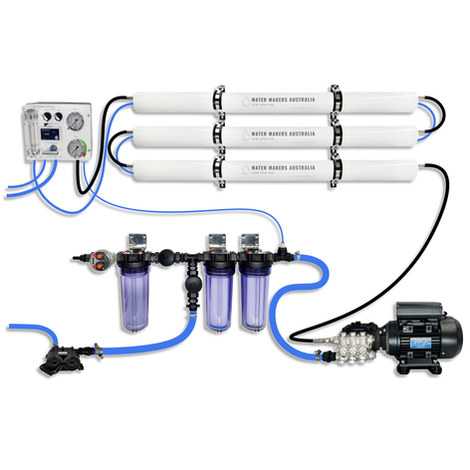
A three-membrane modular watermaker with 200 L/h nominal output and up to 240 L/h family-level marketing, for larger crews and heavy use.
Explore →