Loading this page…

Loading this page…
Sailing club
Ocean Reef Sea Sports Club is a multi‑sport sea‑sports club based at the redeveloped Ocean Reef Marina on Perth’s northern coastline. Formed from a community fishing competition in 1973, the club supports angling, diving, power boating and a sailing section that runs trailer sailer and keelboat racing, social activities and shared clubhouse facilities overlooking the marina and coastal pool.
About
Ocean Reef Sea Sports Club is a multi‑sport sea‑sports club based at the redeveloped Ocean Reef Marina on Perth’s northern coastline. Formed from a community fishing competition in 1973, the club supports angling, diving, power boating and a sailing section that runs trailer sailer and keelboat racing, social activities and shared clubhouse facilities overlooking the marina and coastal pool.
Service area: Ocean Reef / Perth Northern Beaches, WA
Keep exploring
Ocean Reef Sea Sports Club is a multi‑discipline sea‑sports organisation based at Ocean Reef Marina in the northern suburbs of Perth. The club’s clubhouse, marina access and facilities are shared by sections for angling, diving, power boating and a sailing section that runs trailer sailer and keelboat racing and social sailing activities.
The club positions itself as a community‑facing sea sports centre rather than a traditional yacht club: facilities and programming are designed to serve a broad range of users of Perth’s northern coastline, and the sailing section operates alongside the club’s other marine activities from the single two‑storey clubhouse and adjacent hardstand and ramps.
Honesty first: unlike many clubs in this book, Ocean Reef does not advertise a formal, accredited learn-to-sail program, and no structured Australian Sailing training pathway could be verified on its sailing pages. What the sailing section does promise newcomers is encouragement and support, with an explicit welcome for those keen to learn. In practice, aspiring sailors in this part of Perth would typically pick up certified beginner skills at a dedicated training centre — several operate along the metropolitan coast — and then bring those skills to a club like this, where crewing is the traditional route in.
The club makes that route easy: new skippers can reach the section through a dedicated sailing email address, and crewing opportunities are coordinated through a separate crew mailbox.
Structured skill-building does happen elsewhere in the club, however. The dive section organises regular club dives and training sessions throughout the year, alongside club vacations and social activities — a genuine education program, simply conducted below the surface rather than above it. The power boating section, meanwhile, gives first-time boat owners a welcoming, family-oriented pathway into boating via its events calendar, an informal but valuable grounding in boat handling and seamanship.
For sailors, the development pathway runs through the racing itself. Summer and winter series, usually on Saturdays, mix regular races with special trophy events, so new crew learn their trade across a full calendar of conditions aboard trailer sailers and keelboats. In a club where the sailing fleet ranges roughly from twenty to thirty feet, there is room aboard for beginners willing to learn on the rail — the oldest sailing school there is. Those wanting formal certificates can pursue them through the wider network of accredited centres along the Perth coast, then come home to race.
Ocean Reef Marina — formerly the Ocean Reef Boat Harbour — stands between Sorrento and Mullaloo Beaches on Perth's northern coastline, and it has been the club's home since the harbour first opened in December 1979. The setting is open-coast Indian Ocean: sailing here means racing, cruising and regattas along the northern beaches, a tradition the club counts as part of its identity across more than four decades. This is real sea sailing, with the marina's protection behind and the ocean in front.
The fleet reflects the coast. The sailing section centres on trailer sailer yachts between about twenty and thirty feet, kept on hardstand alongside the clubhouse a short run from the marina's boat ramps, and they are joined on the start line by keelboats from neighbouring Hillarys and Mindarie marinas. Racing runs across both summer and winter series, typically on Saturdays, blending regular club races with special trophy events that keep the calendar varied through the year. Crewing is organised with a practicality typical of the club: dedicated email contacts connect new skippers and aspiring crew with the section.
The marina around them has just been transformed. A $272.3 million WA State Government redevelopment has delivered boat pens and ramps plus the first metropolitan coastal pool in Perth, and the club's new two-storey clubhouse — shared with the Joondalup City RSL — crowns it. The building offers improved dining and bar spaces plus amenities for every section, function catering for up to 180 guests, and a first-floor outdoor deck looking out over the coastal pool and the ocean beyond.
From the hardstand where the trailer sailers rest to the deck where members gather afterwards, the club now occupies one of the most modern marine precincts in the country, on a coastline it has sailed since 1973.
The club's roots predate its formation by decades. Beach shacks dotted the dunes at Hillarys and Whitfords from around 1933; the land changed hands in 1968, and the shacks came down four years later as Whitfords opened up to housing. Out of that displaced beach community came the new club: a first fishing competition on 29 July 1973, a first general meeting on 9 August 1973 at Springfield School in Kallaroo, and, that December, a first surf-cat sailing event that attracted sixty to seventy boats. Weekly sailing events followed from 1974.
Community building came naturally. July 1975 saw members establish the Whitfords Volunteer Sea Rescue Group, and club lobbying successfully kept development off West Coast Drive's western verge at the Nodes. The big prize was a harbour: government approval for the Ocean Reef Boat Harbour was signed on 25 November 1978, works got under way on 22 January 1979, and WA Premier Sir Charles Court opened it on 2 December that year. Clubrooms followed between January and July 1980, officially opened on 19 July — the club's seventh birthday — with first employees Kevin and Vivian Gillespie living on site as bosun and caretaker.
Maturity arrived in stages: a revised constitution at the August 2002 AGM and, that same year, scheme water finally connected — twenty-two years after the clubhouse was built. The boldest chapter is the most recent. Work on a new two-storey clubhouse started in 2024 within the wider Ocean Reef Marina redevelopment, backed by $6.5 million in funding — $1.75 million of it the club's own, with $3 million contributed by the City of Joondalup. The old clubhouse came down in 2025, and by May 2026 the club was operating from its new home beside the new Marine Rescue Whitfords headquarters — fifty-odd years after a fishing competition on a beach started it all.
Ashmore Reef is a remote, uninhabited oceanic reef and low-lying island group in the Timor Sea that offers a stark, conservation-led sailing environment rather than typical recreational cruising. It is distinctive for its exposed coral reef, vegetated sand islands and strong legal protections, including tightly controlled access and traditional Indonesian fishing arrangements. Visiting from a recreational yacht is logistically challenging, subject to regulatory limits, and suited only to well-prepared offshore passages or research/management charters rather than casual day sails.

Pick a protected bay, estuary or river reach where you can rig, launch and arrive on calm water within a short, sheltered transit; choose a site with a good ramp or jetty, clear recovery options and a nearby sailing club, marina or commercial operator for local knowledge and help.
Explore →
Write a one‑page plan with the who/what/when/where/how of your trip, keep a copy on board and leave the main copy with a responsible person ashore (and optionally with your club, marina office or local volunteer rescue service).
Explore →
Practise early, repeatable depowering (reefing and flattening), controlled sail-trim changes and deliberate, crew-led tacks/gybes so you keep heel, steerage and speed in a safe window as the Fremantle Doctor builds. Rehearse routines in sheltered water until they are second nature—clear commands, disciplined weight moves to windward and aft, and a quick, practised reef routine will prevent panicked mistakes.
Explore →
Expect very different seasonal systems across Western Australia: the south‑west (Perth to Albany) has a strong summer afternoon sea breeze (the “Fremantle Doctor”) and winter westerly fronts, while northern WA follows a wet/dry monsoonal cycle with strong seasonal onshore winds, thunderstorms and cyclone risk in the wet season. Local headlands, estuaries and tidal flows often change what you actually feel on the water, so learn the local timing and sheltered venues first.
Explore →
A practical guide for new sailors on picking the right Australian sailing club: training, boat access, racing, social fit, costs and the key questions to ask before joining.
Explore →A practical guide to the coastal weather systems that affect sailing along Western Australia's coast, focusing on the Fremantle Doctor, local sea breezes, and linked coastal phenomena. Explains how these systems form, when they tend to occur, how they influence boat handling and passage planning, common mistakes, and a
Explore →
A practical guide for recreational sailors planning day sails or short coastal cruises in the southern section of the Great Barrier Reef. Covers prevailing conditions, route planning, anchorages, navigation, reef etiquette and safety considerations specific to this region.
Explore →
A practical, Australia‑focused introduction to sailing: key terms, common boat types, basic manoeuvres, where to learn, licence and club options, and planning your first trips with safety and local conditions in mind.
Explore →Burke Yachtsman Gear Bag 40L - Shop Now Zip Pay | Tamar Marine Skip to content 59 – 63 Holbrook Street, Invermay Online Shop Open 24/7 Products search Contact us 1300 MARINE $ 0.00 0 Cart Burke Yachtsman Gear Bag 40L $ 79.90 Colour Choose an option Black Blue Black Blue Clear - Burke Yachtsman Gear Bag 40L quantity + Add to cart Enquire about this product SKU BAGB-Y24/BLACK* Category Bags - Sail & Gear A Burke classic and customer favourite, the Yachtsman’s Gear Bag is built tough to handle wet, salty conditions while keeping your gear dry and protected. Made from double coated waterproof…
Explore →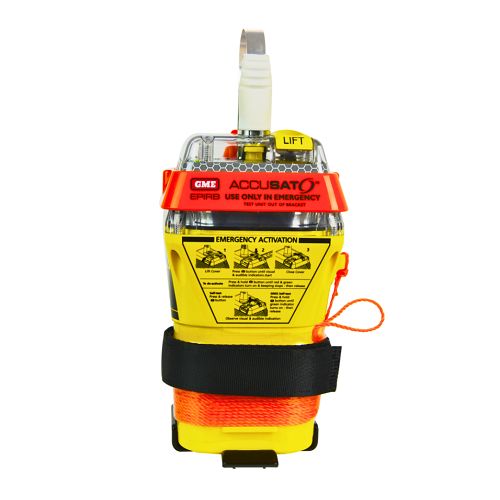
A 10‑year battery EPIRB with integrated GNSS (supports GPS and Galileo), infrared strobe and 121.5 MHz homing signal. Approved for worldwide COSPAS‑SARSAT operation.
Explore →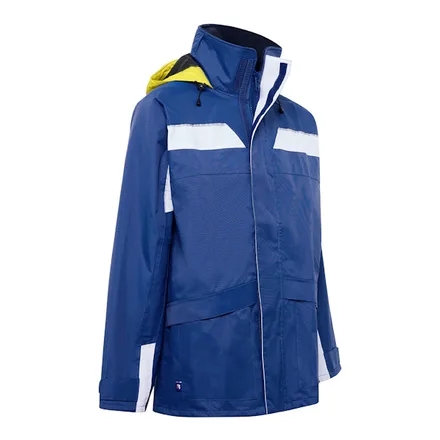
Burke Super Dry Jacket in Blue. Product codes shown: DRY228-XS, DRY228-S, DRY228-M, DRY228-L, DRY228-XL, DRY228-XXL. Available sizes listed: XS, S, M, L, XL, XXL.
Explore →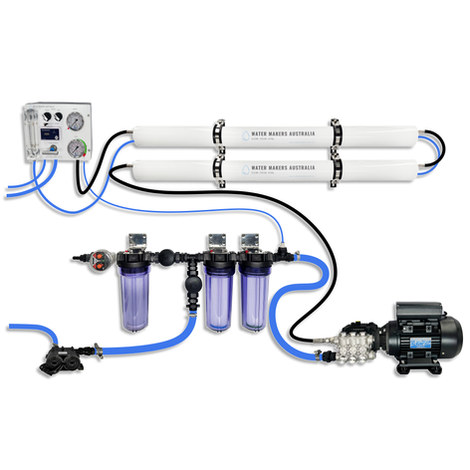
A two-membrane modular watermaker with 140 L/h nominal output, aimed at families and liveaboards that want more water per run.
Explore →