Loading this page…

Loading this page…
Sailing club
Ord River Sailing Club is a small dinghy club based in the Kununurra / Lake Argyle area of Western Australia’s East Kimberley. The club sails on Lake Argyle and nearby Lake Kununurra and has a documented history of Tasar dinghy racing from the mid-1980s. In 2026 the organisation re‑emerged with community activation events and formal affiliation with the national body, signalling a new phase of membership growth and beginner activity.
About
Ord River Sailing Club is a small dinghy club based in the Kununurra / Lake Argyle area of Western Australia’s East Kimberley. The club sails on Lake Argyle and nearby Lake Kununurra and has a documented history of Tasar dinghy racing from the mid-1980s. In 2026 the organisation re‑emerged with community activation events and formal affiliation with the national body, signalling a new phase of membership growth and beginner activity.
Service area: Lake Argyle / Kununurra, East Kimberley, Western Australia
Keep exploring
Ord River Sailing Club is a dinghy sailing club that sails on Lake Argyle and the adjoining Lake Kununurra in the East Kimberley. The club represents a remote, community‑based sailing organisation rather than a metropolitan yacht club: its activities are rooted in inland freshwater sailing and a tradition of Tasar dinghy racing that began on the lake in the 1980s.
The club’s recent revival has combined local enthusiasm with formal affiliation and community events, positioning it to grow membership and develop learn‑to‑sail opportunities for both juniors and adults.
The club operates with a close connection to local community groups and relies on volunteer support and regional servicing assistance to sustain on‑water opportunities in this remote area.
The defining program at Ord River Sailing Club is also its newest. The club's inaugural Discover Sailing Day, held on Sunday 10 May 2026, drew fifty-six participants from the Kununurra community — an extraordinary opening statement for a club only weeks away from formal affiliation. Australian Sailing's WA office reported the event warmly, stating that it looked forward to supporting the organisation as it builds membership and delivers on-water opportunities locally, with assistance flowing through the WA Government's Regional Servicing Grant program.
That grant context matters: remote clubs face costs and logistics that metropolitan centres rarely encounter, and external servicing support is often what turns enthusiasm into a sustainable calendar. Beyond the come-and-try day, the club's documented program history centres on racing rather than instruction. From about 1984 the Tasar two-person dinghy was the fleet of choice, and competition connected Kununurra sailors with interstate rivals from the Northern Territory.
Structured learn-to-sail offerings in the club's earlier decades are not recorded in the public material available, which is unsurprising for a small volunteer group operating far from any capital city; clubs of this size typically grow skills informally, pairing newcomers with experienced hands before formal courses become viable. With national affiliation now secured and a successful first participation event on the books, the pathway that Australian Sailing describes — activation, membership growth and community sailing opportunity — points toward junior and adult introductory courses becoming part of the club's future.
For the moment, the honest summary is that training here is young, energetic and backed by both the state association and the regional grant system.
Kununurra sits on the upper reaches of the Ord River in Western Australia's Kimberley region, and the club's sailing water is a product of one of the nation's great engineering projects. Lake Argyle, formed by the Ord River Dam completed in the 1970s, is the largest man-made lake in Australia — an inland sea by any reasonable measure, and the venue where club racing took root in the mid-1980s.
Closer to town, Lake Kununurra was created by the earlier Diversion Dam of 1962, and together the two waterways have become popular with water-sports enthusiasts across the East Kimberley. Sailing conditions here differ profoundly from the coastal experience most Australian clubs know. There is no tide to compute, no ocean swell, and no sea breeze cycle; instead there is an enormous freshwater body ringed by ranges, subject to the seasonal rhythms of the tropical north. The remoteness is not a figure of speech.
When the WA Government granted the club travel assistance in 1998, the responsible minister observed publicly that Perth is a very long journey for Ord River members contesting state championships — competitors routinely committed to drives measured in days, not hours, to race against southern fleets. That isolation shaped the club's character: self-reliant, informal, and connected to the Top End sailing community of Darwin almost as naturally as to Perth.
The club's recorded address is a Kununurra post office box, and its community listing runs through the town's Neighbourhood House, reflecting an organisation woven into local life rather than housed behind a marina fence. For visitors, the setting alone justifies the detour — freshwater sailing on a lake of genuine scale, in country few sailors ever see.
Piecing together the story of Ord River Sailing Club means working from fragments, because no founding date or founder names have been published. The honest account begins with what can be verified. Peter Saunders, who served as Kununurra's District Veterinary Officer from 1973, sat on the committees that ran the club during its early community years, placing organised sailing activity in the town by the late 1970s or thereabouts.
The Tasar class association records that racing in its two-person dinghy began on Lake Argyle around 1984, and the local fleet grew quickly enough to mingle with sailors from Darwin. In 1986 the lake hosted the first WA Tasar State Championships — won, fittingly for the cross-border flavour of the fleet, by Darwin's Andrew York sailing Vamoose. The club surfaces again in official records in May 1998, when it received a $640 Sport Lottery Fund country package grant toward travel costs for the state titles, with Sport and Recreation Minister Norman Moore acknowledging the sheer distance members covered to compete.
That same year the club appeared among the respondent groups in the Federal Court native title matter Ward v Western Australia, a reminder that East Kimberley institutions operate inside a wider story of land and community. Corporate records show the incorporated body active from 1 July 2009. The most recent chapter is the brightest: a first Discover Sailing Day in May 2026 that attracted fifty-six people, followed in June 2026 by Australian Sailing's announcement that the club had joined the national affiliated network with twenty-two members.
The founding generation may be unrecorded, but the revival is thoroughly documented.
American River (Kangaroo Island, SA) is a small, sheltered inlet and township on the north‑eastern side of Kangaroo Island that acts as a calm staging point for cruising the eastern part of the island and for short hops through Backstairs Passage. It’s distinctive for its protected anchorage inside Eastern Cove and the adjacency of Pelican Lagoon — a shallow, ecologically important lagoon with sanctuary zoning — which shapes how and where boats can move. The area suits sheltered day sailing, weekend cruising and short coastal passages; it’s appropriate for trailer sailors, small cruisers and a

Expect very different seasonal systems across Western Australia: the south‑west (Perth to Albany) has a strong summer afternoon sea breeze (the “Fremantle Doctor”) and winter westerly fronts, while northern WA follows a wet/dry monsoonal cycle with strong seasonal onshore winds, thunderstorms and cyclone risk in the wet season. Local headlands, estuaries and tidal flows often change what you actually feel on the water, so learn the local timing and sheltered venues first.
Explore →
There are legal obligations in Western Australia for recreational boat owners and skippers covering vessel registration, carriage of safety equipment and general skipper responsibilities, but the exact requirements depend on vessel type, size, where you sail and whether the vessel is commercial or recreational. Check the Western Australian Department of Transport (DoT WA) and the national authority for the precise checklist that applies to your boat and voyage.
Explore →
Look for a friendly club with beginner-focused training, accessible facilities and boats, a supportive community, clear safety practices, and opportunities to progress at your own pace.
Explore →
Pick a protected bay, estuary or river reach where you can rig, launch and arrive on calm water within a short, sheltered transit; choose a site with a good ramp or jetty, clear recovery options and a nearby sailing club, marina or commercial operator for local knowledge and help.
Explore →A practical guide to the coastal weather systems that affect sailing along Western Australia's coast, focusing on the Fremantle Doctor, local sea breezes, and linked coastal phenomena. Explains how these systems form, when they tend to occur, how they influence boat handling and passage planning, common mistakes, and a
Explore →
A practical guide for new sailors on picking the right Australian sailing club: training, boat access, racing, social fit, costs and the key questions to ask before joining.
Explore →Practical guidance for recreational sailors planning coastal and remote cruising in Western Australia, focusing on tidal planning, reef awareness, navigation and safety preparation tailored to local conditions.
Explore →A concise, practical introduction to the essential parts of a recreational sailing boat for beginners in Australia. Covers hull, deck, rigging, sails, steering, below-decks spaces and safety equipment, with simple explanations, common mistakes and a pre-decast checklist to help new sailors communicate and get underway.
Explore →Burke Yachtsman Gear Bag 40L - Shop Now Zip Pay | Tamar Marine Skip to content 59 – 63 Holbrook Street, Invermay Online Shop Open 24/7 Products search Contact us 1300 MARINE $ 0.00 0 Cart Burke Yachtsman Gear Bag 40L $ 79.90 Colour Choose an option Black Blue Black Blue Clear - Burke Yachtsman Gear Bag 40L quantity + Add to cart Enquire about this product SKU BAGB-Y24/BLACK* Category Bags - Sail & Gear A Burke classic and customer favourite, the Yachtsman’s Gear Bag is built tough to handle wet, salty conditions while keeping your gear dry and protected. Made from double coated waterproof…
Explore →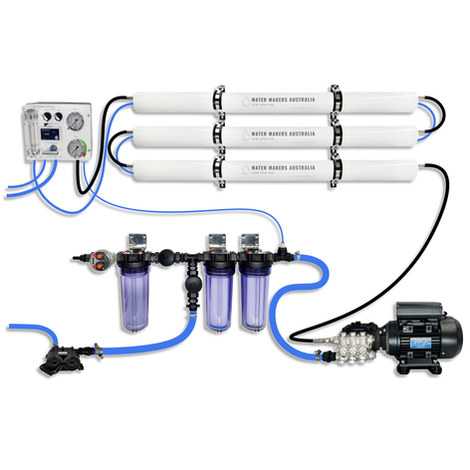
A three-membrane modular watermaker with 200 L/h nominal output and up to 240 L/h family-level marketing, for larger crews and heavy use.
Explore →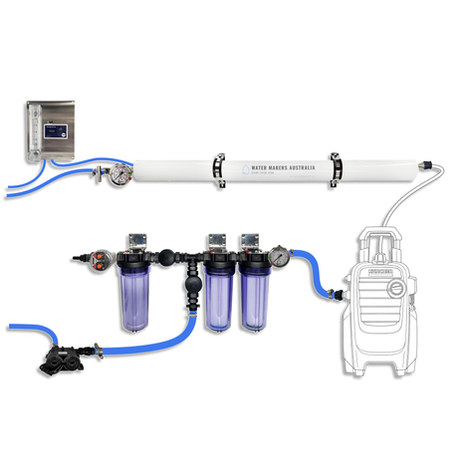
A one-membrane modular marine watermaker with 80 L/h nominal output, remote stainless control panel, standard consumables and direct Australian support.
Explore →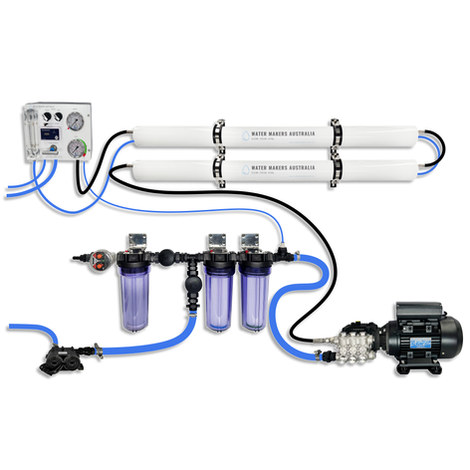
A two-membrane modular watermaker with 140 L/h nominal output, aimed at families and liveaboards that want more water per run.
Explore →