Loading this page…

Loading this page…
Sailing club
Oxley Sailing Club is a volunteer-run dinghy club based at 142 Leybourne Street, Chelmer, sailing on the Indooroopilly Reach of the Brisbane River. The club runs a September–April Saturday afternoon racing season focused on mixed off-the-beach dinghies (Pacers are a core fleet), offers junior Tackers courses and adult learn-to-sail sessions, and maintains a long-standing interclub rivalry with South Brisbane Sailing Club.
About
Oxley Sailing Club is a volunteer-run dinghy club based at 142 Leybourne Street, Chelmer, sailing on the Indooroopilly Reach of the Brisbane River. The club runs a September–April Saturday afternoon racing season focused on mixed off-the-beach dinghies (Pacers are a core fleet), offers junior Tackers courses and adult learn-to-sail sessions, and maintains a long-standing interclub rivalry with South Brisbane Sailing Club.
Service area: Indooroopilly Reach, Brisbane River (Chelmer / Indooroopilly area)
Keep exploring
Volunteer-run sailing club on the Brisbane River at Chelmer. Runs a sailing season (typically September–April) with Saturday-afternoon dinghy racing (up to three races) for a range of off‑the‑beach boats. Offers Learn to Sail programs (Tackers for kids; adults and teens) and a SailPass option for visitors' first three sails. Club communicates via email and WhatsApp and asks visitors to contact oxleysc@gmail.com before attending.
Oxley's most distinctive program asset is not a course but a contest: the annual three-trophy interclub against South Brisbane Sailing Club, built around the Tristram Shield — first sailed in 1963 when both clubs campaigned sixteen-foot skiffs — and the Nose and Tail Trophy, the bisected Laser that has been fought over since 2000. Lasers and Impulse-sized dinghies feature in this annual meeting, and the event gives Oxley's sailors, from novices upward, a genuine competitive target each season. The club's own Saturday racing centres on the Pacer, the two-person dinghy that suits both family crews and developing sailors stepping up from training.
On the formal tuition side, the club keeps things compact and accessible. Tackers 1, 2 and 3 — the national junior introductory pathway — run during school holidays and on Saturday mornings, giving children a structured route from first sail to confident independent dinghy handling. Adults are catered for with a Start Sailing course held on Sunday afternoons in November and again across February and March, timed to deliver new sailors into the second half of the racing season.
The club is also a registered provider under the Queensland Government's Play On! sports voucher scheme (the successor to Get Started), which helps eligible families offset the cost of children's sailing participation.
Club racing runs on Saturday afternoons from September through to April or May, with the gates open from twelve noon and visitors explicitly welcome. Communication is informal and modern — news circulates through an email group and a WhatsApp chat — in keeping with a small volunteer-run club. Discover Sailing Centre accreditation isn't advertised, so the club's training operates as club-level tuition rather than through a formally accredited centre; the substance, though, covers the full beginner pathway for both juniors and adults.
The clubhouse stands at 142 Leybourne Street in Chelmer, a leafy residential pocket of Brisbane's south-west, with the Brisbane River quite literally at the end of the street. The sailing water is the Indooroopilly Reach, the stretch of river around the Walter Taylor and Albert bridges between Chelmer and Indooroopilly, about seven kilometres upstream of the CBD by road. River sailing of this kind has a particular flavour: shifting breezes bent by banks and buildings, tidal flow to read, and a course area compact enough that tactical skill matters more than boat speed. It is water that teaches sailors properly, and Oxley has been teaching on it for generations.
The reach has defined the club's sailing identity since the beginning. When the new club commenced in January 1921, its first races were sailed over two-mile courses here, with the start and finish beside the Indooroopilly bridge. A decade later, Brisbane press was referring to the reach simply as Oxley's sporting ground in season — an indication of how completely the club had made this stretch of river its own.
The setting also shapes the club's calendar and community role. A September-to-April season makes the most of the warmer months on the river, and the club's proximity to the suburbs of Chelmer, Graceville, Indooroopilly and Taringa gives it a natural catchment of riverside families. In 2002 the club mounted a historical display as part of the Chelmer and Graceville history exhibition held at the Chelmer Community Centre, a small but telling sign of how embedded it is in local life.
For sailors, the practical appeal is straightforward: a sheltered, scenic and conveniently reached stretch of metropolitan river, an active Saturday race program, and a clubhouse in one of Brisbane's most pleasant western suburbs.
Organised sailing under the Oxley name reaches back further than most people realise. An earlier Oxley Sailing Club was already conducting general handicap racing on the Brisbane River by December 1906, and although that incarnation did not survive, its successor was not long in coming. In January 1921 newspapers reported that a new club had been formed by youthful local sailors from Taringa, Indooroopilly and Chelmer, and that it had started operations the previous Saturday with six boats on the register.
The early patronage was impressively local: supporters included H. B. Hemming, who had led the now-defunct Oxley Electorate Sailing Club as its president, along with J. K. Cannan junior, T. W. Ham, a Mr M'Emdin described as a former Tasmanian yachtsman, and George White.
The boats in that first 1921 race read like a survey of early Australian dinghy and skiff sailing: the ten-foot skiff Cecil under W. Whitten, the sixteen-foot skiff Orchid under W. Marquis, the twelve-foot dinghy Sianara, the fourteen-foot sharpies Sirene and Eumara, and the eighteen-foot sharpie Castanet. Racing began over two-mile courses on the reach, starting and finishing beside the Indooroopilly bridge, and interclub competition with South Brisbane Sailing Club was inaugurated within the first season, in 1921–22.
The club quickly became an institution of the western suburbs. It met at the Chelmer School of Arts in February 1926 under commodore Dr E. Culpin, distributed season trophies at a function covered by Brisbane's Telegraph in 1930, and by 1931 the Indooroopilly Reach was being called, in print, the club's sporting ground in season. A rare survival from that era, Oxley's official 1938–39 season programme, is today held in the Australian National Maritime Museum's collection, placing the club's pre-war record in the national keeping.
The post-war decades are best traced through the South Brisbane rivalry. The Tristram Shield dates to 1963, when both clubs raced sixteen-foot skiffs; from the early 1980s Oxley sailors campaigned Mirror dinghies against South Brisbane's Herons; and in 2000 the Nose and Tail Trophy was fashioned from a Laser cut into three sections, with the bow and stern contested annually. Oxley retained that trophy in 2023 — a century and more after six boats first lined up at the Indooroopilly bridge, the same competitive thread still runs through this riverside club.
Batemans Bay and the Clyde River form a classic NSW South Coast cruising region where a sheltered, tidal estuary meets a short, island‑dotted entrance to the Tasman Sea. It’s distinctive for easy access from Canberra, a mix of river and bay sailing, a compact marina and mooring network, and a river entrance (the Clyde River bar) that can change rapidly. The area suits day sails, weekend cruising, trailer‑boat exploration and sheltered coastal passages; offshore or long‑passage plans require careful timing and local knowledge. Preparation for tidal flow, variable southerly swells and shallow, s

Look for a friendly club with beginner-focused training, accessible facilities and boats, a supportive community, clear safety practices, and opportunities to progress at your own pace.
Explore →
Pick a protected bay, estuary or river reach where you can rig, launch and arrive on calm water within a short, sheltered transit; choose a site with a good ramp or jetty, clear recovery options and a nearby sailing club, marina or commercial operator for local knowledge and help.
Explore →
Keep the boat balanced by steering a consistent course for the sail trim and by moving crew weight fore/aft and side-to-side to control helm and reduce weather or lee helm. Upwind you aim for a slight weather helm and a heel that lets the sails work efficiently; downwind you flatten the boat a little, ease sheets to prevent luffing or accidental broaches, and shift weight aft as the apparent wind drops.
Explore →
Learn boat-handling basics (steering, points of sail and sail trim), safety and seamanship (personal flotation, wind awareness, man-overboard procedure), and simple anchoring/mooring — these give you the core skills to sail safely and enjoyably.
Explore →
A practical guide for new sailors on picking the right Australian sailing club: training, boat access, racing, social fit, costs and the key questions to ask before joining.
Explore →A concise, practical introduction to the essential parts of a recreational sailing boat for beginners in Australia. Covers hull, deck, rigging, sails, steering, below-decks spaces and safety equipment, with simple explanations, common mistakes and a pre-decast checklist to help new sailors communicate and get underway.
Explore →Practical guide for recreational sailors planning passage on the Hawkesbury River: how to plan around tides, choose anchorages, read local conditions and prepare the boat and crew for a safe, comfortable trip.
Explore →
A practical, Australia-focused guide for planning and sailing around the Whitsunday Islands: weather and seasons, navigation and anchoring, moorings and parks, provisioning and charters, safety and common mistakes, plus checklists and next steps.
Explore →Burke Yachtsman Gear Bag 40L - Shop Now Zip Pay | Tamar Marine Skip to content 59 – 63 Holbrook Street, Invermay Online Shop Open 24/7 Products search Contact us 1300 MARINE $ 0.00 0 Cart Burke Yachtsman Gear Bag 40L $ 79.90 Colour Choose an option Black Blue Black Blue Clear - Burke Yachtsman Gear Bag 40L quantity + Add to cart Enquire about this product SKU BAGB-Y24/BLACK* Category Bags - Sail & Gear A Burke classic and customer favourite, the Yachtsman’s Gear Bag is built tough to handle wet, salty conditions while keeping your gear dry and protected. Made from double coated waterproof…
Explore →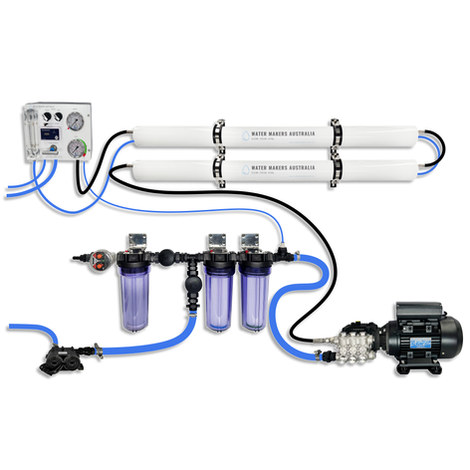
A two-membrane modular watermaker with 140 L/h nominal output, aimed at families and liveaboards that want more water per run.
Explore →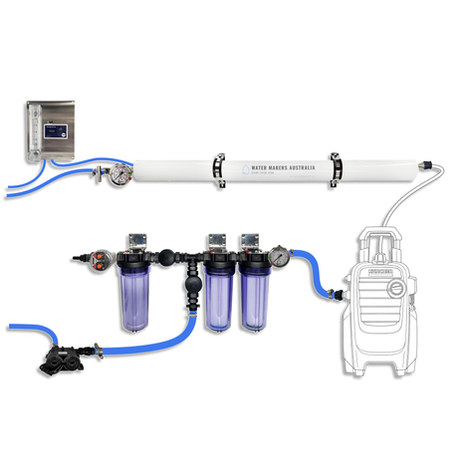
A one-membrane modular marine watermaker with 80 L/h nominal output, remote stainless control panel, standard consumables and direct Australian support.
Explore →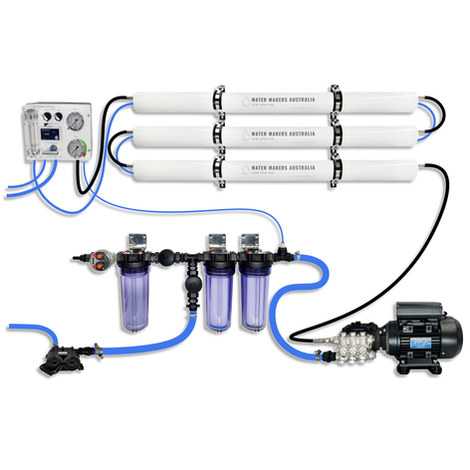
A three-membrane modular watermaker with 200 L/h nominal output and up to 240 L/h family-level marketing, for larger crews and heavy use.
Explore →