Loading this page…

Loading this page…
Sailing club
Parkdale Yacht Club is a community sailing club on the long beach of Port Phillip Bay in Parkdale, VIC. The club runs organised racing (summer and winter Sunday series, twilight sailing), hosts regattas and events, offers Learn to Sail programs (junior, adult and windsurfing) and operates a SailPass casual-sailing option. The clubhouse and new facilities are also promoted for venue hire and club social events. Contact details and event calendar are available on the club website.
About
Parkdale Yacht Club is a community sailing club on the long beach of Port Phillip Bay in Parkdale, VIC. The club runs organised racing (summer and winter Sunday series, twilight sailing), hosts regattas and events, offers Learn to Sail programs (junior, adult and windsurfing) and operates a SailPass casual-sailing option. The clubhouse and new facilities are also promoted for venue hire and club social events. Contact details and event calendar are available on the club website.
Service area: Parkdale, VIC
Keep exploring
A small strip of the Bayside foreshore carries an outsized piece of Australian sailing history: this is the birthplace of the Australian Sailfish, the home-designed single-hander that spread across the country and as far as Papua New Guinea. Parkdale Yacht Club remains very much in that grassroots mould — a progressive, volunteer-based club in the City of Kingston devoted to community sailing and windsurfing, where the racing fleets are Minnows, Lasers, Pacers, 125s, catamarans and boards rather than anything requiring a bank manager or a full-time crew.
The club is not shy about its pedigree. It states that Olympians, world, national and state champions "have called Parkdale Yacht Club their home" — the club's own claim, offered without names, so take it as testimony rather than a roll call. What is verifiable is the lineage of the place itself: founded just after the war (1946 by the club's account; the council's park page says 1945), it sailed from the same Parkdale beach for decades before a $2.9 million redevelopment delivered a new clubhouse in May 2021, shared with the local Girl Guides and Beach Patrol Australia.
Summer brings a genuine beachside social rhythm — the PYC cafe trading through the warm months, Sunday live music, both pausing over winter — and Thursday-evening twilight sailing when the daylight stretches. The address on the Bay Trail, with uninterrupted water views and a commercial kitchen, even draws function and photo-shoot bookings, though the heart of the place remains Sunday afternoon racing off the sand, rounded out by presentation day in late May.
Windsurfing is the program that separates Parkdale from most Bayside clubs. While neighbours concentrate purely on dinghies, Parkdale runs a Learn To Windsurf stream alongside its junior and adult learn-to-sail courses, all on weekends from November through April at beginner-to-intermediate level, and fields a dedicated windsurfing racing division — Division 3 — where the Windsurfer LT is enjoying a genuine resurgence. For anyone wanting to try board sailing on Port Phillip, this is one of the few club homes left.
The dinghy pathway is welcoming and deliberately low-pressure. Beginners work through the junior and adult courses, then are encouraged straight into Sunday afternoon racing, with support boats and supervision out on the water — learning by racing, with a rescue boat watching. The club is currently seeking sponsorship to swap its ageing Minnow trainers for six new Ozi Opti dinghies, at $3,000 apiece, a candid sign of a volunteer club investing in its next generation. Visiting sailors can sample racing on a SailPass day membership before committing.
Racing is organised in four divisions — Division 1 for catamarans and Arrows, Division 2 for Lasers, Pacers and 125s, Division 3 for windsurfers, and Division 4 for Minnows, Optis and Zooms — so everyone from a seven-year-old to a cat crew gets a fair start. The summer season opens the first Sunday of October and runs to late April, with Sunday briefings at noon and two or three races from 1 pm; a winter series sails every second Sunday from June to August, finished off with a hearty lunch. Notably, no racing is scheduled on public-holiday weekends or over Christmas, freeing members to campaign at regattas around the country.
The clubhouse stands at 132 Bay Trail (Beach Road), on the Parkdale foreshore opposite Parkers Road in the City of Kingston, looking straight out over Port Phillip from beside what locals call the long beach. The 2021 building — designed by Haskell Architects for the council — is a considered piece of sailing infrastructure: a race control room with those uninterrupted views, rooftop water storage feeding boat wash-down, energy-efficient services, full disability access and generous boat storage, shared with the Girl Guides and Beach Patrol. A later car park and Bay Trail project lifted total investment in the precinct to $3.7 million.
The sailing water is textbook eastern Port Phillip. Parkdale's 1.5-kilometre beach faces west across the bay, open to the prevailing south-westerlies that build through a summer afternoon, with the Bay Trail, a kiosk, showers, public toilets and accessible parking strung along the foreshore. Launching is off the sand — there is no marina on this stretch of coast — which keeps the fleet honest: catamarans and boards relish the open fetch when a front punches through, while the lighter divisions prefer the morning glass or a moderate sea breeze.
Conditions here shaped a class of boat. Port Phillip's signature short, steep chop — the product of a shallow bay and a long wind fetch — was exactly the problem the Australian Sailfish was conceived to solve at this beach in 1956, its flat-bottomed scow form built to bang through bay slop. Modern sailors inherit the same water: honest, occasionally rowdy, and never boring, with Melbourne's skyline on the northern horizon and the shipping channel not far off.
Founding dates here come with a footnote: the club and Kingston Council media give 1946, while the council's own parks page says 1945 — a small wartime-era ambiguity common to clubs born in the demobilisation years, when sailing boomed along the Bayside beaches. Either way, the club's defining moment came a decade on. In 1956, members Bruce Scott and Jack Carroll designed a single-handed, cat-rigged scow — 3.5 metres long, minimum hull weight 28.6 kilograms, Bermuda rig — purpose-built for Port Phillip's chop, and launched the first two boats at Parkdale: No.
1 "Little Osprey" and No. 2 "Debonair". The Australian Sailfish was born, and the class association formed in the 1961/62 season, when the first Victorian championship was also held at the club, won by Carroll himself.
Parkdale and Elwood built the strongest Sailfish divisions in the state and dominated Victorian racing in the class for years, as the design spread interstate and overseas to Papua New Guinea. The bond has never been cut: Carroll sailed his restored "Debonair" again in 2019 at about ninety years of age, and at a November 2025 open day the club displayed the Sailfish, receiving the "Little Osprey" trophy donated by Brian Carroll. At Opening Day 2025 the club named a new Pacer after long-serving member and instructor Chris Hewitt while paying tribute to the class it created.
The built history is simpler: an original 1964 clubhouse served until a $2.9 million redevelopment — with a $100,000 club contribution — delivered the current building, officially opened in May 2021. The club's standing in Victorian sailing was underscored in June 2026, when it hosted the Australian Sailing Victorian Sailing Summit. From post-war beach sailors to a class that conquered a state, Parkdale's arc is a quiet but remarkable one.
Batemans Bay and the Clyde River form a classic NSW South Coast cruising region where a sheltered, tidal estuary meets a short, island‑dotted entrance to the Tasman Sea. It’s distinctive for easy access from Canberra, a mix of river and bay sailing, a compact marina and mooring network, and a river entrance (the Clyde River bar) that can change rapidly. The area suits day sails, weekend cruising, trailer‑boat exploration and sheltered coastal passages; offshore or long‑passage plans require careful timing and local knowledge. Preparation for tidal flow, variable southerly swells and shallow, s

Pack sun protection and lightweight, quick-drying layers for summer; insulation, waterproof outer layers and warm accessories for winter — plus basic safety and comfort gear for both seasons.
Explore →
Use ramps and beaches with respect for local conditions: check ramp layout, tide and swell, wind direction, vehicle access and crowding; prepare boat and crew before you launch or retrieve; and follow local signage, courtesy and safety practices. Specifics vary by ramp and beach, so confirm details for the exact site before you go.
Explore →
Plan passages across Spencer Gulf or to Kangaroo Island by basing fuel on your boat’s actual consumption plus a generous reserve, choosing sensible staging/stop options that match your boat and crew, and prioritising shelter and weather windows (gale fronts, strong winds and tidal streams can make the gulf uncomfortable or unsafe). Confirm fuel availability, safe anchorages or marinas on your route, and check up-to-date local weather, tide and navigation information before you go.
Explore →
Before your first sail in South Australian waters check the weather and tide, make sure the boat and safety equipment are fit for the trip, confirm local rules and any area-specific hazards, and tell someone your plan.
Explore →
A practical guide for new sailors on picking the right Australian sailing club: training, boat access, racing, social fit, costs and the key questions to ask before joining.
Explore →A concise, practical introduction to the essential parts of a recreational sailing boat for beginners in Australia. Covers hull, deck, rigging, sails, steering, below-decks spaces and safety equipment, with simple explanations, common mistakes and a pre-decast checklist to help new sailors communicate and get underway.
Explore →A practical guide for recreational sailors planning visits to Albany and King George Sound. Covers the main anchorage areas, typical local weather patterns, tidal and current considerations, navigational hazards, on-the-water etiquette and a pre-departure checklist to help you plan a safe passage and enjoyable stopover
Explore →A practical guide for recreational sailors planning day sails or short cruises around Batemans Bay, Broulee and the Clyde River. Covers local conditions, safe approaches, anchorages, launching, tides, common hazards, and checklists for trip planning and on-water decisions.
Explore →Burke Yachtsman Gear Bag 40L - Shop Now Zip Pay | Tamar Marine Skip to content 59 – 63 Holbrook Street, Invermay Online Shop Open 24/7 Products search Contact us 1300 MARINE $ 0.00 0 Cart Burke Yachtsman Gear Bag 40L $ 79.90 Colour Choose an option Black Blue Black Blue Clear - Burke Yachtsman Gear Bag 40L quantity + Add to cart Enquire about this product SKU BAGB-Y24/BLACK* Category Bags - Sail & Gear A Burke classic and customer favourite, the Yachtsman’s Gear Bag is built tough to handle wet, salty conditions while keeping your gear dry and protected. Made from double coated waterproof…
Explore →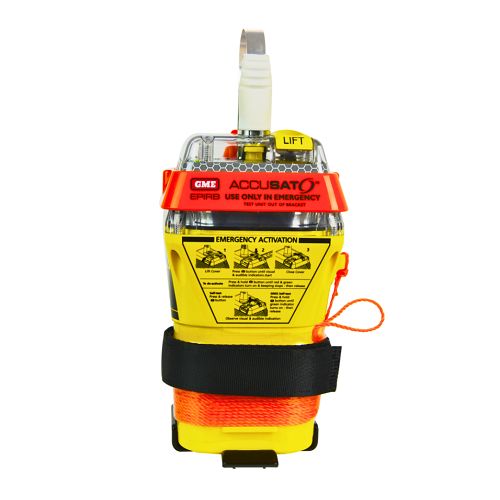
A 10‑year battery EPIRB with integrated GNSS (supports GPS and Galileo), infrared strobe and 121.5 MHz homing signal. Approved for worldwide COSPAS‑SARSAT operation.
Explore →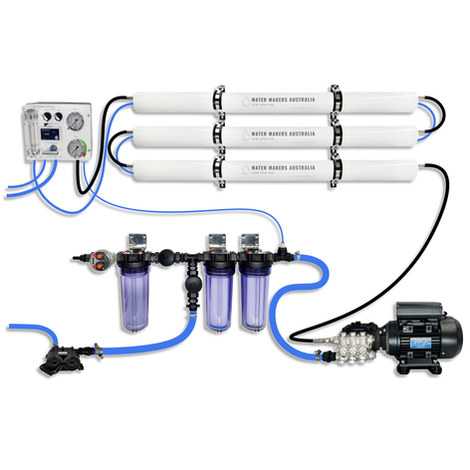
A three-membrane modular watermaker with 200 L/h nominal output and up to 240 L/h family-level marketing, for larger crews and heavy use.
Explore →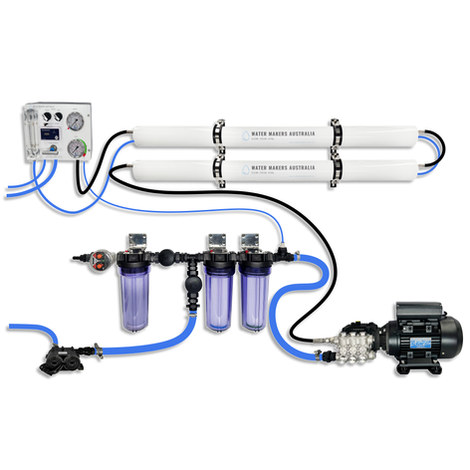
A two-membrane modular watermaker with 140 L/h nominal output, aimed at families and liveaboards that want more water per run.
Explore →