Loading this page…

Loading this page…
Sailing club
Perth Dinghy Sailing Club (PDSC) is a volunteer-run dinghy club on the Crawley foreshore of the Swan River in Perth, Western Australia. Founded in 1903, the club focuses on lightweight dinghy and skiff racing, junior development and community sailing. It operates a busy Saturday-afternoon racing season, an active junior and learn-to-sail programme, and hosts a range of one-design and high-performance dinghy classes.
About
Perth Dinghy Sailing Club (PDSC) is a volunteer-run dinghy club on the Crawley foreshore of the Swan River in Perth, Western Australia. Founded in 1903, the club focuses on lightweight dinghy and skiff racing, junior development and community sailing. It operates a busy Saturday-afternoon racing season, an active junior and learn-to-sail programme, and hosts a range of one-design and high-performance dinghy classes.
Service area: Crawley / Matilda Bay, Swan River (Perth), Western Australia
Keep exploring
What distinguishes sailing development at Perth Dinghy Sailing Club is the sheer spread of classes a newcomer can grow into. The club's active fleets include the WASZP, International 14, Javelin, Cherub, Signet, Sabre, Heron, Jay-Dee and Mudlark — a ladder that runs from simple trainer dinghies for children through to some of the most demanding high-performance boats sailed anywhere in the country.
Learn-to-sail courses and junior programs operate under qualified instructors and are pitched at everyone from first-timers to advanced sailors refining their technique, all of it staffed within the club's all-volunteer structure, coaches included. Club racing occupies Saturday afternoons from mid-October through to mid-April, giving graduates of the training program an immediate competitive outlet each week of the season.
The pathway is deliberate: a junior might begin in a stable two-handed boat, progress through the intermediate classes and eventually crew or helm a skiff-type International 14 — a progression generations of members have followed, which helps explain the multi-generation family involvement the club reports. Instructors, race officers, safety boat drivers and canteen helpers all come from the same membership pool, so juniors see their parents and grandparents running the sport they are learning.
That immersion is itself a form of training, teaching race management and club stewardship alongside boat handling. The club points to a long record of members reaching elite competition as evidence that the system works, and two consecutive state Club of the Year awards suggest the broader sailing community agrees. Few clubs of comparable size offer this breadth of class choice under one roof.
The Crawley shoreline gives Perth Dinghy Sailing Club one of the more practical dinghy venues on the Swan River. The clubhouse stands at Crawley Bay, facing Matilda Bay and the University of Western Australia across the water, on a site the club has occupied since 1960. Lightweight racing dinghies need a rigging beach rather than a marina pen, and the location delivers exactly that: a river foreshore where boats can be launched straight into open water.
The shore-side setup is substantial for a club of this size — eighty car bays with further room set aside for boat rigging and trailer parking, a storage shed for the fleet, and large clubrooms that incorporate a museum devoted to the club's own past. A canteen and a bar, both volunteer-staffed, open onto a balcony looking across the river; the club acknowledges that bar and tuck shop takings provide its most important income stream, which keeps the social room genuinely central to the operation rather than decorative.
Sailing takes place on the Swan's broad upper reaches, where afternoon summer breezes build reliably across the wide water between Crawley and the opposite shore — conditions that suit the quick, tactical dinghy racing around which the club's season is built. The current address also represents a considered choice: when the original Perth Water site near Barrack Street Jetty became untenable through silting and the looming Narrows Bridge project, members selected Crawley specifically because the beach let small boats rig and launch with ease.
Sixty-plus years on, that decision still shapes how the club sails every Saturday.
Perth Dinghy Sailing Club began in 1903 as a breakaway: dinghy crews walked out of the Perth Flying Squadron and the Mounts Bay Sailing Club to form an organisation of their own, according to a 1953 West Australian article written as the new club's fiftieth jubilee approached. Among the foundation members was veteran dinghy sailor Andy Roche, described in that same jubilee coverage as probably the oldest living former commodore.
The young club erected a first clubhouse close by the Barrack Street Jetty on Perth Water in 1905, and from that city-front base it became embedded in Perth life — during 1946 and 1947 the 2/4th Machine Gun Battalion Association even held its monthly meetings in the rooms. The jubilee year of 1953 brought a reunion of old and current members and a championship regatta sailed for the national title, with Commodore F. F. Nickels leading flag officers Bev Morris (vice) and Arthur Tomlinson (rear).
By then the writing was on the wall for the Barrack Street site: silting, the planned Narrows Bridge and the simple need of lightweight dinghies for a beach rigging spot forced a move, and the replacement clubhouse at Crawley Bay was opened officially in 1960 — raised by members' own labour, as were the extensions and renovations that followed. A 1966 rebrand shortened the name to Perth 14ft Sailing Club Inc before settling into today's Perth Dinghy Sailing Club Inc.
The club's furniture tells the story too: the Anketell Cup, roughly forty-five centimetres tall and first won in 1952, anchors the annual Life Members and Legends Day; the famous Triad, owned jointly by Wally Hill and Bill Osborne, won eight Australian championships before her hull passed to a clubhouse in St Kilda. Hilary Arber's 2002 book "Sail OH!" gathered the whole century into print.
Adelaide’s metropolitan coast fronts the eastern side of Gulf St Vincent and mixes short, sheltered bay sailing around Holdfast Bay and the Patawalonga with more exposed, open-water sailing north toward Outer Harbour and along the Le Fevre Peninsula. The area suits a wide range of activity — sheltered day sails, club and trailer-sailer racing, short coastal cruising into the Fleurieu and Yorke Peninsula, and launch-and-home-port racing — but demands local knowledge about shipping channels, tidal flows in the Port River/Outer Harbour approaches, and seasonal wind patterns.

Expect very different seasonal systems across Western Australia: the south‑west (Perth to Albany) has a strong summer afternoon sea breeze (the “Fremantle Doctor”) and winter westerly fronts, while northern WA follows a wet/dry monsoonal cycle with strong seasonal onshore winds, thunderstorms and cyclone risk in the wet season. Local headlands, estuaries and tidal flows often change what you actually feel on the water, so learn the local timing and sheltered venues first.
Explore →
Look for a friendly club with beginner-focused training, accessible facilities and boats, a supportive community, clear safety practices, and opportunities to progress at your own pace.
Explore →
There are legal obligations in Western Australia for recreational boat owners and skippers covering vessel registration, carriage of safety equipment and general skipper responsibilities, but the exact requirements depend on vessel type, size, where you sail and whether the vessel is commercial or recreational. Check the Western Australian Department of Transport (DoT WA) and the national authority for the precise checklist that applies to your boat and voyage.
Explore →
Pick a protected bay, estuary or river reach where you can rig, launch and arrive on calm water within a short, sheltered transit; choose a site with a good ramp or jetty, clear recovery options and a nearby sailing club, marina or commercial operator for local knowledge and help.
Explore →Practical guide for recreational sailors navigating the Swan River and coastal waters around Perth. Covers local weather patterns, tides and currents, river navigation, launching and berthing options, safety equipment, common hazards, and step-by-step pre-departure and on-water checklists tailored to Western Australian
Explore →
A practical guide for new sailors on picking the right Australian sailing club: training, boat access, racing, social fit, costs and the key questions to ask before joining.
Explore →A practical guide to the coastal weather systems that affect sailing along Western Australia's coast, focusing on the Fremantle Doctor, local sea breezes, and linked coastal phenomena. Explains how these systems form, when they tend to occur, how they influence boat handling and passage planning, common mistakes, and a
Explore →Practical guidance for recreational sailors planning coastal and remote cruising in Western Australia, focusing on tidal planning, reef awareness, navigation and safety preparation tailored to local conditions.
Explore →Burke Yachtsman Gear Bag 40L - Shop Now Zip Pay | Tamar Marine Skip to content 59 – 63 Holbrook Street, Invermay Online Shop Open 24/7 Products search Contact us 1300 MARINE $ 0.00 0 Cart Burke Yachtsman Gear Bag 40L $ 79.90 Colour Choose an option Black Blue Black Blue Clear - Burke Yachtsman Gear Bag 40L quantity + Add to cart Enquire about this product SKU BAGB-Y24/BLACK* Category Bags - Sail & Gear A Burke classic and customer favourite, the Yachtsman’s Gear Bag is built tough to handle wet, salty conditions while keeping your gear dry and protected. Made from double coated waterproof…
Explore →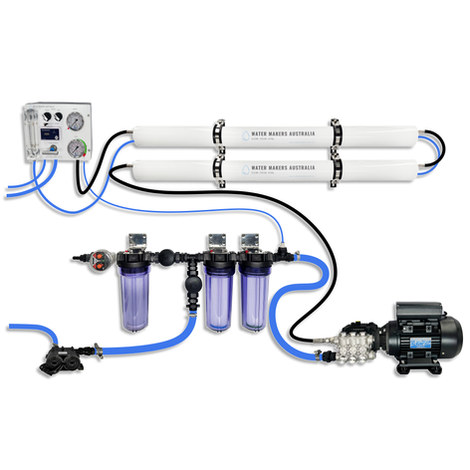
A two-membrane modular watermaker with 140 L/h nominal output, aimed at families and liveaboards that want more water per run.
Explore →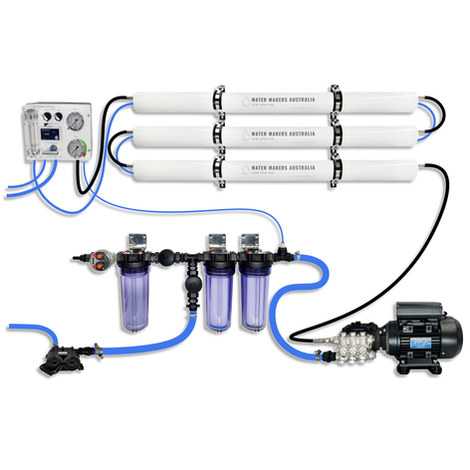
A three-membrane modular watermaker with 200 L/h nominal output and up to 240 L/h family-level marketing, for larger crews and heavy use.
Explore →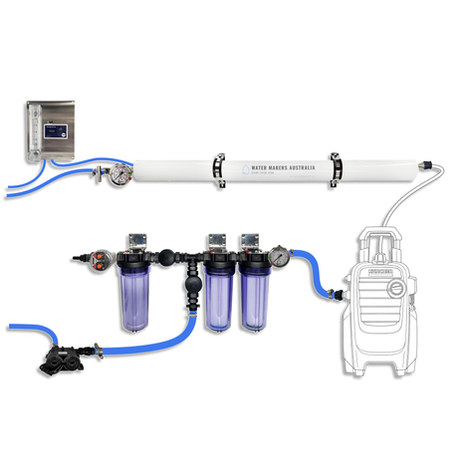
A one-membrane modular marine watermaker with 80 L/h nominal output, remote stainless control panel, standard consumables and direct Australian support.
Explore →