Loading this page…

Loading this page…
Sailing club
Perth Flying Squadron Yacht Club (PFSYC) is a family-oriented yacht club on the Swan River foreshore at Dalkeith, Western Australia. Founded in 1897, the club runs year‑round racing and training programs for juniors and adults, holds Australian Sailing Discover Sailing Centre accreditation, and operates significant shore facilities including pens, hard standing and undercover boat storage alongside a licensed waterfront function venue.
About
Perth Flying Squadron Yacht Club (PFSYC) is a family-oriented yacht club on the Swan River foreshore at Dalkeith, Western Australia. Founded in 1897, the club runs year‑round racing and training programs for juniors and adults, holds Australian Sailing Discover Sailing Centre accreditation, and operates significant shore facilities including pens, hard standing and undercover boat storage alongside a licensed waterfront function venue.
Service area: Perth / Swan River (Western Australia)
Keep exploring
Free keelboat taster days for complete strangers to the sport headline the club's recent training story. Throughout November 2023, Perth Flying Squadron opened its Discover Keelboat Sailing Days to the public every Sunday, asking nothing of participants — no experience, no equipment, no membership — and the initiative drew attention in Australian Sailing's own news coverage.
It built on years of hosting Discover Sailing Days and running Tackers junior courses, a combination the national body credited with driving a real rise in junior membership at Dalkeith. Week in and week out, junior sail training runs on Sundays, with Start Sailing programs operating right through the year and a fleet of Optimist dinghies reserved for the youngest children; Tackers, the national entry-level scheme, feeds youngsters into that pipeline.
What the club sells, in its own framing, is a structured pathway taking sailors from total beginner through to keen competitor, with fee packages priced separately for members and non-members and club boats available so that juniors without their own dinghy are not locked out. The instruction sits inside an accredited Discover Sailing Centre, which means courses follow the national scheme rather than ad hoc volunteer invention.
Adults are not an afterthought either: the keelboat discovery format targets grown-up beginners who might never consider dinghy sailing, converting curiosity into crew spots on the club's larger boats. And because a power boating group calls the club home with an active cruising calendar, graduates who prefer throttle to sheet have somewhere to go as well. The through-line is access — multiple entry points, loaner boats, and public days that lower every barrier the club can control.
Standing on the foreshore at Dalkeith, the clubhouse commands views straight across the Swan to the Perth skyline, and the water in between is the broadest the river offers. The club describes this as the widest stretch of the Swan, and that width is what has made the reach a significant arena for yacht racing, power boating and general water sports over many decades. A year-round racing calendar takes full advantage, with events pitched at sailors of all abilities rather than a single flagship series.
Practical shore infrastructure supports the on-water program at a scale many clubs would envy: the club provides pens, hard standing and undercover storage catering for every class of boat it hosts, and demand for Swan River pens has run hot enough that additional pens have been built to keep pace. The four-acre grounds, expanded from an original 1.6-acre reclaimed lease in 1966, give the operation room to breathe — space that also accommodates a licensed function centre hired out for weddings, birthday celebrations, conferences and business functions.
The Mele Bilo Room seats up to one hundred guests or holds two hundred and fifty for cocktails, while The Lawn manages one hundred and thirty seated or six hundred standing, figures that make the venue one of the larger riverfront hire spaces in the western suburbs. The setting does the marketing on its own: lawns running to the water, the city glittering across the river, and a jetty with its own curious pedigree, built from second-hand timber salvaged out of the Narrows Bridge construction works and the old Fremantle Traffic Bridge.
Few metropolitan clubs combine heritage grounds, serious boat storage and a commercial-grade events business on one site.
The club's own records trace everything back to 8 June 1897, when sailing enthusiasts meeting at the Metropole Hotel voted a new yacht club into existence under the name Perth Flying Squadron. When the first general meeting convened, H. F. W. Lane was elected inaugural Commodore, with H. J. Saunders taking the patron's role. The name honoured the Sydney Flying Squadron and its spectacular 18-footers — open centreboard live-ballast boats whose towering rigs made them look, in the club's retelling, as though they were flying through the water.
The Squadron's first clubhouse stood at the bottom of William Street, on the city Esplanade, and there it might have stayed had the Stephenson Plan of the early 1950s not confirmed a freeway system with a bridge spanning the Narrows to Mill Point, straight through the club's world. The search for a new home ended at Dalkeith in 1962, on ground with its own deep history — the site of the first farm taken up in the Nedlands district, by Adam Armstrong. Architect L. W.
Buckeridge designed the new clubhouse on reclaimed leased land then measuring 1.6 acres, at a cost of £35,000, and Commodore J. Digby Leach officiated at the opening. Expansion followed quickly: the holding grew to four acres in 1966; the jetty went up on recycled timbers from two demolished eras of Perth transport. By 1998, according to the heritage assessment later entered on the municipal inventory, the club counted 550 members, sailed officially on Sundays, Wednesdays and Fridays, and drew strong crowds to social twilight sailing.
The clubhouse's heritage listing, adopted 15 April 1999, recognised its aesthetic, historic and social significance, while the club's minute books, financial records, scrapbooks and newspaper cuttings found permanent safekeeping in the State Library of WA's private archives as collection MN870.
A practical cruising guide for the Moyne River port at the mouth of the Moyne River on Victoria’s south-west coast. It explains harbour geometry, seasonal conditions, principal sailing zones, anchorages, visitor facilities, known local hazards (bar, reefs, strong currents, surf and commercial traffic), regulatory controls and realistic experiences for day sailors, trailer-sailors and coastal cruisers. The guide draws on local port plans, state boating authorities, the yacht club’s visiting-boat practice and regional marine management documents.

Expect very different seasonal systems across Western Australia: the south‑west (Perth to Albany) has a strong summer afternoon sea breeze (the “Fremantle Doctor”) and winter westerly fronts, while northern WA follows a wet/dry monsoonal cycle with strong seasonal onshore winds, thunderstorms and cyclone risk in the wet season. Local headlands, estuaries and tidal flows often change what you actually feel on the water, so learn the local timing and sheltered venues first.
Explore →
There are legal obligations in Western Australia for recreational boat owners and skippers covering vessel registration, carriage of safety equipment and general skipper responsibilities, but the exact requirements depend on vessel type, size, where you sail and whether the vessel is commercial or recreational. Check the Western Australian Department of Transport (DoT WA) and the national authority for the precise checklist that applies to your boat and voyage.
Explore →
A regular, layered maintenance routine combining hull cleaning, targeted anti-fouling management, cathodic protection and systems checks will substantially reduce marine growth and corrosion for boats kept year‑round in South Australian waters. Focus on preventing attachment and electrochemical attack, then inspect and act more often if you’re in warm, nutrient-rich or high‑traffic sheltered waters.
Explore →
Look for a friendly club with beginner-focused training, accessible facilities and boats, a supportive community, clear safety practices, and opportunities to progress at your own pace.
Explore →Practical guide for recreational sailors navigating the Swan River and coastal waters around Perth. Covers local weather patterns, tides and currents, river navigation, launching and berthing options, safety equipment, common hazards, and step-by-step pre-departure and on-water checklists tailored to Western Australian
Explore →
A practical guide for new sailors on picking the right Australian sailing club: training, boat access, racing, social fit, costs and the key questions to ask before joining.
Explore →Practical guidance for recreational sailors planning coastal and remote cruising in Western Australia, focusing on tidal planning, reef awareness, navigation and safety preparation tailored to local conditions.
Explore →A practical guide to the coastal weather systems that affect sailing along Western Australia's coast, focusing on the Fremantle Doctor, local sea breezes, and linked coastal phenomena. Explains how these systems form, when they tend to occur, how they influence boat handling and passage planning, common mistakes, and a
Explore →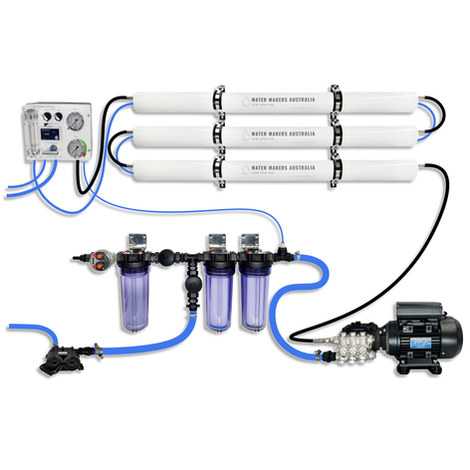
A three-membrane modular watermaker with 200 L/h nominal output and up to 240 L/h family-level marketing, for larger crews and heavy use.
Explore →Burke Yachtsman Gear Bag 40L - Shop Now Zip Pay | Tamar Marine Skip to content 59 – 63 Holbrook Street, Invermay Online Shop Open 24/7 Products search Contact us 1300 MARINE $ 0.00 0 Cart Burke Yachtsman Gear Bag 40L $ 79.90 Colour Choose an option Black Blue Black Blue Clear - Burke Yachtsman Gear Bag 40L quantity + Add to cart Enquire about this product SKU BAGB-Y24/BLACK* Category Bags - Sail & Gear A Burke classic and customer favourite, the Yachtsman’s Gear Bag is built tough to handle wet, salty conditions while keeping your gear dry and protected. Made from double coated waterproof…
Explore →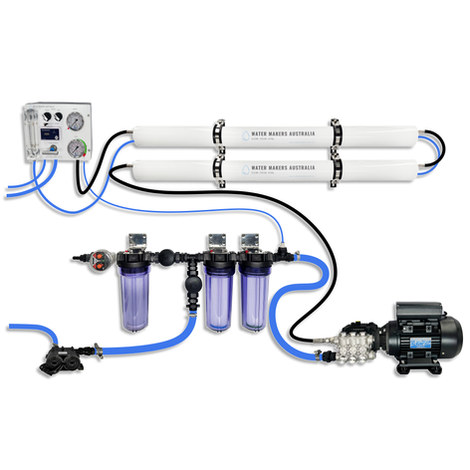
A two-membrane modular watermaker with 140 L/h nominal output, aimed at families and liveaboards that want more water per run.
Explore →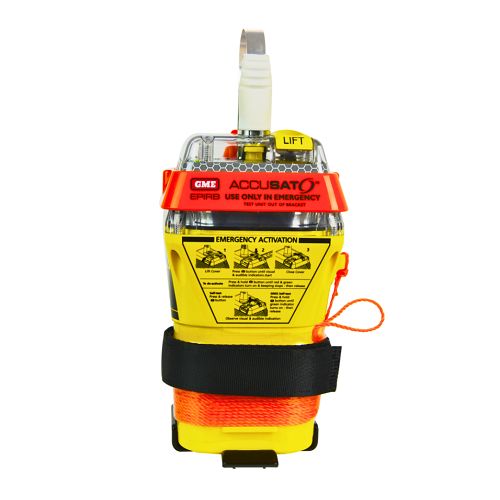
A 10‑year battery EPIRB with integrated GNSS (supports GPS and Galileo), infrared strobe and 121.5 MHz homing signal. Approved for worldwide COSPAS‑SARSAT operation.
Explore →