Loading this page…

Loading this page…
Sailing club
Port Albert Yacht Club is a local yacht and sailing club based in Port Albert, Gippsland, Victoria (31 Bay Street). The club organises sailing and kayaking activities and runs member events such as regular social gatherings and lunch-club days.
About
Port Albert Yacht Club is a local yacht and sailing club based in Port Albert, Gippsland, Victoria (31 Bay Street). The club organises sailing and kayaking activities and runs member events such as regular social gatherings and lunch-club days.
Service area: Port Albert, VIC
Keep exploring
Ask around the Gippsland sailing scene and Port Albert comes up with a smile: a small, volunteer-run country club on the South Gippsland coast where the competition is keen but the tempo stays unhurried. The club calls itself a laid-back outfit kept going by volunteers of all ages, and that self-assessment shows in everything from the Sunday-afternoon race rhythm to the fortnightly Thursday Lunch Club, a social fixture that gathers members from early February whether or not sailing is on the agenda.
The fleet is mixed and unpretentious. Off-the-beach dinghies share start lines with trailable yachts, and anyone who doesn't yet own a boat can borrow from the club's dinghy stock rather than watch from the bank. That open-handed approach suits the setting. Port Albert is a small historic fishing village, and the club works as much as a community institution as a sporting one. Visiting sailors can step into a race through Australian Sailing's SailPass scheme, the club is affiliated with the national body, and its boats carry the NC sail-number prefix.
Port Albert also sits inside one of the busier interclub circuits in country Victoria. It belongs to the Eastern Region group of Gippsland clubs — Metung, South Gippsland, Gippsland Lakes, Lake Wellington, Loch Sport and Latrobe Valley among them — whose members travel between venues for combined regattas through the season. For a sailor based anywhere between the Latrobe Valley and the Prom, that circuit converts a modest home fleet into a year of varied competition. The club suits families, casual weekend racers and trailable-yacht owners who like their sailing mixed with exploring, and it rewards anyone who prefers a clubhouse where the harbour view comes without city-club ceremony.
What distinguishes Port Albert from a standard pathway club is what it will lend you. A pool of club dinghies is held for sailors who haven't yet bought a boat, which removes the single biggest barrier between a beginner's course and regular racing. Alongside that sits a cruising habit unusual in a small club: members take their trailable yachts out to explore Corner Inlet and down toward Wilsons Promontory, with relaxed picnic sails that treat the local scenery as the point of the exercise rather than the backdrop.
Learn-to-sail instruction is offered by experienced club members, and the club has opened its gates to the wider public through an Australian Sailing Discover Sailing Day, run at the end of November 2019. Casual participants are looked after through SailPass, so a holidaymaker staying in the village can legally join a Sunday race without committing to a season membership. No formal Tackers junior program is documented, so families should ask the club directly about current junior arrangements; in a volunteer club of this size, junior activity tends to wax and wane with the ages of members' own children.
Racing runs every Sunday through the season, roughly mid-October to May, for off-the-beach dinghies and trailable yachts. The competitive year has real shape to it: an annual Commodore's Cup, a long-running regatta shared with South Gippsland Yacht Club on Nooramunga Inlet, and periodic hosting duties for the Eastern Region Interclub Regatta, which Port Albert ran in both 2018 and 2024. That interclub event draws an eclectic spread of classes — trailables such as the Explorer 16, Noelex TS and Jedda 22 alongside Minnows, Sabres, Lasers, 29ers, Tasars, Impulses and catamarans from Windrush to Nacra — letting local sailors sample big-fleet starting lines on their own doorstep.
The clubhouse looks out over Port Albert harbour at the edge of the Nooramunga Marine and Coastal Park, a protected scatter of islands, channels and tidal flats on the South Gippsland coast. For a small-boat sailor the arrangement is close to ideal: the inlet offers sheltered water in most weathers, enough room for a proper club course, and a labyrinth of anchorages for weekends when the racing flag stays furled. Beyond the inlet lies Corner Inlet and, further again, the granite ramparts of Wilsons Promontory — genuine cruising country that trailable-yacht crews can reach without an ocean passage.
Port Albert itself carries the patina of a working past. This was the port through which Gippsland was settled in the nineteenth century, and the town retains the feel of that era in its jetties, sheds and quiet streets. St John's Anglican Church held its first service in the old Customs House in 1856, a reminder of how central the harbour once was to the life of the district. These days the economy leans more on fishing and holidaymakers, but the water remains the organising fact of the town.
Practicalities are simple. The season stretches from October through to May, with racing on Sundays and social sailing threaded between. The clubhouse's outlook across the harbour does much of the work of a spectator facility, and the interclub network means visiting trailersailers are a regular sight on the hardstand. For anyone towing a boat through Gippsland, Port Albert offers that rare combination of protected sailing water, a living maritime town and a club that will make room for you at the start line.
Organised sailing at Port Albert is older than any living club on this coast, though the modern club's own paperwork tells only part of the story. Regattas have been staged here since about 1850, when the settlement was the gateway port for the whole of Gippsland and a sailing contest was natural entertainment for a harbour town. By the 1860s the scene had proper structure: Captain Edgar Slade, a retired Royal Navy officer who doubled as Gippsland's police superintendent, held the commodore's post at the North Gippsland Yacht Club before going on to preside over the Port Albert Regatta Club.
Together those appointments stand as firm documentary proof of an organised racing scene at the port well over a century and a half ago.
The founding date of the present Port Albert Yacht Club is not recorded in any source the club can currently point to. A third-party directory lists 1960, but the figure is unverified, and the honest account is one of continuity gaps: sailing here has repeatedly organised, lapsed and reorganised, as small country clubs do. What is documented is a lineage of events that the modern club has inherited and kept alive.
Chief among them is the Eastern Region Interclub Regatta, which began life as the Gippsland Interclub Open Sailing Regatta — affectionately known around the traps as the Geeza — and later ran as the Yachting Victoria Eastern Region Regatta. Port Albert hosted the 2018 and 2024 editions, a significant undertaking for a volunteer club of this size. The annual regatta sailed with South Gippsland Yacht Club is another sturdy thread: the May 2021 running drew sixteen boats onto Nooramunga Inlet, with the visitors taking the honours that year.
Add a Commodore's Cup contested each season and a Discover Sailing Day in 2019, and what emerges is a small club that punches through its weight by leaning on a sailing tradition older than almost anywhere else in Victoria.
A practical, harbour-focused cruising guide to Trial Bay on the New South Wales Mid North Coast. The guide describes the bay’s sheltered and exposed zones, headlands and islands, local seasonal wind and swell patterns, principal sailing areas and recommended anchorages, shore facilities around South West Rocks and Arakoon, navigation and arrival considerations, specific hazards such as the Macleay River entrance, sand movement and reefs, local marine park and heritage restrictions, and three realistic sailing experiences ranging from sheltered family daysails to multi-day island circuits. It’s

Plan passages across Spencer Gulf or to Kangaroo Island by basing fuel on your boat’s actual consumption plus a generous reserve, choosing sensible staging/stop options that match your boat and crew, and prioritising shelter and weather windows (gale fronts, strong winds and tidal streams can make the gulf uncomfortable or unsafe). Confirm fuel availability, safe anchorages or marinas on your route, and check up-to-date local weather, tide and navigation information before you go.
Explore →
Use ramps and beaches with respect for local conditions: check ramp layout, tide and swell, wind direction, vehicle access and crowding; prepare boat and crew before you launch or retrieve; and follow local signage, courtesy and safety practices. Specifics vary by ramp and beach, so confirm details for the exact site before you go.
Explore →
Look for a friendly club with beginner-focused training, accessible facilities and boats, a supportive community, clear safety practices, and opportunities to progress at your own pace.
Explore →
Pick a protected bay, estuary or river reach where you can rig, launch and arrive on calm water within a short, sheltered transit; choose a site with a good ramp or jetty, clear recovery options and a nearby sailing club, marina or commercial operator for local knowledge and help.
Explore →
A practical guide for new sailors on picking the right Australian sailing club: training, boat access, racing, social fit, costs and the key questions to ask before joining.
Explore →A practical guide for recreational sailors planning visits to Albany and King George Sound. Covers the main anchorage areas, typical local weather patterns, tidal and current considerations, navigational hazards, on-the-water etiquette and a pre-departure checklist to help you plan a safe passage and enjoyable stopover
Explore →A practical guide for recreational sailors planning passages to, from or around Eden and Twofold Bay. Covers sheltered anchorages, shore facilities, local weather and tidal considerations, preparing for Bass Strait conditions and a focused equipment and safety checklist.
Explore →
Practical guidance for recreational sailors planning day trips or short cruises in Moreton Bay — local weather patterns, tides, safe anchorages, common hazards, equipment checklists and sensible trip planning for islands such as Moreton, North Stradbroke and the smaller bayside islands.
Explore →Burke Yachtsman Gear Bag 40L - Shop Now Zip Pay | Tamar Marine Skip to content 59 – 63 Holbrook Street, Invermay Online Shop Open 24/7 Products search Contact us 1300 MARINE $ 0.00 0 Cart Burke Yachtsman Gear Bag 40L $ 79.90 Colour Choose an option Black Blue Black Blue Clear - Burke Yachtsman Gear Bag 40L quantity + Add to cart Enquire about this product SKU BAGB-Y24/BLACK* Category Bags - Sail & Gear A Burke classic and customer favourite, the Yachtsman’s Gear Bag is built tough to handle wet, salty conditions while keeping your gear dry and protected. Made from double coated waterproof…
Explore →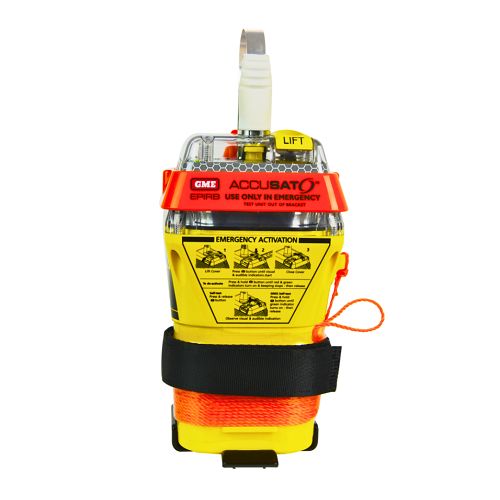
A 10‑year battery EPIRB with integrated GNSS (supports GPS and Galileo), infrared strobe and 121.5 MHz homing signal. Approved for worldwide COSPAS‑SARSAT operation.
Explore →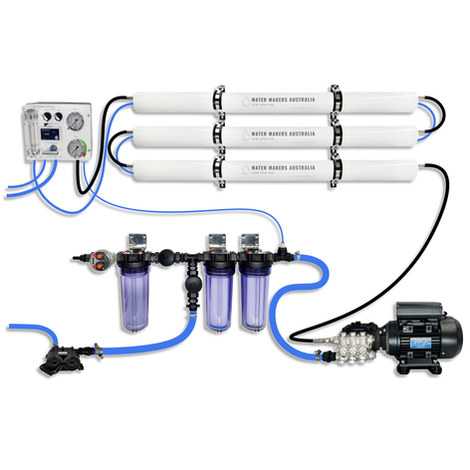
A three-membrane modular watermaker with 200 L/h nominal output and up to 240 L/h family-level marketing, for larger crews and heavy use.
Explore →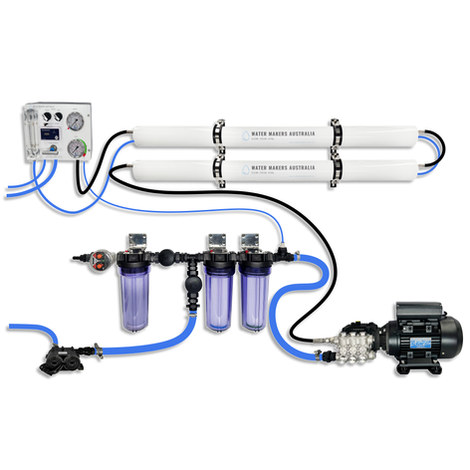
A two-membrane modular watermaker with 140 L/h nominal output, aimed at families and liveaboards that want more water per run.
Explore →