Loading this page…

Loading this page…
Sailing club
Port Denison Sailing Club (PDSC) is an off‑the‑beach dinghy club based on Front Beach, 1 Thomas Street, Bowen, Queensland. The club promotes junior and family dinghy sailing, runs an in‑house Learn to Sail program, stages the annual Sail Bowen regatta each November and maintains a long local sailing tradition the club dates to 1864.
About
Port Denison Sailing Club (PDSC) is an off‑the‑beach dinghy club based on Front Beach, 1 Thomas Street, Bowen, Queensland. The club promotes junior and family dinghy sailing, runs an in‑house Learn to Sail program, stages the annual Sail Bowen regatta each November and maintains a long local sailing tradition the club dates to 1864.
Service area: Front Beach / Sinclair Bay, Bowen, Queensland
Keep exploring
Port Denison Sailing Club (PDSC) is a community sailing club on Bowen's Front Beach at 1 Thomas Street. The club runs dinghy-focused activities including club racing and an annual regatta called Sail Bowen. PDSC offers a Learn to Sail program delivered by trained volunteers and provides clubhouse facilities and a beach launching venue with views toward the northern Whitsunday Islands.
What distinguishes Port Denison's sailing development effort is that it is home-grown rather than franchise-delivered. The club runs its own off-the-beach junior learn-to-sail program, branded simply as PDSC Learn to Sail, and invites families to enquire about sailing opportunities for kids. No Tackers branding or Discover Sailing Centre accreditation is advertised, so the club's junior tuition operates under its own banner — an arrangement with deep precedent here, since Port Denison was fostering junior sailors decades before national training schemes existed.
Junior, youth and senior sailors from the club take part in tuition and racing both at home in Bowen and at regattas across Australia, and several government grants have been secured over the years to build up off-the-beach sailing at the club — an endorsement of the pathway it has created.
The historical junior model is worth recalling because it was so far ahead of its time. In the 1950s and 1960s the club bought Sabots and leased them to parents who could not afford boats of their own, and it barred single-handed Sabot sailing to keep children crewing two-up — deliberate, practical policies to widen access and build skills. The results were measurable: fifteen Sabots on the start line in the 1976–77 season, and Sabot numbers at Bowen regattas peaking at seventy-nine boats in 1968.
For racing sailors, the club's off-the-beach program offers an unusually accessible format: bring your own boat, or hire one of the club's boats for the day, allocated on a first-in, best-dressed basis — a simple device that removes the biggest barrier to participation for visitors and newcomers. The season runs September to Easter, and the competitive year peaks in November with Sail Bowen, the annual regatta that pulls sailors from across Queensland to the Front Beach course; the 2025 running took place over the weekend of 8–9 November, promoted by neighbours including Keppel Bay Sailing Club. The clubhouse is fully equipped for hosting regattas, with a rigging lawn that makes the whole operation family-friendly.
The clubhouse address — 1 Thomas Street, Bowen — understates what a sailor finds on arrival. The building stands directly on Front Beach, with a front deck overlooking Sinclair Bay towards Gloucester Island and the northern Whitsunday Islands strung along the horizon. Below the deck, a wide sandy beach slopes to the water, and a rigging lawn gives families room to spread out, making the whole precinct purpose-shaped for off-the-beach dinghy sailing and regatta hosting. The club itself attributes its dinghy-sailing pedigree to the combination of that beach and the steady trade winds that blow through the season — by its own account, conditions that have suited small boats since 1864.
Sinclair Bay is the immediate playground: sheltered enough for learn-to-sail sessions close to shore, open enough for proper club racing courses, and framed by island scenery that most clubs can only offer on a poster. The regatta infrastructure — deck, lawn, beach and equipped clubhouse — is all within a few steps of the water, which is precisely why Sail Bowen works as a drawcard for travelling sailors each November.
The setting also carries the town's maritime backstory. Bowen was populated in the years after the gold rush, and as the club's own history notes, most early arrivals came under sail, the era's preferred mode of transport in North Queensland. Sailing, in other words, was Bowen's original connection to the outside world, and the club on Front Beach is the living descendant of that era.
Beyond the bay, the cruising ground opens up dramatically: Bowen sits at the northern gateway to the Whitsundays, with Edgecumbe Bay and Port Denison's harbour alongside and the island chain stretching away to the south-east. For a dinghy club, the combination is close to ideal — a sheltered home bay with reliable breeze for training and racing, a beach made for launching, and one of Australia's celebrated island cruising regions at the doorstep.
The club's foundation date is both its proudest boast and its most carefully qualified fact. Port Denison Sailing Club states that it was established in 1864 and that this makes it the second oldest club in Queensland — a ranking the club advances itself, and one repeated in directory listings rather than independently verified. What the documentary record does confirm is a continuous sailing presence at Bowen of very great age. W. H. Darwen's first boat went onto the P.D.S.C. register in 1894.
The Port Denison Times and Bowen Advocate reported a Port Denison Sailing and Aquatic Sports Club in action in June 1909. And a photograph of the opening day of the 1918 sailing season preserves the fleet in names: Faith, Reliance, Denisona, Gulnare, Irene and Ruby.
The mid-twentieth century brought the club's most consequential contribution to Australian sailing: the birth of the Queensland Sabot movement. At Bowen's 1953 Easter Regatta and the North Queensland Yachting Association conference held alongside it, Port Denison moved the adoption of a Sabot class for North Queensland, and that same year the state's first Sabot — Billy Dee, built for Bill Darwen — was launched by Commodore Claude Darwen and sailed by thirteen-year-old David Steen with Phillip Kirk as crew.
The NQYA officially adopted the class at its Cairns Easter conference in 1956, and the little pram went on to become the standard junior trainer across the state. The club's Sabot history document, authored within the Darwen family tradition, is today hosted by the Sabot Queensland Sailing Association — fitting recognition of PDSC's foundational role.
The Darwen name threads through the whole story. Claude Darwen served as commodore from 1952 to 1976, was a Life Member and Trustee, and wrote the club's history. Even state politics touched the committee room: Dr P. R. Delamothe O.B.E., later Queensland's Attorney-General, served as club treasurer around 1950, and his donation funded a Sabot order for the next season.
Regatta continuity completes the picture. Bowen repeatedly hosted the North Queensland Easter Regatta through the 1950s, 1960s and 1970s, including in 1977, and the modern successor, Sail Bowen each November, was promoted in 2025 as the club's 161st regatta — a count that, by the club's own reckoning, stretches the regatta tradition back towards that claimed 1864 beginning.
Adelaide’s metropolitan coast fronts the eastern side of Gulf St Vincent and mixes short, sheltered bay sailing around Holdfast Bay and the Patawalonga with more exposed, open-water sailing north toward Outer Harbour and along the Le Fevre Peninsula. The area suits a wide range of activity — sheltered day sails, club and trailer-sailer racing, short coastal cruising into the Fleurieu and Yorke Peninsula, and launch-and-home-port racing — but demands local knowledge about shipping channels, tidal flows in the Port River/Outer Harbour approaches, and seasonal wind patterns.

Look for a friendly club with beginner-focused training, accessible facilities and boats, a supportive community, clear safety practices, and opportunities to progress at your own pace.
Explore →
Late spring to summer is usually the best time for beginners to start learning to sail in Tasmania because the weather is generally warmer, days are longer and conditions are often more settled. Expect lighter to moderate winds with regular afternoon sea breees in summer, while spring and autumn bring more changeable and sometimes stronger conditions; winter is colder, wetter and typically windier with more fronts and swell.
Explore →
Expect very different seasonal systems across Western Australia: the south‑west (Perth to Albany) has a strong summer afternoon sea breeze (the “Fremantle Doctor”) and winter westerly fronts, while northern WA follows a wet/dry monsoonal cycle with strong seasonal onshore winds, thunderstorms and cyclone risk in the wet season. Local headlands, estuaries and tidal flows often change what you actually feel on the water, so learn the local timing and sheltered venues first.
Explore →
Pick a stable, simple, forgiving dinghy with a single sail or basic sloop rig, affordable handling and easy maintenance—ideally one with a local class or school nearby so you can access coaching and spare parts.
Explore →
A concise, practical guide to the points of sail and how to trim sails effectively for common Australian conditions. Learn the basics of wind angles, sail shape, telltales, reefing considerations and simple steps to improve boat speed and balance.
Explore →
A practical guide for new sailors on picking the right Australian sailing club: training, boat access, racing, social fit, costs and the key questions to ask before joining.
Explore →
A practical guide to Queensland’s top sailing areas, what to expect from each region, seasonal and safety considerations, suggested itineraries and useful planning checklists for recreational sailors.
Explore →
A practical, Australia‑focused introduction to sailing: key terms, common boat types, basic manoeuvres, where to learn, licence and club options, and planning your first trips with safety and local conditions in mind.
Explore →Burke Yachtsman Gear Bag 40L - Shop Now Zip Pay | Tamar Marine Skip to content 59 – 63 Holbrook Street, Invermay Online Shop Open 24/7 Products search Contact us 1300 MARINE $ 0.00 0 Cart Burke Yachtsman Gear Bag 40L $ 79.90 Colour Choose an option Black Blue Black Blue Clear - Burke Yachtsman Gear Bag 40L quantity + Add to cart Enquire about this product SKU BAGB-Y24/BLACK* Category Bags - Sail & Gear A Burke classic and customer favourite, the Yachtsman’s Gear Bag is built tough to handle wet, salty conditions while keeping your gear dry and protected. Made from double coated waterproof…
Explore →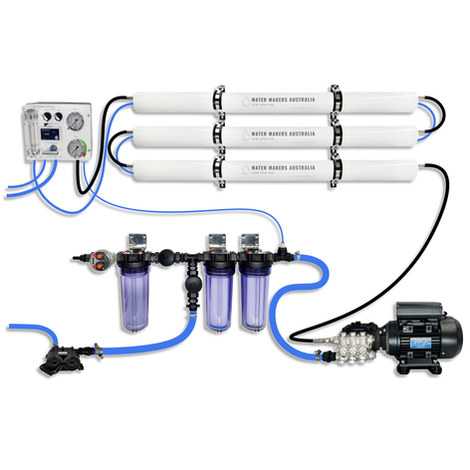
A three-membrane modular watermaker with 200 L/h nominal output and up to 240 L/h family-level marketing, for larger crews and heavy use.
Explore →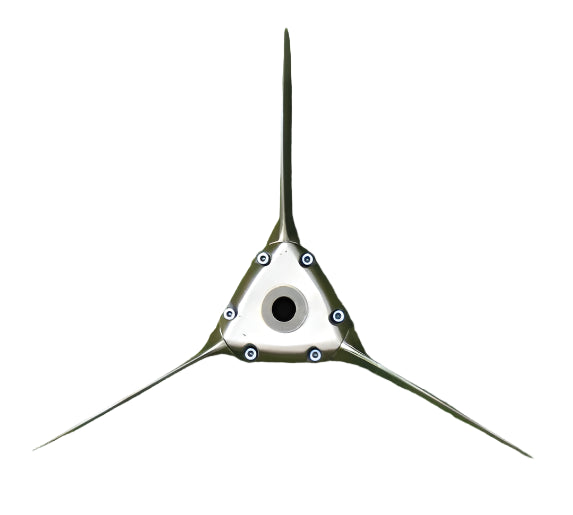
Feathering propeller designed for larger cruising yachts. Diameter range 18"–25"; shaft range 1¼"–1¾"; hub lengths 120mm or 165mm (with anode). Sail drive option available.
Explore →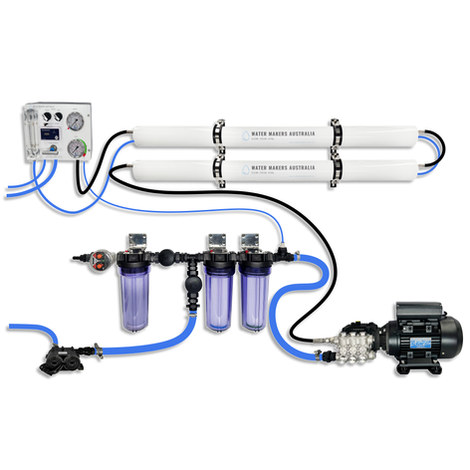
A two-membrane modular watermaker with 140 L/h nominal output, aimed at families and liveaboards that want more water per run.
Explore →