Loading this page…

Loading this page…
Sailing club
Port Fairy Yacht Club is a local sailing club in Port Fairy, VIC offering primarily keelboat ocean sailing including racing and cruising, and a sailability program. The club publishes a seasonal race program and visitor/crew registration information, and lists a contact email for enquiries.
About
Port Fairy Yacht Club is a local sailing club in Port Fairy, VIC offering primarily keelboat ocean sailing including racing and cruising, and a sailability program. The club publishes a seasonal race program and visitor/crew registration information, and lists a contact email for enquiries.
Service area: Port Fairy, VIC
Keep exploring
Every February, a fleet of ocean-racing yachts rounds Cape Otway, runs north-west past the Twelve Apostles and finishes off one of the oldest towns in Victoria — and the welcome waiting at the end has made Port Fairy Yacht Club famous well beyond its size. Within the ocean-racing fraternity the club is renowned for the warmth of its hospitality, a reputation earned one arrival at a time: hot food served to crews no matter the hour they cross the line, and a local pilot guiding each yacht up the Moyne River to a safe berth. For keelboat and trailable sailors, this is a club whose identity is bound up with the sea at its most demanding.
Home sailing happens on Port Fairy Bay, where the Southern Ocean rolls in along the stretch of Victoria known as the Shipwreck Coast. The clubhouse stands at 1 Griffith Street beside the Moyne River, close to the river mouth and the harbour, in a port town that ocean racers routinely describe as something out of a film — nineteenth-century cottages, Norfolk pines, old stone churches. The building is managed in connection with the Moyne Shire and is available for hire outside club activity, a typical arrangement for a country club of this scale.
The club is affiliated with Australian Sailing, sails under the PF prefix and belongs to Yachting Western Victoria, the regional body formed in Portland in 1959 that links clubs across the state's west and into South Australia's south-east. It draws members from Port Fairy and the surrounding district, and its calendar tilts toward grown-up keelboat racing rather than beach culture: passage races, short-course series and a seasonal rhythm that peaks when the visiting ocean fleet ties up along the Moyne each summer.
The signature commitment here is not a learn-to-sail course but a role no other Victorian club fills: Port Fairy Yacht Club serves as finishing host for the Ocean Racing Club of Victoria's Melbourne to Port Fairy race, a 135-nautical-mile Category 2 event that starts off Queenscliff and crosses some of the roughest water on the southern coast. Hosting means a full club weekend — race control, hospitality, berthing and prizegiving — and members take on the jobs personally.
Club member Bernie Campbell has put on hot food for every arrival regardless of the hour, while Adam Pope has piloted finishing yachts up the Moyne River to their moorings. The club also revived its own trophy for line honours, presented by Commodore Hugh Parker.
The home racing program, which runs from December through May, is built around a nine-race Aggregate series on Saturday afternoons, backed by the Bill Dalton and P & J Condon Short Course Series. Longer tests give the calendar its flavour: the Lefty McCann Julia Percy race, the Julia Percy race itself, the Warrnambool and Return passage races, a Latitude race, the Stern Chaser at Easter and a two-handed crew race. Race-control duties are rostered among member boats — names like Hawkeye, The Brothers, Redback and Running Wild take their turn on the start line.
Structured junior training is the one gap in the picture: no Tackers or formal learn-to-sail program is documented, and the club's footprint in that space appears minimal, so newcomers should make direct contact about current options. What the club does offer is a genuine pathway into passage and ocean racing. Regional events fill out the year — the Portland Regatta, the Admella Cup match racing at Portland and the Warrnambool to Portland race — and visiting sailors can join club racing via Australian Sailing's SailPass. For a competent dinghy or keelboat sailor wanting to step up to coastal racing, few small clubs offer a more direct apprenticeship.
Port Fairy sits where the Moyne River meets the Southern Ocean on Victoria's western coast, and the club's water is defined by that meeting. Inside, the river offers a sheltered, all-weather haven with berthing that accommodates deep-draft yachts; outside lies Port Fairy Bay and then open ocean. How much water the entrance offers depends on the dredging program and the state of the tide — yachts drawing 2.4 metres or less are generally unconstrained, while deeper boats may need to wait in the bay at low water. It is a working harbour, and the club's sailors learn its moods early.
The racing water east and west is serious. The club's offshore courses reach toward Julia Percy Island, the flat-topped volcanic cone offshore, and down the coast to Warrnambool. For the ORCV fleet, the 65-nautical-mile run in from Cape Otway traverses the junction where Bass Strait swell meets shallower coastal water, a junction the ocean-racing community warns can produce treacherous seas in strong winds; one storm edition of the race recorded gusts to 70 knots. The same water that hosts a gentle summer short-course race can, in a south-westerly gale, be among the most testing in the state.
The town completes the package. Port Fairy is among Victoria's earliest settlements, and its preserved nineteenth-century streetscapes make the arrival up the Moyne a pleasure in itself — visiting ocean racers have described it as out of a movie. Practical touches matter too: a fast rail connection lets race crews who finish on a Sunday return to Melbourne the same night. For sailors weighing a club on this coast, the combination is distinctive — a safe river haven, honest ocean water on the doorstep and a town worth staying in after the sails are down.
A Port Fairy Yacht Club was active by the autumn of 1893: the Hamilton Spectator of 23 March that year advertised the club's regatta for Easter Monday, promising an attractive programme. That notice is the earliest firm trace of organised club sailing in the town, though whether a continuous thread runs from that nineteenth-century body to today's club cannot be verified — the modern club's founding year is simply not documented, and its early records have left a faint digital trail. The honest framing is a port town where yacht clubs have formed and re-formed across the decades, riding on one of the oldest maritime communities in the state.
By the late twentieth century the club was firmly on the ocean-racing map. The Port Lincoln Times recorded in February 1990 that no fewer than three of that year's Adelaide to Port Lincoln starters hailed from Port Fairy Yacht Club — a remarkable representation for a small coastal club and a sign of how offshore-minded its sailors were. The relationship with the Ocean Racing Club of Victoria deepened into the role the club holds today: finish host of the Melbourne to Port Fairy race, one of the fixtures of the Victorian offshore calendar. The race record, set in 1984 by Quasimodo at 14 hours, 26 minutes and 20 seconds, has stood for decades.
That hosting tradition has produced the club's best-known stories. In one storm-ravaged running, the yacht Inception went down roughly seven miles out between Cape Otway and Warrnambool, her six-strong crew getting clear before a fellow competitor plucked them up under the race's incident response system — a reminder of what this coast can do and why the river haven matters. Through it all, members such as Bernie Campbell and Adam Pope became institutions in their own right, feeding and berthing tired crews at any hour.
The revived PFYC Trophy for line honours, handed over by Commodore Hugh Parker, ties the modern club to a race that has made Port Fairy a finishing-line name known to every offshore sailor in the state.
A practical cruising guide for the Moyne River port at the mouth of the Moyne River on Victoria’s south-west coast. It explains harbour geometry, seasonal conditions, principal sailing zones, anchorages, visitor facilities, known local hazards (bar, reefs, strong currents, surf and commercial traffic), regulatory controls and realistic experiences for day sailors, trailer-sailors and coastal cruisers. The guide draws on local port plans, state boating authorities, the yacht club’s visiting-boat practice and regional marine management documents.

Pick a protected bay, estuary or river reach where you can rig, launch and arrive on calm water within a short, sheltered transit; choose a site with a good ramp or jetty, clear recovery options and a nearby sailing club, marina or commercial operator for local knowledge and help.
Explore →
Write a one‑page plan with the who/what/when/where/how of your trip, keep a copy on board and leave the main copy with a responsible person ashore (and optionally with your club, marina office or local volunteer rescue service).
Explore →
Before your first sail in South Australian waters check the weather and tide, make sure the boat and safety equipment are fit for the trip, confirm local rules and any area-specific hazards, and tell someone your plan.
Explore →
Look for a friendly club with beginner-focused training, accessible facilities and boats, a supportive community, clear safety practices, and opportunities to progress at your own pace.
Explore →
A practical guide for new sailors on picking the right Australian sailing club: training, boat access, racing, social fit, costs and the key questions to ask before joining.
Explore →A practical guide for recreational sailors planning visits to Albany and King George Sound. Covers the main anchorage areas, typical local weather patterns, tidal and current considerations, navigational hazards, on-the-water etiquette and a pre-departure checklist to help you plan a safe passage and enjoyable stopover
Explore →A practical guide for recreational sailors planning voyages to Esperance and the Recherche Archipelago: what to expect, key planning considerations, common anchorages, safety and communications, equipment recommendations and sensible steps for a successful trip in this remote southern WA cruising area.
Explore →
A practical, Australia‑focused introduction to sailing: key terms, common boat types, basic manoeuvres, where to learn, licence and club options, and planning your first trips with safety and local conditions in mind.
Explore →Burke Yachtsman Gear Bag 40L - Shop Now Zip Pay | Tamar Marine Skip to content 59 – 63 Holbrook Street, Invermay Online Shop Open 24/7 Products search Contact us 1300 MARINE $ 0.00 0 Cart Burke Yachtsman Gear Bag 40L $ 79.90 Colour Choose an option Black Blue Black Blue Clear - Burke Yachtsman Gear Bag 40L quantity + Add to cart Enquire about this product SKU BAGB-Y24/BLACK* Category Bags - Sail & Gear A Burke classic and customer favourite, the Yachtsman’s Gear Bag is built tough to handle wet, salty conditions while keeping your gear dry and protected. Made from double coated waterproof…
Explore →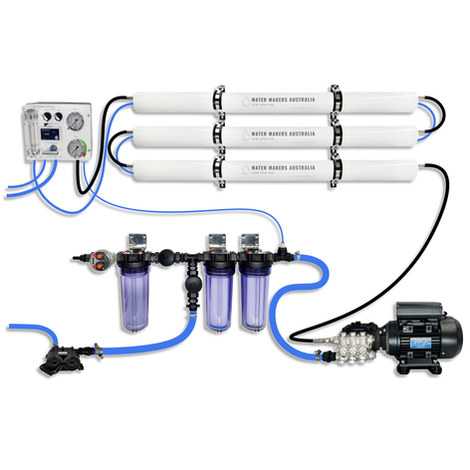
A three-membrane modular watermaker with 200 L/h nominal output and up to 240 L/h family-level marketing, for larger crews and heavy use.
Explore →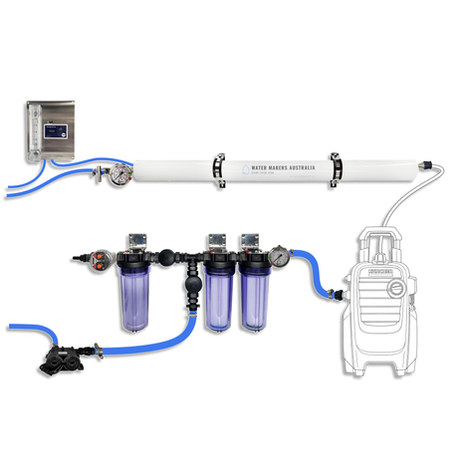
A one-membrane modular marine watermaker with 80 L/h nominal output, remote stainless control panel, standard consumables and direct Australian support.
Explore →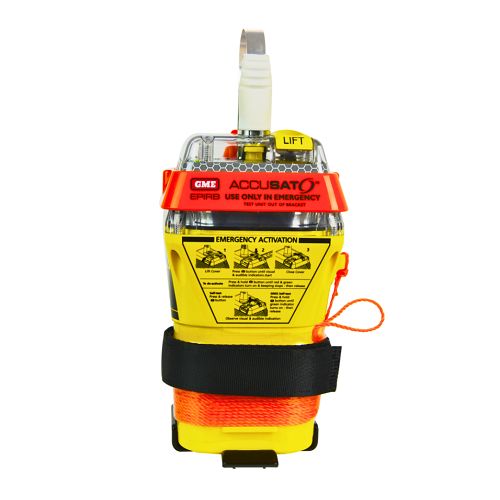
A 10‑year battery EPIRB with integrated GNSS (supports GPS and Galileo), infrared strobe and 121.5 MHz homing signal. Approved for worldwide COSPAS‑SARSAT operation.
Explore →