Loading this page…

Loading this page…
Sailing club
Port Walcott Yacht Club is a volunteer-run yacht club based at Wickham Back Beach on the Port Walcott coast in the Pilbara region of Western Australia. Operating since 1973, the club provides a licensed clubhouse, waterfront facilities for sailing and kayaking, a popular volunteer-run fish-and-chips social program and acts as a local event venue for fishing competitions and community gatherings. The club maintains its public presence primarily through a Facebook page.
About
Port Walcott Yacht Club is a volunteer-run yacht club based at Wickham Back Beach on the Port Walcott coast in the Pilbara region of Western Australia. Operating since 1973, the club provides a licensed clubhouse, waterfront facilities for sailing and kayaking, a popular volunteer-run fish-and-chips social program and acts as a local event venue for fishing competitions and community gatherings. The club maintains its public presence primarily through a Facebook page.
Service area: Wickham / Port Walcott coast (Pilbara, WA)
Keep exploring
Port Walcott Yacht Club Inc is a small, not-for-profit, volunteer-only yacht club located on Wickham Back Beach at Port Walcott, a short drive northeast of Karratha in Western Australia’s Pilbara. The club occupies a marina-style foreshore site beside the working horizon of Rio Tinto’s Cape Lambert iron ore port and serves as a local waterfront gathering place where sailing, kayaking and community events take place.
The club operates its clubhouse and waterfront facilities using volunteer labour and has a Western Australian liquor licence that supports community social functions. Members run a popular fish-and-chips day that draws locals and visitors to the foreshore setting, and the club frequently acts as the presentation venue and social hub for regional fishing competitions.
Port Walcott Yacht Club maintains an active Facebook page that carries notices, opening times and event updates. Because the club is volunteer-run, opening hours and formal programming can vary with member availability; prospective visitors are advised to check the club’s Facebook page or contact the club directly before arrival.
There are no verified learn-to-sail courses or formal training programs on the public record for Port Walcott Yacht Club, and any honest profile has to start there. What the club does provide, by its own description, is facilities for water sports including sailing and kayaking — the boatshed-and-beach infrastructure from which an all-volunteer, social-sailing model operates.
In practice, clubs of this kind tend to pass on skills informally: a newcomer crews with a regular, borrows a kayak, learns the local water by doing rather than by enrolling in a certified course. That pattern is common across remote Western Australia, where small membership bases and long distances from accredited centres make scheduled instruction hard to sustain; prospective sailors at Port Walcott should treat that as general context rather than a documented club offering, and contact the club directly about what is currently possible.
The nearest structured on-water capability in the district sits with Marine Rescue Port Walcott, the volunteer marine rescue group based at Wickham and part of the Volunteer Marine Rescue WA network, whose presence alongside the club strengthens local boating safety. The club's contribution to water-sport life is real even without a syllabus: it maintains the waterfront base, opens its doors on advertised days, and partners with the VMR on community events like the fishing competitions that bring hundreds of people to the coast.
For a sailor arriving in Wickham — a fly-in fly-out worker, a family posted to the port — the club is the obvious first call, reachable by phone, email or its active Facebook page. Formal courses may come and go with volunteer capacity; the facilities and the welcome are the constants.
The club's piece of coast is Wickham Back Beach at Port Walcott, a crescent of Pilbara shoreline between the towns of Wickham and Point Samson, roughly a dozen kilometres northeast of Karratha as locals measure their world. The setting is a study in contrasts. To one side stands Rio Tinto's Cape Lambert operation, one of the great iron ore export terminals of the north-west; to the other, a marina-style setting travel write-ups call popular for relaxation, and a surf spot nearby that comes alive only when cyclone swells push down the coast.
Port Walcott also sits adjacent to the area proposed for the Dampier Archipelago Marine Park, placing the club's sailing water at the edge of some of the richest marine country in Western Australia. The sailing itself is open-coast tropical work: warm water, seasonal winds, and the wet-season awareness that defines boating anywhere between Karratha and Port Hedland.
Cyclone season shapes the local calendar as surely as any fixture list, and the same swells that interrupt boating occasionally light up the surf break — a quirk few Australian yacht clubs can claim. The land beneath the club tells its own story: it sits on land the City of Karratha planning scheme zones Strategic Industry, legacy of the old Shire of Roebourne days, which means the club sails recreationally in a precinct planned for heavy use.
The Wickham Boat Beach Foreshore Management Plan, adopted May 2016 and prepared by the City of Karratha, covers the club's area and lists Rio Tinto as a key stakeholder, formal recognition that this beach serves industry, community and recreation at once. For visiting sailors, that mix is precisely the fascination: a working port horizon, empty tropical water, and a club verandah when the day is done.
A half-century of operation is on the record — the club has run continuously since 1973 — but the names of its founders and the exact date of its formation aren't published, so the early story begins with the setting rather than the people. Port Walcott's modern history is inseparable from the Pilbara iron ore boom: the Cape Lambert port development turned this stretch of coast into an industrial precinct, and the club site came to sit on land the Karratha planning scheme zones for strategic industry, inherited from the former Shire of Roebourne.
Coexistence with the port has not always been comfortable. A 2009 Environmental Protection Authority assessment of the Cape Lambert Port B development judged the visual impacts on the yacht club to be moderate to substantially adverse — an official acknowledgement that the view from the verandah had become part of an environmental approval equation. Security of tenure was the next battle.
After engagement stretching back to 2015, the City of Karratha, Rio Tinto and the club worked together in 2019 on alternative land tenure arrangements, minuted as intended to allow the club to continue operating with certainty. The Wickham Boat Beach Foreshore Management Plan of May 2016 had already brought the club's area into a managed framework with Rio Tinto at the table as a key stakeholder.
Through all of it the volunteer model endured: sailing and kayaking facilities, a licensed clubhouse, fish and chips run by members, and a growing role as the district's event waterfront. The Pilbara Fishing Extravaganza's weigh-in and presentation night now happen at the club in association with Port Walcott VMR, and 2026 was set to bring the Pilbara Barra Bonanza to the venue for the first time. Industry may own the horizon; the club owns the welcome.
Practical cruising guide to the Five Islands region off the Illawarra coast, centred on the islands east of Port Kembla and the neighbouring waters from Wollongong to Shellharbour. The guide describes coastal geography, prevailing conditions, main sailing zones, anchorages, arrival considerations, shoreside facilities, hazards and regulatory controls, and offers several realistic sailing experiences for day sailors, weekend cruisers and coastal passagemakers.

Expect very different seasonal systems across Western Australia: the south‑west (Perth to Albany) has a strong summer afternoon sea breeze (the “Fremantle Doctor”) and winter westerly fronts, while northern WA follows a wet/dry monsoonal cycle with strong seasonal onshore winds, thunderstorms and cyclone risk in the wet season. Local headlands, estuaries and tidal flows often change what you actually feel on the water, so learn the local timing and sheltered venues first.
Explore →
There are legal obligations in Western Australia for recreational boat owners and skippers covering vessel registration, carriage of safety equipment and general skipper responsibilities, but the exact requirements depend on vessel type, size, where you sail and whether the vessel is commercial or recreational. Check the Western Australian Department of Transport (DoT WA) and the national authority for the precise checklist that applies to your boat and voyage.
Explore →
Look for a friendly club with beginner-focused training, accessible facilities and boats, a supportive community, clear safety practices, and opportunities to progress at your own pace.
Explore →
Pick a protected bay, estuary or river reach where you can rig, launch and arrive on calm water within a short, sheltered transit; choose a site with a good ramp or jetty, clear recovery options and a nearby sailing club, marina or commercial operator for local knowledge and help.
Explore →
A practical guide for new sailors on picking the right Australian sailing club: training, boat access, racing, social fit, costs and the key questions to ask before joining.
Explore →A practical guide to the coastal weather systems that affect sailing along Western Australia's coast, focusing on the Fremantle Doctor, local sea breezes, and linked coastal phenomena. Explains how these systems form, when they tend to occur, how they influence boat handling and passage planning, common mistakes, and a
Explore →A concise, practical introduction to the essential parts of a recreational sailing boat for beginners in Australia. Covers hull, deck, rigging, sails, steering, below-decks spaces and safety equipment, with simple explanations, common mistakes and a pre-decast checklist to help new sailors communicate and get underway.
Explore →Practical guidance for recreational sailors planning coastal and remote cruising in Western Australia, focusing on tidal planning, reef awareness, navigation and safety preparation tailored to local conditions.
Explore →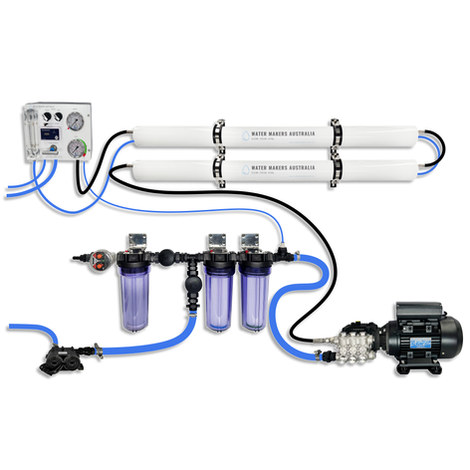
A two-membrane modular watermaker with 140 L/h nominal output, aimed at families and liveaboards that want more water per run.
Explore →Burke Yachtsman Gear Bag 40L - Shop Now Zip Pay | Tamar Marine Skip to content 59 – 63 Holbrook Street, Invermay Online Shop Open 24/7 Products search Contact us 1300 MARINE $ 0.00 0 Cart Burke Yachtsman Gear Bag 40L $ 79.90 Colour Choose an option Black Blue Black Blue Clear - Burke Yachtsman Gear Bag 40L quantity + Add to cart Enquire about this product SKU BAGB-Y24/BLACK* Category Bags - Sail & Gear A Burke classic and customer favourite, the Yachtsman’s Gear Bag is built tough to handle wet, salty conditions while keeping your gear dry and protected. Made from double coated waterproof…
Explore →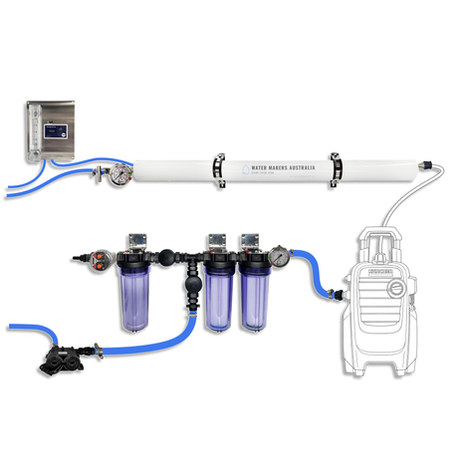
A one-membrane modular marine watermaker with 80 L/h nominal output, remote stainless control panel, standard consumables and direct Australian support.
Explore →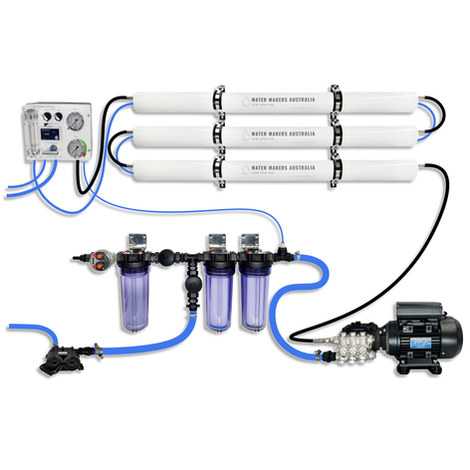
A three-membrane modular watermaker with 200 L/h nominal output and up to 240 L/h family-level marketing, for larger crews and heavy use.
Explore →