Loading this page…

Loading this page…
Sailing club
Princess Royal Sailing Club (PRSC) is a long-established yacht and community sailing club based at Pagoda Point, Little Grove, on the southern shore of Princess Royal Harbour, about nine kilometres from Albany town centre, Western Australia. The club operates a full racing calendar (October–June), an accredited Australian Sailing Discover Sailing Centre for keelboat training, an active Sailability program, marina berthing and hard‑stand facilities, and a busy social and events program in a harbour‑front clubhouse.
About
Princess Royal Sailing Club (PRSC) is a long-established yacht and community sailing club based at Pagoda Point, Little Grove, on the southern shore of Princess Royal Harbour, about nine kilometres from Albany town centre, Western Australia. The club operates a full racing calendar (October–June), an accredited Australian Sailing Discover Sailing Centre for keelboat training, an active Sailability program, marina berthing and hard‑stand facilities, and a busy social and events program in a harbour‑front clubhouse.
Service area: Princess Royal Harbour and King George Sound, Little Grove (Albany), Western Australia
Keep exploring
Adults learning on keelboats is the signature here. Princess Royal runs a six-week Learn to Sail course for sailors aged twenty-one and over, priced at $360 and leading to Australian Sailing's Start Crewing and Start Helming certificates — a structured on-ramp for grown-ups delivered through the club's accredited Discover Sailing Centre. Youth development scales up to a regional event: the annual Great Southern Youth Clinic and Regatta welcomes junior and youth sailors under twenty, with invited classes spanning the Minnow, Optimist and Open Skiff, the ILCA 4, 6 and 7 rigs, Pelican and Mirror dinghies, the 420 and 29er, the 125, and the RS Feva, RS Quest and Pacer — a roll-call that turns the harbour into the south coast's youth sailing capital for the duration.
A weekly Sailability program on Thursday mornings offers supported time on the water for people of all abilities, backed by specialised equipment and trained volunteers. The club also grows the instructors themselves, hosting Australian Sailing courses including a Keelboat Trainer program — normally $435 but offered free with grant funding — plus Assistant Dinghy Instructor and Safety Boat Operator qualifications, an investment that lifts capability across the whole Great Southern.
Dinghy sailors get early-morning Saturday learn-to-sail sessions, while a Cruising division casts off every Wednesday morning for leisurely harbour passages. Training is underwritten by named local support: Backing comes from Pinelock Systems, Rusty's Marine, the Albany Port Authority, Healthway and the state Department of Local Government, Sport and Cultural Industries. Racing anchors the week through the long October-to-June season, with Saturdays devoted to a full calendar plus twilight events, and coaching woven through.
It is an unusually complete offering for a regional club — entry-level to instructor level, dinghy to keelboat, racing to cruising — and the breadth is entirely documented.
Nine kilometres from the centre of Albany, the club looks out over Princess Royal Harbour from Little Grove, a position that hands its sailors two distinct bodies of water. Inside the heads, the harbour itself offers sheltered, reliable sailing — the natural arena for junior training, Sailability mornings and the Saturday club racing that fills the long season.
Beyond lies King George Sound, the grand open anchorage where ocean racing begins and where the club draws conditions for its bigger events; the club notes that it takes advantage of both environments, and the geography is genuinely unusual among Australian regional clubs. Shore infrastructure matches the water. A full marina serves the keelboat fleet — the largest pens measure twelve metres by five and a half, and three catamaran pens of ten metres by ten accommodate the multihulls — while a hard stand and boat shed handle storage and maintenance.
Visiting yachts drawing 2.4 metres or less are welcomed, making the club a recognised port of call for cruisers working along the south coast. Off-the-beach sailors launch by ramp, and the local Flying Fifteen contingent — three boats registered — sails Saturdays in season plus twilight fixtures. A bar, restaurant and function centre complete the waterfront picture, and the social calendar runs deep: quiz nights, themed dinners and live music sit alongside Friday member meals, Saturday sundowners from half past four and Sunday Sundowners.
The harbour even supplies the start line for another sport entirely — the Albany Harbour Swim, a four-kilometre open-water crossing, sets off from the club before finishing at Peace Park in town. Princess Royal Harbour has sheltered shipping for two centuries; for the sailors of Little Grove it remains the club's greatest asset.
The founding moment is precisely documented: 24 February 1909, when Frank Dymes brought Albany's sailing enthusiasts together at the Royal George Hotel in Stirling Terrace and a club was born. Early racing started from the Albany Town Jetty, and for its first decades the club lived a waterfront nomad's existence until the Shire of Albany granted it a lease of land at Pagoda Point, Little Grove, during the 1950s — the site it occupies to this day.
Stan Austin chronicled the first three-quarters of the journey in a 304-page volume published in 1986, its title marking seventy-five years of sailing at Albany from 1909 to 1984. The centenary year of 2009 produced the club's boldest celebration: revival of the ocean race from Fremantle to Albany — first sailed in 1968 and regarded, in the club's telling, as Western Australia's leading ocean race through the 1970s and 1980s before lapsing after the 1997 edition.
The revived race was set to return again on 19 April 2026 as part of Albany's Bicentenary celebrations, binding the club's story to the city's own two-hundred-year milestone. Season 2020-21 was formally the club's 112th, opened by Albany MLA Peter Watson, while Commodore Susette Evans welcomed members — a season that also had the club slated for a three-day State Mirror Championship in January 2021, reduced from national status by the pandemic, alongside its annual Easter Regatta.
The club's convening role has only grown: on 18 May 2025 it hosted the first WA Sailing Summit Roadshow staged by Australian Sailing's state office, drawing club leaders from across the region to Little Grove. From a hotel meeting room in 1909 to a marina-fronted clubhouse hosting state-level gatherings, the arc of 116 seasons has bent steadily upward.
Bathurst Harbour (Port Davey system), in south‑west Tasmania, is a vast, almost land‑locked estuarine harbour inside the Southwest National Park and World Heritage Area. It offers a remote, sheltered anchoring environment protected from the Roaring Forties, but demands careful planning, an awareness of marine‑reserve rules, and a willingness to operate in shallow, tannin‑stained waters. Best suited to experienced coastal cruisers and small expedition yachts prepared for self‑sufficiency, Bathurst Harbour is more a place to linger and explore on foot and by tender than a port of call for busy,

Before your first sail in South Australian waters check the weather and tide, make sure the boat and safety equipment are fit for the trip, confirm local rules and any area-specific hazards, and tell someone your plan.
Explore →
Pick a protected bay, estuary or river reach where you can rig, launch and arrive on calm water within a short, sheltered transit; choose a site with a good ramp or jetty, clear recovery options and a nearby sailing club, marina or commercial operator for local knowledge and help.
Explore →
Expect the usual IALA-B lateral system (red and green), cardinal and isolated-danger marks, safe-water and special marks, plus harbour-specific fairway buoys, leading/transit marks and exclusion or speed‑limit buoys. Check local harbour charts and Notices to Mariners for exact positions and light characteristics before entry.
Explore →
Write a one‑page plan with the who/what/when/where/how of your trip, keep a copy on board and leave the main copy with a responsible person ashore (and optionally with your club, marina office or local volunteer rescue service).
Explore →A practical guide for recreational sailors planning visits to Albany and King George Sound. Covers the main anchorage areas, typical local weather patterns, tidal and current considerations, navigational hazards, on-the-water etiquette and a pre-departure checklist to help you plan a safe passage and enjoyable stopover
Explore →
A concise, practical guide to the points of sail and how to trim sails effectively for common Australian conditions. Learn the basics of wind angles, sail shape, telltales, reefing considerations and simple steps to improve boat speed and balance.
Explore →
A practical guide for new sailors on picking the right Australian sailing club: training, boat access, racing, social fit, costs and the key questions to ask before joining.
Explore →A concise, practical introduction to the essential parts of a recreational sailing boat for beginners in Australia. Covers hull, deck, rigging, sails, steering, below-decks spaces and safety equipment, with simple explanations, common mistakes and a pre-decast checklist to help new sailors communicate and get underway.
Explore →Burke Yachtsman Gear Bag 40L - Shop Now Zip Pay | Tamar Marine Skip to content 59 – 63 Holbrook Street, Invermay Online Shop Open 24/7 Products search Contact us 1300 MARINE $ 0.00 0 Cart Burke Yachtsman Gear Bag 40L $ 79.90 Colour Choose an option Black Blue Black Blue Clear - Burke Yachtsman Gear Bag 40L quantity + Add to cart Enquire about this product SKU BAGB-Y24/BLACK* Category Bags - Sail & Gear A Burke classic and customer favourite, the Yachtsman’s Gear Bag is built tough to handle wet, salty conditions while keeping your gear dry and protected. Made from double coated waterproof…
Explore →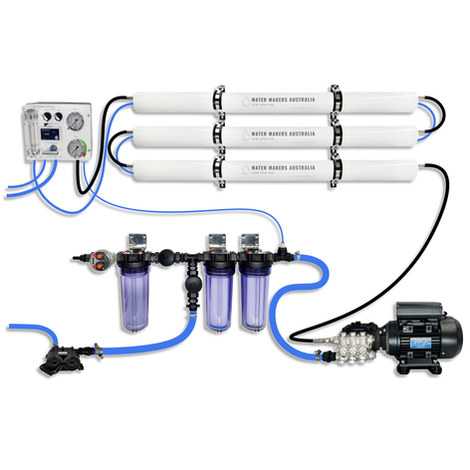
A three-membrane modular watermaker with 200 L/h nominal output and up to 240 L/h family-level marketing, for larger crews and heavy use.
Explore →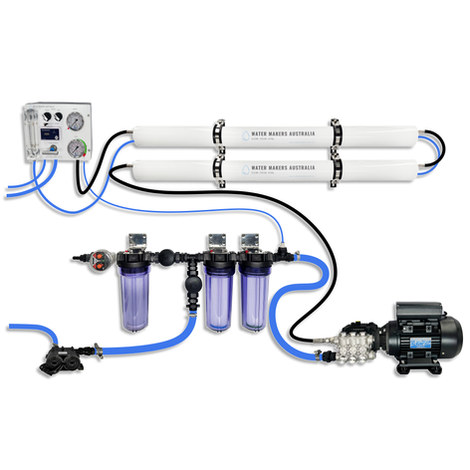
A two-membrane modular watermaker with 140 L/h nominal output, aimed at families and liveaboards that want more water per run.
Explore →
A 10‑year battery EPIRB with integrated GNSS (supports GPS and Galileo), infrared strobe and 121.5 MHz homing signal. Approved for worldwide COSPAS‑SARSAT operation.
Explore →