Loading this page…

Loading this page…
Sailing club
Queenscliff Cruising Yacht Club (QCYC) is a sailing club located on Swan Island at the entrance to Port Phillip Bay, adjacent to Swan Bay Marine Park. The club operates an extensive wharf and a refurbished clubhouse with kitchen, bathrooms, dining/meeting rooms, an upstairs reading room/bar and viewing decks. QCYC accepts visiting yachts for overnight stays with wharfage fees, runs organised races and events, and provides a launching ramp and dinghy storage. The club operates as a volunteer, self-help organisation and requires prior booking for wharf berths.
About
Queenscliff Cruising Yacht Club (QCYC) is a sailing club located on Swan Island at the entrance to Port Phillip Bay, adjacent to Swan Bay Marine Park. The club operates an extensive wharf and a refurbished clubhouse with kitchen, bathrooms, dining/meeting rooms, an upstairs reading room/bar and viewing decks. QCYC accepts visiting yachts for overnight stays with wharfage fees, runs organised races and events, and provides a launching ramp and dinghy storage. The club operates as a volunteer, self-help organisation and requires prior booking for wharf berths.
Service area: Queenscliff, VIC
Keep exploring
The sign outside the clubhouse reads simply Paradise, and nobody who has spent a weekend there argues with it. Queenscliff Cruising Yacht Club occupies Sand Island, next door to Swan Island right at the entrance to Port Phillip, and it is unlike any other club on the bay: a keelboat-only, cruising-centred club run entirely on a self-help, co-operative basis by its members, where the bar opening is announced by a yellow flag and a horn, and kangaroos and possums wander the island past the moored yachts.
Getting there is part of the ritual. The club's land is leased from the state and administered by Parks Victoria, and vehicle access runs through a Department of Defence security gate at the end of Bridge Street, Queenscliff — Checkpoint 1, open roughly seven to seven. You cannot walk or cycle across the causeway, pets and camping are banned, and crews sleep aboard their boats — as yachties should.
Inside the clubhouse the rules keep the mood analog: no television, no Wi-Fi and no power cabled down to the boats, with engines and generators permitted for battery charging only between nine and noon. The Ocean Racing Club of Victoria has described the place as an extremely well equipped, member-operated lodge for yachties, which captures it exactly.
The club's character has been shaped by deliberate modernisation as much as tradition. In October 2021 Lee Renfree was elected the club's first female Commodore, and her work — recognised with the 2022 Australian Sailing Victorian She Sails Award — has pushed female helm divisions into every one of the club's signature races. For cruising sailors who want a base at the Heads, a destination for bay passages, and a club where membership means lending a hand, Paradise lives up to its sign.
KISS — the Keelboat Introduction to Sailing Savvy program — is the club's creation and its clearest contribution to Victorian sailing. Established in 2021-22 under Commodore Lee Renfree, it is a by-women, for-women keelboat training course built from six online webinars, a Category 5 boat safety audit and a full day of hands-on workshops covering safety, radio and diesel engines, culminating in a thirty-nautical-mile passage race and rally from Altona to Queenscliff.
The first running, in July 2022, drew twenty-five women from eleven clubs with a waitlist behind them, supported by a grant from the state government's Office of Women in Sport and Recreation and by the ORCV. By 2025 more than eighty sailors had come through the program, and Renfree collected further national recognition during National Volunteers Week.
That program sits atop a calendar built for keelboats and their crews. The season opens on Melbourne Cup weekend with the HMAS Goorangai Memorial Trophy, a roughly twenty-six-nautical-mile passage race from Royal Brighton Yacht Club down the bay to the island — its fiftieth running came in 2025. Easter brings the Queenscliff Cup regatta, and Opening Day includes a traditional blessing of the fleet.
Women's participation is structural rather than decorative: all the club's on-water events now carry female helm divisions, with the Eliza Ramsden Trophy added to the Goorangai race in 2024 and a Commodore's Trophy for female helms joining the Queenscliff Cup in 2022, first won by Janet Torode of Royal Geelong.
There is no junior or dinghy pathway — this is a keelboat club and makes no apology for it. Instead the club serves as a destination partner: the ORCV's Women's Helm, Navigator and Radio Operator Race finishes here each August, with the Women's Return Sprint starting off the club wharf and boats rafting up for the night. For sailors whose ambition runs to passage-making rather than dinghy circuits, the club is both a venue and an education.
Sand Island is, in part, a human-made place: spoil dredged from Queenscliff Harbour helped build it, pushing the bay shoreline some four hundred metres seaward. Today the club sits between two waters — the protected shallows of Swan Basin to the west, adjoining the Swan Bay Marine Park, and an open sandy Port Phillip beach to the east. Queenscliff and its ferry lie just across the Cut, and Port Phillip Heads, with the notorious Rip, are minutes away under sail. That position makes the club the natural jumping-off point for yachts bound through the Heads into Bass Strait, and a safe haven for those coming in.
The wharf precinct is the operational heart. Two wharves, north and south, flank a dinghy ramp, and together they accommodate around thirty-five boats rafted up to three deep in roughly 2.3 metres of water at low tide. Boats over eighteen metres overall cannot be berthed, and anything over fifteen needs committee permission. The local tide lore matters: high and low water at the wharf run about three hours behind the Heads, and the current through the Queenscliff Cut can touch five knots, with the Sorrento ferry berthing at its head — first-time visitors quickly learn to time their arrivals.
Wharfage is modest: registered members' boats pay twenty-five dollars a night up to sixty nights a year, visitors fifty-five.
The clubhouse itself is the other half of the attraction: a commercial-style kitchen, dining and meeting rooms, an upstairs members' bar and reading room, viewing decks, bathrooms, laundry, barbecues, a pizza oven, a workshop, dinghy storage and a launching ramp — all maintained by member labour at an October working bee that traditionally flows into the AGM. A new North Wharf was officially opened during the 2025 season celebrations, the latest improvement in six decades of self-built infrastructure.
The club was born from a practical idea: keelboat sailors from around Port Phillip needed a base at the Heads. Occupancy of a modest spit at the bay's entrance was secured in October 1962 by Arthur Webb, Ross Farrow and Ranald McAllister, the club's founding trustees, after negotiations involving the Borough of Queenscliffe plus the public works and Defence departments. On 21 January 1963, forty yachtsmen met at Royal Brighton Yacht Club and formally brought the Queenscliff Cruising Yacht Club into being. Members then built the clubhouse with their own hands, opening it in December 1964 — establishing the co-operative, self-help ethic that still defines the place.
Memory and commemoration run deep in the club's calendar. The HMAS Goorangai Memorial Trophy honours the minesweeper that went down following a collision with MV Duntroon on 20 November 1940, all twenty-four of her crew lost — the Royal Australian Navy's first casualty of the Second World War. The trophy was presented by former club member Les Nangle, who had served aboard Goorangai as a petty officer in the Naval Reserve, and the race reached its fiftieth running in 2025.
In 2024 the club added the Eliza Ramsden Trophy, commemorating the three-masted barque that came to grief on Corsair Rock at the Heads in 1875 — her recovered anchor stands today outside the Queenscliff Maritime Museum — creating a women's division for the Goorangai race.
Milestones have kept coming. The sixtieth anniversary was celebrated over the last weekend of October 2022 with the Goorangai race and an Opening Day blessing of the fleet. A year earlier, Lee Renfree's election as first female Commodore had set the club's modern course and earned her state-level recognition for that work. The sixty-third season opened on 1 November 2025 with the fiftieth Goorangai and the official opening of the new North Wharf. Six decades on, the club still works the way its founders built it: members doing the work, on an island they were trusted to keep.
Bernier Island is a remote, conservation-focused island on the north-west edge of the Shark Bay World Heritage Area. It offers quiet, wildlife-rich cruising close to Dorre Island and the Shark Bay entrance, but the place is conservation-sensitive, has restricted visitor access and limited facilities — making it best for experienced cruising sailors planning day visits or short anchorage stops from Denham rather than casual overnight island-hopping.

Plan passages across Spencer Gulf or to Kangaroo Island by basing fuel on your boat’s actual consumption plus a generous reserve, choosing sensible staging/stop options that match your boat and crew, and prioritising shelter and weather windows (gale fronts, strong winds and tidal streams can make the gulf uncomfortable or unsafe). Confirm fuel availability, safe anchorages or marinas on your route, and check up-to-date local weather, tide and navigation information before you go.
Explore →
Use ramps and beaches with respect for local conditions: check ramp layout, tide and swell, wind direction, vehicle access and crowding; prepare boat and crew before you launch or retrieve; and follow local signage, courtesy and safety practices. Specifics vary by ramp and beach, so confirm details for the exact site before you go.
Explore →
Write a one‑page plan with the who/what/when/where/how of your trip, keep a copy on board and leave the main copy with a responsible person ashore (and optionally with your club, marina office or local volunteer rescue service).
Explore →
Before your first sail in South Australian waters check the weather and tide, make sure the boat and safety equipment are fit for the trip, confirm local rules and any area-specific hazards, and tell someone your plan.
Explore →A practical guide for recreational sailors planning visits to Albany and King George Sound. Covers the main anchorage areas, typical local weather patterns, tidal and current considerations, navigational hazards, on-the-water etiquette and a pre-departure checklist to help you plan a safe passage and enjoyable stopover
Explore →
A practical guide for new sailors on picking the right Australian sailing club: training, boat access, racing, social fit, costs and the key questions to ask before joining.
Explore →Practical guide for recreational sailors planning passages, anchorages and visits to Ningaloo Reef and the Exmouth coast. Covers anchoring considerations, marine park rules and how local weather, tides and currents affect safety and enjoyment.
Explore →A practical guide to the coastal weather systems that affect sailing along Western Australia's coast, focusing on the Fremantle Doctor, local sea breezes, and linked coastal phenomena. Explains how these systems form, when they tend to occur, how they influence boat handling and passage planning, common mistakes, and a
Explore →Burke Yachtsman Gear Bag 40L - Shop Now Zip Pay | Tamar Marine Skip to content 59 – 63 Holbrook Street, Invermay Online Shop Open 24/7 Products search Contact us 1300 MARINE $ 0.00 0 Cart Burke Yachtsman Gear Bag 40L $ 79.90 Colour Choose an option Black Blue Black Blue Clear - Burke Yachtsman Gear Bag 40L quantity + Add to cart Enquire about this product SKU BAGB-Y24/BLACK* Category Bags - Sail & Gear A Burke classic and customer favourite, the Yachtsman’s Gear Bag is built tough to handle wet, salty conditions while keeping your gear dry and protected. Made from double coated waterproof…
Explore →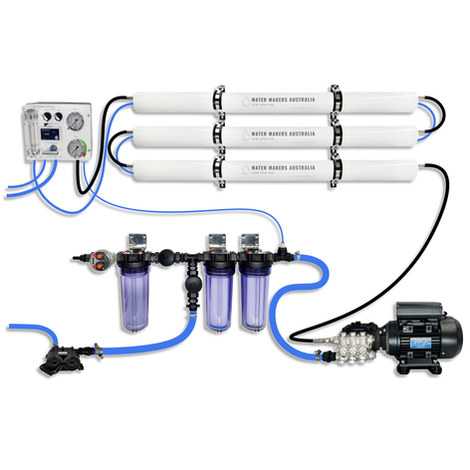
A three-membrane modular watermaker with 200 L/h nominal output and up to 240 L/h family-level marketing, for larger crews and heavy use.
Explore →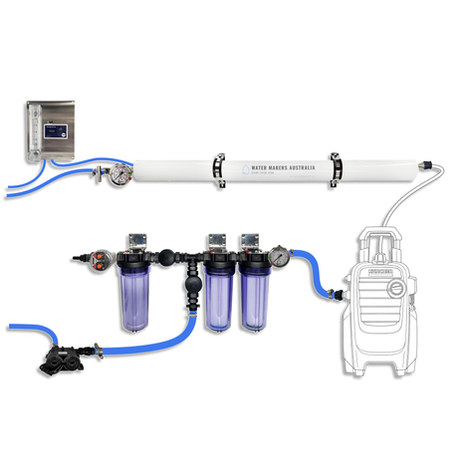
A one-membrane modular marine watermaker with 80 L/h nominal output, remote stainless control panel, standard consumables and direct Australian support.
Explore →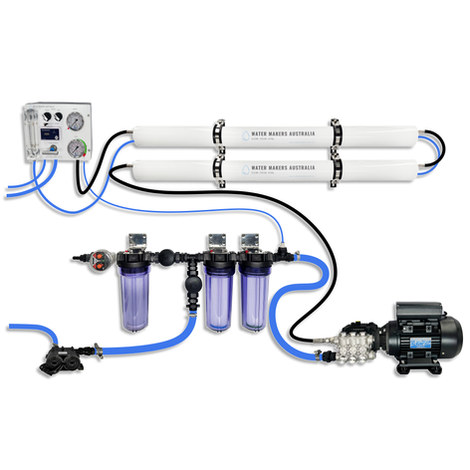
A two-membrane modular watermaker with 140 L/h nominal output, aimed at families and liveaboards that want more water per run.
Explore →