Loading this page…

Loading this page…
Sailing club
Sailing arm of the private Ranelagh Club at Mount Eliza, set in a 1920s estate designed by Walter Burley Griffin and Marion Mahony Griffin, with beach access, tennis, a bar and a restaurant over Port Phillip.
About
Sailing arm of the private Ranelagh Club at Mount Eliza, set in a 1920s estate designed by Walter Burley Griffin and Marion Mahony Griffin, with beach access, tennis, a bar and a restaurant over Port Phillip.
Service area: Mount Eliza, VIC
Keep exploring
Few sailing clubs anywhere operate inside a streetscape drawn up by the architects of Canberra. Ranelagh Yacht Squadron is the on-water arm of the Ranelagh Club at Mount Eliza, a private multi-sport and social club that occupies part of a 1920s estate designed by Walter Burley Griffin and Marion Mahony Griffin. The sailing squadron shares its home with tennis courts, a licenced bar and lounge with a fireplace, and a restaurant looking out over Port Phillip Bay, and the wider club counts around 2,000 members — a mix of young families, working professionals and retired couples, with private access to Ranelagh Beach below the clubhouse.
The squadron itself is deliberately broad in outlook. Alongside dinghy sailors it welcomes kayakers, stand-up paddle boarders, windsurfers, swimmers and the volunteers who drive the safety boats, which makes it less a hardcore racing outfit than a beach-and-water activities community with sailing at its centre. Supervised sessions, safety cover and a genuine pathway for children give it a family-first feel, and the club's own planning documents with the shire recognise "Ranelagh Club incl.
Ranelagh Yacht Squadron" as a key user group of this stretch of coast. Affiliated with Australian Sailing, the squadron suits Peninsula locals who want their sailing woven into a wider club life — a morning on the water, lunch on the deck, kids in a holiday program — rather than a stripped-back dinghy park and start line. It is an unusual model, and the heritage-listed Griffin garden suburb wrapping around it makes it more unusual still.
What sets Ranelagh apart is that much of its structured sailing development is delivered through a formal partnership with neighbouring Davey's Bay Yacht Club. Under a Memorandum of Understanding, Ranelagh members tap into a shared Sailing Academy that fields a fleet running from Optimists through to Lasers, with weekly Tackers sessions for ages seven to sixteen, Little Tackers for the four-to-six bracket, Adventure Sailing for Tackers graduates and dedicated Race Training for those chasing the next level. It is a pragmatic arrangement between two clubs barely a kilometre apart along the Mount Eliza coast, and it gives Ranelagh families a full junior pathway without the squadron needing to replicate an accredited training centre of its own — none is listed under the Ranelagh name.
Back at the club's own beach, the rhythm is friendly and supervised. Regular sailing runs on Sunday mornings from 10am, with twilight sessions on Wednesday evenings from 5pm through February, all under the eye of on-water safety boats and beach support crews. KidSail is the squadron's signature junior week: an annual course run across the opening week of January each year for members' kids aged seven to thirteen, timed perfectly for the summer holiday window.
Graduates and adults looking to sharpen up can step into Better Sailing, the club's skills-progression program that carries sailors from boat-handling essentials through to race-ready competence. The squadron also gives back to the wider sailing scene, supplying on-water and catering volunteers for interclub fixtures such as the Mornington Schools Teams races and the schools teams racing at Mornington Yacht Club's Schnapper Point Regatta in 2017.
The clubhouse sits high on the cliff above Ranelagh Beach at 3 Rosserdale Crescent, Mount Eliza, and the view alone explains why the function room is in steady demand for weddings and events — the whole sweep of eastern Port Phillip lies below, with the Melbourne skyline floating on the horizon on a clear day. A private path drops to the sand, where a row of brightly painted boat sheds lines the back of a small, protected bay beach near the mouth of Earimil Creek, below Earimil Lookout. Mount Eliza is roughly 62 kilometres from the city, about an hour's drive, which keeps the beach comparatively quiet outside holiday peaks.
The sailing happens on eastern Port Phillip, directly off the beach. Launching is straightforward in the bay's typically modest morning conditions, and summer afternoons bring the reliable sea breeze that makes this side of the bay such good teaching and twilight water — fresh enough to stretch experienced sailors, manageable enough for juniors in Optis under supervision. Tidal range is small and the water stays relatively flat until the afternoon breeze opposes a run-out tide.
The boating facilities stand within the Griffin-designed foreshore reserve, on land the club has held since the estate was laid out, so the rigging lawns and beach access carry a century of planning history under their grass. Good company is close at hand, too: Davey's Bay Yacht Club, founded in 1909, and the Canadian Bay Club, formed in 1958, are the squadron's immediate neighbours along this coast.
Ranelagh began as one of Australia's earliest experiments with the American country club idea. In 1924 a Melbourne company, John E. Taylor's Sequoia, commissioned Walter Burley Griffin and Marion Mahony Griffin — the designers of Canberra — together with surveyor and planner Saxil Tuxen to subdivide roughly 280 acres of Mount Eliza coastline into 795 residential blocks arranged at right angles to the bay, sold as a seaside retreat for Melbourne professionals.
The club itself dates its establishment to 1925, though a third-party directory records 1927, suggesting the club formed as the estate's subdivision took hold; the discrepancy of a year or two is unresolved, but the mid-1920s origin is beyond argument.
Ambition ran high from the start. In 1926 the committee resolved to build tennis courts, cricket grounds, a polo field, archery and hockey facilities, croquet lawns, bowling greens and a nine-hole golf course, plus a two-storey beach building costing £100 to house yachts and boats. Those eleven original sporting pursuits survive symbolically in the eleven stars of the club logo. Early sailing craft on the beach through the 1920s included a Flying Dutchman, several 525s, a Cabo and a fleet of Mirror dinghies.
In the estate's earliest days, membership was reportedly restricted to landowners within Ranelagh — an exclusivity long since gone. The estate now carries a listing on the Victorian Heritage Register, recognised for its Griffin, Mahony and Tuxen associations; a 1956 Olympic Games architecture guide even called Ranelagh the birthplace of Melbourne's modern movement. The club retains Lots B, E and M, having sold cliff-top Lot A in 1996 subject to a covenant preventing development, and Marie McMahon's 1996 book chronicles the full story of estate and club.
Batemans Bay and the Clyde River form a classic NSW South Coast cruising region where a sheltered, tidal estuary meets a short, island‑dotted entrance to the Tasman Sea. It’s distinctive for easy access from Canberra, a mix of river and bay sailing, a compact marina and mooring network, and a river entrance (the Clyde River bar) that can change rapidly. The area suits day sails, weekend cruising, trailer‑boat exploration and sheltered coastal passages; offshore or long‑passage plans require careful timing and local knowledge. Preparation for tidal flow, variable southerly swells and shallow, s

Look for a friendly club with beginner-focused training, accessible facilities and boats, a supportive community, clear safety practices, and opportunities to progress at your own pace.
Explore →
Pick a stable, simple, forgiving dinghy with a single sail or basic sloop rig, affordable handling and easy maintenance—ideally one with a local class or school nearby so you can access coaching and spare parts.
Explore →
Use ramps and beaches with respect for local conditions: check ramp layout, tide and swell, wind direction, vehicle access and crowding; prepare boat and crew before you launch or retrieve; and follow local signage, courtesy and safety practices. Specifics vary by ramp and beach, so confirm details for the exact site before you go.
Explore →
Before your first sail in South Australian waters check the weather and tide, make sure the boat and safety equipment are fit for the trip, confirm local rules and any area-specific hazards, and tell someone your plan.
Explore →
A practical guide for new sailors on picking the right Australian sailing club: training, boat access, racing, social fit, costs and the key questions to ask before joining.
Explore →A concise, practical introduction to the essential parts of a recreational sailing boat for beginners in Australia. Covers hull, deck, rigging, sails, steering, below-decks spaces and safety equipment, with simple explanations, common mistakes and a pre-decast checklist to help new sailors communicate and get underway.
Explore →
A practical, Australia‑focused introduction to sailing: key terms, common boat types, basic manoeuvres, where to learn, licence and club options, and planning your first trips with safety and local conditions in mind.
Explore →
A practical step‑by‑step guide to planning a safe, realistic coastal sailing passage in Australian waters: choosing a route, estimating distance and time, checking weather and tides, fuel and daylight planning, identifying safe harbours and anchorages, and preparing backup plans.
Explore →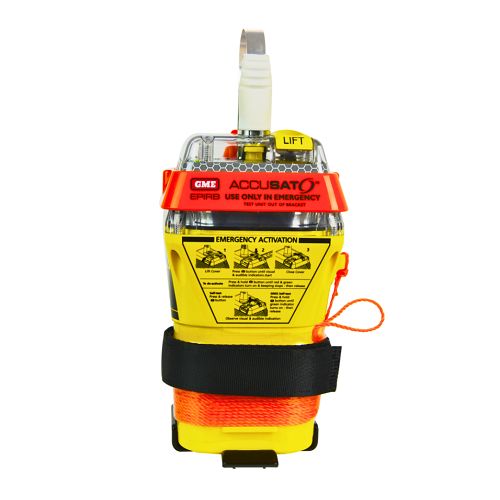
A 10‑year battery EPIRB with integrated GNSS (supports GPS and Galileo), infrared strobe and 121.5 MHz homing signal. Approved for worldwide COSPAS‑SARSAT operation.
Explore →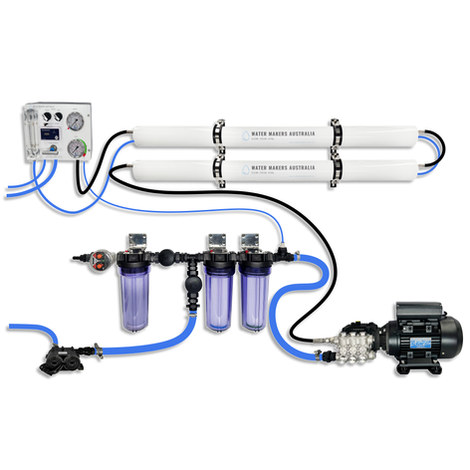
A two-membrane modular watermaker with 140 L/h nominal output, aimed at families and liveaboards that want more water per run.
Explore →Burke Yachtsman Gear Bag 40L - Shop Now Zip Pay | Tamar Marine Skip to content 59 – 63 Holbrook Street, Invermay Online Shop Open 24/7 Products search Contact us 1300 MARINE $ 0.00 0 Cart Burke Yachtsman Gear Bag 40L $ 79.90 Colour Choose an option Black Blue Black Blue Clear - Burke Yachtsman Gear Bag 40L quantity + Add to cart Enquire about this product SKU BAGB-Y24/BLACK* Category Bags - Sail & Gear A Burke classic and customer favourite, the Yachtsman’s Gear Bag is built tough to handle wet, salty conditions while keeping your gear dry and protected. Made from double coated waterproof…
Explore →
Self-contained, battery-powered plug‑and‑play autopilot designed for standard hydraulic steering systems.
Explore →