Loading this page…

Loading this page…
Sailing club
Volunteer-run, family-friendly yacht club on the foreshore at Rhyll, on Phillip Island's north-east corner, racing dinghies, multihulls, trailerables and keelboats from October to April.
About
Volunteer-run, family-friendly yacht club on the foreshore at Rhyll, on Phillip Island's north-east corner, racing dinghies, multihulls, trailerables and keelboats from October to April.
Service area: Rhyll, VIC
Keep exploring
Rhyll Yacht Club is exactly what a small coastal sailing club should be: volunteer-run, family-friendly and unpretentious, perched on the foreshore of a quiet fishing village on Phillip Island's north-east corner. Bass Coast Shire describes it as known for excellent facilities and an easy-going atmosphere, and that pairing sums the place up — the clubhouse and boat yard are genuinely well sorted, yet nobody is keeping score of anything but the racing. Dinghies, multihulls, trailerable yachts and keel boats all find a start line here, and the club welcomes each with equal enthusiasm.
The sailing calendar runs from October to April, and woven through it is a social program that would shame clubs many times its size. Roughly monthly gatherings, often pegged to public holiday weekends like New Year, Australia Day and Easter, keep the clubhouse humming, and social memberships mean partners and friends who never touch a sheet are still part of the place.
Governance is thoroughly grassroots: a committee elected each June at the annual general meeting, every member of it carrying a portfolio, and representation on the Yachting Western Port Committee of Management tying Rhyll into the wider bay community alongside Cowes and Newhaven. Affiliations run from Yachting Australia and Yachting Victoria through to the regional Yachting Western Port body, plus the various class associations, keeping the club connected upward as well.
For a visiting sailor, the appeal is simple — genuine Western Port racing, a two-storey clubhouse overlooking the course area, and a crowd that will talk sailing with you over a drink long after the boats are packed away.
Rather than leaning on a branded national learn-to-sail ladder, Rhyll runs training in its own idiom, and the club is upfront about it: for those new to the sport, it offers training opportunities pitched at different skill levels, delivered by members in the club's own boats and waters. No Discover Sailing Centre accreditation or Tackers branding is listed in the club's name, so the emphasis falls where it naturally does at a volunteer club — on getting newcomers into boats alongside experienced hands and letting the racing do the teaching.
And what a classroom the fleet is. The off-the-beach divisions have, across recent seasons, thrown together an eclectic yardstick mix: Impulse, Sabre, Mirror, 125 and Taser dinghies among committee members' own boats, with past summer series results showing 420s, Corsairs, 29ers, Javelins, Hobie 14s and Pacers all racing under yardstick. That variety is a genuine asset for a developing sailor, because handicap racing against dissimilar boats teaches trimming for speed rather than one-design boat-on-boat tuning.
Inter-club competition lifts the standard further: Rhyll contests the Westernport Challenge and the Triangular Series against neighbouring clubs, and the Westernport Challenge off-the-beach event is run on behalf of the Yachting Western Port clubs — Rhyll, Cowes and Newhaven among them — open to any beach-launched boat. Two rescue boats provide the safety cover for every on-water event, and members can train up for rescue boat crew duties, which doubles as both a safety investment and a practical skills pathway.
Season racing and training run together from October through to April.
Western Port is the making of this club. The clubhouse stands on the Beach Road foreshore at Rhyll, looking straight out over the stretch of bay where the racing is held, and from the first-floor race control tower the duty crew can watch every beat and run without leaving their chairs. Downstairs there are change rooms and equipment storage; upstairs, a function room and kitchen that the club hires out between regattas. Beside the clubhouse sits a secure, fenced boat storage yard adjacent to the foreshore and boat ramp, with room for dinghies and trailable yachts alike — the yard was, fittingly, the first structure the club ever built.
Rhyll itself is well set up for boating, with an all-tide ramp plus two jetties serving a village that has launched boats since a 300-foot jetty went in back in 1868. The racing waters of north-eastern Western Port are tidal, so local knowledge of channels and banks matters; the club's earliest courses threaded permanent channel markers near Rhyll and rounded the Minah wreck off Churchill Island, and that working-water character remains. Sailors here learn to read current as readily as wind.
The rewards are environmental as well as tactical — neighbouring Rhyll Inlet is recognised as internationally significant habitat for migratory wading birds, and a quiet reach home can come with a show of spoonbills and oystercatchers. The village lies about 80 kilometres south-east of Melbourne as the crow flies, rather further by road, with Phillip Island reached via the 1940 bridge at San Remo.
The club's own account says it all began in 1969, when a group of resident sailors decided Rhyll needed a dedicated sailing club, then spent a full two years choosing a suitable site and drawing up plans. Local reference sources, including Victorian Places and a regional directory, date the club from 1971 — a discrepancy the club is relaxed about, and one easily explained if 1969 marks the decision and 1971 the formal establishment. Either way, the founding membership was 39 families fielding a fleet of 25 boats, racing around the permanent channel markers off Rhyll and out to the Minah wreck near Churchill Island.
The early years ran on improvisation. Race timekeeping was done from a car parked at the foreshore, the starter hooting the car horn as each boat crossed the finish line — a detail the club still recounts with affection. Practicality came first: the fenced boat yard went up before any clubhouse, and when the clubhouse did rise it was built entirely by volunteer labour, officially opened on 22 November 1981. Community responsibility arrived early too.
In 1973–74 the club signed on with the just-formed Westernport Safety Council, putting radios and its own Search and Rescue craft, RH11, at the service of the emergency network across Western Port Bay — a serious commitment for a club only a few years old. The township around it carries deeper maritime roots: Rhyll was named after a village in northern Wales, George Bass anchored offshore for ten days in 1798, and the jetty dates to 1868. From car-horn finishes to a modern two-storey clubhouse, the volunteer spirit has never really changed.
American River (Kangaroo Island, SA) is a small, sheltered inlet and township on the north‑eastern side of Kangaroo Island that acts as a calm staging point for cruising the eastern part of the island and for short hops through Backstairs Passage. It’s distinctive for its protected anchorage inside Eastern Cove and the adjacency of Pelican Lagoon — a shallow, ecologically important lagoon with sanctuary zoning — which shapes how and where boats can move. The area suits sheltered day sailing, weekend cruising and short coastal passages; it’s appropriate for trailer sailors, small cruisers and a

Look for a friendly club with beginner-focused training, accessible facilities and boats, a supportive community, clear safety practices, and opportunities to progress at your own pace.
Explore →
Late spring to summer is usually the best time for beginners to start learning to sail in Tasmania because the weather is generally warmer, days are longer and conditions are often more settled. Expect lighter to moderate winds with regular afternoon sea breees in summer, while spring and autumn bring more changeable and sometimes stronger conditions; winter is colder, wetter and typically windier with more fronts and swell.
Explore →
Use ramps and beaches with respect for local conditions: check ramp layout, tide and swell, wind direction, vehicle access and crowding; prepare boat and crew before you launch or retrieve; and follow local signage, courtesy and safety practices. Specifics vary by ramp and beach, so confirm details for the exact site before you go.
Explore →
Write a one‑page plan with the who/what/when/where/how of your trip, keep a copy on board and leave the main copy with a responsible person ashore (and optionally with your club, marina office or local volunteer rescue service).
Explore →A practical guide for recreational sailors planning visits to Albany and King George Sound. Covers the main anchorage areas, typical local weather patterns, tidal and current considerations, navigational hazards, on-the-water etiquette and a pre-departure checklist to help you plan a safe passage and enjoyable stopover
Explore →Practical guide for recreational sailors planning a coastal cruise from Sydney north to the Queensland border. Covers route options, weather and tidal considerations, planning checklists, common hazards, anchorages and practical examples for a safe, enjoyable trip.
Explore →
A practical guide for new sailors on picking the right Australian sailing club: training, boat access, racing, social fit, costs and the key questions to ask before joining.
Explore →A practical guide for recreational sailors planning voyages to Esperance and the Recherche Archipelago: what to expect, key planning considerations, common anchorages, safety and communications, equipment recommendations and sensible steps for a successful trip in this remote southern WA cruising area.
Explore →Burke Yachtsman Gear Bag 40L - Shop Now Zip Pay | Tamar Marine Skip to content 59 – 63 Holbrook Street, Invermay Online Shop Open 24/7 Products search Contact us 1300 MARINE $ 0.00 0 Cart Burke Yachtsman Gear Bag 40L $ 79.90 Colour Choose an option Black Blue Black Blue Clear - Burke Yachtsman Gear Bag 40L quantity + Add to cart Enquire about this product SKU BAGB-Y24/BLACK* Category Bags - Sail & Gear A Burke classic and customer favourite, the Yachtsman’s Gear Bag is built tough to handle wet, salty conditions while keeping your gear dry and protected. Made from double coated waterproof…
Explore →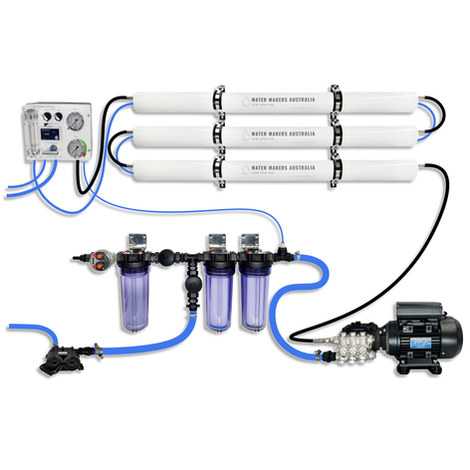
A three-membrane modular watermaker with 200 L/h nominal output and up to 240 L/h family-level marketing, for larger crews and heavy use.
Explore →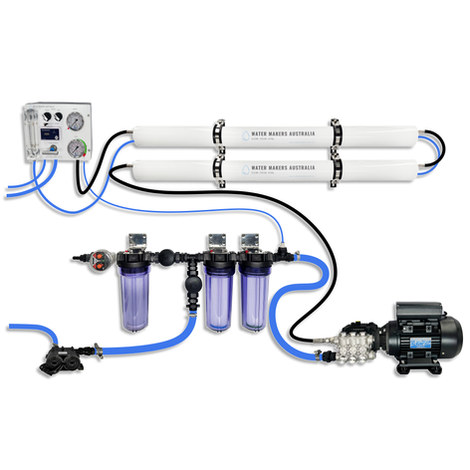
A two-membrane modular watermaker with 140 L/h nominal output, aimed at families and liveaboards that want more water per run.
Explore →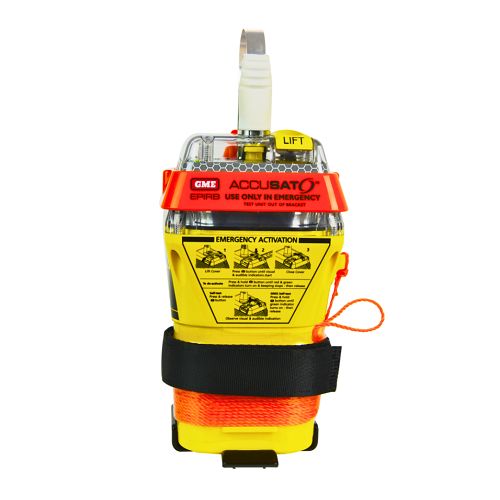
A 10‑year battery EPIRB with integrated GNSS (supports GPS and Galileo), infrared strobe and 121.5 MHz homing signal. Approved for worldwide COSPAS‑SARSAT operation.
Explore →