Loading this page…

Loading this page…
Sailing club
A beach club at heart on Port Phillip at Rosebud: racing under a "fun, friends and frivolity" ethos, with free use of club paddleboards and gear for members and plenty of social life on the sand.
About
A beach club at heart on Port Phillip at Rosebud: racing under a "fun, friends and frivolity" ethos, with free use of club paddleboards and gear for members and plenty of social life on the sand.
Service area: Rosebud, VIC
Keep exploring
Ask the members what kind of club Rosebud is and they'll tell you straight: a beach club. Sailing is the reason it exists, but the culture sprawls happily across the sand — members get free use of the club's stand-up paddleboards and sporting gear, and a summer afternoon can as easily mean beach cricket, volleyball, table tennis or a lazy swim as a race. The stated racing ethos is "fun, friends and frivolity", conducted in a safe environment under the watch of support boats, and the club is genuinely community-run, depending on members to pitch in for its continuing development and day-to-day operation.
On the water, Rosebud is an off-the-beach club through and through, sailing the shallows of Port Phillip off the Rosebud foreshore. The fleet splits into divisions that give everyone a fair race: Division 1 for catamarans, Division 2 for monohulls up to yardstick 131, and Division 3 for juniors and green-fleet sailors in the slower boats, with foilers and juniors also catered for in distance events. That structure tells you a lot about the place — it is built to absorb raw beginners and young sailors into real racing without feeding them to the experts.
Volunteering is organised with unusual care for a club this size, with a duty roster of named teams and principal race officers running each Sunday. Families weighing up a Mornington Peninsula club will find Rosebud unpretentious, affordable in spirit and unusually good at making a first season feel like belonging rather than auditioning.
The Junior Sailing Program is the engine room of Rosebud's future membership. Qualified instructors and experienced volunteers teach kids boat handling, trimming sails, balance, righting a capsized dinghy and working together as a crew, using the shallow, sheltered water off the Rosebud foreshore as the classroom — water the club rightly calls the perfect training ground, because a capsize here means standing waist-deep beside the boat rather than a long wait for a rescue boat. The program is club-run rather than a branded national pathway; no Discover Sailing Centre accreditation or Tackers banner is listed in the club's name, so the teaching follows the club's own syllabus and the instincts of its instructors.
For older newcomers, beginner courses take first-timers through the fundamentals, and a "sail faster" course picks up where they leave off, aimed squarely at racing skills for sailors who want to stop following the fleet and start troubling it. The bridge from course to competition is deliberately short: weekly club racing is presented as the natural next step, with several short races, often sailed back to back, in each session so learners get repeated starts and plenty of mark roundings in a single afternoon.
Sundays through the season, which runs from mid-October to the end of March, see races at 11am and again at 2pm, weather permitting. Signature events add spice to the calendar — the Le Mans Cup sends crews sprinting down the beach to their boats for a running start, while green-fleet juniors graduate through Division 3 into the full divisions as their confidence builds. It is a simple, well-worn ladder, and it works because every rung is sailed in the same forgiving shallows.
The club stands on the Rosebud foreshore at 990 Point Nepean Road, across from 6th Avenue, next door to the Village Green and a short stroll from the heritage-listed Sound Shell — about as public and visible a sailing address as you will find on the Peninsula. Facilities are practical rather than polished. "The Compound" handles boat and trailer storage, rigging and washing down, a ramp runs from the yard straight to the beach for launching, and a shipping container houses the club's rescue rubber duck and gear. Everything is arranged around the essential fact of the venue: the beach is the boat park, the rigging lawn and the start line all at once.
The water itself is the club's great asset. Port Phillip off Rosebud is shallow and sheltered, with sandbars that knock the chop down and keep the sea warm by bay standards — ideal for juniors, though it rewards sailors who know where the banks sit at low tide. Because the club shares a busy bathing beach, its racing rules give swimmers right of way near shore and build sandbar and swimmer-safety provisions into beach starts, a civility that keeps relations with the foreshore crowd easy.
For bigger adventures the club ranges west into Capel Sound, the stretch of bay between Rosebud and Rye, where distance races run up to 24 kilometres for catamarans and 36 kilometres for foilers around a common gate set roughly off Violet Street. When the summer sea breeze fills in against that open reach of water, Capel Sound offers some of the longest, fastest off-the-beach legs on the bay.
Even the town owes its name to a boat. In 1851 a westerly gale drove the schooner Rosebud onto a sandbank just off the beach, and locals who gathered to salvage her timbers took to meeting at "the Rosebud" — the settlement grew up around the name. Sailing followed naturally: through the 1940s and 1950s this foreshore hosted many large regattas, including races that brought fleets down the bay from Melbourne to the Peninsula.
The club as it exists today was formally established in 1969, when a group of friends met in the youth hall beside the Sound Shell and drafted a constitution at a general meeting. Getting a permanent home took a decade of persistence. A permit for building extensions was first sought in 1971; the club won an appeal against a council refusal, only to see the permit lapse.
In 1978 Flinders councillors finally granted a permit covering a kitchen, toilets, change and first-aid rooms, a control tower with observation deck and racking for boat storage — despite the shire engineer recommending against it. In the meantime the club made do gloriously: the race control tower began life as a tank stand shifted onto the site with a clad box bolted on top, an old caravan dispensed tea and coffee, and a plastic screen behind the tower served as the change room.
The new clubhouse on the current site was officially opened in 1979, with 91 boats sailing on the day while the Shire Band played. Incorporation followed in 1984. The club has since punched well above its weight as a regatta host — the first Hobie State Titles, a Paper Tiger Championship with more than 70 entries, the once-famous Frankston to Rosebud Marathon, and class titles from Corsairs through to A Class catamarans, Taipans, F16s and F18s.
American River (Kangaroo Island, SA) is a small, sheltered inlet and township on the north‑eastern side of Kangaroo Island that acts as a calm staging point for cruising the eastern part of the island and for short hops through Backstairs Passage. It’s distinctive for its protected anchorage inside Eastern Cove and the adjacency of Pelican Lagoon — a shallow, ecologically important lagoon with sanctuary zoning — which shapes how and where boats can move. The area suits sheltered day sailing, weekend cruising and short coastal passages; it’s appropriate for trailer sailors, small cruisers and a

Use ramps and beaches with respect for local conditions: check ramp layout, tide and swell, wind direction, vehicle access and crowding; prepare boat and crew before you launch or retrieve; and follow local signage, courtesy and safety practices. Specifics vary by ramp and beach, so confirm details for the exact site before you go.
Explore →
Look for a friendly club with beginner-focused training, accessible facilities and boats, a supportive community, clear safety practices, and opportunities to progress at your own pace.
Explore →
Expect very different seasonal systems across Western Australia: the south‑west (Perth to Albany) has a strong summer afternoon sea breeze (the “Fremantle Doctor”) and winter westerly fronts, while northern WA follows a wet/dry monsoonal cycle with strong seasonal onshore winds, thunderstorms and cyclone risk in the wet season. Local headlands, estuaries and tidal flows often change what you actually feel on the water, so learn the local timing and sheltered venues first.
Explore →
Anchor in rocky coves, sandy bays and tidal flats by choosing the right ground and anchor, giving plenty of scope, setting the anchor slowly and testing it, and planning for tidal change and swing room.
Explore →
A practical guide for new sailors on picking the right Australian sailing club: training, boat access, racing, social fit, costs and the key questions to ask before joining.
Explore →A practical guide for recreational sailors on using VHF marine radios safely and effectively in Australian waters: basic operation, channel use, emergency procedures, DSC basics, common mistakes and a ready checklist for pre-departure and on-water use.
Explore →A practical guide for recreational sailors planning voyages to Esperance and the Recherche Archipelago: what to expect, key planning considerations, common anchorages, safety and communications, equipment recommendations and sensible steps for a successful trip in this remote southern WA cruising area.
Explore →A practical guide for recreational sailors planning visits to Albany and King George Sound. Covers the main anchorage areas, typical local weather patterns, tidal and current considerations, navigational hazards, on-the-water etiquette and a pre-departure checklist to help you plan a safe passage and enjoyable stopover
Explore →Burke Yachtsman Gear Bag 40L - Shop Now Zip Pay | Tamar Marine Skip to content 59 – 63 Holbrook Street, Invermay Online Shop Open 24/7 Products search Contact us 1300 MARINE $ 0.00 0 Cart Burke Yachtsman Gear Bag 40L $ 79.90 Colour Choose an option Black Blue Black Blue Clear - Burke Yachtsman Gear Bag 40L quantity + Add to cart Enquire about this product SKU BAGB-Y24/BLACK* Category Bags - Sail & Gear A Burke classic and customer favourite, the Yachtsman’s Gear Bag is built tough to handle wet, salty conditions while keeping your gear dry and protected. Made from double coated waterproof…
Explore →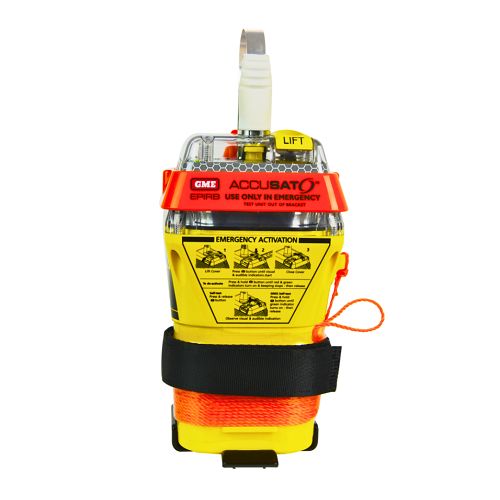
A 10‑year battery EPIRB with integrated GNSS (supports GPS and Galileo), infrared strobe and 121.5 MHz homing signal. Approved for worldwide COSPAS‑SARSAT operation.
Explore →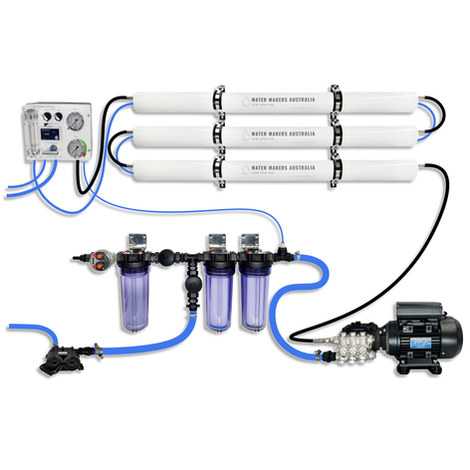
A three-membrane modular watermaker with 200 L/h nominal output and up to 240 L/h family-level marketing, for larger crews and heavy use.
Explore →
Self-contained, battery-powered plug‑and‑play autopilot designed for standard hydraulic steering systems.
Explore →