Loading this page…

Loading this page…
Sailing club
Royal Freshwater Bay Yacht Club (RFBYC) is a historic mixed yacht club based at Keane's Point, Hobbs Place, Peppermint Grove, Western Australia. The club runs a full calendar of on-water activity across Freshwater Bay and Melville Water, including off‑the‑beach development fleets, strong keelboat classes (notably Etchells and Flying Fifteen), high‑performance pathway programs and a long-established offshore racing schedule led by the Bunbury and Return Ocean Race. The clubhouse occupies the former Keane residence and combines marina berthing, launching cranes and shore-side facilities for members and guests.
About
Royal Freshwater Bay Yacht Club (RFBYC) is a historic mixed yacht club based at Keane's Point, Hobbs Place, Peppermint Grove, Western Australia. The club runs a full calendar of on-water activity across Freshwater Bay and Melville Water, including off‑the‑beach development fleets, strong keelboat classes (notably Etchells and Flying Fifteen), high‑performance pathway programs and a long-established offshore racing schedule led by the Bunbury and Return Ocean Race. The clubhouse occupies the former Keane residence and combines marina berthing, launching cranes and shore-side facilities for members and guests.
Service area: Peppermint Grove / Freshwater Bay (Melville Water), Western Australia
Keep exploring
Royal Freshwater Bay Yacht Club traces its origins to 1896 and occupies Keane's Point at 1 Hobbs Place, Peppermint Grove. The elevated clubhouse looks across Freshwater Bay to Melville Water and combines heritage rooms, dining and function facilities with a full-service marina and boat‑handling infrastructure. RFBYC is active at club, state, national and international levels and is a foundation member of the International Council of Yacht Clubs.
RFBYC runs a broad spectrum of sailing: off‑the‑beach development fleets and coaching, keelboat and mixed-division racing, offshore events and powerboating. The club supports both recreational and high‑performance pathways and stages signature events including the Bunbury and Return Ocean Race. Its facilities and location make it suitable for dinghy sailors, keelboat crews and offshore competitors alike.
The Sailing High Performance Programme is the jewel in the club's development crown. Delivered from Freshwater Bay jointly with the Western Australian Institute of Sport, Yachting Western Australia and Australian Sailing, it places elite-pathway training inside a member club environment — a combination few organisations anywhere in the country can offer. The production line is demonstrable: the club's youth academy feeds sailors into senior competition, with eighteen-year-old Grayson Downs, a product of the club's youth programs, taking a crew spot in the 2022 edition of the Bunbury and Return Ocean Race.
Entry points are deliberately numerous. Learn to Sail programs cater for kids, teens and adults separately; school group programs introduce whole classes to the sport; and powerboat courses round out the certificate-level offerings. On the water, the activity list is remarkable in range — off-the-beach dinghy sailing with Green and Orange Fleet pathways and dedicated coaching, keelboat and offshore racing, St Ayles Skiff rowing, remote control sailing, and even power boating down to time trialling all run under the one burgee.
Guest participation is smoothed by SailPass, the national short-term membership pass, letting visitors race without a full commitment. The Flying Fifteen fleet, thirteen strong, sails Saturday afternoons in season with launching by ramp or via the club's three overhead cranes, and twilight events plus Sunday-morning off-season sailing keep the water busy nearly year-round.
What ties the whole structure together is depth: a child can start in an entry fleet, climb through academy coaching and emerge into Etchells or offshore competition alongside sailors of the calibre of Dirk Van Der Struyf, a two-time Australian match racing champion. The pathway from first tack to elite racing exists here in full.
Freshwater Bay is the club's front yard and Melville Water its racetrack. Sailing is generally conducted on Melville Water, the wide basin of the Swan River downstream of the clubhouse, while the building itself looks across Freshwater Bay from its elevated position at Peppermint Grove, a dozen kilometres from the city. The stretch of river here is among the most storied in Australian yachting — deep enough for keelboats, broad enough for full-sized courses, and close enough to the Fremantle approaches that offshore crews can be at sea within the hour.
Onshore, the facilities reflect more than a century of accumulated capability: bars, restaurants and a function centre serve members and the events market, and a marina supports the keelboat fleet alongside three overhead cranes that handle launching for boats too heavy for the ramp. River-view rooms host weddings, family celebrations and corporate functions, making the clubhouse one of the western suburbs' most sought-after private venues — a commercial strength that underwrites the sailing program.
The property itself carries heritage weight: the club occupies the former Keane residence, leased from the Government in 1936, probably Peppermint Grove's earliest surviving house, erected not long after the suburb was subdivided in 1891. Keane's Point, named for the founding captain, marks the geography of the club's origin story. Practically, the site works for every discipline the club runs — dinghies launch from the foreshore, Flying Fifteens swing from cranes, offshore yachts berth in the marina, and rowers in the St Ayles Skiff share the same water.
Few clubs anywhere combine a historic homestead setting, full-service marina infrastructure and direct access to both river and ocean sailing in one address.
In 1896 Edward Keane — then five years past his term as Mayor of Perth — joined the Collector of Customs, Aubrey Sherwood, and a group of local friends in a resolve to establish a sailing club and put in a jetty at the bottom of Irvine Street, Freshwater Bay. The organisation began life as a Boating Club with Keane as its Captain, held its first official race in 1897, restyled itself a yacht club in 1903, and saw its Royal Charter follow in 1934.
The roll of early members carries genuine national weight: Lieutenant-General Sir John Talbot Hobbs, the celebrated citizen-soldier, was a foundation member who later became patron of the club, while his son Athol went on to serve as commodore. It was another Hobbs — 'Tally' — who built the first Flying Fifteen in Australia at the club, giving Freshwater Bay a permanent place in the international story of that class.
June 1936 brought a new home when the Government leased the old Keane residence to the club, which promptly added a second storey; the building, raised soon after Peppermint Grove was subdivided in 1891, is thought to be the suburb's earliest surviving house, and the property around Keane's Point still anchors the club. Ken Tregonning's club history, covering 1896 to 1996, is available through the office for those wanting the full account.
The ocean racing record deserves its own chapter: the Bunbury and Return Ocean Race, the club's signature overnight fixture each February, drew fifteen boats to its first running, celebrated its 70th anniversary edition in 2018 and reached edition seventy-four in 2022. Internationally, the club has contested the New York Yacht Club's Rolex Invitational Cup from 2013 onward, skippered by former Commodore Peter Ahern — an IRC WA state champion and Kings Cup Thailand winner as skipper, and an Australian Etchells champion as tactician.
A foundation seat on the International Council of Yacht Clubs ties the whole story together.
Apollo Bay is a small working harbour on Victoria’s Great Ocean Road where sheltered inshore sailing meets the Southern Ocean. The character is a mix of protected harbour berths and an exposed open coast: pleasant day-sails and sheltered weekend cruising inside the bay, with demanding coastal passages immediately offshore where south‑westerly swell and strong winds from the Southern Ocean dominate. It suits coastal cruisers, trailer sailors who launch at the ramp, and experienced coastal sailors who understand bar and swell behaviour; it is not a casual open‑ocean anchorage for unprepared or

Expect very different seasonal systems across Western Australia: the south‑west (Perth to Albany) has a strong summer afternoon sea breeze (the “Fremantle Doctor”) and winter westerly fronts, while northern WA follows a wet/dry monsoonal cycle with strong seasonal onshore winds, thunderstorms and cyclone risk in the wet season. Local headlands, estuaries and tidal flows often change what you actually feel on the water, so learn the local timing and sheltered venues first.
Explore →
There are legal obligations in Western Australia for recreational boat owners and skippers covering vessel registration, carriage of safety equipment and general skipper responsibilities, but the exact requirements depend on vessel type, size, where you sail and whether the vessel is commercial or recreational. Check the Western Australian Department of Transport (DoT WA) and the national authority for the precise checklist that applies to your boat and voyage.
Explore →
Look for a friendly club with beginner-focused training, accessible facilities and boats, a supportive community, clear safety practices, and opportunities to progress at your own pace.
Explore →
Pick a protected bay, estuary or river reach where you can rig, launch and arrive on calm water within a short, sheltered transit; choose a site with a good ramp or jetty, clear recovery options and a nearby sailing club, marina or commercial operator for local knowledge and help.
Explore →A practical guide to the coastal weather systems that affect sailing along Western Australia's coast, focusing on the Fremantle Doctor, local sea breezes, and linked coastal phenomena. Explains how these systems form, when they tend to occur, how they influence boat handling and passage planning, common mistakes, and a
Explore →
A practical guide for new sailors on picking the right Australian sailing club: training, boat access, racing, social fit, costs and the key questions to ask before joining.
Explore →Practical guide for recreational sailors navigating the Swan River and coastal waters around Perth. Covers local weather patterns, tides and currents, river navigation, launching and berthing options, safety equipment, common hazards, and step-by-step pre-departure and on-water checklists tailored to Western Australian
Explore →A practical guide for recreational sailors planning a multi-day coastal passage along Western Australia: what to consider, how to plan for weather, tides and currents, required equipment and safety checks, route-planning steps, common mistakes and sensible next steps.
Explore →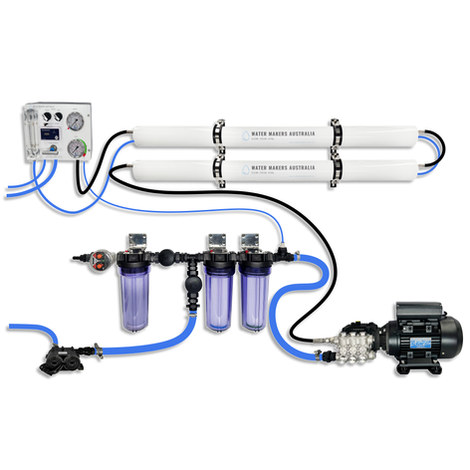
A two-membrane modular watermaker with 140 L/h nominal output, aimed at families and liveaboards that want more water per run.
Explore →Burke Yachtsman Gear Bag 40L - Shop Now Zip Pay | Tamar Marine Skip to content 59 – 63 Holbrook Street, Invermay Online Shop Open 24/7 Products search Contact us 1300 MARINE $ 0.00 0 Cart Burke Yachtsman Gear Bag 40L $ 79.90 Colour Choose an option Black Blue Black Blue Clear - Burke Yachtsman Gear Bag 40L quantity + Add to cart Enquire about this product SKU BAGB-Y24/BLACK* Category Bags - Sail & Gear A Burke classic and customer favourite, the Yachtsman’s Gear Bag is built tough to handle wet, salty conditions while keeping your gear dry and protected. Made from double coated waterproof…
Explore →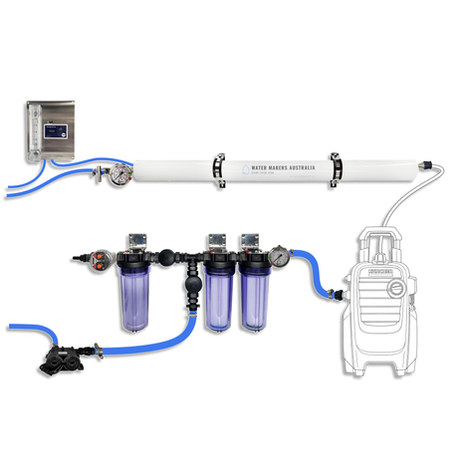
A one-membrane modular marine watermaker with 80 L/h nominal output, remote stainless control panel, standard consumables and direct Australian support.
Explore →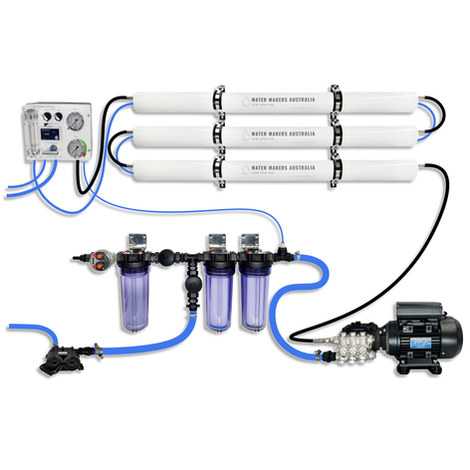
A three-membrane modular watermaker with 200 L/h nominal output and up to 240 L/h family-level marketing, for larger crews and heavy use.
Explore →