Loading this page…

Loading this page…
Sailing club
Royal Geelong Yacht Club (RGYC) is a waterfront sailing club in Geelong offering a large member clubhouse and organised sailing programs alongside marina and yard facilities. The Club operates a 270-berth marina with temporary and permanent berthing, three public swing moorings nearby, on-site 24-hour EFTPOS fuel pumps supplying diesel and unleaded, a 3,000 kg SWL crane, mast hoist and a slipway (available subject to bookings/fees). RGYC runs a Sailing Academy and a range of practical courses and training including learn-to-sail programs, powerboat courses and radio/first-aid courses. The Club also offers visitor berthing arrangements and recommends phone booking ahead.
About
Royal Geelong Yacht Club (RGYC) is a waterfront sailing club in Geelong offering a large member clubhouse and organised sailing programs alongside marina and yard facilities. The Club operates a 270-berth marina with temporary and permanent berthing, three public swing moorings nearby, on-site 24-hour EFTPOS fuel pumps supplying diesel and unleaded, a 3,000 kg SWL crane, mast hoist and a slipway (available subject to bookings/fees). RGYC runs a Sailing Academy and a range of practical courses and training including learn-to-sail programs, powerboat courses and radio/first-aid courses. The Club also offers visitor berthing arrangements and recommends phone booking ahead.
Service area: Geelong, VIC
Keep exploring
Every January, the biggest keelboat gathering in the Southern Hemisphere — as the organisers describe the Festival of Sails — rolls into Geelong, and Royal Geelong Yacht Club is the engine at the centre of it. More than 100,000 visitors descend on the waterfront for the event, the Melbourne to Geelong Passage Race opens proceedings, and the club that has run the regatta for a century becomes, for a week, the focus of Australian sailing. That alone would justify the club's standing, but RGYC is much more than its festival: a working, year-round yacht club on Corio Bay with a Sailing Academy, a busy off-the-beach program and a waterfront precinct that hums with functions and marina traffic.
The club acknowledges the Wadawurrung People as Traditional Owners of its country, and its address — 25 Eastern Beach Road, on Geelong's celebrated waterfront — places it within the city's Safe Harbour precinct, a working marina environment rather than a manicured foreshore. International sailing knows the venue well: the 2020 world championships for the 49er, 49erFX and Nacra 17 Olympic classes were sailed here with more than 400 participants, and the 2024 Fireball World Championship followed. A biennial Wooden Boat Festival adds a heritage flavour.
Olympic silver medallist Lisa Darmanin has fronted the club's junior mentoring at festival time, and the RGYC Foundation underwrites the Sailing Academy with a stated mission to foster the sport in Geelong. Whether you arrive for a world championship, a learn-to-sail course or a wedding at Events by RGYC, this is a club operating at the centre of its city's life rather than the edge of it.
The new Victorian Sailing Centre, opened in 2025 and pressed into festival service for the first time in 2026, gives Geelong's training operation a purpose-built home the club calls state-of-the-art — and it anchors a high-performance streak that sets this academy apart. The off-the-beach program runs well beyond entry level: junior fleets contest events like the International Cadet Sprint Series, while the sharp end hosts Moths, Superfoilers and the WASZP Victorian Slalom Championships, drawing exactly the kind of sailors who make a club faster by osmosis. When Lisa Darmanin served as festival ambassador and commentator in 2022, she also spent time mentoring RGYC juniors, a direct line from Olympic podium to club dinghy park.
The Sailing Academy itself, supported by the RGYC Foundation, covers the full arc. The entry rungs are conventional — Tackers for seven-to-twelve-year-olds, delivered as 20-hour courses in Ozi Optis across Saturday term mornings or four-day school-holiday blocks by Australian Sailing-qualified instructors at regulation ratios — but the club sweetens completion with a one-time three-month academy membership, and members receive course discounts.
Teenagers move into OutThere Sailing for the twelve-to-seventeen bracket, while adults can learn in keelboats or dinghies or sample the sport through Discover Sailing experience sessions. Powerboat courses round out the practical side, and the academy regularly hosts First Aid and CPR, Marine Radio and other accreditation training — the unglamorous qualifications that keep a volunteer sport safe. It amounts to a pathway from a child's first tack in a plastic Opti through to foiling slalom racing, all on the same stretch of Corio Bay.
Corio Bay has earned serious international endorsement. Ahead of the 2020 world championships, 49er Olympic gold medallist Nathan Outteridge praised the racing water for its super flat water and really good winds — a rare double, since flat water usually comes at the price of breeze. The bay's geography explains it: a broad, partly enclosed sheet of water where the fetch is long enough for solid wind but short enough to keep sea state down, producing fast, tactical racing that rewards crew work over boat-bashing. For off-the-beach classes, that means championship conditions within sight of the clubhouse.
The club's facilities sit inside the Waterfront Geelong precinct, with the Bay City Marina, its 223 berths dating from the 1980s, spreading directly in front of the clubhouse. Since the 2021 festival the Wangim Walk wave attenuator has further tamed the harbour for small boats, and the Geelong Waterfront Safe Harbour Precinct project underpinned the infrastructure that made the 2020 Olympic-class worlds possible.
The setting is urban in the best way: Eastern Beach, the restored sea baths and the waterfront promenade are neighbours, the Regatta Village spills along the foreshore each January with live music and entertainment, and the working marina precinct means chandleries, travel lifts and marine trades are close at hand. For visiting keelboats, berthing at Bay City puts the race start a short motor away; for dinghy sailors, launching into flat water off a major regional city — little more than an hour from Melbourne — is about as convenient as championship sailing gets in this state.
The regatta is older than the club, and older than almost everything else in Australian sport. Geelong's first regatta was sailed on Corio Bay in 1844, which — as the festival's historians point out — predates the Melbourne Cup, the Ashes and the VFL, and the event has run uninterrupted through both World Wars and even the COVID pandemic, when 2021 managed a limited program. The Royal Australian Navy describes the opening Melbourne to Geelong Passage Race as the oldest sporting event in the Southern Hemisphere. In 1859 a group of local enthusiasts formalised the scene by founding the Geelong Yacht Club, and the two have grown together ever since.
King George V conferred the Royal Warrant in 1924, and the newly titled Royal Geelong Yacht Club hosted the regatta for the first time in 1925. The event swelled steadily — by 1986 it drew 361 yachts — and the 1980s brought the 223-berth Bay City Marina to the foreshore in front of the clubhouse, anchoring the club within the redeveloping waterfront. The Geelong Regatta marked a century and a half of racing on the bay in 1994, then merged with the Geelong Waterfront Festival in 1997 to become the event now known as the Festival of Sails, which marked 180 years of sailing tradition in 2023 with Victorian Government and City of Greater Geelong support.
Jack Champ's book The Wind Is Free chronicles the club from 1859 to 1988. The modern honours board keeps lengthening: the February 2020 world titles in the 49er, 49erFX and Nacra 17, then the 2024 Fireball worlds won by Tom Gillard and Andy Thompson, and in 2025 the opening of the Victorian Sailing Centre — the latest chapter in a story that began before the gold rushes.
Adelaide’s metropolitan coast fronts the eastern side of Gulf St Vincent and mixes short, sheltered bay sailing around Holdfast Bay and the Patawalonga with more exposed, open-water sailing north toward Outer Harbour and along the Le Fevre Peninsula. The area suits a wide range of activity — sheltered day sails, club and trailer-sailer racing, short coastal cruising into the Fleurieu and Yorke Peninsula, and launch-and-home-port racing — but demands local knowledge about shipping channels, tidal flows in the Port River/Outer Harbour approaches, and seasonal wind patterns.

Write a one‑page plan with the who/what/when/where/how of your trip, keep a copy on board and leave the main copy with a responsible person ashore (and optionally with your club, marina office or local volunteer rescue service).
Explore →
Look for a friendly club with beginner-focused training, accessible facilities and boats, a supportive community, clear safety practices, and opportunities to progress at your own pace.
Explore →
Pick a protected bay, estuary or river reach where you can rig, launch and arrive on calm water within a short, sheltered transit; choose a site with a good ramp or jetty, clear recovery options and a nearby sailing club, marina or commercial operator for local knowledge and help.
Explore →
Do a seasonal inspection and servicing routine that focuses on hull and antifouling, through-hulls and seacocks, rigging and sails, engine and fuel systems, electricals and batteries, safety gear and bilge systems. Tailor exact tasks to your boat type, age and where you sail in South Australia, and follow manufacturer and marine service advice for anything technical.
Explore →
A practical guide for new sailors on picking the right Australian sailing club: training, boat access, racing, social fit, costs and the key questions to ask before joining.
Explore →A practical guide for recreational sailors planning passages to, from or around Eden and Twofold Bay. Covers sheltered anchorages, shore facilities, local weather and tidal considerations, preparing for Bass Strait conditions and a focused equipment and safety checklist.
Explore →
A practical, Australia-focused guide for planning and sailing around the Whitsunday Islands: weather and seasons, navigation and anchoring, moorings and parks, provisioning and charters, safety and common mistakes, plus checklists and next steps.
Explore →A practical guide for recreational sailors planning visits to Albany and King George Sound. Covers the main anchorage areas, typical local weather patterns, tidal and current considerations, navigational hazards, on-the-water etiquette and a pre-departure checklist to help you plan a safe passage and enjoyable stopover
Explore →Burke Yachtsman Gear Bag 40L - Shop Now Zip Pay | Tamar Marine Skip to content 59 – 63 Holbrook Street, Invermay Online Shop Open 24/7 Products search Contact us 1300 MARINE $ 0.00 0 Cart Burke Yachtsman Gear Bag 40L $ 79.90 Colour Choose an option Black Blue Black Blue Clear - Burke Yachtsman Gear Bag 40L quantity + Add to cart Enquire about this product SKU BAGB-Y24/BLACK* Category Bags - Sail & Gear A Burke classic and customer favourite, the Yachtsman’s Gear Bag is built tough to handle wet, salty conditions while keeping your gear dry and protected. Made from double coated waterproof…
Explore →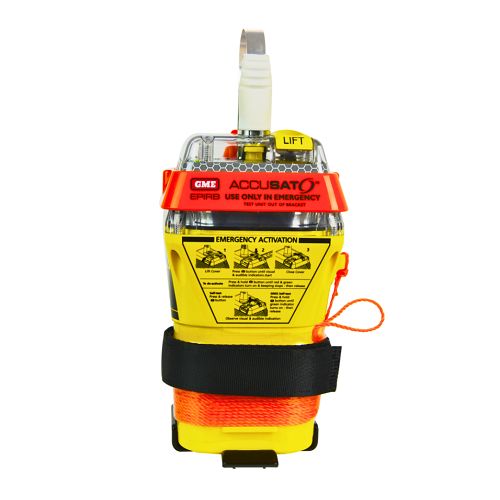
A 10‑year battery EPIRB with integrated GNSS (supports GPS and Galileo), infrared strobe and 121.5 MHz homing signal. Approved for worldwide COSPAS‑SARSAT operation.
Explore →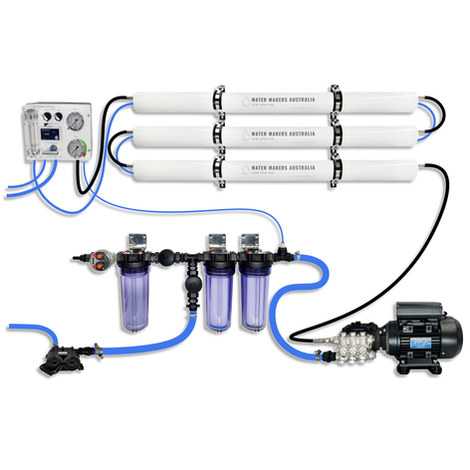
A three-membrane modular watermaker with 200 L/h nominal output and up to 240 L/h family-level marketing, for larger crews and heavy use.
Explore →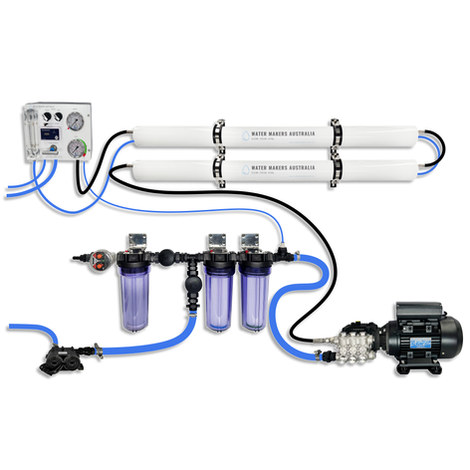
A two-membrane modular watermaker with 140 L/h nominal output, aimed at families and liveaboards that want more water per run.
Explore →