Loading this page…

Loading this page…
Sailing club
Royal Melbourne Yacht Squadron (RMYS) is a sailing club based on Pier Road in St Kilda, Victoria, about 20 minutes from Melbourne CBD. The club runs organised sailing programs, training and membership options (including Sail Pass day membership), and operates a 250-berth floating marina offering casual and long-term pens. RMYS provides marina facilities, berth booking and marina terms, locker and boat storage options, slipping/yard storage and antifouling services, and a program of on‑water racing and training courses for juniors and adults.
About
Royal Melbourne Yacht Squadron (RMYS) is a sailing club based on Pier Road in St Kilda, Victoria, about 20 minutes from Melbourne CBD. The club runs organised sailing programs, training and membership options (including Sail Pass day membership), and operates a 250-berth floating marina offering casual and long-term pens. RMYS provides marina facilities, berth booking and marina terms, locker and boat storage options, slipping/yard storage and antifouling services, and a program of on‑water racing and training courses for juniors and adults.
Service area: St Kilda, Victoria
Keep exploring
St Kilda's foreshore has hosted Australian sailing history in bulk, and Royal Melbourne Yacht Squadron has written most of it. Founded in 1876 and regarded by the club itself as the centre of aquatic events in Victoria, the squadron occupies the heritage clubhouse at the foot of Fitzroy Street where, in 1956, the Olympic Games yachting events were directed and medals were presented on the lawns. Most major Victorian championships have been sailed off its shores at one time or another, and the international fixtures keep coming — the 1999 Laser World Championship here, the ISAF Sailing World Cup's first Melbourne stop in 2015.
Yet the squadron's character is broader than its honours. Core activity is keelboat racing plus recreational boating across the bay, backed by junior and adult sail training, marina operations and a year-round social program, and one corner of the calendar belongs emphatically to women: the Australian Women's Keelboat Regatta has been run here since 1990, an event widely credited with pioneering women's keelboat racing here and overseas, complemented each year by the Jennifer Goldsmith Trophy for female skippers in the Port Phillip Women's Championship Series.
The clubhouse tells its own story — the Olympic Bar recalling 1956, the Harbour Room function space with rooftop views running from the city down the bay, live webcams streaming the scene to anyone curious. For a sailor wanting history, hard racing and a city-edge location inside the one club, St Kilda remains difficult to argue past — and for Melburnians simply curious about the sport, the squadron's training academy and Sail Pass options make that first step onto the water an easy one.
Keelboats are the point of difference. Where most clubs push beginners into dinghies first, the Royal Melbourne Sail Training Academy teaches children and adults across both keelboats and dinghies, and layers on the seamanship disciplines a yacht sailor actually needs: powerboat handling, marine radio operation, first aid and coastal navigation. It is a curriculum shaped by a club whose fleets race and cruise Port Phillip year-round, and whose cruising division programs everything from lunch outings to long-weekend passages around the bay and beyond. Racing runs Wednesdays and Saturdays through all seasons, so a graduate never waits long for a start line.
The junior side is conventional in structure but has a quirk all its own. Tackers courses — including after-school Tackers 3 — run under accredited Australian Sailing instructors, alongside junior coaching, RS Quest and Optimist programs, and a Sail Pass day pass lets non-members sample the water before committing. The distinctive flourish is the squadron's bilingual French holiday programs, Tackers delivered in French for Melbourne's francophone families — a small, telling sign of a city-edge club with an international outlook.
Volunteering is treated as training too: regular safety sessions and race-management volunteering keep the member base qualified and the racing calendar staffed. And for women weighing up where to build keelboat skills, the AWKR connection matters — the regatta's home since 1990 has decades of accumulated expertise in female keelboat racing, from first-time crews assembling for the event through to seasoned skippers contesting the championship series.
Few training pathways in Victoria run from a child's first tack to a women's national keelboat title within the one clubhouse.
St Kilda Harbour is one of Melbourne's great public waterfronts — the precinct draws more than eight million foreshore visitors a year, two million of them along the pier alone — and the squadron sits at its heart, at the end of Fitzroy Street beside Catani Gardens. The breakwater that encloses the harbour went in during the mid-1950s to create the Olympic yachting venue, and it now shelters a marina of 250 floating berths for vessels up to 23 metres, complete with power, water, security, lighting and CCTV, holding Gold Anchor accreditation under a 21-year seabed lease. A further 115 swing moorings lie in the harbour, tender-serviced without shore utilities, and the club's boatyard offers slipping and storage.
Then there are the neighbours no other club can claim: a colony of around 1,200 Little Penguins lives on the breakwater, the bay's sole permanent colony, protected by the Wildlife Act 1975 — marina works have been planned around their breeding. The sailing water itself is northern Port Phillip, minutes by sail from the shipping channels yet largely protected from them, with the city skyline astern on the beat and, on summer afternoons, a sea breeze that sets in with metronomic reliability.
Parks Victoria manages the pier and acts as Committee of Management for the harbour, sharing the precinct with the squadron. For visiting boats, a berth here puts Melbourne's restaurants and trams at the gangway; for racers, the course areas that hosted the Olympics, a Laser worlds and a World Cup round are the everyday backyard.
The squadron grew out of informal beginnings: in the early 1870s a small band of yachtsmen and the occasional fisherman began gathering at St Kilda beach and racing one another for pride. In 1876 they formalised as the St Kilda Sailing Club — around twenty members, Robert Hill as Commodore, an annual subscription of ten shillings. Permanence proved hard to win. Plans for a clubhouse were twice blocked by St Kilda Council, in 1879–80 and again in 1881–82 after residents objected, even as membership reached 44. A September 1884 rebrand to St Kilda Yacht Club came with extended tonnage limits admitting larger yachts, and the club's standing climbed steadily from there.
Royal recognition arrived in 1924 in two steps: an Admiralty warrant of 27 March permitting members to wear the Blue Ensign, and on 9 April King George V bestowed the Royal title. The current heritage clubhouse opened on the foreshore in 1926. Its finest hour came thirty years later, when the club served as control centre and executive headquarters for the yachting program of the 1956 Melbourne Games, with victory ceremonies and medal presentations unfolding on its lawns above the purpose-built harbour.
On 26 June 1961 Queen Elizabeth II approved a new name — Royal Melbourne Yacht Squadron — effective 6 November that year, coinciding with a merger absorbing the St Kilda 14 Foot Sailing Club. The modern era brought the 1999 Laser World Championship, the ISAF Sailing World Cup in 2015, and serious investment: around $6.5 million in breakwater and groyne works handed to the State, plus roughly $7.5 million for the 250-berth floating marina that replaced the old timber structure in late 2014.
A First World War Roll of Honour preserved in the clubhouse ties the present membership to the earliest generations.
Adelaide’s metropolitan coast fronts the eastern side of Gulf St Vincent and mixes short, sheltered bay sailing around Holdfast Bay and the Patawalonga with more exposed, open-water sailing north toward Outer Harbour and along the Le Fevre Peninsula. The area suits a wide range of activity — sheltered day sails, club and trailer-sailer racing, short coastal cruising into the Fleurieu and Yorke Peninsula, and launch-and-home-port racing — but demands local knowledge about shipping channels, tidal flows in the Port River/Outer Harbour approaches, and seasonal wind patterns.

Look for a friendly club with beginner-focused training, accessible facilities and boats, a supportive community, clear safety practices, and opportunities to progress at your own pace.
Explore →
Use ramps and beaches with respect for local conditions: check ramp layout, tide and swell, wind direction, vehicle access and crowding; prepare boat and crew before you launch or retrieve; and follow local signage, courtesy and safety practices. Specifics vary by ramp and beach, so confirm details for the exact site before you go.
Explore →
Write a one‑page plan with the who/what/when/where/how of your trip, keep a copy on board and leave the main copy with a responsible person ashore (and optionally with your club, marina office or local volunteer rescue service).
Explore →
Before your first sail in South Australian waters check the weather and tide, make sure the boat and safety equipment are fit for the trip, confirm local rules and any area-specific hazards, and tell someone your plan.
Explore →
A practical guide for new sailors on picking the right Australian sailing club: training, boat access, racing, social fit, costs and the key questions to ask before joining.
Explore →A practical guide for recreational sailors planning visits to Albany and King George Sound. Covers the main anchorage areas, typical local weather patterns, tidal and current considerations, navigational hazards, on-the-water etiquette and a pre-departure checklist to help you plan a safe passage and enjoyable stopover
Explore →
A practical, Australia‑focused introduction to sailing: key terms, common boat types, basic manoeuvres, where to learn, licence and club options, and planning your first trips with safety and local conditions in mind.
Explore →
A practical, Australia-focused guide for planning and sailing around the Whitsunday Islands: weather and seasons, navigation and anchoring, moorings and parks, provisioning and charters, safety and common mistakes, plus checklists and next steps.
Explore →Burke Yachtsman Gear Bag 40L - Shop Now Zip Pay | Tamar Marine Skip to content 59 – 63 Holbrook Street, Invermay Online Shop Open 24/7 Products search Contact us 1300 MARINE $ 0.00 0 Cart Burke Yachtsman Gear Bag 40L $ 79.90 Colour Choose an option Black Blue Black Blue Clear - Burke Yachtsman Gear Bag 40L quantity + Add to cart Enquire about this product SKU BAGB-Y24/BLACK* Category Bags - Sail & Gear A Burke classic and customer favourite, the Yachtsman’s Gear Bag is built tough to handle wet, salty conditions while keeping your gear dry and protected. Made from double coated waterproof…
Explore →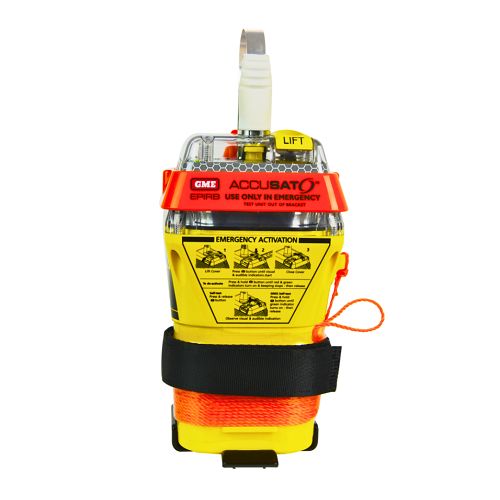
A 10‑year battery EPIRB with integrated GNSS (supports GPS and Galileo), infrared strobe and 121.5 MHz homing signal. Approved for worldwide COSPAS‑SARSAT operation.
Explore →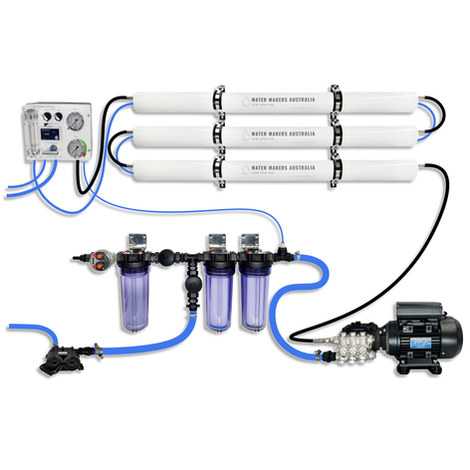
A three-membrane modular watermaker with 200 L/h nominal output and up to 240 L/h family-level marketing, for larger crews and heavy use.
Explore →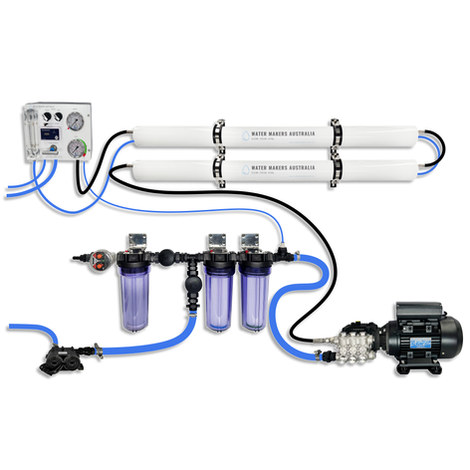
A two-membrane modular watermaker with 140 L/h nominal output, aimed at families and liveaboards that want more water per run.
Explore →