Loading this page…

Loading this page…
Sailing club
The Royal Prince Edward Yacht Club (RPEYC) is a private members' yacht club at 160 Wolseley Road, Point Piper, on Felix Bay in the south‑eastern reaches of Sydney Harbour. Formed in 1922, the club runs an active harbour racing programme from a single, purpose‑built clubhouse and waterfront lawn with an historic jetty and a number of moorings in Felix Bay. RPEYC stages the long‑running Wednesday passage series, a Sunday Summer Series, shared Saturday racing with the Royal Sydney Yacht Squadron, and a year‑round calendar of regattas including the Classic Yacht Regatta, Couta Boat events and class regattas.
About
The Royal Prince Edward Yacht Club (RPEYC) is a private members' yacht club at 160 Wolseley Road, Point Piper, on Felix Bay in the south‑eastern reaches of Sydney Harbour. Formed in 1922, the club runs an active harbour racing programme from a single, purpose‑built clubhouse and waterfront lawn with an historic jetty and a number of moorings in Felix Bay. RPEYC stages the long‑running Wednesday passage series, a Sunday Summer Series, shared Saturday racing with the Royal Sydney Yacht Squadron, and a year‑round calendar of regattas including the Classic Yacht Regatta, Couta Boat events and class regattas.
Service area: Point Piper and Sydney Harbour (Felix Bay / eastern harbour)
Keep exploring
Royal Prince Edward Yacht Club (RPEYC) is a private yacht club at 160 Wolseley Rd, Point Piper on Felix Bay, on the south‑eastern shore of Sydney Harbour. The club (membership by invitation) provides clubhouse facilities, a jetty for member drop‑off/pick‑up (subject to vessel‑size limits), a boat shed for small sailing boats, dinghies and kayaks, and a davit for lifting boats to road level. RPEYC runs an active sailing and racing program on Sydney Harbour, including Wednesday and Sunday race series, regattas and race management services. Guests are welcome when accompanied by a member.
Entry to sailing at the Edwards works differently from most clubs, and that is the point. Rather than running a junior dinghy school, the club operates a practical crew pathway: owner-members regularly look for racing crew on a casual or season-long basis, and prospective sailors are directed to the club secretary to be matched with a boat. For anyone wanting a realistic route into Sydney Harbour keelboat racing — trimming on a Wednesday afternoon, learning the tidal quirks off Point Piper, then graduating to Saturday and Sunday series — it is one of the most direct on-ramps available, with no boat ownership required.
The club's other genuine training strength is race management. RPEYC is highly regarded around the harbour for the professionalism of its race officers and volunteers, who officiate not only at club fixtures but at selected major regattas and other clubs' events. New volunteers are actively welcomed and trained, so members can build accredited skills in course setting, starts and scoring — a discipline with its own pathway to national-level officiating.
Class coaching happens on an ad hoc basis when fleets request it, as when the club hosted J24 coaching days and, in 2012, the NSW J24 State Championship. Parents after dinghy instruction for children are pointed to the neighbouring Royal Sydney Yacht Squadron Academy, which runs the full Tackers, OutThere and adult Discover Sailing suite; the partnership suits both clubs, since RPEYC and RSYS already share Saturday racing in a two-to-one arrangement that dates back to RPAYC's move to Newport.
Point Piper puts the club on the southern shore of Sydney Harbour's eastern reaches, with the clubhouse standing over Felix Bay and Lady Martin's Beach directly in front. Racing takes place on open water off the point, in one of the harbour's most tactically demanding stretches: the summer north-easter arrives funnelling between headlands, strong tidal streams reward those who read them correctly, and wind shadows off the high ground and waterfront properties punish complacency. Local knowledge accumulated over seasons genuinely pays here, which is part of the attraction for the one-design fleets and the Wednesday regulars.
That Wednesday passage racing deserves special mention as a piece of harbour theatre. Introduced by the club in the summer of 1961, it has run ever since — 2026 marks the 63rd annual series — and on a typical summer afternoon around 50 yachts jostle the start line between the clubhouse and Shark Island while spectators watch from the lawn. Facilities reflect the club's compact, single-site character: the 1924 clubhouse, extended over the years with a balcony, portico and improved kitchen; the original jetty dating from 1927; and the waterfront lawn that doubles as the best spectator seat on the harbour.
The Royal Sydney Yacht Squadron lies directly across the water at Kirribilli, with Middle Harbour Yacht Club further up the drowned valley, placing the Edwards at the heart of a tight triangle of eastern harbour racing. For visitors, the setting is pure Sydney — deep water, sandstone, and racing that finishes within hailing distance of the clubhouse veranda.
The Edwards began around a dining table in Wunulla Road, Point Piper, on 4 August 1922, when Arthur Muston hosted a group of yachtsmen — among them surgeon Sir Alexander MacCormick, who became first commodore — wanting a club closer to their southern-shore homes. RSYS and the Sydney Amateur Sailing Club were both across the harbour, and the Royal Prince Alfred was then a city club. The new body passed through two working titles, The New Yacht Club and the Southern Yacht Club, before settling on a name honouring Edward, Prince of Wales, whose 1920 arrival in Sydney aboard HMS Renown had captivated the city. King George V granted the "Royal" prefix in August 1935.
Milestones accumulated quickly: a first race in November 1922 won by Inez, a purpose-built clubhouse opened in July 1924 and funded by passing the hat around members, and 134 members across categories by 1927. The club survived a wartime racing shutdown from 1940, a kindergarten tenancy in the clubhouse, and a contested liquor-licence debate before the bar opened in 1948.
Its sailing pedigree runs deep — Colin Ryrie instigated Australia's first America's Cup challenge and sailed on Gretel in 1962, and the club built the Finn "Prince Edward" for the 1956 Melbourne Olympics. Between 1987 and 1995 it won every running of the interclub Admirals Trophy. Centenary celebrations in 2022 brought every harbour club together for a regatta, and four years later the club made global news with its Team Australia challenge for the 38th America's Cup, backed by the Winning family with Grant Simmer, Tom Slingsby and Glenn Ashby leading the campaign.
American River (Kangaroo Island, SA) is a small, sheltered inlet and township on the north‑eastern side of Kangaroo Island that acts as a calm staging point for cruising the eastern part of the island and for short hops through Backstairs Passage. It’s distinctive for its protected anchorage inside Eastern Cove and the adjacency of Pelican Lagoon — a shallow, ecologically important lagoon with sanctuary zoning — which shapes how and where boats can move. The area suits sheltered day sailing, weekend cruising and short coastal passages; it’s appropriate for trailer sailors, small cruisers and a

Expect very different seasonal systems across Western Australia: the south‑west (Perth to Albany) has a strong summer afternoon sea breeze (the “Fremantle Doctor”) and winter westerly fronts, while northern WA follows a wet/dry monsoonal cycle with strong seasonal onshore winds, thunderstorms and cyclone risk in the wet season. Local headlands, estuaries and tidal flows often change what you actually feel on the water, so learn the local timing and sheltered venues first.
Explore →
Tasmania has a mix of state marine parks, local harbour bylaws and environmental protections that affect where and how you anchor—so check the specific area’s rules before you go, aim to use designated anchorages or soft seabeds, and follow standard anchoring and biosecurity good practice.
Explore →
Expect the usual IALA-B lateral system (red and green), cardinal and isolated-danger marks, safe-water and special marks, plus harbour-specific fairway buoys, leading/transit marks and exclusion or speed‑limit buoys. Check local harbour charts and Notices to Mariners for exact positions and light characteristics before entry.
Explore →
Before your first sail in South Australian waters check the weather and tide, make sure the boat and safety equipment are fit for the trip, confirm local rules and any area-specific hazards, and tell someone your plan.
Explore →
A practical guide for new sailors on picking the right Australian sailing club: training, boat access, racing, social fit, costs and the key questions to ask before joining.
Explore →A practical, step‑by‑step guide for recreational sailors on Sydney Harbour covering navigation, local weather and tides, safe anchoring, berthing, common routes, rules of the road, and useful checklists tailored to Australian conditions.
Explore →A concise, practical introduction to the essential parts of a recreational sailing boat for beginners in Australia. Covers hull, deck, rigging, sails, steering, below-decks spaces and safety equipment, with simple explanations, common mistakes and a pre-decast checklist to help new sailors communicate and get underway.
Explore →Practical guide for recreational sailors planning a coastal cruise from Sydney north to the Queensland border. Covers route options, weather and tidal considerations, planning checklists, common hazards, anchorages and practical examples for a safe, enjoyable trip.
Explore →Burke Yachtsman Gear Bag 40L - Shop Now Zip Pay | Tamar Marine Skip to content 59 – 63 Holbrook Street, Invermay Online Shop Open 24/7 Products search Contact us 1300 MARINE $ 0.00 0 Cart Burke Yachtsman Gear Bag 40L $ 79.90 Colour Choose an option Black Blue Black Blue Clear - Burke Yachtsman Gear Bag 40L quantity + Add to cart Enquire about this product SKU BAGB-Y24/BLACK* Category Bags - Sail & Gear A Burke classic and customer favourite, the Yachtsman’s Gear Bag is built tough to handle wet, salty conditions while keeping your gear dry and protected. Made from double coated waterproof…
Explore →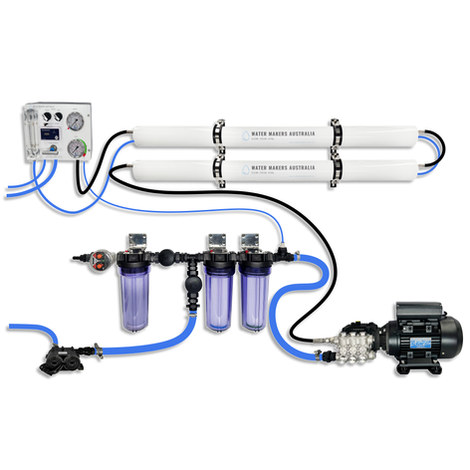
A two-membrane modular watermaker with 140 L/h nominal output, aimed at families and liveaboards that want more water per run.
Explore →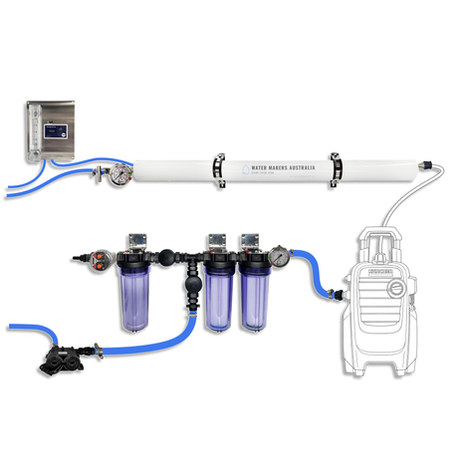
A one-membrane modular marine watermaker with 80 L/h nominal output, remote stainless control panel, standard consumables and direct Australian support.
Explore →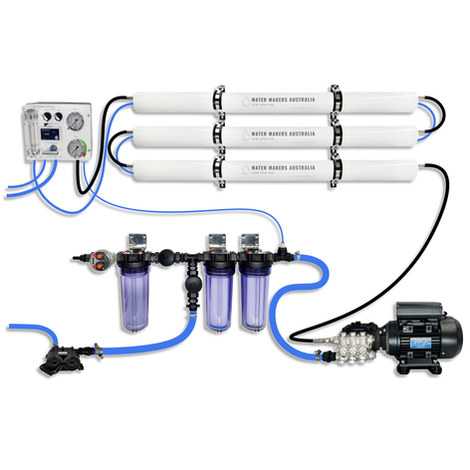
A three-membrane modular watermaker with 200 L/h nominal output and up to 240 L/h family-level marketing, for larger crews and heavy use.
Explore →