Loading this page…

Loading this page…
Sailing club
The Royal Yacht Club of Tasmania is the state's largest yacht club and the Hobart host of the Rolex Sydney Hobart. From its marina and clubhouse on the River Derwent at Sandy Bay, it runs keelboat racing from summer twilights to the 180-nautical-mile Maria Island Race, Tackers and OutThere learn-to-sail programmes for young sailors, powerboat and safety courses, and a 210-berth marina with a fuel dock and boat yard.
About
The Royal Yacht Club of Tasmania is the state's largest yacht club and the Hobart host of the Rolex Sydney Hobart. From its marina and clubhouse on the River Derwent at Sandy Bay, it runs keelboat racing from summer twilights to the 180-nautical-mile Maria Island Race, Tackers and OutThere learn-to-sail programmes for young sailors, powerboat and safety courses, and a 210-berth marina with a fuel dock and boat yard.
Service area: Sandy Bay, TAS
Keep exploring
The Royal Yacht Club of Tasmania (RYCT) is Tasmania's largest yacht club, based at 15 Marieville Esplanade, Sandy Bay, on the River Derwent in Hobart — about a 15-minute walk from the city centre. It runs keelboat racing and cruising, the Off the Beach youth programme (Tackers for ages 7–12 and OutThere Sailing for ages 13–17), and Australian Sailing powerboat and safety courses including motor boat licence, marine radio and Safety and Sea Survival courses.
On the shore side there is a 210-berth marina for boats from 10 to 20 metres, a fuel dock, a boat yard and storage, plus a bistro and function spaces in the clubhouse. Several membership categories are available, and visiting boats can ask about berths through the club office on (03) 6223 4599. The club is affiliated with Australian Sailing and co-hosts the Hobart end of the Rolex Sydney Hobart Yacht Race every December.
You can compare it with its neighbours on our Sandy Bay sailing clubs page.
The club's youth pathway runs through its Off the Beach programme, usually shortened to OTB. Children aged 7 to 12 start in Tackers, Australian Sailing's learn-to-sail course, while teenagers aged 13 to 17 move into OutThere Sailing. The club keeps its own fleet of training boats — Optimists, Sabots, Pacers and Lasers — so newcomers can try a few different classes before anyone has to buy a boat.
Once the basics click, OTB runs training and racing for centreboard classes on Sundays, there are learn-to-sail sessions in the school holidays, and the calendar includes the odd weekend away, such as the club's training weekend at Miena. If you are new to the sport, our beginner's guide to sailing in Australia is a good primer in the Central Highlands.
Adults are well looked after too. The club runs Australian Sailing powerboat courses, motor boat licence training, marine radio courses and Safety and Sea Survival, a course many crew need before they can take part in offshore races. If you would rather learn by doing, the easiest way into keelboat racing is the club's crew noticeboard, where skippers looking for hands and sailors looking for a ride can find each other. Cruising members also run navigation and seamanship cruises, a relaxed way to learn the local anchorages with experienced sailors alongside.
The clubhouse sits at 15 Marieville Esplanade in Sandy Bay, on the western shore of the River Derwent and about a 15-minute walk from Hobart's city centre, with shops, cafés and banks close by. It shares the esplanade with the Derwent Sailing Squadron next door, and the two clubs open the sailing season together each October on Opening Day, when their fleets sail past in combined manoeuvres on the river.
The Derwent is a broad, deep estuary that gives the club plenty of room to play with: sheltered racing off Sandy Bay, longer courses down towards Storm Bay, and the D'Entrecasteaux Channel and Bruny Island within easy reach for weekend cruising. Conditions on southern Tasmanian water can change quickly, which is part of the appeal for racing crews and a good reason newcomers are encouraged to sail with experienced hands first.
On the shore side, the marina has 210 berths for boats from 10 to 20 metres, all with power and water, along with temporary berthing for larger visiting yachts. There is a fuel dock, a boat yard and storage, and the bistro and function spaces make the clubhouse an easy place to finish a day on the water. Visiting boats can ask about a berth through the club office before arriving.
Organised yachting in Hobart is older than the RYCT, and the club's own account is refreshingly honest about the false starts. A Tasmanian Yacht Club — the first in the colony — was founded in 1859 and soon faded, and a revival in 1861 failed as well. In 1874 about sixty enthusiasts formed the Derwent Sailing Boat Club, which became the Derwent Yacht Club two years later. After another lapse the club was brought back to life in 1880, and it has sailed without a break ever since.
In 1908 a Royal Warrant was granted and the club became the Royal Yacht Club of Tasmania; its present burgee was designed and approved in 1910. For its early decades the club had no home of its own and met in Hobart hotels — among them the Duke of York at Battery Point and the Nautilus Hotel on Salamanca Place, later known as Knopwoods Retreat. It moved into the National Mutual Building in Macquarie Street in 1910, then to the corner of Harrington and Davey Streets in 1913, before settling at Marieville Esplanade in Sandy Bay in 1955.
Offshore racing gave the club its national profile after the Second World War. The first Sydney to Hobart finished on the Derwent in 1945, and today the RYCT works with the Cruising Yacht Club of Australia to run the Hobart end of the race. The club's own Maria Island Race followed soon after and has grown into one of Australia's oldest ocean races, still sailed down the Tasman Peninsula and up the east coast every year.
A practical cruising guide for the Moyne River port at the mouth of the Moyne River on Victoria’s south-west coast. It explains harbour geometry, seasonal conditions, principal sailing zones, anchorages, visitor facilities, known local hazards (bar, reefs, strong currents, surf and commercial traffic), regulatory controls and realistic experiences for day sailors, trailer-sailors and coastal cruisers. The guide draws on local port plans, state boating authorities, the yacht club’s visiting-boat practice and regional marine management documents.

Taking pets between Australian states and into marinas or national parks is governed by state and territory biosecurity/quarantine rules, local council and marina policies, and the management rules of parks. Requirements vary by jurisdiction and by the species of animal, so check the relevant state/territory biosecurity office, the park management agency and the marina operator before you travel.
Explore →
Late spring to summer is usually the best time for beginners to start learning to sail in Tasmania because the weather is generally warmer, days are longer and conditions are often more settled. Expect lighter to moderate winds with regular afternoon sea breees in summer, while spring and autumn bring more changeable and sometimes stronger conditions; winter is colder, wetter and typically windier with more fronts and swell.
Explore →
Tasmania has a mix of state marine parks, local harbour bylaws and environmental protections that affect where and how you anchor—so check the specific area’s rules before you go, aim to use designated anchorages or soft seabeds, and follow standard anchoring and biosecurity good practice.
Explore →
Pick a protected bay, estuary or river reach where you can rig, launch and arrive on calm water within a short, sheltered transit; choose a site with a good ramp or jetty, clear recovery options and a nearby sailing club, marina or commercial operator for local knowledge and help.
Explore →A practical guide for recreational sailors planning day sails or short cruises around Batemans Bay, Broulee and the Clyde River. Covers local conditions, safe approaches, anchorages, launching, tides, common hazards, and checklists for trip planning and on-water decisions.
Explore →Practical guide for recreational sailors navigating the Swan River and coastal waters around Perth. Covers local weather patterns, tides and currents, river navigation, launching and berthing options, safety equipment, common hazards, and step-by-step pre-departure and on-water checklists tailored to Western Australian
Explore →Practical guide for recreational sailors planning passage on the Hawkesbury River: how to plan around tides, choose anchorages, read local conditions and prepare the boat and crew for a safe, comfortable trip.
Explore →
A practical guide for new sailors on picking the right Australian sailing club: training, boat access, racing, social fit, costs and the key questions to ask before joining.
Explore →Burke Yachtsman Gear Bag 40L - Shop Now Zip Pay | Tamar Marine Skip to content 59 – 63 Holbrook Street, Invermay Online Shop Open 24/7 Products search Contact us 1300 MARINE $ 0.00 0 Cart Burke Yachtsman Gear Bag 40L $ 79.90 Colour Choose an option Black Blue Black Blue Clear - Burke Yachtsman Gear Bag 40L quantity + Add to cart Enquire about this product SKU BAGB-Y24/BLACK* Category Bags - Sail & Gear A Burke classic and customer favourite, the Yachtsman’s Gear Bag is built tough to handle wet, salty conditions while keeping your gear dry and protected. Made from double coated waterproof…
Explore →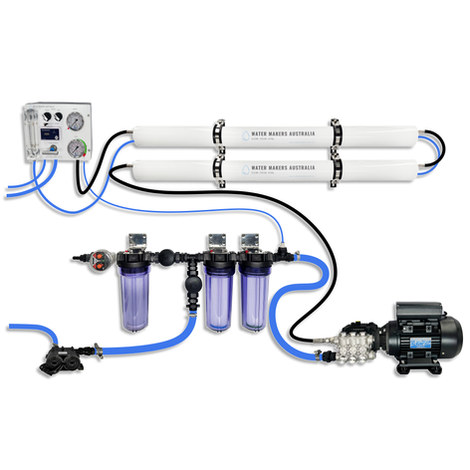
A two-membrane modular watermaker with 140 L/h nominal output, aimed at families and liveaboards that want more water per run.
Explore →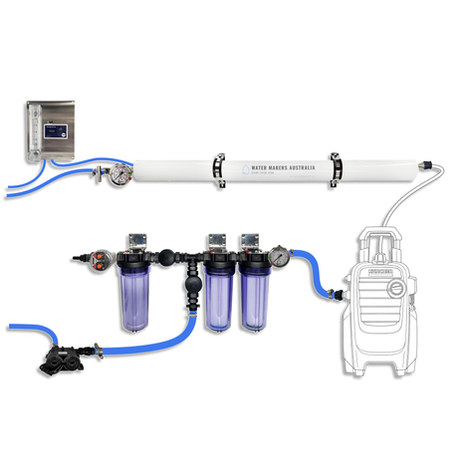
A one-membrane modular marine watermaker with 80 L/h nominal output, remote stainless control panel, standard consumables and direct Australian support.
Explore →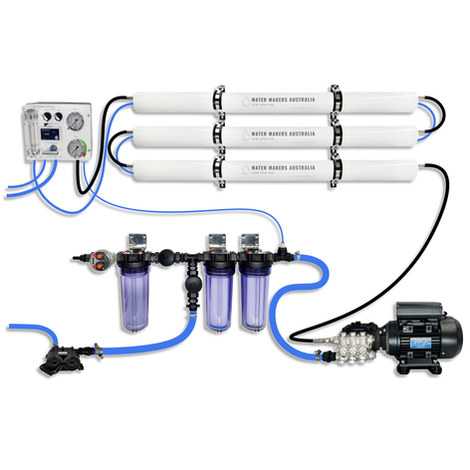
A three-membrane modular watermaker with 200 L/h nominal output and up to 240 L/h family-level marketing, for larger crews and heavy use.
Explore →