Loading this page…

Loading this page…
Sailing club
Off-the-beach club on the Mornington Peninsula's bay side at Rye, whose sailing school has won state and national instructor awards three times. Welcoming, inclusive and community-driven.
About
Off-the-beach club on the Mornington Peninsula's bay side at Rye, whose sailing school has won state and national instructor awards three times. Welcoming, inclusive and community-driven.
Service area: Rye, VIC
Keep exploring
The trophy at Rye Yacht Club's first race was built from empty cans wrapped in foil and strung with toilet-paper bunting. Half a century later, the club's sailing school has collected state and national instructor awards three times over. That arc — from a laughed-together beach race to one of Victoria's most decorated community training operations — captures the character of this off-the-beach club on the Mornington Peninsula's bay side. Rye describes itself in four phrases — "welcoming and inclusive", "community-driven", "active and engaging" — and it sits in Category B of Australian Sailing's affiliation-fee scale, the middle tier that covers most of the state's volunteer-run clubs.
The rhythm of the place is seasonal and thoroughly family-shaped. The season's organised programs open on the second weekend of October and close on the final weekend of April, and every member receives the annual RYC Yearbook carrying the notice of race, the season's sailing program, the trophy list and the sailing instructions — a proper little almanac for a beach club.
Racing and training happen straight off the sand on Port Phillip, with the clubhouse, canteen, training rooms and sailing school packed into a compact foreshore enclosure opposite the Nepean Highway. Membership figures are not published, so the club's size has to be judged by its footprint rather than its numbers — and by the silverware its instructors keep bringing home, which lately has been considerable.
For Peninsula families who want their sailing unpretentious, affordable and taught by people the national body keeps handing awards to, Rye makes a persuasive case.
The sailing school is the headline act, and its honours list is genuinely unusual for a club this size. Yachting Victoria handed it the state's Discover Sailing Centre of the Year title three times — 2015, 2019 and again in 2023; principal Bob Cooper twice took out the national Australian Sailing Instructor of the Year award, in 2016 and 2023; and instructor Kate Hyde collected that same honour in 2017. That is three centre-of-the-year titles and three individual national instructor awards inside a decade, all earned in a foreshore enclosure sixty metres wide.
What the school teaches ranges well beyond the standard dinghy syllabus. Alongside junior and adult learn-to-sail courses, the program list includes windsurfing, stand-up paddle boarding and wing foiling — one of the few Victorian beach clubs teaching the new foil disciplines — plus powerboat handling and safety boat operator training to keep the volunteer roster qualified. Juniors progress through the national Tackers pathway, then into OutThere Sailing for roughly twelve-and-ups, sailed on Saturday mornings in O'penBICs, RS Fevas and Laser 4.7s.
Graduates of either stream feed the Junior Development Squad, which trains Saturday afternoons and Sunday mornings, races in the monthly Sunday club series and travels to external regattas, with squad hire boats available so nobody is excluded for want of equipment. Adults get Start Sailing 1 and 2 as five-week Saturday courses each summer — nine to three, $300, sailed in Pacers, Quests and single-handed boats — and can buy coaching in blocks of four sessions at $50 in their own boat or $100 with a club boat supplied.
Junior membership costs $90, and a six-day-visit membership at $120 suits holidaymakers who only summer at Rye.
The club occupies a foreshore reserve on the Nepean Highway at Rye, postcode 3941, on the long bay-beach stretch of the Mornington Peninsula between Rosebud and Blairgowrie. Since 1982 its home has been a fenced foreshore enclosure measuring just sixty metres by twenty — a reminder that off-the-beach clubs do not need acreage, just sand, water and somewhere to stack the trailers. Within that compact footprint sit the clubhouse, opened in 1985, the canteen that has been registered with the Victorian health department since 1992, training rooms and the dedicated sailing school added as the grounds expanded.
The sailing water is Port Phillip off Rye beach: broad, open bay with a sandy bottom and a long, gently shelving shoreline. Rye faces north across the bay, so the summer sea breeze arrives over open water and the beach makes launching and recovery straightforward for dinghies, catamarans, windsurfers and foiling gear alike. The whole program — racing, training, squad sessions — is beach-launched, which keeps the barrier to participation low; there are no cranes, no marinas and no mooring bills between a member and a sail.
The seasonal calendar, October to April, matches the Peninsula's holiday rhythm, when the foreshore fills with Melbourne families and the club's six-day visitor membership picks up sailors in town for a week. It is a setting built for exactly what the club does: getting large numbers of ordinary people afloat quickly, cheaply and often, in water that forgives beginners while still giving the development squad enough room and breeze to train seriously for outside regattas.
The club's origin story is the best kind of sailing folklore. On New Year's Day 1970, a handful of locals organised an informal race off Rye beach; six boats started, and the winner received that memorable improvised trophy of foil-wrapped cans and toilet-paper streamers. The fun was evidently repeatable, because in May 1971 around twenty-five families came together to formally establish Rye Yacht Club, adopting a constitution about a year later and joining the Victorian Yachting Council — the state body now folded into Australian Sailing — in October 1972.
The early club was a moveable feast, operating from the sand opposite Ozone Street before shifting in 1974 to a foreshore enclosure opposite Lyons Street, and finally settling in 1982 on the compact sixty-by-twenty-metre site it occupies today. Members then did what Peninsula sailing families have always done: they raised the money themselves. The clubhouse that their fundraising paid for was officially opened on 31 March 1985, and the canteen gained its health department registration in 1992 — a small administrative milestone that says a lot about a club where feeding sailors matters as much as racing them.
In the decades since, training rooms, a purpose-built sailing school and expanded grounds have been added to the original building. The essentials of the story are clear: a beach race that got out of hand, a quarter-century of self-funded building, and a community club that quietly turned itself into a three-time state sailing school of the year without losing the spirit of that first New Year's Day.
A practical cruising guide for the Moyne River port at the mouth of the Moyne River on Victoria’s south-west coast. It explains harbour geometry, seasonal conditions, principal sailing zones, anchorages, visitor facilities, known local hazards (bar, reefs, strong currents, surf and commercial traffic), regulatory controls and realistic experiences for day sailors, trailer-sailors and coastal cruisers. The guide draws on local port plans, state boating authorities, the yacht club’s visiting-boat practice and regional marine management documents.

Use ramps and beaches with respect for local conditions: check ramp layout, tide and swell, wind direction, vehicle access and crowding; prepare boat and crew before you launch or retrieve; and follow local signage, courtesy and safety practices. Specifics vary by ramp and beach, so confirm details for the exact site before you go.
Explore →
Late spring to summer is usually the best time for beginners to start learning to sail in Tasmania because the weather is generally warmer, days are longer and conditions are often more settled. Expect lighter to moderate winds with regular afternoon sea breees in summer, while spring and autumn bring more changeable and sometimes stronger conditions; winter is colder, wetter and typically windier with more fronts and swell.
Explore →
Pick a stable, simple, forgiving dinghy with a single sail or basic sloop rig, affordable handling and easy maintenance—ideally one with a local class or school nearby so you can access coaching and spare parts.
Explore →
Pick a protected bay, estuary or river reach where you can rig, launch and arrive on calm water within a short, sheltered transit; choose a site with a good ramp or jetty, clear recovery options and a nearby sailing club, marina or commercial operator for local knowledge and help.
Explore →A practical guide for recreational sailors planning day sails or short cruises around Batemans Bay, Broulee and the Clyde River. Covers local conditions, safe approaches, anchorages, launching, tides, common hazards, and checklists for trip planning and on-water decisions.
Explore →A practical guide to the coastal weather systems that affect sailing along Western Australia's coast, focusing on the Fremantle Doctor, local sea breezes, and linked coastal phenomena. Explains how these systems form, when they tend to occur, how they influence boat handling and passage planning, common mistakes, and a
Explore →
A practical guide for new sailors on picking the right Australian sailing club: training, boat access, racing, social fit, costs and the key questions to ask before joining.
Explore →
A practical, Australia-focused guide for planning and sailing around the Whitsunday Islands: weather and seasons, navigation and anchoring, moorings and parks, provisioning and charters, safety and common mistakes, plus checklists and next steps.
Explore →Burke Yachtsman Gear Bag 40L - Shop Now Zip Pay | Tamar Marine Skip to content 59 – 63 Holbrook Street, Invermay Online Shop Open 24/7 Products search Contact us 1300 MARINE $ 0.00 0 Cart Burke Yachtsman Gear Bag 40L $ 79.90 Colour Choose an option Black Blue Black Blue Clear - Burke Yachtsman Gear Bag 40L quantity + Add to cart Enquire about this product SKU BAGB-Y24/BLACK* Category Bags - Sail & Gear A Burke classic and customer favourite, the Yachtsman’s Gear Bag is built tough to handle wet, salty conditions while keeping your gear dry and protected. Made from double coated waterproof…
Explore →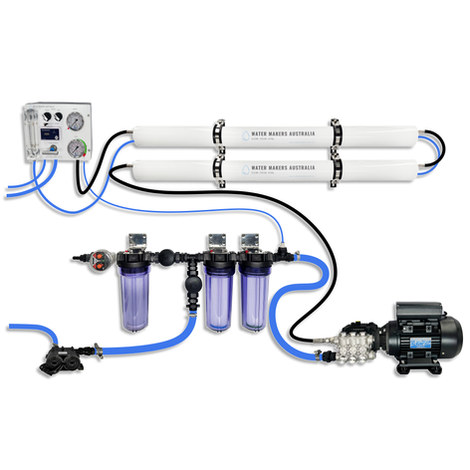
A two-membrane modular watermaker with 140 L/h nominal output, aimed at families and liveaboards that want more water per run.
Explore →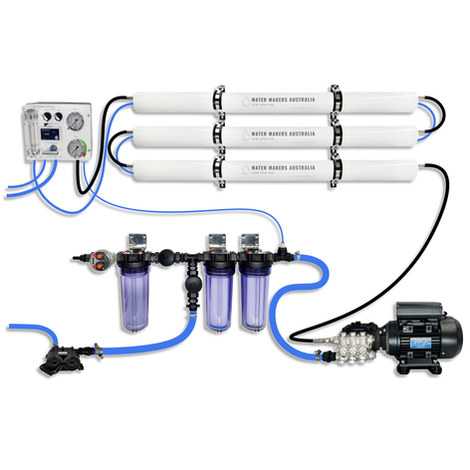
A three-membrane modular watermaker with 200 L/h nominal output and up to 240 L/h family-level marketing, for larger crews and heavy use.
Explore →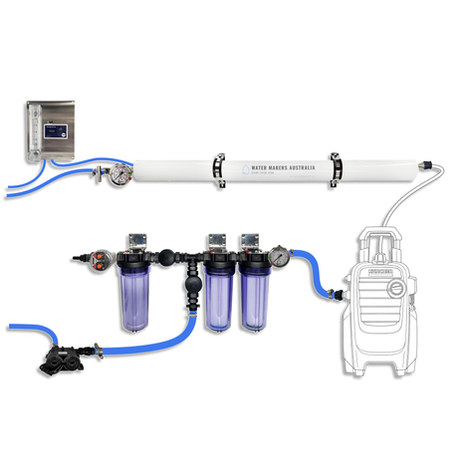
A one-membrane modular marine watermaker with 80 L/h nominal output, remote stainless control panel, standard consumables and direct Australian support.
Explore →