Loading this page…

Loading this page…
Sailing club
Safety Beach Sailing Club is a community yacht and sailing club at 185 Marine Drive, Safety Beach, Victoria. The club runs organised on-water programs for keelboats, off‑the‑beach classes and junior sailors, stages racing and event regattas (including Sail Peninsula), offers a junior Learn to Sail program and social/venue facilities (dining and bar, venue hire). The club website provides race calendars, results, membership info and contact details.
About
Safety Beach Sailing Club is a community yacht and sailing club at 185 Marine Drive, Safety Beach, Victoria. The club runs organised on-water programs for keelboats, off‑the‑beach classes and junior sailors, stages racing and event regattas (including Sail Peninsula), offers a junior Learn to Sail program and social/venue facilities (dining and bar, venue hire). The club website provides race calendars, results, membership info and contact details.
Service area: Safety Beach, Victoria
Keep exploring
Safety Beach Sailing Club made the jump that most off-the-beach clubs never manage: when a six-hundred-berth marina rose next door in the mid-2000s, it grew from a pure dinghy club into a genuine two-world operation — beach cats and juniors on the sand, keelboats on marina berths — without shedding the family character it was founded with. The club's own tagline — "family friendly off the beach and keelboat sailing" — states the formula plainly, and it claims to cater for every racing level from first-timers through to world champions. Australian Sailing lists it as a Category B club, and the club's history records that interstate sailing groups came to respect Safety Beach for how efficiently it could organise State and National titles across a long list of classes.
The setting does half the work. The club sits on Dromana Bay, on the Mornington Peninsula's calm northern shoreline between Mount Martha and Dromana, where the water is famously shallow and sheltered — ideal for teaching children and for beach-launched fleets. Behind it stands the expanded clubhouse that arrived with the Martha Cove development, giving the club dining and bar facilities plus rooms hired out for functions.
The membership mix is correspondingly broad: juniors training on Sunday mornings, off-the-beach racers in monohulls and catamarans, trailable yacht sailors, and keelboat owners who berth at the marina and race under the club burgee. A community bank sponsors the junior training, the race calendar carries class championships most seasons, and the whole operation still runs on the volunteer labour of a club that began with seventeen interested people and a six-dollar steering committee.
The Junior Sail Training Program is the engine room here, and it is more structured than the beach-club label suggests. Open to ages six through sixteen, it runs on Sunday mornings across the season under Australian Sailing's Start Sailing framework, with the teaching fleet spread across five different classes — Optimists, Open Skiffs, RS Teras, Pacers and RS Quests — so children learn on the boat that fits their size and stage.
Newcomers get two free trial sessions before committing, junior membership for the 2025/26 season is set at $150, and the program carries sponsorship from Community Bank Southern Peninsula, the local community-owned bank branch. It is worth noting that no Tackers branding or formal Discover Sailing Centre listing appears in the club's published material; the program is presented as the club's own junior school following the national syllabus.
Adults and racers are served by the other half of the club's identity. Racing spans keelboat, trailable and off-the-beach divisions, with cruising alongside, and learn-to-sail offerings extend beyond juniors. Where Safety Beach genuinely distinguishes itself is championship hosting: the club's history notes a long record of running State and National titles, and recent seasons confirm it.
The club hosted the 2025 Victorian Tasar State Titles, was scheduled to run the Victorian A Class State Championship in March 2026, and hosts Sail Peninsula — the multi-class February regatta that draws fleets from across the bay. For a club of Category B size, that events resume is substantial, and it gives junior graduates a visible pathway: learn on Sunday mornings, race off the beach, and one day contest a national title on home water.
The clubhouse stands at 185 Marine Drive, Safety Beach, postcode 3936, on the Mornington Peninsula's bay-facing coast. The water out front is Dromana Bay, the gentle curve of Port Phillip that runs between Mount Martha and Dromana — a stretch locals describe as calm and shallow, with the kind of protected, gradually shelving water that makes beach launching easy and capsizes undramatic. That character shaped everything about the club: it is why mirrors and catamarans flourished here in the 1960s, why junior training works for six-year-olds, and why the racing fleets can launch straight off the sand in front of the clubhouse.
The second defining feature arrived in 2006/07, when the Martha Cove marina and housing development was built immediately adjacent and the clubhouse was dramatically expanded alongside it. With roughly six hundred berths next door — the club calls Martha Cove the safest marina on the Bay — keelboat sailors gained direct marina access, and a keelboat division joined the off-the-beach fleets that had defined the club for four decades.
The result is an unusual hybrid site: beach and boat-storage areas serving dinghies and cats on one side, a major marina serving the keelboat fleet on the other, with the expanded clubhouse between them offering a dining room, bar and function spaces available for hire. Members race on the sheltered waters of the bay in sight of the clubhouse, and visitors arriving by road find the club directly on Marine Drive's foreshore strip, minutes from Dromana and Mount Martha.
Few Victorian clubs can offer both a launching beach and a marina berth under one membership.
The founding meeting happened over the Australia Day long weekend of 1967 — 30 January, to be exact — when seventeen interested locals elected a steering committee of six to get a sailing club started. A public meeting on the beachfront the following month drew around fifty people, each paying a dollar (children fifty cents) to adopt a first constitution modelled on Mount Martha Yacht Club's, and Dr Roy Bean was elected founding Commodore with a committee of eight.
The improvisation of the first season was heroic: boats were stored in the boat-hire sheds Ray Cooper ran by Tassels Creek, a rented motorboat served as rescue and buoy-laying vessel, and race officers worked from a scaffold control tower the members knocked together themselves. Even so, the club ran thirty-eight official races in 1967–68 for sixty-six member yachts — twenty-six Mirrors, twenty-seven mixed monohulls and thirteen catamarans.
Permanence came in stages. The Flinders Shire and the Port Phillip Authority granted a beachfront block beside Tassels Creek, and a first small building — toilet, spar storage and a roofed control tower — went up in 1970–71. In 1974 members formed the S.B.S. Club Co-Operative to finance a real clubhouse, which opened its doors in 1976; by 1990 the co-op loan had been fully repaid and the co-operative dissolved, job done. Mirrors, Paper Tigers, Mosquitos, 145s and Sabres filled the beach racks through those decades.
The Martha Cove development of 2006–07 transformed the site again, bringing the expanded clubhouse and the marina-berth keelboat fleet. For its fiftieth anniversary the club published a 290-page illustrated history, Tom McCullough's "S.B.S.C Log Book 1967 to 2017" — a weighty testament for a club that began with a rented motorboat and a scaffold tower.
Apollo Bay is a small working harbour on Victoria’s Great Ocean Road where sheltered inshore sailing meets the Southern Ocean. The character is a mix of protected harbour berths and an exposed open coast: pleasant day-sails and sheltered weekend cruising inside the bay, with demanding coastal passages immediately offshore where south‑westerly swell and strong winds from the Southern Ocean dominate. It suits coastal cruisers, trailer sailors who launch at the ramp, and experienced coastal sailors who understand bar and swell behaviour; it is not a casual open‑ocean anchorage for unprepared or

Use ramps and beaches with respect for local conditions: check ramp layout, tide and swell, wind direction, vehicle access and crowding; prepare boat and crew before you launch or retrieve; and follow local signage, courtesy and safety practices. Specifics vary by ramp and beach, so confirm details for the exact site before you go.
Explore →
Before your first sail in South Australian waters check the weather and tide, make sure the boat and safety equipment are fit for the trip, confirm local rules and any area-specific hazards, and tell someone your plan.
Explore →
Pick a stable, simple, forgiving dinghy with a single sail or basic sloop rig, affordable handling and easy maintenance—ideally one with a local class or school nearby so you can access coaching and spare parts.
Explore →
Rig and de-rig a small dinghy by following a consistent, step-by-step sequence: prepare the boat on shore, fit spars and foils in a stable order, control sails and running rigging so lines don’t tangle, check fittings and safety gear, and reverse the process when coming ashore—always working with a partner when possible and staying aware of wind and tide.
Explore →Practical guide for recreational sailors navigating the Swan River and coastal waters around Perth. Covers local weather patterns, tides and currents, river navigation, launching and berthing options, safety equipment, common hazards, and step-by-step pre-departure and on-water checklists tailored to Western Australian
Explore →A practical guide for recreational sailors planning day sails or short cruises around Batemans Bay, Broulee and the Clyde River. Covers local conditions, safe approaches, anchorages, launching, tides, common hazards, and checklists for trip planning and on-water decisions.
Explore →A practical guide for recreational sailors on using VHF marine radios safely and effectively in Australian waters: basic operation, channel use, emergency procedures, DSC basics, common mistakes and a ready checklist for pre-departure and on-water use.
Explore →
A practical guide for new sailors on picking the right Australian sailing club: training, boat access, racing, social fit, costs and the key questions to ask before joining.
Explore →Burke Yachtsman Gear Bag 40L - Shop Now Zip Pay | Tamar Marine Skip to content 59 – 63 Holbrook Street, Invermay Online Shop Open 24/7 Products search Contact us 1300 MARINE $ 0.00 0 Cart Burke Yachtsman Gear Bag 40L $ 79.90 Colour Choose an option Black Blue Black Blue Clear - Burke Yachtsman Gear Bag 40L quantity + Add to cart Enquire about this product SKU BAGB-Y24/BLACK* Category Bags - Sail & Gear A Burke classic and customer favourite, the Yachtsman’s Gear Bag is built tough to handle wet, salty conditions while keeping your gear dry and protected. Made from double coated waterproof…
Explore →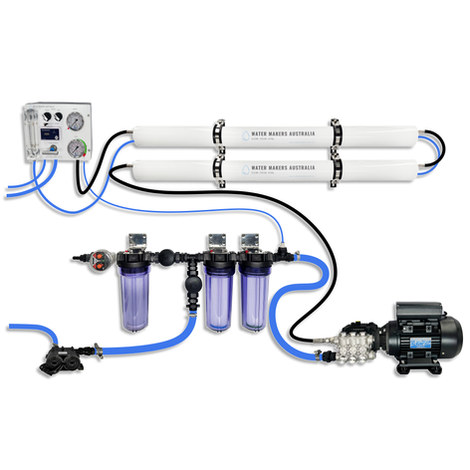
A two-membrane modular watermaker with 140 L/h nominal output, aimed at families and liveaboards that want more water per run.
Explore →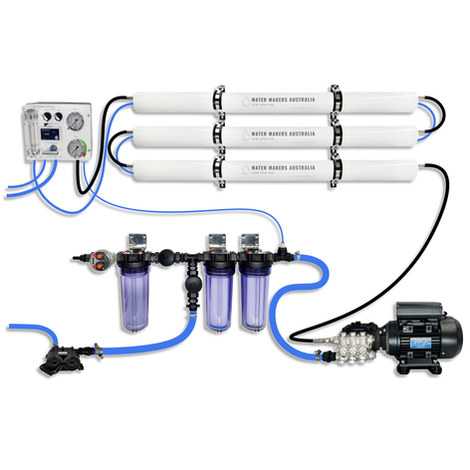
A three-membrane modular watermaker with 200 L/h nominal output and up to 240 L/h family-level marketing, for larger crews and heavy use.
Explore →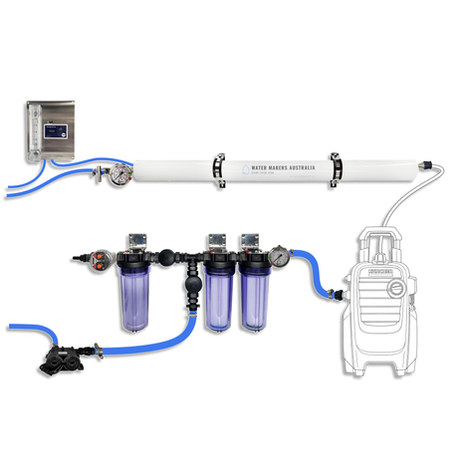
A one-membrane modular marine watermaker with 80 L/h nominal output, remote stainless control panel, standard consumables and direct Australian support.
Explore →