Loading this page…

Loading this page…
Sailing club
Sailability NSW is a state-level inclusive sailing organisation that supports a network of branches across New South Wales to enable people with disability to sail. Operating through volunteer-led local branches, Sailability NSW provides access to purpose-designed Hansa boats and other accessible craft, and runs recreational, therapeutic and competitive sailing programs. The organisation emphasises accessible infrastructure (pontoons, cranes/hoists and wheelchair-accessible facilities) and partnerships with established sailing clubs to deliver regular sailing days and events.
About
Sailability NSW is a state-level inclusive sailing organisation that supports a network of branches across New South Wales to enable people with disability to sail. Operating through volunteer-led local branches, Sailability NSW provides access to purpose-designed Hansa boats and other accessible craft, and runs recreational, therapeutic and competitive sailing programs. The organisation emphasises accessible infrastructure (pontoons, cranes/hoists and wheelchair-accessible facilities) and partnerships with established sailing clubs to deliver regular sailing days and events.
Service area: Statewide — branches across New South Wales
Keep exploring
Sailability NSW is a state-level not-for-profit organisation that promotes and facilitates sailing for people with disability across New South Wales. It supports a network of around 24 Sailability branches that offer recreational sailing, competitive opportunities, learn-to-sail programs, coaching and training clinics, volunteer roles, and organised events and regattas. Activities, services and programs vary by branch.
Everything in Sailability NSW's program hangs off one distinctive asset: the Hansa fleet. Designer Chris Mitchell's universal-design boats — wide, ballasted, effectively uncapsizable, with forward-facing seats, joystick steering options and simple reefing — were purpose-built so that a sailor's physical limitation need not dictate whether they can helm independently.
Branches operate mixes of the compact Hansa 2.3, the 303 (including servo-assisted 303S variants steered by joystick or electric switch) and the larger Liberty; around 800 Hansa craft now work in Australian Sailability programs, and the class is sold in 32 countries. Rushcutters Bay adds a Paralympic-class Sonar and two 7.4-metre Salvos for group and offshore-style sailing.
Programs run across recreational, therapeutic and competitive streams. New sailors go out one-on-one with an experienced skipper; from there they can sail socially, race solo, race with another skipper, or crew — and the ladder runs from branch racing through state titles and the Hansa Australian Championships to the Hansa Worlds and Para Sailing World Championships, held on Pittwater in 2025.
Sailors such as Ame Barnbrook have reached the Paralympic team through this pathway, and Wendy Evans — more than two decades a sailor with cerebral palsy and a competitor at the 2004 IFDS Worlds — sums up the appeal: "When I'm on the water, I forget my disability. I'm in control and I'm free." Delivery standards are coordinated statewide through a Training Coordinator and Assistant Training Officer, and recent conference work has explored learning to sail via headset visual effects.
Volunteers are the engine room: every branch needs people on land and water, many roles require no sailing background at all, and holders of first-aid certificates or powerboat licences are especially prized, with Working with Children Checks mandatory across the board.
There is no single Sailability NSW address because the water is the point, and the water is everywhere. The branch map stretches from Gosford on Brisbane Water — where it all began in 1995 — through Sydney sites at Dobroyd, Manly, Middle Harbour, Rushcutters Bay and Pittwater's Rowland Reserve at Bayview, out to Belmont and Toronto on Lake Macquarie, the Illawarra, Narooma, Albury, the Northern Rivers, Port Macquarie on the Hastings River and Port Stephens. The mission statement commits the organisation to sailing on inland, estuary and ocean water alike, and the branch list shows that is no rhetoric: a sailor in Albury on Lake Hume and a sailor off Rushcutters Bay in a Sonar are members of the same network.
What unifies these scattered venues is the infrastructure standard each branch builds toward: accessible pontoons and jetties, cranes or hoists for transferring wheelchair users into dinghies, wheelchair-accessible amenities, and safety boats on station whenever sailors are afloat. Toronto's setup at Toronto Amateur Sailing Club illustrates the model — its own jetty and pontoon, a crane for dinghy transfers, eight Hansa 303s, two servo 303S boats and five 2.3s, sailing Thursday and Saturday mornings through the warmer months.
Belmont runs four mornings a week out of Belmont 16ft Sailing Club, while the Rushcutters Bay branch sails from the Legacy Marina, a facility created for the Sydney 2000 Paralympics. Host-club partnerships are the key that unlocks each location, with established sailing clubs sharing ramps, storage and rescue coverage so branches can concentrate on getting sailors on the water.
The story starts with Denis Critchley, a businessman, yachtsman and wheelchair user who chaired a Sailability committee within the NSW Yachting Association and drove the first sailing at Gosford on Brisbane Water in early 1995. Sailability Gosford formalised that April, a Come and Try day followed at Dobroyd in May, and on 21 December 1995 Sailability NSW was incorporated with Gosford and Dobroyd as its first branches. Global solo sailor David Adams signed on as the first patron that same year.
Growth was rapid: by the end of 1996 branches had appeared from Manly and Pittwater to the Illawarra, Narooma, Albury and the Northern Rivers, guided by president Neil Anderson and treasurer Paul Tayler.
Milestones since read like a history of inclusive sailing itself. The Access 303 launched in 1998 and the Liberty in 2004, giving branches their defining boats; Nava George's solo harbour sail in 2000 proved what servo-assisted steering made possible; Lindsay Dalmon collected a national Disabled Sailor of the Year award; and Ame Barnbrook was honoured with the Sir Roden Cutler Award in 2011 on her way to the Paralympic team.
The organisation celebrated a decade at Rushcutters Bay in 2005, its twentieth year with its President's Cup regatta staged at Dobroyd in 2016, and in June 2025 gathered some 120 people from 25 branches at Newcastle Cruising Yacht Club for its 30th, where chair Clare Archer launched a new vision statement committing to remove every barrier between people and sailing. Liesl Tesch AM now serves as patron, and John Price as president, leading what remains Australia's biggest inclusive sailing network.
The Althorpe Islands are a small, rugged group off the south-west tip of Yorke Peninsula in Investigator Strait, South Australia. A conservation area with a historic lighthouse, they are a landmark to pass with care.

Legal requirements can change — check Transport for NSW for the current rules. As a practical baseline for coastal day sailing from NSW shores: keep the right number and type of lifejackets for everyone, have a means of calling for help, show navigation lights if you’ll be out after dusk, and carry basic items to manage a man‑overboard or abandon‑ship situation. Add anchor, bilge/bailer, sun/protection and basic repair kit as recommended items.
Explore →
Before the season: confirm seaworthiness — hull, rig, engine, electrics, sails and safety gear — and replace or service wearable items. After the season: wash, dry and protect gear, service consumables and record what you did so the boat’s ready and reliable next season.
Explore →
Usually not for a small sailing dinghy. In NSW a boat driving licence is needed only to drive at 10 knots or more, or to drive a personal watercraft, and a vessel must be registered if it has an engine of 4 kW or more, is 5.5 m or longer, or needs a mooring licence or marina berth. A trailer towed on public roads needs its own registration.
Explore →
Plan to transit Sydney Heads and northern NSW estuary entrances to take advantage of favourable tidal streams or slack water; account for local acceleration over shoals, eddies, wind-on-current effects and river discharge, and always check the latest local observations and tide/stream products before departure.
Explore →A practical guide to selecting and using anchorages around New South Wales for cruising sailors. Covers sheltered bays, tidal considerations, holding, approach planning, and example anchorages with local conditions to check before you go.
Explore →Practical guidance for recreational sailors planning to cross coastal bars in New South Wales. Explains how to assess conditions, plan a crossing, prepare equipment and crew, recognise hazards and manage emergencies, with checklists and realistic examples relevant to NSW waters.
Explore →A concise, practical introduction to the essential parts of a recreational sailing boat for beginners in Australia. Covers hull, deck, rigging, sails, steering, below-decks spaces and safety equipment, with simple explanations, common mistakes and a pre-sail checklist to help new sailors communicate and get underway.
Explore →Practical guide for recreational sailors in Pittwater covering safe anchorages, popular beaches, typical weather patterns, tidal and local considerations, boat handling and a pre-departure checklist tailored to local conditions.
Explore →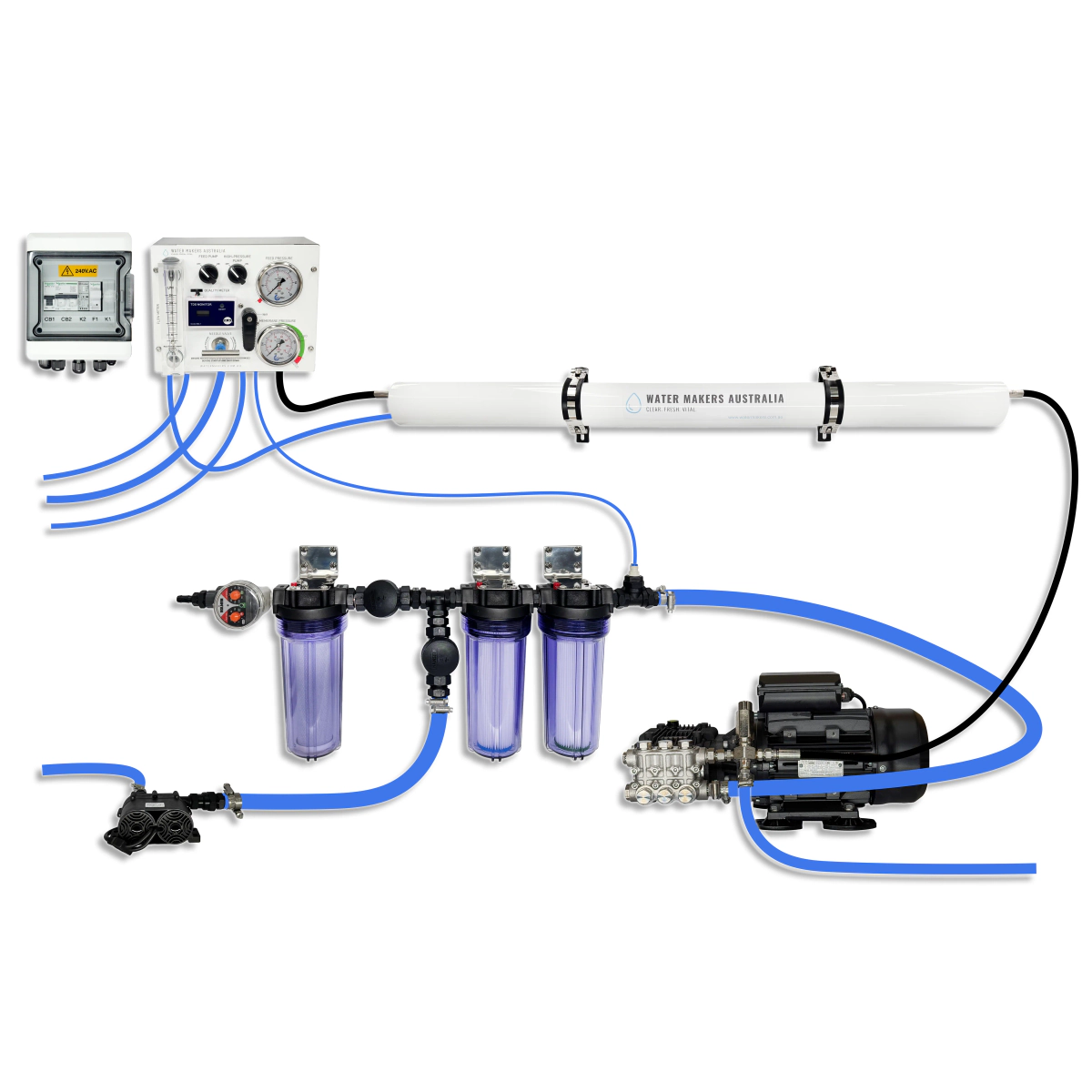
Single-membrane 240 V reverse-osmosis watermaker producing a nominal 80 L/h, built to order in Sydney for cruising boats of about 10 to 15 m with a generator or inverter.
Explore →
Push-to-talk radio that uses 4G mobile networks where there is coverage and a built-in 16-channel analog radio where there is none, with GPS and SOS. Sold as a two-pack.
Explore →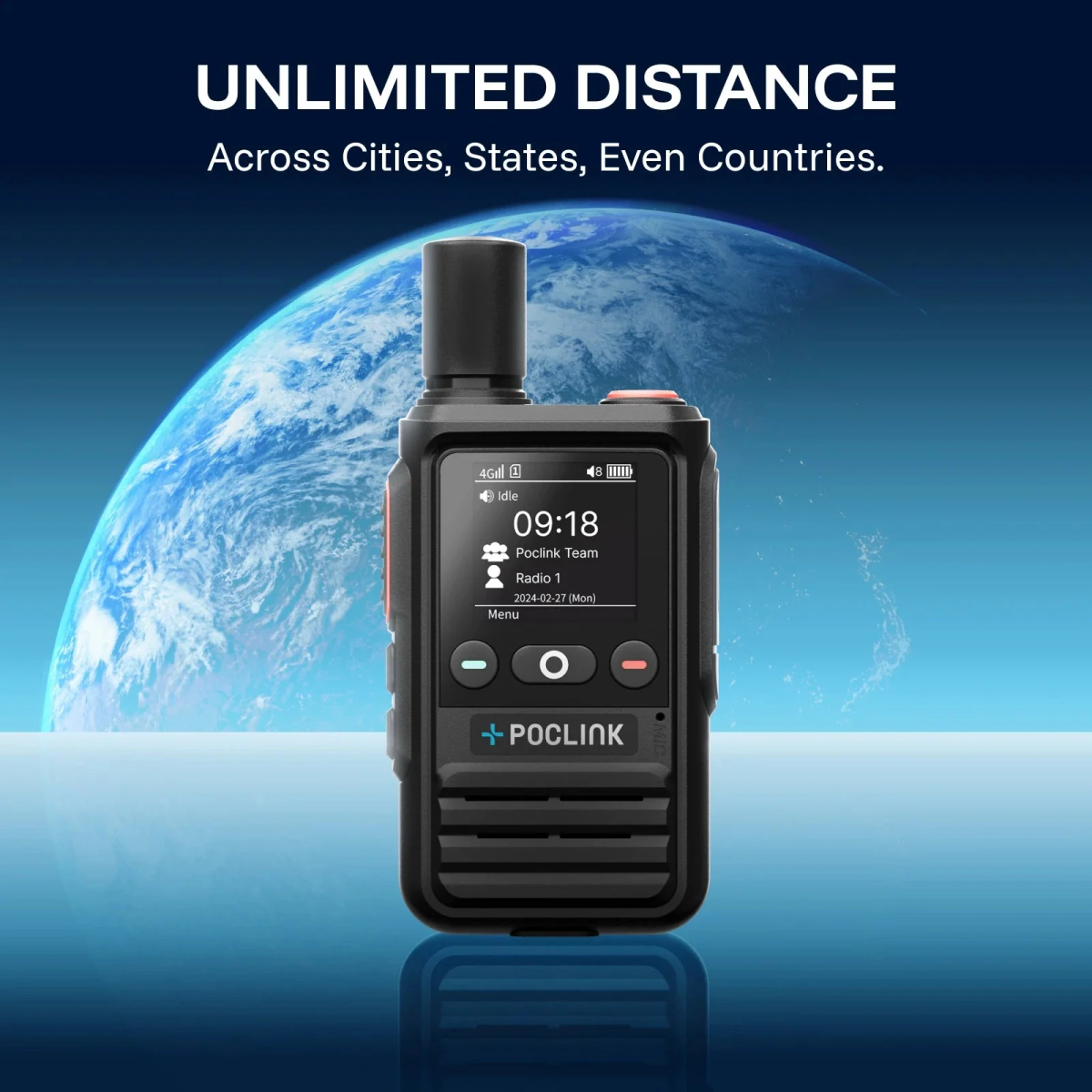
The entry-level Poclink push-to-talk radio: 4G mobile network only, three years of service included, sold as a two-pack for half the price of the Pro and Ultra.
Explore →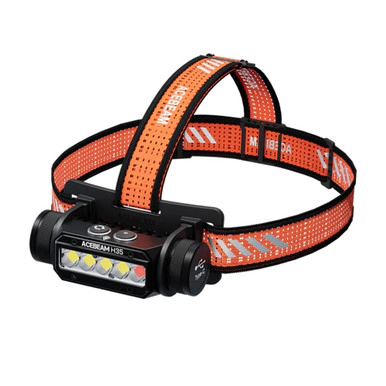
A 2600 lumen wide-beam headlamp with a red light, rated IP68 and submersible to 2 metres, with a 170 metre beam and USB-C charging.
Explore →