Loading this page…

Loading this page…
Sailing club
Shelley Sailing Club is a small, family-focused dinghy club on the Canning River at Shelley (Perth southern suburbs). Established in the mid-1970s, the club sails predominantly small, off‑the‑beach boats on Sunday afternoons and runs a relaxed junior development and learn-to-sail pathway. Facilities are modest and volunteer-run: a clubroom beside an original boatshed, an elevated start box with a fixed anemometer, club-owned hire Lasers, a safety boat and a canteen. The club is affiliated with Australian Sailing and appears as a stakeholder in Swan‑Canning riverpark boating planning.
About
Shelley Sailing Club is a small, family-focused dinghy club on the Canning River at Shelley (Perth southern suburbs). Established in the mid-1970s, the club sails predominantly small, off‑the‑beach boats on Sunday afternoons and runs a relaxed junior development and learn-to-sail pathway. Facilities are modest and volunteer-run: a clubroom beside an original boatshed, an elevated start box with a fixed anemometer, club-owned hire Lasers, a safety boat and a canteen. The club is affiliated with Australian Sailing and appears as a stakeholder in Swan‑Canning riverpark boating planning.
Service area: Canning River (Shelley), Perth southern suburbs, Western Australia
Keep exploring
The pathway into Shelley starts young and stays relaxed. The club's junior development program takes children from age eight, teaching them in Minnow and Mudlark dinghies on Sunday mornings — a low-pressure introduction that matches the family brief perfectly. From there the ladder continues through learn-to-sail classes offered across multiple boat types, plus formal courses and race coaching delivered under the club's Australian Sailing affiliation.
Adults are anything but an afterthought: the club openly invites newcomers to come and try sailing on any Sunday from about one o'clock between October and April, and with club Lasers for hire a beginner can get afloat without owning a thing. The racing classes tell their own story about who sails here. The Laser fleet, the club notes, is crewed single-handed by men and women from fifteen years of age to past sixty, with Radial and Standard rigs suiting different body weights.
The Windrush 14 is a Perth-built fourteen-foot off-the-beach catamaran and a winner of an Australian Design Award, able to be rigged cat or sloop and handled solo. The Scow Moth completes a trio that keeps costs modest and racing close. The competitive calendar runs through an Open Series from October to March with two o'clock starts, anchored by two fixtures of genuine local folklore: the Convict Bay Regatta, which celebrated its fiftieth anniversary in 2025, and the race bearing the frankly irresistible name Cock of the Canning.
Under the 2024-25 committee — Commodore Riko Stevens, Secretary Chris Musto and Treasurer Andrew Currie — the whole program keeps humming along.
Everything about Shelley's home water argues for the club's chosen style. The Canning River at Shelley offers the quiet, protected water of a broad suburban river — no ocean swell, a world away from exposed coastal chop — just steady reaches of open river in Perth's southern suburbs. That kind of water has practical virtues a family club exploits fully: a capsize is an inconvenience rather than an emergency, young sailors can be turned loose in Minnows within sight of the clubhouse, and race officials in the air-conditioned start box can read the breeze off the club's fixed anemometer before the first warning signal.
The club's footprint sits off Riverton Drive, with the social clubroom and boat store beside the launching area, while mail goes to a Parkwood post office box. This is also carefully managed water: Shelley Sailing Club appears among the stakeholders in the State Government's boating strategy covering the Swan-Canning riverpark, sharing the river system with paddlers, rowers and power craft under a coordinated plan. Nor does the club sail in class isolation.
Its classes pages map a network of sister clubs racing the same boats around the state — Maylands, Geographe Bay, Koombana Bay and Princess Royal for Lasers; for the Windrush, clubs at Walpole, Denmark, Jervoise Bay and Augusta — so a Shelley sailor who travels to a country regatta finds familiar competition waiting on the start line. It is the classic river-club bargain, struck with unusual success: modest water, used brilliantly, across fifty seasons and counting.
Shelley has preserved its foundation story in unusual detail, and it begins with a challenge. In 1974 Dr Malcolm Hoare, Tony Quayle and David Hartley happened to be sailing small craft near the Shelley ends of Beryl and Modillion Avenues when a challenge to race was issued. The impromptu contests became a habit; Roy Whitehead joined after buying a Mirror dinghy, Russell Matthews followed, and on 23 March 1975 the group held its first General Meeting, electing Tony Quayle President, Roy Whitehead Vice President, Simon Dodd Secretary and Max Birch Treasurer.
Growth came immediately. The first AGM, on 21 August 1975, opened a season in which 74 boats were registered and thirty to forty of them regularly fronted for Sunday afternoon sailing; affiliation with the Yachting Association of WA followed six days later, on 27 August. Bricks and mortar took longer. Incorporation was instigated in 1979, and in June 1980 the club negotiated a licence with the City of Canning for its present site.
Members built the original boatshed during the 1981 off-season — it survives as the clubhouse boat store — and Hon Clive Griffiths MLC performed the opening on 18 October 1981; a start box was later formed atop its concrete roof. The extended clubrooms arrived next, financed by a $30,000 City of Canning loan against the $10,283 members had raised by March 1994; Mayor Dr Mick Lekias declared them open on 9 October that year.
Three decades on, the club celebrated fifty years on the Canning in 2025, centring the occasion on a golden-anniversary Convict Bay Regatta — the same fixture that has anchored its calendar for as long as most members can remember.
Batemans Bay and the Clyde River form a classic NSW South Coast cruising region where a sheltered, tidal estuary meets a short, island‑dotted entrance to the Tasman Sea. It’s distinctive for easy access from Canberra, a mix of river and bay sailing, a compact marina and mooring network, and a river entrance (the Clyde River bar) that can change rapidly. The area suits day sails, weekend cruising, trailer‑boat exploration and sheltered coastal passages; offshore or long‑passage plans require careful timing and local knowledge. Preparation for tidal flow, variable southerly swells and shallow, s

Pick a stable, simple, forgiving dinghy with a single sail or basic sloop rig, affordable handling and easy maintenance—ideally one with a local class or school nearby so you can access coaching and spare parts.
Explore →
Pick a protected bay, estuary or river reach where you can rig, launch and arrive on calm water within a short, sheltered transit; choose a site with a good ramp or jetty, clear recovery options and a nearby sailing club, marina or commercial operator for local knowledge and help.
Explore →
Rig and de-rig a small dinghy by following a consistent, step-by-step sequence: prepare the boat on shore, fit spars and foils in a stable order, control sails and running rigging so lines don’t tangle, check fittings and safety gear, and reverse the process when coming ashore—always working with a partner when possible and staying aware of wind and tide.
Explore →
Use ramps and beaches with respect for local conditions: check ramp layout, tide and swell, wind direction, vehicle access and crowding; prepare boat and crew before you launch or retrieve; and follow local signage, courtesy and safety practices. Specifics vary by ramp and beach, so confirm details for the exact site before you go.
Explore →
A practical guide for new sailors on picking the right Australian sailing club: training, boat access, racing, social fit, costs and the key questions to ask before joining.
Explore →
A practical guide to the safety equipment commonly carried on recreational sailing boats in Australia: lifejackets, EPIRBs/PLBs, flares, radios, fire extinguishers, liferafts, jacklines, first-aid and how state requirements influence what you must carry.
Explore →
A practical guide for recreational sailors planning day sails or short coastal cruises in the southern section of the Great Barrier Reef. Covers prevailing conditions, route planning, anchorages, navigation, reef etiquette and safety considerations specific to this region.
Explore →Practical guide for recreational sailors navigating the Swan River and coastal waters around Perth. Covers local weather patterns, tides and currents, river navigation, launching and berthing options, safety equipment, common hazards, and step-by-step pre-departure and on-water checklists tailored to Western Australian
Explore →Burke Yachtsman Gear Bag 40L - Shop Now Zip Pay | Tamar Marine Skip to content 59 – 63 Holbrook Street, Invermay Online Shop Open 24/7 Products search Contact us 1300 MARINE $ 0.00 0 Cart Burke Yachtsman Gear Bag 40L $ 79.90 Colour Choose an option Black Blue Black Blue Clear - Burke Yachtsman Gear Bag 40L quantity + Add to cart Enquire about this product SKU BAGB-Y24/BLACK* Category Bags - Sail & Gear A Burke classic and customer favourite, the Yachtsman’s Gear Bag is built tough to handle wet, salty conditions while keeping your gear dry and protected. Made from double coated waterproof…
Explore →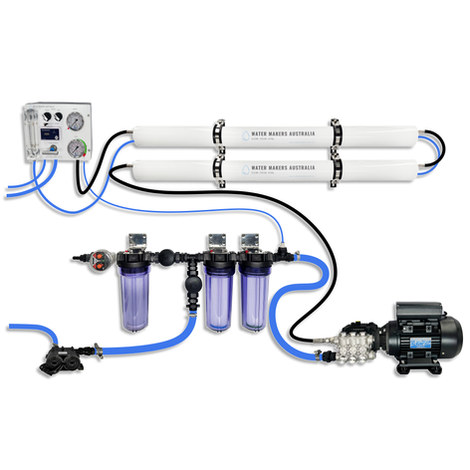
A two-membrane modular watermaker with 140 L/h nominal output, aimed at families and liveaboards that want more water per run.
Explore →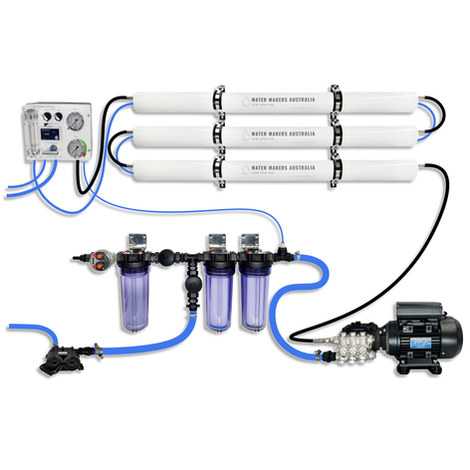
A three-membrane modular watermaker with 200 L/h nominal output and up to 240 L/h family-level marketing, for larger crews and heavy use.
Explore →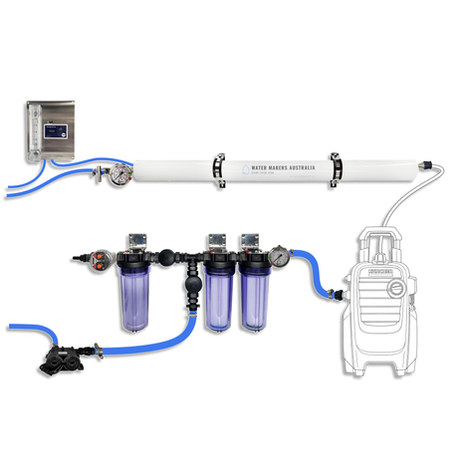
A one-membrane modular marine watermaker with 80 L/h nominal output, remote stainless control panel, standard consumables and direct Australian support.
Explore →