Loading this page…

Loading this page…
Sailing club
South of Perth Yacht Club (SoPYC) is a large, mixed yacht club located at Coffee Point, Applecross, with on‑water facilities for keelboats, dinghies and powerboats and an extensive sailing academy. The club runs broad coaching and learn‑to‑sail pathways for children, teenagers and adults, operates keelboat and off‑the‑beach racing programs, and provides marina pens, hardstand and travel‑lift services from its clubhouse on the Swan and Canning Rivers.
About
South of Perth Yacht Club (SoPYC) is a large, mixed yacht club located at Coffee Point, Applecross, with on‑water facilities for keelboats, dinghies and powerboats and an extensive sailing academy. The club runs broad coaching and learn‑to‑sail pathways for children, teenagers and adults, operates keelboat and off‑the‑beach racing programs, and provides marina pens, hardstand and travel‑lift services from its clubhouse on the Swan and Canning Rivers.
Service area: Applecross / Melville Water, Swan and Canning Rivers (Perth), Western Australia
Keep exploring
Adults who assume sailing clubs only teach children get a short answer at Coffee Point: SoPYC runs separate learn-to-sail courses for grown-ups on dinghies and on keelboats, and that adult pathway anchors one of the broadest training menus in the state. Around it the club has assembled a genuine cradle-to-club-racer structure. For teenagers there is OutThere Sailing, Australian Sailing's program for twelve-to-seventeen-year-olds; the junior entry rung is Tackers, which the club delivers for six-to-twelve-year-olds.
Beyond conventional sailing, the club offers tuition in wingfoiling and windsurfing, hosts school group programs, and puts its fleet and waterways to work for corporate sailing charters. Recent evidence says the formula is landing: club news from October 2025 reported healthy learn-to-sail numbers, among them an adult dinghy course run by Senior Coach Conor Nicholas together with Iain Lane, and dozens of juniors moving through Tackers and OutThere holiday courses. Racing gives graduates somewhere to aim.
The 2025-26 season opened with 36 yachts contesting the Patrons Trophy Pursuit Race, a day that suited the club's storied H28 fleet — three of the first four places went to the class, with Aloha taking the win. Nor is the program purely sail: the club's Power section has been time trialling since 1962 and still cruises to Rottnest Island and beyond. MySailing's directory profile sums the place up as a big Applecross club complete with marina, a strong club racing calendar across keelboats and dinghies, and kids' learn-to-sail — a fair snapshot of a club that treats tuition and racing as two halves of the same whole.
Few clubs anywhere in Australia can offer what Coffee Point offers by pure accident of geography: two rivers at once. The clubhouse stands at 2 Canning Beach Road, Applecross, on the Canning River's western bank, with direct access to both the Swan and Canning systems — the centreboard fleet launching onto the Swan while the keelboat and power sections occupy pens on the Canning side.
The building itself, a one- and two-level structure with verandahs and a foreshore viewing deck, fronts a line of jetties projecting into the two rivers as moorings for yachts and launches, and the whole precinct carries a Category B heritage listing in the City of Melville's Municipal Inventory, adopted in June 2014. The ground beneath it is comparatively young: five acres formed from material dredged out of the Canning while the freeway was being built, created after dredging near Point Heathcote in 1957. The place is far older than that, of course.
Wagoorjup — place of the Waugal — is the Aboriginal name recorded for the Canning's mouth near the club, while the river itself is Dyarlgarro — names that anchor the club's fashionable address in a much longer story of this estuary. For sailors, the practical dividend is choice: sheltered river courses in either direction, sea-breeze afternoons through summer as the south-wester fills in across the estuary, and enough water to run pursuit races for 36-yacht fleets without leaving the rivers.
Like every club on this system, SoPYC holds stakeholder status in the government boating plan that manages the riverpark.
The founding meeting grew out of a boatbuilding scene: sailors constructing Vaucluse Junior dinghies decided on 18 December 1945 to form the South Perth Yacht Club. A constitution followed on 12 February 1946, with Frank Sampson elected first Commodore, and the club wasted no time getting on the water — its first yacht race was sailed on 13 January 1946. The original clubhouse was an exercise in postwar resourcefulness: an ex-army mess hut bought and shifted by members from Point Walter in Bicton to a foreshore spot near Olives Reserve at Mary Street, Como, hard by the Como Sea Scout Hall.
The official opening came on 16 November 1946 according to the club's own history (the heritage record says 18 November, a minor disagreement between sources). Growth was rapid: by 1955 the roll stood at 400 members, juniors forming the majority — the product of tuition delivered by sailing parents and volunteer coaches. Then came the freeway. A WA Government report covering 1959-69 records that the works stripped the club of its South Perth home, that reclamation near Point Heathcote created the replacement from 1957, and that the relocated club soon ran senior and junior clubhouses for 1,779 members with a register of 260 craft.
In 1960 the club moved with State Government assistance and took its present name. Two years later its keelboat scene made history of its own: Loyal Weaver led the push to collect the river's H28s under the SoPYC burgee, and on 28 February 1963 the class convened its inaugural meeting, the founding roll including Bob Moss, Ray Kelt, Jim Carrol, John Lewis and W. Vance; Weaver also lured noted owner-builder Don Bourne and his yacht Wynella across from Royal Perth.
The Fremantle-to-Geraldton ocean race, begun in 1969, grew from that same scene and still runs. Even WA parliamentarian Phil Edman's biography records an IGA Frostbite championship won at South Perth in 2008.
Apollo Bay is a small working harbour on Victoria’s Great Ocean Road where sheltered inshore sailing meets the Southern Ocean. The character is a mix of protected harbour berths and an exposed open coast: pleasant day-sails and sheltered weekend cruising inside the bay, with demanding coastal passages immediately offshore where south‑westerly swell and strong winds from the Southern Ocean dominate. It suits coastal cruisers, trailer sailors who launch at the ramp, and experienced coastal sailors who understand bar and swell behaviour; it is not a casual open‑ocean anchorage for unprepared or

Before your first sail in South Australian waters check the weather and tide, make sure the boat and safety equipment are fit for the trip, confirm local rules and any area-specific hazards, and tell someone your plan.
Explore →
Yes — South Australian coastal waters include marine parks, aquatic reserves, harbour bylaws and local council restrictions that can affect anchoring, fishing, mooring and access; check the relevant state agencies, local councils and Notices to Mariners for location-specific rules and permit requirements.
Explore →
A regular, layered maintenance routine combining hull cleaning, targeted anti-fouling management, cathodic protection and systems checks will substantially reduce marine growth and corrosion for boats kept year‑round in South Australian waters. Focus on preventing attachment and electrochemical attack, then inspect and act more often if you’re in warm, nutrient-rich or high‑traffic sheltered waters.
Explore →
Expect very different seasonal systems across Western Australia: the south‑west (Perth to Albany) has a strong summer afternoon sea breeze (the “Fremantle Doctor”) and winter westerly fronts, while northern WA follows a wet/dry monsoonal cycle with strong seasonal onshore winds, thunderstorms and cyclone risk in the wet season. Local headlands, estuaries and tidal flows often change what you actually feel on the water, so learn the local timing and sheltered venues first.
Explore →A practical guide for recreational sailors planning day sails or short cruises around Batemans Bay, Broulee and the Clyde River. Covers local conditions, safe approaches, anchorages, launching, tides, common hazards, and checklists for trip planning and on-water decisions.
Explore →A practical guide for recreational sailors planning passages to, from or around Eden and Twofold Bay. Covers sheltered anchorages, shore facilities, local weather and tidal considerations, preparing for Bass Strait conditions and a focused equipment and safety checklist.
Explore →A practical guide for recreational sailors planning visits to Albany and King George Sound. Covers the main anchorage areas, typical local weather patterns, tidal and current considerations, navigational hazards, on-the-water etiquette and a pre-departure checklist to help you plan a safe passage and enjoyable stopover
Explore →Practical guide for recreational sailors planning passage on the Hawkesbury River: how to plan around tides, choose anchorages, read local conditions and prepare the boat and crew for a safe, comfortable trip.
Explore →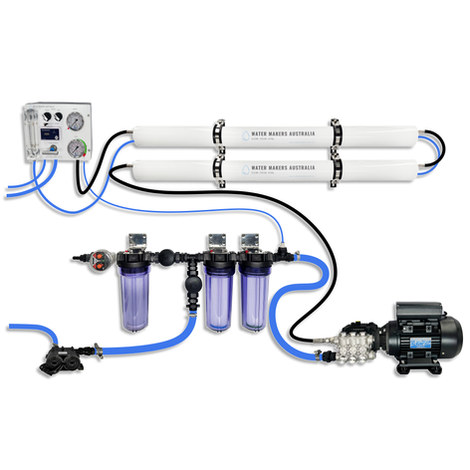
A two-membrane modular watermaker with 140 L/h nominal output, aimed at families and liveaboards that want more water per run.
Explore →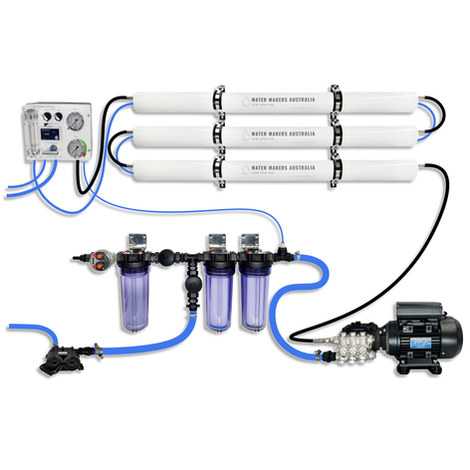
A three-membrane modular watermaker with 200 L/h nominal output and up to 240 L/h family-level marketing, for larger crews and heavy use.
Explore →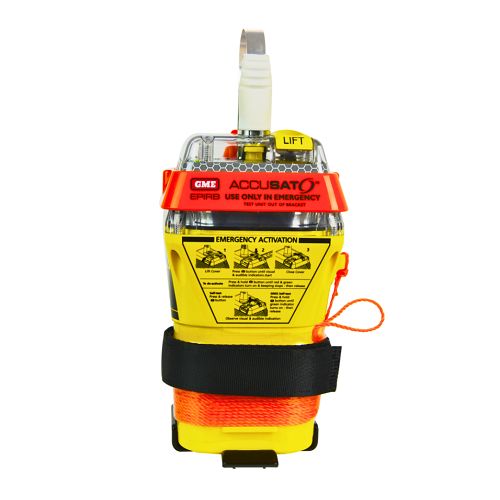
A 10‑year battery EPIRB with integrated GNSS (supports GPS and Galileo), infrared strobe and 121.5 MHz homing signal. Approved for worldwide COSPAS‑SARSAT operation.
Explore →Burke Yachtsman Gear Bag 40L - Shop Now Zip Pay | Tamar Marine Skip to content 59 – 63 Holbrook Street, Invermay Online Shop Open 24/7 Products search Contact us 1300 MARINE $ 0.00 0 Cart Burke Yachtsman Gear Bag 40L $ 79.90 Colour Choose an option Black Blue Black Blue Clear - Burke Yachtsman Gear Bag 40L quantity + Add to cart Enquire about this product SKU BAGB-Y24/BLACK* Category Bags - Sail & Gear A Burke classic and customer favourite, the Yachtsman’s Gear Bag is built tough to handle wet, salty conditions while keeping your gear dry and protected. Made from double coated waterproof…
Explore →