Loading this page…

Loading this page…
Sailing club
Speers Point Amateur Sailing Club (SPASC) is a community, family-oriented sailing club based at the northern end of Lake Macquarie next to Speers Point Park. The club runs organised sail racing (Saturday seasonal racing, September–April), hosts regattas, and supports both monohull and catamaran fleets. SPASC operates junior and adult learn-to-sail programs through accredited dinghy instructors (an Australian Sailing Discover Sailing Centre) and offers club boats for trial use. Facilities described include a clubhouse with viewing deck, large grassed rigging area, ample parking and multiple ramps for launching and retrieving dinghies, catamarans and larger trailer boats.
About
Speers Point Amateur Sailing Club (SPASC) is a community, family-oriented sailing club based at the northern end of Lake Macquarie next to Speers Point Park. The club runs organised sail racing (Saturday seasonal racing, September–April), hosts regattas, and supports both monohull and catamaran fleets. SPASC operates junior and adult learn-to-sail programs through accredited dinghy instructors (an Australian Sailing Discover Sailing Centre) and offers club boats for trial use. Facilities described include a clubhouse with viewing deck, large grassed rigging area, ample parking and multiple ramps for launching and retrieving dinghies, catamarans and larger trailer boats.
Service area: Speers Point / Lake Macquarie, NSW
Keep exploring
Speers Point Amateur Sailing Club (SPASC) is a community, family-oriented sailing club based at the northern end of Lake Macquarie next to Speers Point Park. The club runs organised sail racing (Saturday seasonal racing, September–April), hosts regattas, and supports both monohull and catamaran fleets. SPASC operates junior and adult learn-to-sail programs through accredited dinghy instructors (an Australian Sailing Discover Sailing Centre) and offers club boats for trial use. Facilities described include a clubhouse with viewing deck, large grassed rigging area, ample parking and multiple ramps for launching and retrieving dinghies, catamarans and larger trailer boats.
The junior pathway at Speers Point is built on a philosophy many bigger clubs would do well to copy: no junior is hurried toward racing until their skills and maturity are ready for it. Programs lean on fun, games and adventure to bed down foundation skills first, with juniors typically taking about two seasons to reach independence. The pathway itself has four clearly marked stages. Start Sailing 1 and 2 take ages eight to sixteen on Sunday mornings in club boats with lifejackets provided, priced at $470, or $300 for families with their own Optimist.
From there sailors move through Green Fleet, then the Silver Fleet and Adventure Series, and finally the Transition to Racing Gold Fleet in ILCA 4s and 6s or O'pen Skiffs — Optimists are deliberately left behind at that point, steering teenagers toward the boats they will race as seniors.
Adults get a serious pathway too: a ten-week adult Start Sailing course, open also to teenagers, generally those over fourteen, taught to the Australian Sailing syllabus in club-provided ILCA 4s. Juniors are encouraged to climb the instructor ladder as Assistant Instructors and then Dinghy Instructors, and the club's bench strength shows — four accredited Dinghy Instructors and five assistants were supporting the programs as of 2025. A Friday twilight junior race series and weekend Gold Fleet racing bridge the gap into senior club competition, and the annual Lake Mac O'pen Skiff and ILCA Champs, drawing fifty-plus young sailors, gives the pathway a home regatta to aim at.
The club's training fleet of Optimists, O'pen Skiffs and ILCAs feeds a senior racing scene of genuine breadth: Tasars, ILCAs, A-Class and Arrow catamarans, Nacra 5.8s and 20s, F18s, Hobie 14s, 16s and 18s, Hartley TS16s, Corsairs and the occasional trailer-sailer. Junior membership is $110, family membership $385, and NSW Active Kids vouchers are accepted — pricing plainly set to keep the door open.
The clubhouse stands at 20B Park Road, inside the park at the top end of Lake Macquarie. From the upper deck the view sweeps across the lake, and the surrounding parkland gives the club something money cannot buy: a large grassed rigging area where whole regatta fleets can spread out, with camping available on site during major events. Two wide ramps handle dinghies and catamarans on beach trolleys, and a separate boat ramp takes larger trailer boats. Ample parking, a bar, a kiosk and food on race days round out a facility mix that explains why class associations keep bringing their state and national titles here.
The sailing water is Lake Macquarie at its most open. The lake is widely known as Australia's largest coastal saltwater lake, and from Speers Point the courses can run long in any direction without touching a channel marker or a tidal rip. Off-the-beach classes thrive on exactly this: steady summer breezes, room for multi-lap courses, and a lee shore close enough to keep safety cover simple. The club's catamaran strength — nearly half the racing fleet — says plenty about the quality of the reaching water off the park.
The season runs from early September to Anzac Day, with Friday twilight and Saturday afternoon racing as the weekly spine. The annual fixtures give the calendar its personality: the 14-foot Cat and Monohull Regatta, the event known as Catagatta, the Marathon race around Pulbah Island, and the Anzac Day Regatta to close the summer. Pulbah Island, the big bush-clad island in the lake's southern basin, gives the marathon its navigation interest and turns a club race into a proper lake crossing. Between the park, the ramps, the island course and a season that stretches across eight months, Speers Point offers about as complete an off-the-beach sailing setup as a volunteer club can assemble.
The club traces its history to at least 1905, founded on the point locals came to call Shipbuilders — a name that hints at the working waterfront the area once was. That makes Speers Point among the longest-established sailing clubs on the lake, and life member Jane Klein has captured the full sweep of it in her history, Sailing Speers Point, 1880 Onwards, which the club recommends to anyone wanting the deep account.
By the 1920s the club hosted a big fleet of 16-foot skiffs, the working-class racing machines of the era. By the 1950s it had become a stronghold of the Vaucluse Junior, the little Sydney skiff that spread through the eastern states, and in the decades that followed mixed fleets raced off the point — VJs, Skates, NS14s, Moths and Sabots sharing the same courses. Catamarans joined in 1969, Tasars arrived in 1983, and both remain central to the club's identity today.
The clubhouse has its own tale. Construction of the current building began in the early 1950s when members shifted the original structure plank by plank to its present spot on the edge of Speers Point Park, chasing better access to the water. Extensions followed as fundraising allowed, and the finished clubhouse was officially opened in 1974.
Recent history has been about recognition catching up with reality. Discover Sailing Centre accreditation came in 2022, formalising a training operation that had been building for years. Then, in February 2023, Speers Point was named one of just three clubs in Australia to host a visit from the Australian SailGP team — Jason Waterhouse and Nina Curtis among the sailors who came to the park.
For a club of fewer than 120 members, run by a nine-person volunteer executive with strong ties to the local council and business community, it was a marker of how far the plank-by-plank clubhouse has travelled since 1905. Social glue helps too: the calendar includes a Pirates Picnic, and a solid contingent of non-sailing members keeps the race tower staffed.
Corner Inlet is a large, tide‑dominated embayment at the northern edge of Wilsons Promontory in South Gippsland, Victoria. It combines extensive tidal flats, shallow sheltered waters and a scattering of barrier islands and channels that make it a rich but exacting sailing destination. The inlet suits day sailing, trailer‑launched excursions, weekend cruises and coastal passagemaking when crews understand tidal flows, shallow channels and protected marine parks. The waters inside the inlet are generally much more sheltered than the exposed ocean around Wilsons Promontory, but strong tidal flows

Look for a friendly club with beginner-focused training, accessible facilities and boats, a supportive community, clear safety practices, and opportunities to progress at your own pace.
Explore →
Learn boat-handling basics (steering, points of sail and sail trim), safety and seamanship (personal flotation, wind awareness, man-overboard procedure), and simple anchoring/mooring — these give you the core skills to sail safely and enjoyably.
Explore →
Pick a stable, simple, forgiving dinghy with a single sail or basic sloop rig, affordable handling and easy maintenance—ideally one with a local class or school nearby so you can access coaching and spare parts.
Explore →
Pick a protected bay, estuary or river reach where you can rig, launch and arrive on calm water within a short, sheltered transit; choose a site with a good ramp or jetty, clear recovery options and a nearby sailing club, marina or commercial operator for local knowledge and help.
Explore →
A concise, practical guide to the points of sail and how to trim sails effectively for common Australian conditions. Learn the basics of wind angles, sail shape, telltales, reefing considerations and simple steps to improve boat speed and balance.
Explore →
A practical guide for new sailors on picking the right Australian sailing club: training, boat access, racing, social fit, costs and the key questions to ask before joining.
Explore →A concise, practical introduction to the essential parts of a recreational sailing boat for beginners in Australia. Covers hull, deck, rigging, sails, steering, below-decks spaces and safety equipment, with simple explanations, common mistakes and a pre-decast checklist to help new sailors communicate and get underway.
Explore →A practical, Australian-focused guide explaining how sails generate drive, the points of sail, and how to trim sails for different conditions. Includes simple explanations of aerodynamic concepts, step-by-step trim checks, common mistakes and clear next steps for practice on the water.
Explore →Burke Yachtsman Gear Bag 40L - Shop Now Zip Pay | Tamar Marine Skip to content 59 – 63 Holbrook Street, Invermay Online Shop Open 24/7 Products search Contact us 1300 MARINE $ 0.00 0 Cart Burke Yachtsman Gear Bag 40L $ 79.90 Colour Choose an option Black Blue Black Blue Clear - Burke Yachtsman Gear Bag 40L quantity + Add to cart Enquire about this product SKU BAGB-Y24/BLACK* Category Bags - Sail & Gear A Burke classic and customer favourite, the Yachtsman’s Gear Bag is built tough to handle wet, salty conditions while keeping your gear dry and protected. Made from double coated waterproof…
Explore →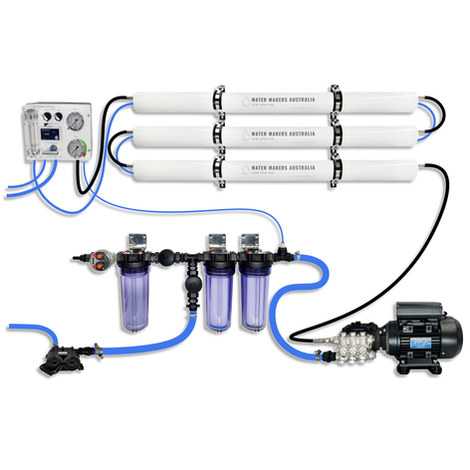
A three-membrane modular watermaker with 200 L/h nominal output and up to 240 L/h family-level marketing, for larger crews and heavy use.
Explore →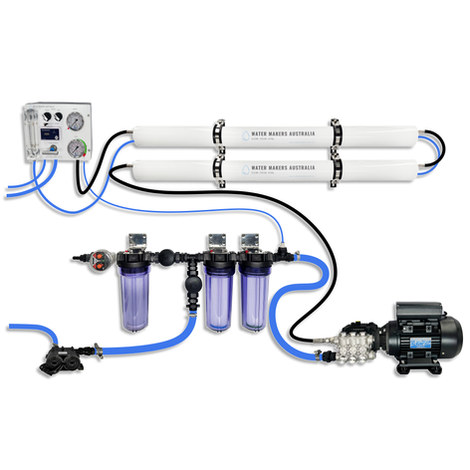
A two-membrane modular watermaker with 140 L/h nominal output, aimed at families and liveaboards that want more water per run.
Explore →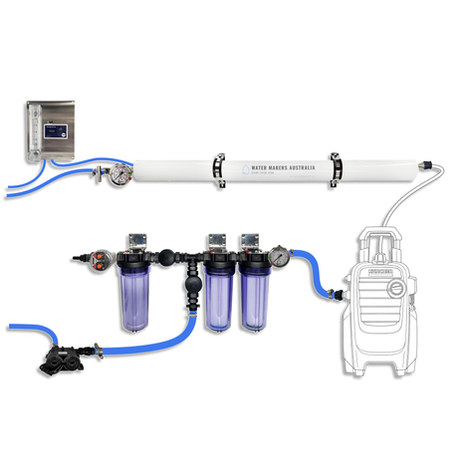
A one-membrane modular marine watermaker with 80 L/h nominal output, remote stainless control panel, standard consumables and direct Australian support.
Explore →