Loading this page…

Loading this page…
Sailing club
St Leonards Yacht Club & Motor Squadron is a combined sailing and motorboat club based in St Leonards, VIC, focused on participation in recreational aquatic activities. The club runs off‑the‑beach sailing and Sunday afternoon club racing (October–Easter), offers Adult and Junior Learn to Sail programs, and operates social facilities including a café and licensed bar on summer Sundays. The club describes a child‑friendly bay beach location on the southern part of Port Phillip Bay.
About
St Leonards Yacht Club & Motor Squadron is a combined sailing and motorboat club based in St Leonards, VIC, focused on participation in recreational aquatic activities. The club runs off‑the‑beach sailing and Sunday afternoon club racing (October–Easter), offers Adult and Junior Learn to Sail programs, and operates social facilities including a café and licensed bar on summer Sundays. The club describes a child‑friendly bay beach location on the southern part of Port Phillip Bay.
Service area: St Leonards, VIC
Keep exploring
The name tells you the first thing about this club: it is two clubs in one, a sailing fleet and a motor squadron sharing a clubhouse on the Bellarine Peninsula's bay coast, united by a stated focus on "participation in all forms of aquatic activities". The Geelong community directory describes it as a family oriented sailing club, Australian Sailing lists it in Category B, and the doors of the club, cafe and licensed bar open each Sunday from October until Easter, with social functions and live local bands animating occasional summer afternoons.
The sailing heart of the club is catamaran-shaped. An A Class catamaran fleet has raced here since 1972 and has produced State and National champions, making St Leonards one of the longest-running A Class homes in the country — a status underlined when the club hosted the 60th Australian A Class Championships in February 2026. The Heron class also has deep roots here: the club ran the 64th Heron National Championship over four days in January 2025.
Founding details come with an honest asterisk — club directories date the establishment to 1964, while the commodore has spoken of the club celebrating its sixtieth anniversary in 2026, which points to 1966; the History section below sets out both versions. What is not in doubt is the club's present shape: a relaxed, family-centred beach venue on the southern shore of Port Phillip, where the racing is off the beach on Sunday afternoons, the rigging happens on grass, and the bar terrace looks straight out over the course.
The program that most defines St Leonards is not a course but a habit: members who turn up without a boat are actively helped to find someone to sail with. That crew-matching ethos — unusual enough to be stated on the club's own homepage — is how a small beach club keeps its fleet full and its newcomers sailing, and it pairs naturally with the A Class tradition, where two-handed boats and mentoring sailors have kept the class alive here since 1972.
Formal instruction comes in a compact format that suits a seasonal club: Adult and Junior Learn to Sail courses run on Saturday mornings throughout February, turning the late-summer holiday stretch into an intensive introduction to the sport. Neither a Tackers listing nor Discover Sailing Centre credentials appear anywhere in the club's published material, so the teaching should be understood as club-run instruction rather than a franchised national pathway — worth confirming with the club before booking.
Racing for graduates is close at hand: off-the-beach club racing runs on Sunday afternoons from October to Easter on the water directly in front of the clubhouse, with results published through the Sailres scoring system. The club also plays a quiet regional role, hosting an Australian Sailing VIC Participation Workshop in July 2024 that brought neighbouring clubs together to talk about growing the sport — a sign that St Leonards thinks beyond its own fence line.
The Motor Squadron half of the club rounds out the offering, covering members' motorised boating interests and feeding the support-boat capability that every race day needs. It adds up to a deliberately simple structure: learn in February, race on Sundays, find a crew spot if you have no boat, and let the bar and the bands handle the rest.
You will find the clubhouse at 1001 Lower Bluff Road, St Leonards, postcode 3223, at the southern end of the road where it meets the foreshore, near the town jetty and the boat ramp at the Bluff Road and Leviens Road corner. St Leonards is a quiet Bellarine Peninsula township on the southern shore of Port Phillip, and the way the club describes its front yard — a child-friendly bay beach — captures why families have anchored themselves here for six decades. The Geelong directory notes the club sits on Wadawurrung Country.
The sailing water is southern Port Phillip: open bay with a sandy beach for launching and enough fetch for a proper sea breeze, yet sheltered enough that the foreshore stays gentle for children. The course area lies directly off the clubhouse, and the viewing arrangements are the envy of bigger clubs — the cafe and licensed bar's outdoor seating overlooks the racing, so parents can watch the Sunday afternoon fleet over coffee while grassed rigging areas behind the club handle the boat park.
The A Class national championships in 2026 showcased the venue to the country's fastest cat sailors, and the Heron nationals the year before did the same for that class; both fleets chose water that locals get to sail every weekend of the season. The October-to-Easter rhythm matches the Peninsula's holiday cycle, when the township swells with visitors and the club's social calendar — bands on summer afternoons, Sunday sessions — turns the foreshore into the town's gathering place.
Access is simple for trailers and beach-launched boats alike, with the ramp close by and rigging lawn at the door. As small-club settings go, it is arranged with uncommon good sense.
Two dates compete for this club's birthday, and a fair account must carry both. Club directories and regatta material give a founding year of 1964. The club's commodore, Cameron Lloyd, wrote in the booklet for the 2026 A Class nationals of the club celebrating our 60th anniversary in 2026 — arithmetic that implies a 1966 start. The discrepancy remains unresolved, and the founders' names, the early clubhouse milestones and the origin of the Motor Squadron name aren't published. What can be said is that by the early 1970s the club was firmly established on the St Leonards foreshore.
The strongest thread in the documented record is the A Class catamaran fleet, continuous at the club since 1972 and credited with producing State and National champions. Over the years St Leonards has run several Victorian State titles and A Class National championships, and its historic racing classes — A Class, Heron, Tasar, Mirror and Paper Tiger — map the everyday history of Australian off-the-beach sailing in miniature.
The club's biggest modern moments both belong to that tradition: the 64th Heron National Championship in January 2025, and the 60th Australian A Class Championships in February 2026, deliberately timed to the club's own sixtieth anniversary season and drawing the national A Class fleet to the Bellarine coast. That a club of Category B size, on a quiet stretch of southern Port Phillip, can twice host national championships in consecutive summers says much about the volunteer capability behind it.
The dual identity has proved durable too — the sailing fleet racing on Sunday afternoons while the Motor Squadron looks after the powerboating members — and the October-to-Easter calendar continues to organise the town's summer around the clubhouse, the beach and the bar overlooking the course.
Deen Maar (the island and adjacent coastal region off south‑west Victoria) is a small but significant offshore island and coastal protected area offering dramatic cliffs, important seabird and seal habitat, cultural values for Gunditjmara and Eastern Maar Traditional Owners, and a clear contrast between exposed Bass Strait seascape and the comparatively sheltered waters inside the Moyne/Port Fairy approaches. From the water it is best treated as an ecological and cultural landmark rather than a place for casual landings: recreational boating activity is concentrated at Port Fairy, Killarney, Y

Use ramps and beaches with respect for local conditions: check ramp layout, tide and swell, wind direction, vehicle access and crowding; prepare boat and crew before you launch or retrieve; and follow local signage, courtesy and safety practices. Specifics vary by ramp and beach, so confirm details for the exact site before you go.
Explore →
Write a one‑page plan with the who/what/when/where/how of your trip, keep a copy on board and leave the main copy with a responsible person ashore (and optionally with your club, marina office or local volunteer rescue service).
Explore →
Pick a stable, simple, forgiving dinghy with a single sail or basic sloop rig, affordable handling and easy maintenance—ideally one with a local class or school nearby so you can access coaching and spare parts.
Explore →
Rig and de-rig a small dinghy by following a consistent, step-by-step sequence: prepare the boat on shore, fit spars and foils in a stable order, control sails and running rigging so lines don’t tangle, check fittings and safety gear, and reverse the process when coming ashore—always working with a partner when possible and staying aware of wind and tide.
Explore →
A practical guide for new sailors on picking the right Australian sailing club: training, boat access, racing, social fit, costs and the key questions to ask before joining.
Explore →A practical guide for recreational sailors planning visits to Albany and King George Sound. Covers the main anchorage areas, typical local weather patterns, tidal and current considerations, navigational hazards, on-the-water etiquette and a pre-departure checklist to help you plan a safe passage and enjoyable stopover
Explore →
A practical, Australia-focused guide for planning and sailing around the Whitsunday Islands: weather and seasons, navigation and anchoring, moorings and parks, provisioning and charters, safety and common mistakes, plus checklists and next steps.
Explore →A practical guide for recreational sailors planning voyages to Esperance and the Recherche Archipelago: what to expect, key planning considerations, common anchorages, safety and communications, equipment recommendations and sensible steps for a successful trip in this remote southern WA cruising area.
Explore →Burke Yachtsman Gear Bag 40L - Shop Now Zip Pay | Tamar Marine Skip to content 59 – 63 Holbrook Street, Invermay Online Shop Open 24/7 Products search Contact us 1300 MARINE $ 0.00 0 Cart Burke Yachtsman Gear Bag 40L $ 79.90 Colour Choose an option Black Blue Black Blue Clear - Burke Yachtsman Gear Bag 40L quantity + Add to cart Enquire about this product SKU BAGB-Y24/BLACK* Category Bags - Sail & Gear A Burke classic and customer favourite, the Yachtsman’s Gear Bag is built tough to handle wet, salty conditions while keeping your gear dry and protected. Made from double coated waterproof…
Explore →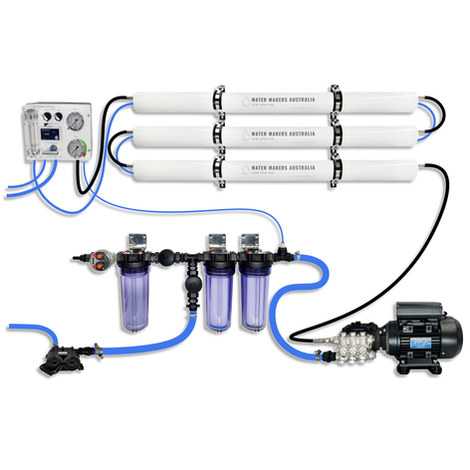
A three-membrane modular watermaker with 200 L/h nominal output and up to 240 L/h family-level marketing, for larger crews and heavy use.
Explore →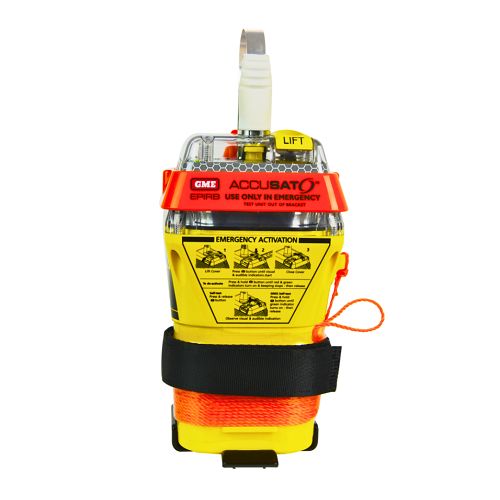
A 10‑year battery EPIRB with integrated GNSS (supports GPS and Galileo), infrared strobe and 121.5 MHz homing signal. Approved for worldwide COSPAS‑SARSAT operation.
Explore →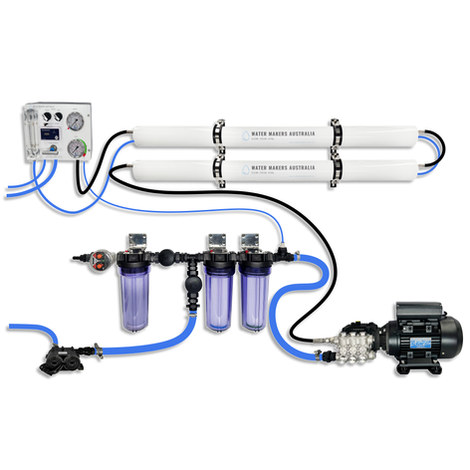
A two-membrane modular watermaker with 140 L/h nominal output, aimed at families and liveaboards that want more water per run.
Explore →