Loading this page…

Loading this page…
Sailing club
Small community-run club sailing on Lake Fyans, between Stawell and Pomonal beneath the Grampians (Gariwerd), with mountain views from both the clubhouse and the race course.
About
Small community-run club sailing on Lake Fyans, between Stawell and Pomonal beneath the Grampians (Gariwerd), with mountain views from both the clubhouse and the race course.
Service area: Stawell, VIC
Keep exploring
Inland sailing has a different rhythm to the coastal game, and few Victorian clubs illustrate that better than Stawell Yacht Club. The club sails on Lake Fyans, a shallow recreational lake lying between the towns of Stawell and Pomonal, beneath the foothills of the Grampian Ranges — Gariwerd — with mountain views framing both the clubhouse and the race course. It is a small, community-run organisation: the Australian Sailing affiliation-fee schedule places it in Category "B", and the office bearers named on the club website are Commodore Anthony Schellens, Secretary Tony Hillier, and Peter Knight, who combines the treasurer, rear commodore and publicity roles.
The club was founded in 1954, established by the local community so that boating enthusiasts would have a way to share the pastime, and it began life catering to sailors and powerboat owners alike. Water has not always been guaranteed: sailing was curtailed during the millennium drought years, but the club reports what it calls a "healthy resurgence" since then, and Sunday afternoon racing once again anchors the season.
For a small inland club, Stawell has produced some serious catamaran talent. It counts Noel Grellet, a noted competitor in Mosquito and Taipan catamarans, among its sailors, and it credits Jon Goodall with collecting three state titles and a national title within a single year in A Class Classic cats. Membership is charged annually alongside race and camping fees, and the club maintains a modest online presence with news, a gallery, a race calendar and acknowledgements of its sponsors and supporters.
Learning at Stawell starts with the club's own boats. Rather than expecting newcomers to buy in before they begin, the club keeps a fleet of training boats that members can use to build experience before committing to a purchase, and it offers members free learn-to-sail sessions across the season. Ross Bennett, the club's Junior and Novice Training Coordinator, puts together the Sunday-morning training sessions, giving younger and less experienced sailors a regular, structured time on the water.
The emphasis is practical: get novices afloat in club boats on a friendly lake, with experienced members alongside. There is no sign of Tackers branding or Discover Sailing Centre accreditation in the club's published material; instruction here is a member-run affair, which suits the scale of the place.
The racing program is organised around Sunday afternoons on Lake Fyans. A twelve-race Pennant series, scored on a back-calculated handicap, is a feature of the season, and trophy races fill out the calendar. The club's most distinctive competitive fixture is its "twin series", an interclub contest with Horsham Yacht Club that links two of western Victoria's inland fleets, and members also receive invitations to regional regattas further afield.
The club's one-design strength is the Impulse dinghy, with what the club describes as a growing fleet of six boats; 125s, Lasers and Taipans also appear on the lake. A Sailability page on the club website signals an interest in sailing for people with disability, and in February 2026 the club hosted the Yachting Western Victoria Training Weekend, bringing the region's sailors together for a concentrated coaching hit-out.
Lake Fyans is not Port Phillip, and that is precisely the point. This is a shallow recreational lake in the Northern Grampians area, lying between the township of Stawell and the small community of Pomonal, where the water sits beneath the ranges of Gariwerd. The club's foreshore position gives sailors and visitors what the club describes as panoramic mountain views, whether from the clubhouse surrounds or out on the course itself.
Facilities are practical rather than grand. A covered barbecue shelter furnished with tables and bench seating handles the social side of a race day, and a shower and toilet block services the site. Camping is available, with the club charging annual membership, race and camping fees — a combination that turns a sailing weekend into an affordable family camping trip beside the water. For travelling sailors attending interclub events or the regional training weekend, that on-site camping is a genuine asset.
Inland clubs live and die by water levels, and Lake Fyans' story reflects that: the millennium drought bit hard enough to halt sailing for a period. In good seasons, though, a shallow lake in a mountain basin offers steady, enclosed-water racing well suited to dinghies and small catamarans, without the swell, shipping or tide considerations of the bay clubs. As one of a small band of freshwater clubs in western Victoria, Stawell occupies a particular niche: it gives the Grampians region a sailing outlet of its own, and its interclub ties with Horsham and invitations to regional regattas stitch it into a wider inland network that most coastal sailors never see.
The story of Stawell Yacht Club begins in 1954, when the local community established the club on Lake Fyans so that boating enthusiasts could share the activity together. From the outset it served two tribes at once, formed as a combined sailing and powerboat club — a practical arrangement for a regional centre where one stretch of water had to accommodate everyone.
The historical record beyond that founding year is thin, and honesty requires saying so. The club hasn't published the names of its founders, its first commodore or the story of its clubhouse's construction. What emerges clearly is a club that has weathered forces larger than itself. The millennium drought curtailed sailing on the lake, a reminder that an inland club's fortunes rise and fall with the catchment. By the club's own account, the years since have brought a healthy resurgence.
The clearest window into the club's competitive heritage comes through its sailors. Stawell counts Noel Grellet, who campaigned Mosquito and Taipan catamarans, among its notable members, and it describes Jon Goodall's single-year haul of three state titles and a national championship in A Class Classic catamarans as a standout achievement. These are quality results from a small freshwater club a long way from the sea.
Continuity, more than any single era, is the theme. The twelve-race Pennant series, the trophy races and the long-running twin series against Horsham Yacht Club speak of a club that has kept its racing traditions intact through drought and recovery alike, and the decision to host the 2026 Yachting Western Victoria Training Weekend suggests a club still willing to carry its share of the region's sailing workload.
Introductory paragraphs for a sailing guide to the Ribbon Reefs (Queensland): two short paragraphs describing what makes the Ribbon Reefs distinctive from the water, the sailing experiences they offer, the kinds of boats and preparation required, relationships between sheltered lagoon waters and exposed outer reef, and how the Ribbon Reefs connect to nearby cruising grounds such as Lizard Island and the northern Cairns area.

Look for a friendly club with beginner-focused training, accessible facilities and boats, a supportive community, clear safety practices, and opportunities to progress at your own pace.
Explore →
Use ramps and beaches with respect for local conditions: check ramp layout, tide and swell, wind direction, vehicle access and crowding; prepare boat and crew before you launch or retrieve; and follow local signage, courtesy and safety practices. Specifics vary by ramp and beach, so confirm details for the exact site before you go.
Explore →
Write a one‑page plan with the who/what/when/where/how of your trip, keep a copy on board and leave the main copy with a responsible person ashore (and optionally with your club, marina office or local volunteer rescue service).
Explore →
Before your first sail in South Australian waters check the weather and tide, make sure the boat and safety equipment are fit for the trip, confirm local rules and any area-specific hazards, and tell someone your plan.
Explore →A practical guide for recreational sailors planning visits to Albany and King George Sound. Covers the main anchorage areas, typical local weather patterns, tidal and current considerations, navigational hazards, on-the-water etiquette and a pre-departure checklist to help you plan a safe passage and enjoyable stopover
Explore →
A practical guide for new sailors on picking the right Australian sailing club: training, boat access, racing, social fit, costs and the key questions to ask before joining.
Explore →A concise, practical introduction to the essential parts of a recreational sailing boat for beginners in Australia. Covers hull, deck, rigging, sails, steering, below-decks spaces and safety equipment, with simple explanations, common mistakes and a pre-decast checklist to help new sailors communicate and get underway.
Explore →A practical guide to the coastal weather systems that affect sailing along Western Australia's coast, focusing on the Fremantle Doctor, local sea breezes, and linked coastal phenomena. Explains how these systems form, when they tend to occur, how they influence boat handling and passage planning, common mistakes, and a
Explore →Burke Yachtsman Gear Bag 40L - Shop Now Zip Pay | Tamar Marine Skip to content 59 – 63 Holbrook Street, Invermay Online Shop Open 24/7 Products search Contact us 1300 MARINE $ 0.00 0 Cart Burke Yachtsman Gear Bag 40L $ 79.90 Colour Choose an option Black Blue Black Blue Clear - Burke Yachtsman Gear Bag 40L quantity + Add to cart Enquire about this product SKU BAGB-Y24/BLACK* Category Bags - Sail & Gear A Burke classic and customer favourite, the Yachtsman’s Gear Bag is built tough to handle wet, salty conditions while keeping your gear dry and protected. Made from double coated waterproof…
Explore →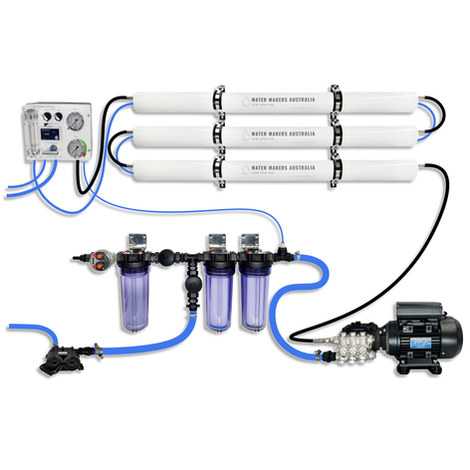
A three-membrane modular watermaker with 200 L/h nominal output and up to 240 L/h family-level marketing, for larger crews and heavy use.
Explore →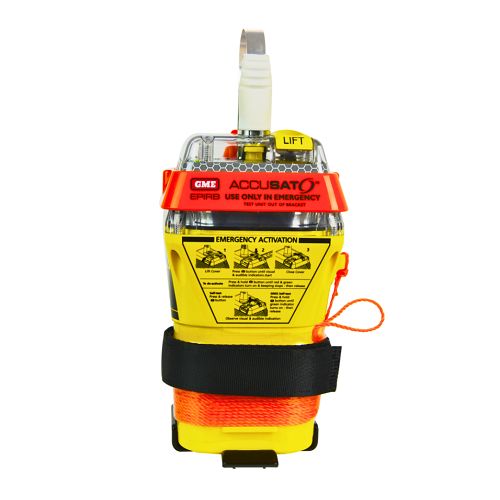
A 10‑year battery EPIRB with integrated GNSS (supports GPS and Galileo), infrared strobe and 121.5 MHz homing signal. Approved for worldwide COSPAS‑SARSAT operation.
Explore →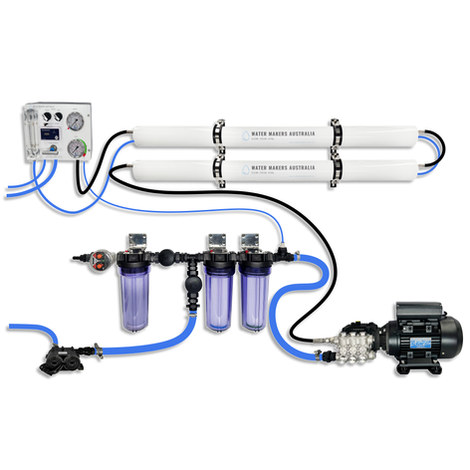
A two-membrane modular watermaker with 140 L/h nominal output, aimed at families and liveaboards that want more water per run.
Explore →