Loading this page…

Loading this page…
Sailing club
Community-oriented sailing club based at Sugarloaf Reservoir in Christmas Hills (Victoria). The club runs year-round sailing activities including organised racing (Winter, Twilight and Summer series), social sailing, a Sailability program for people of differing abilities, and a sail-training programme (including a Fleet 101 beginners program for young sailors). Facilities are described as suitable for club racing and recreational sailing on a roughly 4.5 km by 2.5 km lake; the website gives a Ridge Road / Gate 11 location in Christmas Hills.
About
Community-oriented sailing club based at Sugarloaf Reservoir in Christmas Hills (Victoria). The club runs year-round sailing activities including organised racing (Winter, Twilight and Summer series), social sailing, a Sailability program for people of differing abilities, and a sail-training programme (including a Fleet 101 beginners program for young sailors). Facilities are described as suitable for club racing and recreational sailing on a roughly 4.5 km by 2.5 km lake; the website gives a Ridge Road / Gate 11 location in Christmas Hills.
Service area: Christmas Hills, Victoria
Keep exploring
Melbourne's drinking-water reservoirs are not obvious places to find a sailing club, which makes Sugarloaf Sailing Club one of the more unusual operations in Victorian sailing. The club sails on Sugarloaf Reservoir at Christmas Hills, in the Shire of Nillumbik north-east of the city, and it does so under licence from Melbourne Water — the authority lists licensed sailing by the club as the only permitted water access on the reservoir. Everyone else admires the water from the surrounding park; club members get to race on it.
The club's tagline is "Sailing for Everyone", and its own description backs the sentiment: many members arrive new to the sport, and new sailors often begin racing almost immediately rather than serving a long apprenticeship on the shore. Sugarloaf is an affiliated member club of Australian Sailing, and it maintains a strong commitment to Sailability — sailing for people with disability — through community partnerships that include Araluen Rosanna and the disability programs of Banyule City Council.
Inclusivity here is not confined to a separate stream. Access dinghies race in the club's general weekly competition alongside classes running from Savage Dolphin 16s right up to A-class cats, mixed-fleet racing that the club says is simply the norm at Sugarloaf. Across more than forty races a year, split between Winter, Twilight and Summer series, that open-entry philosophy shapes the whole program. Community engagement runs in other directions too: come-and-try days with local Scouts, a dinghy donated to a preschool, and an arrangement that lets visitors put suitable craft on the water by arrangement with the club on Sundays and public holidays.
Sailability is where Sugarloaf's training story begins, because disability sailing is woven into the club's identity rather than appended to it. The program runs twice a month — on the first and third Wednesdays — through the summer season, using Access dinghies, a design the club describes as unsinkable and uncapsizable, and it is supported by the partnerships with Araluen Rosanna and Banyule City Council. Unusually, the Access dinghies are not quarantined from the racing fleet: they line up in weekly competition against classes spanning Savage Dolphin 16s to A-class catamarans, which the club describes as the norm at Sugarloaf.
For members generally, the club offers a comprehensive sail-training program free of charge, covering rigging and de-rigging, the physics of sailing, safety, the racing rules, capsize recovery and sail performance. It is generally scheduled in November, with a possible February repeat. Newer sailors then graduate into Fleet 101, a weekly on-water program for members aged ten and up that runs through the warmer months and is pitched squarely at novice and green crews. A Crew and Skipper Finder WhatsApp group does the matchmaking, connecting skippers, willing crew and coaching support so that inexperienced members can find a ride.
The social tier is Fair Weather Social Sailing, member-coordinated days on the water that finish with a shared barbecue lunch at the beach shelter. Racing continues nearly all year, with more than forty races annually across the Winter, Twilight and Summer series. The club's website gives no indication of Tackers or Discover Sailing Centre accreditation; training here is delivered by members, for members, and free of charge.
The club's home is Gate 11 on Ridge Road, Christmas Hills, just off the Eltham–Yarra Glen road — around thirty-five minutes from Melbourne's eastern suburbs, yet a world apart in character. The sailing area on the reservoir measures roughly 4.5 by 2.5 kilometres, a generous sheet of enclosed water ringed by the bushland of Sugarloaf Reservoir Park, where grey kangaroos, echidnas, koalas and black-tailed wallabies live, and where sea eagles and pelicans call in.
The reservoir itself is serious infrastructure. Completed in 1981, its rolled rockfill embankment stands 89 metres high and runs 1,050 metres across, impounding 96,253 megalitres over a surface area of 440 hectares to supply Melbourne's northern and eastern suburbs. Because this is a drinking-water catchment, the rules are strict: no swimming, no paddle craft, sailing boats restricted to small off-the-beach craft under five metres, and only club-owned power boats permitted afloat. Those constraints suit the club's dinghy and small-catamaran fleet well, and they keep the water uncrowded in a way Melbourne's bay clubs can only envy.
Facilities are modest and functional: club rooms with a permanent small barbecue, toilets housed in a shed out behind the rooms, a car park opposite, and a sign-in, sign-out visitor book at the gate. Visitors who want to launch an appropriate craft may do so solely via the club, on Sundays and public holidays, paying a launch fee; the club phone, (03) 9730 1885, is the listed contact for those enquiries. For everyone else, the park offers the views while the club holds the keys to the water.
Every club's history starts somewhere; Sugarloaf's starts, at the latest, with the water itself. The reservoir was completed in 1981, so the club necessarily post-dates that year — but its founding year and founders aren't published. The club website carries no history page, and no anniversary coverage has surfaced. What the public record does show is a club that has become the authorised human presence on a protected water supply.
The Melbourne Water licence makes the club the gatekeeper of recreation on the reservoir: licensed sailing activities by Sugarloaf Sailing Club are listed as the only permitted water access, and tourism material for the Yarra Valley describes the organisation as the Sugarloaf Sailing and Boating Club, the channel through which visitors may launch suitable craft for a fee on Sundays and public holidays. A 125-class dinghy recorded on the class owner's register as relocated to the club offers a small material trace of its fleet history, though the date of that move is unclear.
The more recent record is richer in community colour than in dates. The club has hosted come-and-try days with Scouts Victoria, including a "Santa Sail" run together with the 2nd Eltham Scout Group, and it donated a dinghy named Lavendar Lady to Winston Hills Pre-School — a small gesture that says much about the club's instincts. In August 2024 the site entered the parliamentary record, mentioned in Victorian Hansard during debate about water infrastructure at Sugarloaf. For a club without a published founding story, these fragments sketch an organisation that has quietly made itself useful — to sailors, to community groups, and to the custodians of Melbourne's water.
A comprehensive cruising guide to Pittwater, the sheltered estuarine waterway north of Sydney framed by Ku-ring-gai Chase National Park and the Northern Beaches. The guide explains the waterway’s geography, seasonal wind and swell patterns, principal sailing zones, recommended anchorages, shore facilities, navigation and port interactions, local hazards and regulatory constraints, plus several practical day and weekend sailing experiences and the types of sailors and craft best suited to the area.

A regular, layered maintenance routine combining hull cleaning, targeted anti-fouling management, cathodic protection and systems checks will substantially reduce marine growth and corrosion for boats kept year‑round in South Australian waters. Focus on preventing attachment and electrochemical attack, then inspect and act more often if you’re in warm, nutrient-rich or high‑traffic sheltered waters.
Explore →
Pack sun protection and lightweight, quick-drying layers for summer; insulation, waterproof outer layers and warm accessories for winter — plus basic safety and comfort gear for both seasons.
Explore →
Treat Tasmanian waters as cold year-round: prevent immersion where possible, wear appropriate layers and a lifejacket, carry reliable distress equipment, and have clear procedures to recover and rewarm anyone who gets wet.
Explore →
Expect very different seasonal systems across Western Australia: the south‑west (Perth to Albany) has a strong summer afternoon sea breeze (the “Fremantle Doctor”) and winter westerly fronts, while northern WA follows a wet/dry monsoonal cycle with strong seasonal onshore winds, thunderstorms and cyclone risk in the wet season. Local headlands, estuaries and tidal flows often change what you actually feel on the water, so learn the local timing and sheltered venues first.
Explore →
A practical guide for new sailors on picking the right Australian sailing club: training, boat access, racing, social fit, costs and the key questions to ask before joining.
Explore →
A practical, Australia-focused guide for planning and sailing around the Whitsunday Islands: weather and seasons, navigation and anchoring, moorings and parks, provisioning and charters, safety and common mistakes, plus checklists and next steps.
Explore →
A practical, Australia‑focused introduction to sailing: key terms, common boat types, basic manoeuvres, where to learn, licence and club options, and planning your first trips with safety and local conditions in mind.
Explore →Practical guide for recreational sailors planning passage on the Hawkesbury River: how to plan around tides, choose anchorages, read local conditions and prepare the boat and crew for a safe, comfortable trip.
Explore →Burke Yachtsman Gear Bag 40L - Shop Now Zip Pay | Tamar Marine Skip to content 59 – 63 Holbrook Street, Invermay Online Shop Open 24/7 Products search Contact us 1300 MARINE $ 0.00 0 Cart Burke Yachtsman Gear Bag 40L $ 79.90 Colour Choose an option Black Blue Black Blue Clear - Burke Yachtsman Gear Bag 40L quantity + Add to cart Enquire about this product SKU BAGB-Y24/BLACK* Category Bags - Sail & Gear A Burke classic and customer favourite, the Yachtsman’s Gear Bag is built tough to handle wet, salty conditions while keeping your gear dry and protected. Made from double coated waterproof…
Explore →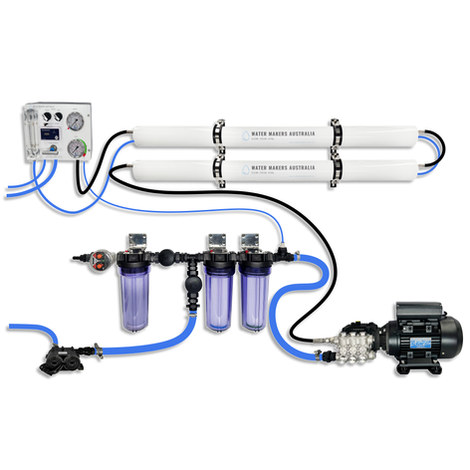
A two-membrane modular watermaker with 140 L/h nominal output, aimed at families and liveaboards that want more water per run.
Explore →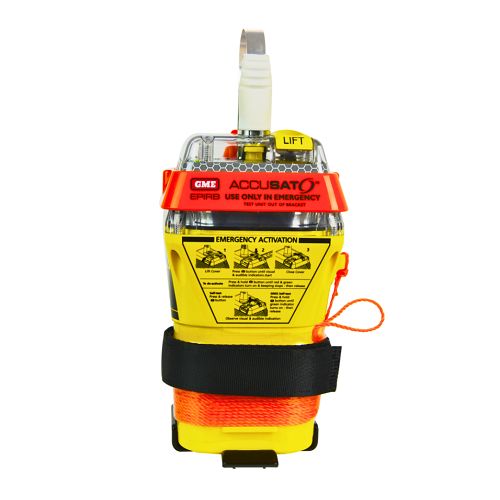
A 10‑year battery EPIRB with integrated GNSS (supports GPS and Galileo), infrared strobe and 121.5 MHz homing signal. Approved for worldwide COSPAS‑SARSAT operation.
Explore →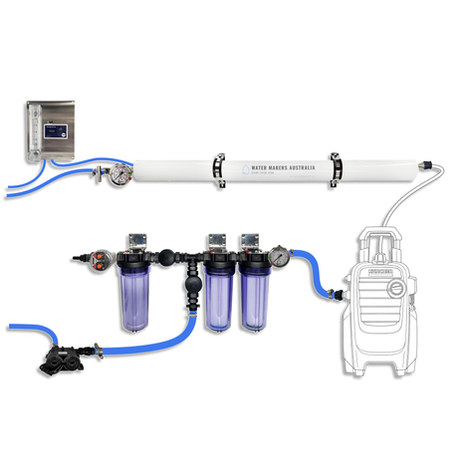
A one-membrane modular marine watermaker with 80 L/h nominal output, remote stainless control panel, standard consumables and direct Australian support.
Explore →