Loading this page…

Loading this page…
Sailing club
Rockingham club formed in 1956 on Cockburn Sound, born from a Governor's idea for a Cowes-style regatta, and sailing from its waterfront clubhouse at 2 Val Street.
About
Rockingham club formed in 1956 on Cockburn Sound, born from a Governor's idea for a Cowes-style regatta, and sailing from its waterfront clubhouse at 2 Val Street.
Service area: Rockingham, WA
Keep exploring
The Cruising Yacht Club of WA exists, in a sense, because a Governor had an idea. During the 1955-56 season, while Royal Freshwater Bay Yacht Club was running the Prince Phillip Cup for the Dragon class, then-Governor Sir Charles Gairdner floated the suggestion that Cockburn Sound could stage a regatta on the model of Cowes. Talks followed in May 1956 between officials of Royal Freshwater Bay and a local Rockingham circle known as the Friday Club; by November that year the Cruising Yacht Club had been formed, and a clubhouse stood on the Rockingham waterfront by 1958.
The present two-storey rendered-brick building at 2 Val Street — crowned by a steel-clad lookout tower styled like a ship's control bridge — gazes out across Cockburn Sound toward Garden Island from the same foreshore strip. The club sits in Australian Sailing's top affiliation category and runs one of the state's busiest programs: an accredited Discover Sailing Centre, off-the-beach and keelboat racing across Mangles Bay and the Sound, and the Cockburn Sound Regatta each Christmas-to-New-Year window, an event billed, with a grin, as for serious sailors having serious fun.
Its most consequential offshoot, though, is one few yacht clubs anywhere can match: Marine Rescue Rockingham, the volunteer sea-rescue service, grew directly out of the club's Power Boat section around 1979-80. The club's own description is of a private club run for members and their guests, offering restaurant, function and fully licensed bar facilities together with moorings plus a hardstand at Point Peron. For a club approaching its seventieth year, the breadth of that offer is striking.
Coaching depth is the calling card here. As an accredited Australian Sailing Discover Sailing Centre, TCYC runs sail training that spans the full arc — from beginner courses right through to advanced high-performance coaching — and complements it with powerboat instruction such as the Recreational Skippers Ticket, the licence WA boaters need at the helm. The junior sailing program is described by the club as strong and, by its account, well represented at National and State championship level — and the weekend scene shows where those juniors are headed.
Off-the-beach racing starts from the lawn in front of the clubhouse on Saturday afternoons, out on Mangles Bay, across a class mix that takes in Yvonnes, Flying Ants, 29ers, Minnows, Puffin Pacers and a mixed dinghy division welcoming Lasers and 49ers. The keelboat program is equally layered: racing in Mangles Bay and out on Cockburn Sound on Saturday afternoons plus some summer Sundays, split into three streams — sports boats, the smaller keelboats, and jib-and-main entries — and sailed in formats ranging from triangle-sausage-triangle and windward-leeward courses to marathons, pursuit races and inter-club contests against Fremantle Sailing Club.
The keelboat register reads like a survey of Australian trailerable design — everything from SpaceSailor 22s and McGregors to S80s, Runnells 8s, Fremantle 8s, Spider 28s, M27s, Ross 780s, Young 780s and Elliott 7s. Then there is the gentlest on-ramp of all: jib-and-main social cruising, which starts at half past five on Friday evenings from December through March on courses laid close to the Rockingham foreshore. However a newcomer prefers to learn — dinghy, keelboat, powerboat or twilight cruise — the club has a lane marked out.
Cockburn Sound does the heavy lifting for TCYC's sailing waters. The club occupies the Rockingham waterfront on the Sound's eastern shore, south of Perth, where one marine directory describes a mild climate ideal for enjoying the sea — and where the water itself is famously protected, sheltered from the open Indian Ocean by Garden Island, whose long bulk fills the clubhouse view.
Racing concentrates in Mangles Bay, the broad bight at the club's doorstep, where summer afternoons bring the reliable sea breeze Perth sailors know as the Fremantle Doctor, filling in from the south-west to power the Saturday program; mornings, by contrast, often stay soft enough for the youngest off-the-beach sailors to learn their trade. The geography flatters every kind of sailing the club offers: flat, enclosed water inside the bay for dinghies and jib-and-main twilight cruisers, with the wider Sound available when the keelboat divisions want longer marathon or windward-leeward courses.
The club's physical footprint runs to two sites. At Val Street stands the two-storey clubhouse with its ship's-bridge lookout tower, restaurant, function rooms and licensed bar; a short distance south, the Point Peron hardstand handles boat storage on land that once held the Turtle Factory and later the Star of the Sea School — the largest surviving building from that site now serves as the club's chartroom.
The club also sits within a growing precinct: Rockingham's 2017 foreshore masterplan provides for boardwalk expansion alongside the clubhouse, cementing TCYC's place at the centre of the Rockingham Beach waterfront — a precinct the city has been steadily upgrading around its marquee tenants.
The founding story begins with someone else's regatta. When Royal Freshwater Bay Yacht Club staged the Prince Phillip Cup for Dragons in the 1955-56 season, Governor Sir Charles Gairdner suggested Cockburn Sound had the makings of a Cowes-style regatta, and on 2 May 1956 officials from Royal Freshwater Bay convened to weigh up an ocean-racing annexe — or an entirely new club — near Rockingham, in conversation with a local group calling itself the Friday Club.
The answer turned out to be a new club: the Cruising Yacht Club was formed with Royal Freshwater Bay's support in November 1956, and its first clubhouse went up in 1958. The regatta the Governor imagined became reality as the Cockburn Sound Regatta, and Royal Freshwater Bay progressively handed it across over five years from 1965, TCYC assuming full responsibility in 1970; it still runs in the Christmas-New Year window over Mangles Bay's sheltered water.
The clubhouse was renewed in kind: the original building was knocked down in 1991, and its successor — the present two-storey premises — opened in 1992 — two of the milestone years on a club timeline that also marks 1957, 1959, 1979 and 2013. Honours at TCYC are rare by design: just 26 Life Memberships have ever been bestowed since the beginning, the earliest going to W. J. (Bill) Lucas in 1959.
The year 1979 deserves its timeline place: around 1979-80 roughly ten members drawn from the club's Power Boat section started a volunteer sea search-and-rescue operation with their own boats, formalised on 15 June 1981 under the name Rockingham Volunteer Sea Search and Rescue Group — today's Marine Rescue Rockingham. The club's stated mission — promoting and developing every aspect of yachting and aquatic pursuits within a friendly, socially minded and responsible setting — is carried to members through its newsletter, The Cruising News; even the parliamentary biography of WA politician Phil Edman records a term as the club's treasurer in 2003-04.
Batemans Bay and the Clyde River form a classic NSW South Coast cruising region where a sheltered, tidal estuary meets a short, island‑dotted entrance to the Tasman Sea. It’s distinctive for easy access from Canberra, a mix of river and bay sailing, a compact marina and mooring network, and a river entrance (the Clyde River bar) that can change rapidly. The area suits day sails, weekend cruising, trailer‑boat exploration and sheltered coastal passages; offshore or long‑passage plans require careful timing and local knowledge. Preparation for tidal flow, variable southerly swells and shallow, s

Use ramps and beaches with respect for local conditions: check ramp layout, tide and swell, wind direction, vehicle access and crowding; prepare boat and crew before you launch or retrieve; and follow local signage, courtesy and safety practices. Specifics vary by ramp and beach, so confirm details for the exact site before you go.
Explore →
Write a one‑page plan with the who/what/when/where/how of your trip, keep a copy on board and leave the main copy with a responsible person ashore (and optionally with your club, marina office or local volunteer rescue service).
Explore →
Before your first sail in South Australian waters check the weather and tide, make sure the boat and safety equipment are fit for the trip, confirm local rules and any area-specific hazards, and tell someone your plan.
Explore →
Pick a protected bay, estuary or river reach where you can rig, launch and arrive on calm water within a short, sheltered transit; choose a site with a good ramp or jetty, clear recovery options and a nearby sailing club, marina or commercial operator for local knowledge and help.
Explore →A practical guide for recreational sailors planning voyages to Esperance and the Recherche Archipelago: what to expect, key planning considerations, common anchorages, safety and communications, equipment recommendations and sensible steps for a successful trip in this remote southern WA cruising area.
Explore →
A practical guide for new sailors on picking the right Australian sailing club: training, boat access, racing, social fit, costs and the key questions to ask before joining.
Explore →A practical guide for recreational sailors planning visits to Albany and King George Sound. Covers the main anchorage areas, typical local weather patterns, tidal and current considerations, navigational hazards, on-the-water etiquette and a pre-departure checklist to help you plan a safe passage and enjoyable stopover
Explore →A concise, practical introduction to the essential parts of a recreational sailing boat for beginners in Australia. Covers hull, deck, rigging, sails, steering, below-decks spaces and safety equipment, with simple explanations, common mistakes and a pre-decast checklist to help new sailors communicate and get underway.
Explore →Burke Yachtsman Gear Bag 40L - Shop Now Zip Pay | Tamar Marine Skip to content 59 – 63 Holbrook Street, Invermay Online Shop Open 24/7 Products search Contact us 1300 MARINE $ 0.00 0 Cart Burke Yachtsman Gear Bag 40L $ 79.90 Colour Choose an option Black Blue Black Blue Clear - Burke Yachtsman Gear Bag 40L quantity + Add to cart Enquire about this product SKU BAGB-Y24/BLACK* Category Bags - Sail & Gear A Burke classic and customer favourite, the Yachtsman’s Gear Bag is built tough to handle wet, salty conditions while keeping your gear dry and protected. Made from double coated waterproof…
Explore →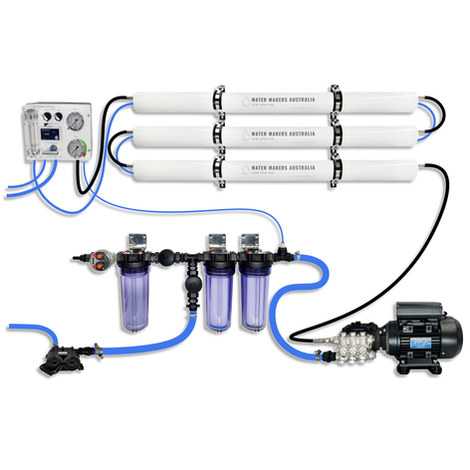
A three-membrane modular watermaker with 200 L/h nominal output and up to 240 L/h family-level marketing, for larger crews and heavy use.
Explore →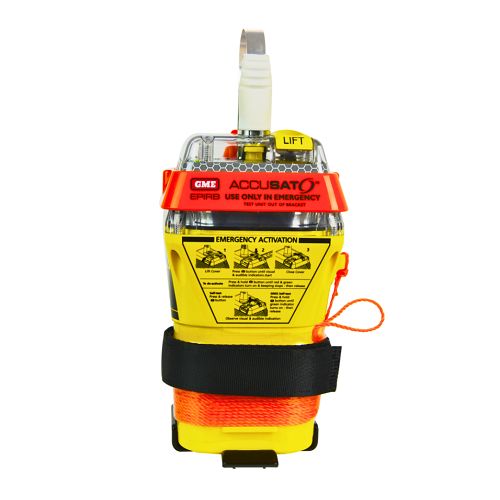
A 10‑year battery EPIRB with integrated GNSS (supports GPS and Galileo), infrared strobe and 121.5 MHz homing signal. Approved for worldwide COSPAS‑SARSAT operation.
Explore →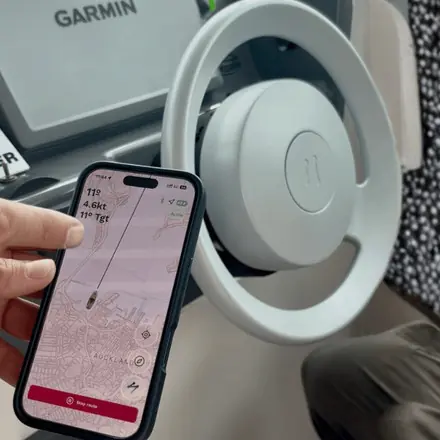
Self-contained, battery-powered plug‑and‑play autopilot designed for standard hydraulic steering systems.
Explore →