Loading this page…

Loading this page…
Sailing club
The Southport School Sailing Club is the school-based dinghy sailing programme run by The Southport School (TSS) on the Nerang River at Southport, Queensland. Open only to enrolled boys from Year 5–12, the club operates from the school’s waterfront Boat Shed and runs Tackers, Pico/Laser and Pacer pathways. The programme combines nationally accredited Learn-to-Sail courses (as an approved Australian Sailing Discover Sailing Centre) with regular competitive racing for state, national and GPS school events.
About
The Southport School Sailing Club is the school-based dinghy sailing programme run by The Southport School (TSS) on the Nerang River at Southport, Queensland. Open only to enrolled boys from Year 5–12, the club operates from the school’s waterfront Boat Shed and runs Tackers, Pico/Laser and Pacer pathways. The programme combines nationally accredited Learn-to-Sail courses (as an approved Australian Sailing Discover Sailing Centre) with regular competitive racing for state, national and GPS school events.
Service area: Nerang River and nearby Gold Coast Broadwater (Southport), QLD
Keep exploring
The Southport School Sailing Club is the school sailing program for The Southport School (Southport, QLD). Open to boys from Year 5–12, the program runs in Term 4 and Term 1 and operates from the school’s waterfront boat shed on the Nerang River. A fleet of dinghies (Tackers, Pico, Lasers and Pacers) is used for learn-to-sail and competitive racing. Coaches (many alumni) are accredited through Australian Sailing, and the school is an approved Discover Sailing Centre able to offer nationally accredited sailing courses. The club fields competitive teams in interschool and wider state/national events; more than 100 students take part each year.
What distinguishes coaching here is who delivers it: many of the coaches are Old Boys of the school, and every coach has completed an Australian Sailing coaching or instructor course, so current students are frequently taught by men who learned the same stretch of river themselves. TSS operates as an approved Discover Sailing Centre under the Australian Sailing scheme, meaning its courses carry national accreditation; the Tackers learn-to-sail stream, pitched at the youngest participants, is noted by the school as especially popular with preparatory school boys.
The fleet mirrors the pathway. Beginners start in the Tackers training boats, then progress through Pico Lasers and into Pacers, all of it housed in the waterfront Boat Shed on the Nerang River. The sailing calendar is concentrated into Terms 4 and 1, fitting around the school's other sporting commitments. Competition is layered. At the individual level, students race regularly at state and national championships, with the Optimist and Laser classes the school's strongest suits.
At the team level, TSS contests secondary schools teams racing — Pacers sailed without spinnakers, three boats against three — at the national secondary schools teams championship, where the school placed 13th in 2024 and 14th at the 2025 edition held at Goolwa in South Australia. Above both sits the GPS contest. Sailing joined the GPS competition in 2000, and the school has taken the title nine times, including a run of seven consecutive premierships from 2014 to 2021.
When the GPS Foundation Cup replaced the original competition, TSS simply kept winning, collecting the 2023, 2024, 2025 and 2026 editions according to its program page.
The club's home water is a working city river. The senior campus looks out over the Nerang River at Southport, and the sailing program operates from the school's own waterfront Boat Shed, with rowing and sailing counted among the facilities spread across a campus known for extensive sporting infrastructure. For a school program this matters practically: boats, rigging space and classrooms sit within the same grounds, so an afternoon's training session begins minutes after the last period ends.
The Nerang offers protected, enclosed water well suited to the training-boat end of the fleet — the Tackers boats and Pacers that carry the youngest sailors — and it has served as the program's daily classroom throughout its modern existence. Just beyond the river mouth lies the Gold Coast Broadwater, the wide, sheltered stretch of estuary between the mainland and the northern beach islands, and it holds a longer place in the school's sailing story: in the early twentieth century the school's annual regatta was a popular fixture on the Broadwater, drawing competitors and spectators well before the modern program took shape.
General local knowledge supports the choice of venue — the Broadwater's enclosed reaches are widely regarded among Gold Coast boaters as forgiving territory for small dinghies, sheltered from ocean swell yet open enough for a decent beat. Between the river at the doorstep and the Broadwater a short sail away, the program has two distinct training environments without ever trailing a boat, an arrangement few school clubs anywhere in the country can match.
The setting also explains the character of the sailing taught here: practical, fleet-based dinghy work rather than offshore keelboat cruising.
Long before sailing carried any formal status at the school, boys were getting afloat on the Nerang River in improvised, makeshift craft — informal sailing that school histories date to the earliest days of the early 1900s. By the early twentieth century the school regatta had become a well-attended annual event on the Broadwater, one of the fixtures of Gold Coast sailing in that era. The modern program is more recent.
The current program page states that sailing has been part of the school's sporting offering for forty years, and the sport sat among a group — basketball, football, gymnastics, tennis, golf, chess and debating among them — introduced or expanded under Director of Sport Bryan Hain, who has held that role since 1998. The competitive record since then is substantial. GPS schools began contesting sailing in 2000; the school has won that competition nine times, and between 2014 and 2021 it strung together seven premierships in a row.
The successor trophy, the GPS Foundation Cup, has gone to TSS in 2023, 2024, 2025 and 2026, per the school's own account. The program's most famous product is Mathew Belcher, whose record the school lists with understandable pride: three Olympic Games, gold at London 2012 and again in Tokyo, silver in Rio, eight world championships in the 470 class, and the 2013 World Sailor of the Year title. Belcher retired from Olympic competition at the end of 2022 and, by the school's account, still drops in on training sessions.
More recent graduates Xavier Doerr and Blake Wilson took on the 2022 Sydney to Hobart, extending the program's reach well beyond schoolboy fleets.
Ballina sits at the mouth of the Richmond River on NSW’s far‑north coast. It’s a working river entrance with a compact boat harbour, exposed ocean beaches and a changeable, sand‑dominated bar. For coastal cruisers it offers a useful stop between Tweed Heads and Yamba, sheltered estuary cruising upriver and easy access to open ocean passages — but the river entrance is highly condition‑dependent and demands respectful planning and local knowledge.

Late spring to summer is usually the best time for beginners to start learning to sail in Tasmania because the weather is generally warmer, days are longer and conditions are often more settled. Expect lighter to moderate winds with regular afternoon sea breees in summer, while spring and autumn bring more changeable and sometimes stronger conditions; winter is colder, wetter and typically windier with more fronts and swell.
Explore →
Look for a friendly club with beginner-focused training, accessible facilities and boats, a supportive community, clear safety practices, and opportunities to progress at your own pace.
Explore →
Pick a protected bay, estuary or river reach where you can rig, launch and arrive on calm water within a short, sheltered transit; choose a site with a good ramp or jetty, clear recovery options and a nearby sailing club, marina or commercial operator for local knowledge and help.
Explore →
Pick a stable, simple, forgiving dinghy with a single sail or basic sloop rig, affordable handling and easy maintenance—ideally one with a local class or school nearby so you can access coaching and spare parts.
Explore →Practical guide for recreational sailors planning a coastal cruise from Sydney north to the Queensland border. Covers route options, weather and tidal considerations, planning checklists, common hazards, anchorages and practical examples for a safe, enjoyable trip.
Explore →
A practical guide to Queensland’s top sailing areas, what to expect from each region, seasonal and safety considerations, suggested itineraries and useful planning checklists for recreational sailors.
Explore →
A practical guide for new sailors on picking the right Australian sailing club: training, boat access, racing, social fit, costs and the key questions to ask before joining.
Explore →Practical guide for recreational sailors planning passage on the Hawkesbury River: how to plan around tides, choose anchorages, read local conditions and prepare the boat and crew for a safe, comfortable trip.
Explore →Burke Yachtsman Gear Bag 40L - Shop Now Zip Pay | Tamar Marine Skip to content 59 – 63 Holbrook Street, Invermay Online Shop Open 24/7 Products search Contact us 1300 MARINE $ 0.00 0 Cart Burke Yachtsman Gear Bag 40L $ 79.90 Colour Choose an option Black Blue Black Blue Clear - Burke Yachtsman Gear Bag 40L quantity + Add to cart Enquire about this product SKU BAGB-Y24/BLACK* Category Bags - Sail & Gear A Burke classic and customer favourite, the Yachtsman’s Gear Bag is built tough to handle wet, salty conditions while keeping your gear dry and protected. Made from double coated waterproof…
Explore →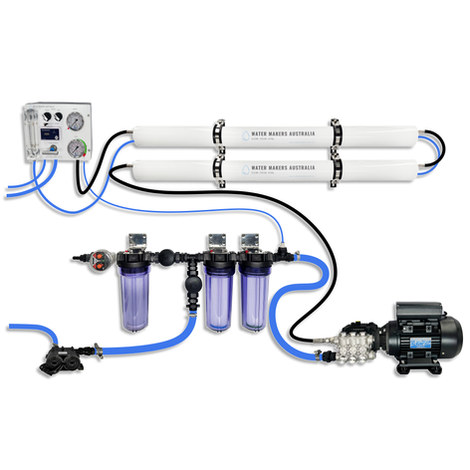
A two-membrane modular watermaker with 140 L/h nominal output, aimed at families and liveaboards that want more water per run.
Explore →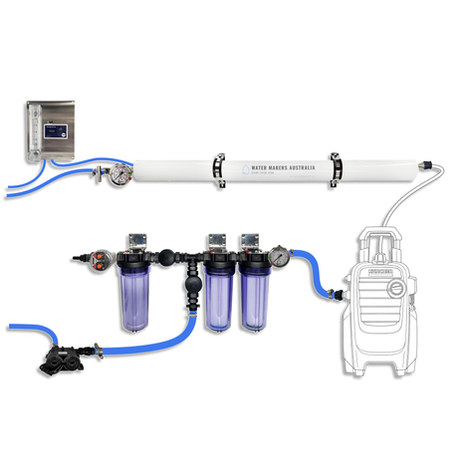
A one-membrane modular marine watermaker with 80 L/h nominal output, remote stainless control panel, standard consumables and direct Australian support.
Explore →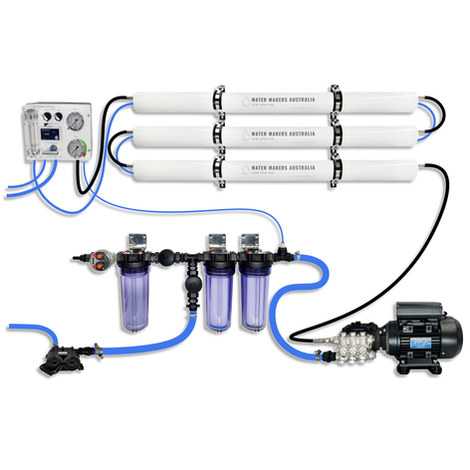
A three-membrane modular watermaker with 200 L/h nominal output and up to 240 L/h family-level marketing, for larger crews and heavy use.
Explore →