Loading this page…

Loading this page…
Sailing club
The Trailer Sailer Club of Queensland (T.S.C.Q.) is a Brisbane-based, volunteer-run club for trailerable sailboats that operates without a fixed clubhouse. Focused on trailer-sailer racing, cruising and family sailing around Moreton Bay and occasional inland venues, the club runs a frequent calendar of events, welcomes visitors to attend and sail, and emphasises seamanship and safety in its event documentation.
About
The Trailer Sailer Club of Queensland (T.S.C.Q.) is a Brisbane-based, volunteer-run club for trailerable sailboats that operates without a fixed clubhouse. Focused on trailer-sailer racing, cruising and family sailing around Moreton Bay and occasional inland venues, the club runs a frequent calendar of events, welcomes visitors to attend and sail, and emphasises seamanship and safety in its event documentation.
Service area: Moreton Bay / Brisbane
Keep exploring
Some sailing clubs measure their standing in waterfront frontage and marina berths; this one owns neither, and has never let that slow it down. The Trailer Sailer Club of Queensland, known to members as T.S.C.Q., is a Brisbane-based, non-profit club built entirely around boats that live on road trailers and travel to wherever the next event is held. Its stated objective is to encourage and promote sailing, with trailer sailers at the centre of that mission, and it wraps family sailing, the classic trailer-sailer classes and good seamanship into the same brief, with safety on the water given equal billing.
The model is nomadic by design: there is no clubhouse to maintain, no bar to staff and no fixed stretch of water to defend, and the club presents that as a feature rather than a failing. By its own account it ranks among the most active clubs of its kind, putting an on-water event on the calendar every two to three weeks while charging what it describes as among the lowest annual membership fees going around.
Founded in 1966, the club has spent nearly six decades roving Moreton Bay and beyond, and its events turn up at Manly, Raby Bay, Victoria Point, Scarborough and even inland at Wivenhoe Dam. Royal Queensland Yacht Squadron's 2016 listing of affiliated Queensland clubs recorded the club under the suburb of Sinnamon Park — a postal and administrative anchor rather than a sailing base.
Visitors are welcome at every event, and prospective members are invited to sail a couple of races and sit in on the monthly meetings before committing, an open-door policy that suits a club whose whole identity is built on turning up, rigging and going sailing.
The distinctive offering here is structured racing and cruising for trailerable boats rather than formal tuition: the club's own documentation makes no mention of Discover Sailing Centre accreditation or a learn-to-sail school, so newcomers typically learn the way trailer-sailer sailors have always learned — crewing alongside experienced owners and picking up skills informally. What the club does run with considerable rigour is its event program.
Club championship racing anchors the calendar, complemented by cruising events, and the whole operation is governed by paperwork that would do a much larger club credit: an annual edition of Sailing Instructions (the 2025-26 cycle is current), plus a Safety Management Plan and an Emergency Response Plan, both at version 3.02. The safety emphasis is deliberate, since seamanship and safe boating sit inside the club's stated objectives alongside the competition.
Standard course areas are spread across the region: Manly, Raby Bay, Victoria Point, a weekender at Sandhills, Scarborough to the north, and freshwater Wivenhoe Dam inland, where camping-and-cruising weekends come with published course and camping maps. The classic fixture of the year is a race around the southern bay islands — an anticlockwise circuit of Macleay and Lamb Islands — after which many crews cruise down from Manly and overnight at Coochiemudlo Island, universally shortened to Coochie.
On top of its own calendar, the club also takes part in Manly Combined Clubs racing. Boats identify themselves with a yellow or green club flag bearing the TSCQ emblem. Typical of trailer-sailer culture, instruction tends to happen informally — rig tuning in the boat park, passage planning over the camping table — and the club's open invitation to visitors functions as its de facto introduction to the sport.
Home, for this club, is wherever the trailer is parked. With no premises of its own, the club stages its racing and cruising across the length of Moreton Bay: Manly on the bayside's boating strip, Raby Bay and Victoria Point to the south-east, Scarborough on the Redcliffe peninsula and the sheltered island waters of the southern bay, with Wivenhoe Dam providing the inland alternative.
The 2016 affiliation listing placed the club at Sinnamon Park, a leafy Brisbane riverside suburb — but that is an administrative address rather than a sailing venue, and no clubhouse stands there. Moreton Bay itself is the genuine clubhouse. One of Australia's great shallow bays, it stretches behind a barrier of sand islands and offers — as generations of Queensland sailors have found — protected water in almost any wind direction, which suits the shoal-draft trailer sailers that make up the fleet.
The southern bay islands feature directly in the club's classic race: Macleay and Lamb Islands form the turning points of the anticlockwise circuit, and Coochiemudlo Island, a short hop from the mainland at Victoria Point, serves as the traditional overnight anchorage. Wivenhoe Dam, the large storage in the Brisbane River catchment, gives members a freshwater camping option away from tides altogether, with the club publishing maps for both courses and campsites.
An event contact — Mic, reachable by mobile — is listed on the club's home page for anyone wanting to find the fleet on a given weekend. It is a notably Queensland arrangement: a club defined not by a patch of waterfront but by a trailer park's worth of boats and a bay full of options.
The club dates to 1966, a foundation year confirmed by an unusual source: a published club history covering the first thirty years, 1966 to 1996, is held by the Royal Historical Society of Queensland. The names of the founders and the precise date of the founding meeting have not been published — a gap not unusual for volunteer clubs of that era, whose early records often live in members' garages rather than archives.
What is clear is the model chosen from the outset and kept ever since: no premises, no clubhouse, with the club running its own races and cruises while also joining Manly Combined Clubs fixtures. That choice has shaped six decades of identity. Freed from building maintenance and lease negotiations, the club poured its energy into the calendar, arriving at the present rhythm of an event every two to three weeks that the club itself cites with pride. The record also calls for a word of disambiguation.
Queensland's trailered multihull sailors organised separately under the Trailer Multihull Yacht Association Queensland, a body with roots in 1978 and a later 1998 formalisation; it is a distinct organisation with its own story and should not be conflated with TSCQ. The club's own community has been sustained in part by long-standing commercial friendships: it acknowledges Madman Marine, Manders Sails and Muir Marine of Manly among its supporters, names that reflect its anchorage in the Manly boating precinct even without a building of its own.
From a volume held by the state's historical society to a website, a Facebook group and a flag flown yellow or green from members' sterns, the club's records sketch a simple through-line: the boats move, the club endures.
Gladstone is an industrial port city on the central Queensland coast, sheltered by Curtis and Facing islands. It is the mainland base for the Capricorn and Bunker reefs and the finish of the Brisbane to Gladstone race.

Look for a friendly club with beginner-focused training, accessible facilities and boats, a supportive community, clear safety practices, and opportunities to progress at your own pace.
Explore →
Look for materials and finishes specified for seawater use (eg 316 stainless, bronze, marine aluminium), clear corrosion-resistance statements (marine‑grade, A4/316, passivated, electropolished, or suitably coated), and mechanical specs (load, thread type, fastener grade) that match marine environments and your boat’s materials.
Explore →
Pick a stable, simple, forgiving dinghy with a single sail or basic sloop rig, affordable handling and easy maintenance—ideally one with a local class or school nearby so you can access coaching and spare parts.
Explore →
Do a simple pre-departure check of fuel, oil, cooling, controls, battery and prop, plus a quick start-and-idle run to confirm the outboard is healthy and responds correctly before you leave the ramp.
Explore →A practical, Australian-focused guide explaining how sails generate drive, the points of sail, and how to trim sails for different conditions. Includes simple explanations of aerodynamic concepts, step-by-step trim checks, common mistakes and clear next steps for practice on the water.
Explore →
A practical guide for new sailors on picking the right Australian sailing club: training, boat access, racing, social fit, costs and the key questions to ask before joining.
Explore →
A practical, Australia-focused guide for planning and sailing around the Whitsunday Islands: weather and seasons, navigation and anchoring, moorings and parks, provisioning and charters, safety and common mistakes, plus checklists and next steps.
Explore →
A concise, practical guide to the points of sail and how to trim sails effectively for common Australian conditions. Learn the basics of wind angles, sail shape, telltales, reefing considerations and simple steps to improve boat speed and balance.
Explore →
The entry-level Poclink push-to-talk radio: 4G mobile network only, three years of service included, sold as a two-pack for half the price of the Pro and Ultra.
Explore →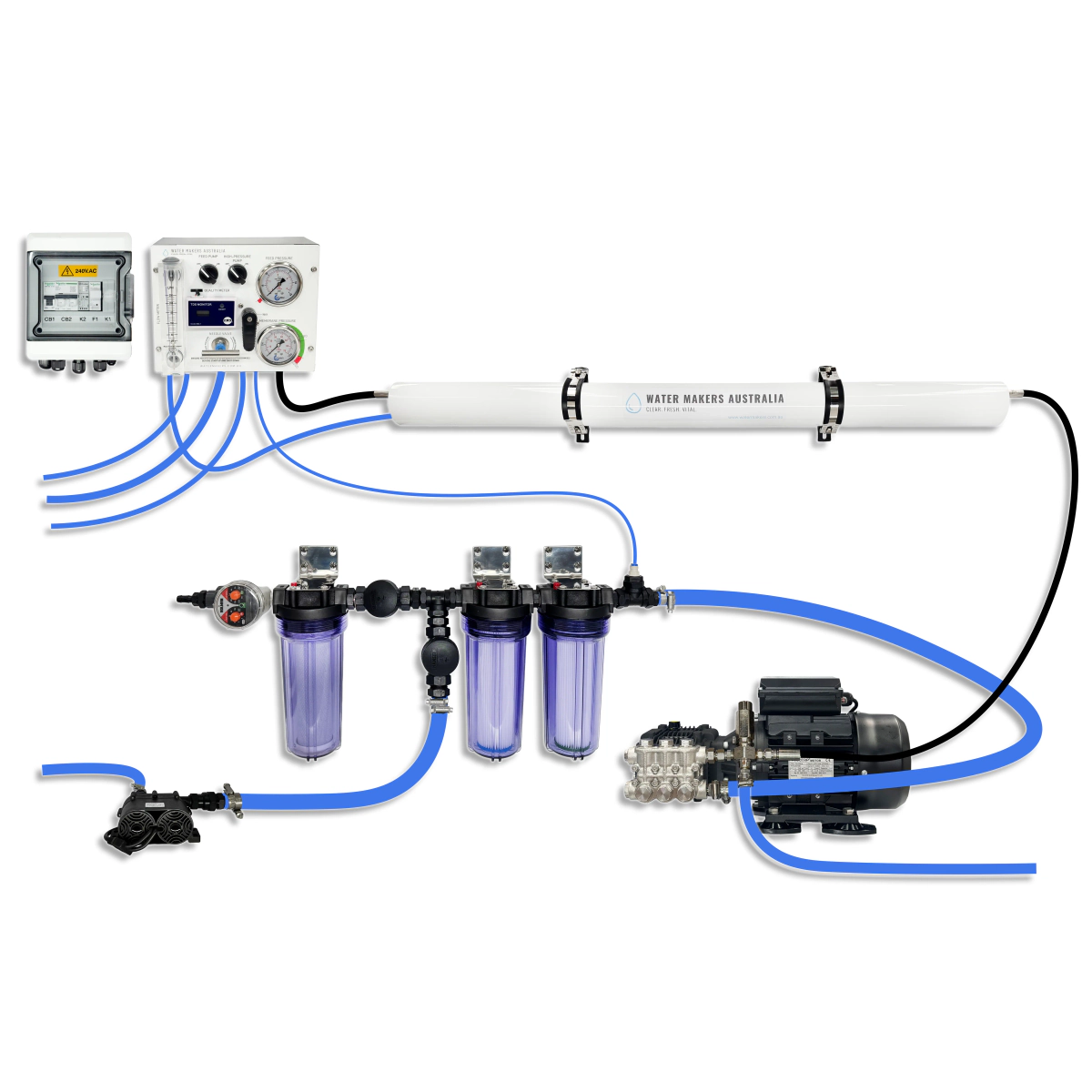
Single-membrane reverse-osmosis watermaker with a 1.1 kW motor, producing a nominal 60 L/h from a 2 kVA inverter or small generator, for cruising couples on boats of about 9 to 14 m.
Explore →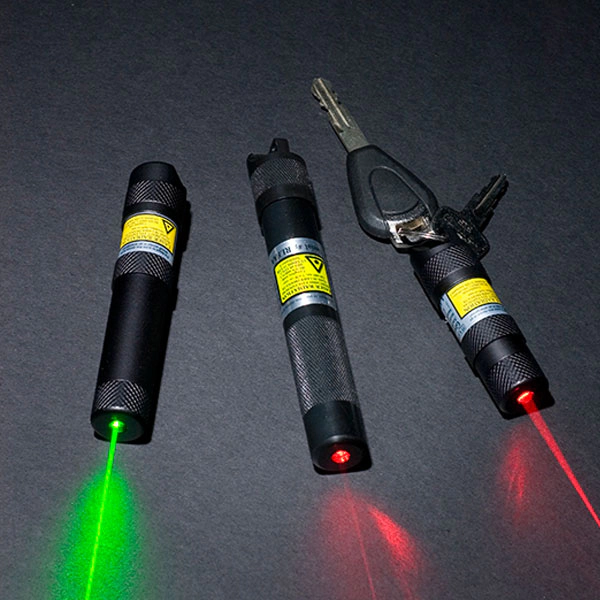
Hand-held, non-flammable laser signalling devices for day and night use, in red, green and Magnum versions, waterproof to 24 m and running for 5 to 72 hours on a battery.
Explore →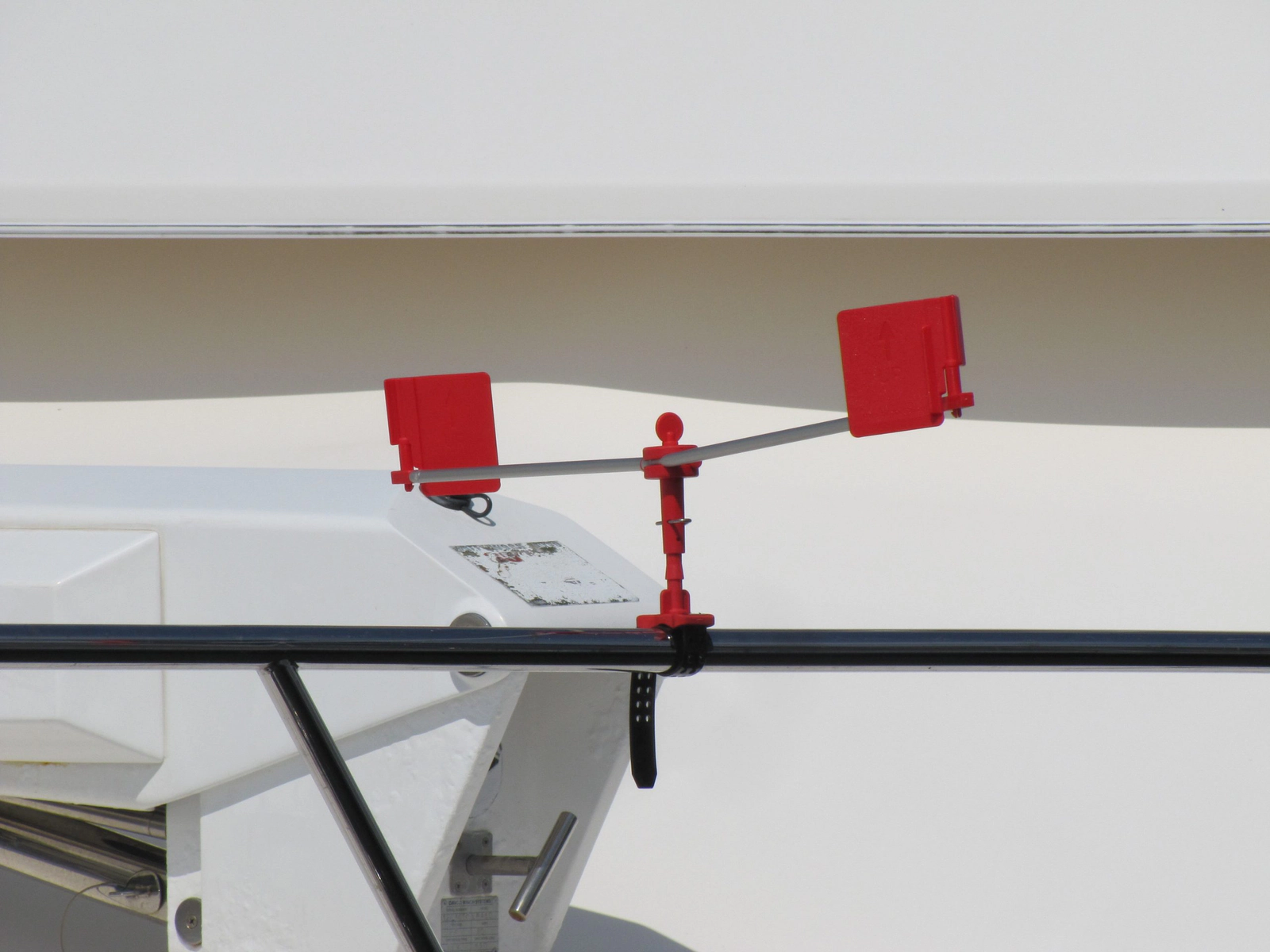
Spare pack of two red flags for the arms of a Bird Busta bird repeller.
Explore →