Loading this page…

Loading this page…
Sailing club
Tin Can Bay Yacht Club is a community-focused yacht club located at Norman Point, Tin Can Bay, Queensland. The club runs an active season of club racing (September–May), social sailing and cruising activities, an established Flying Fifteen racing fleet, and a Green Fleet learn-to-sail program for juniors and adults. Club facilities include a clubhouse with bar and café (managed by Tin Can Bay Country Club), hardstand boat storage and rigging areas, and event hosting such as the annual Bay to Bay race to Hervey Bay.
About
Tin Can Bay Yacht Club is a community-focused yacht club located at Norman Point, Tin Can Bay, Queensland. The club runs an active season of club racing (September–May), social sailing and cruising activities, an established Flying Fifteen racing fleet, and a Green Fleet learn-to-sail program for juniors and adults. Club facilities include a clubhouse with bar and café (managed by Tin Can Bay Country Club), hardstand boat storage and rigging areas, and event hosting such as the annual Bay to Bay race to Hervey Bay.
Service area: Tin Can Bay and immediate Cooloola Coast waterways
Keep exploring
Tin Can Bay Yacht Club is a community sailing club on Norman Point, Tin Can Bay (Snapper Creek) on the Cooloola Coast. The club runs organised sailing activities and events (club racing, series and regattas), operates a Green Fleet learn-to-sail program for adults and children, provides safety cover for training (club safety boat, PFDs and helmets for trainees), and offers secure hardstand (dry) boat storage for members and short-term casual storage for trailerable vessels up to about 30 ft. The clubhouse is non-smoking; the on-site bar and cafe are currently managed by Tin Can Bay Country Club (contact phone listed on the club website).
The fleet that defines racing here is the Flying Fifteen, a two-person keelboat the club has nurtured into a genuine stronghold, with local crews going on to compete at state, national and even world championship level. Around that spine sits a program with room for almost every kind of small boat. Racing divisions over the years have taken in juniors, multihulls, off-the-beach monohulls and the trailer-sailer and keelboat fleets, and the season structure keeps them all occupied: the calendar runs from September to May, opened each spring by the Commodore's Trophy race, with Summer Series club racing through the warmer months and a Winter Series for those who sail year-round.
Cruising gets its own billing alongside the racing, as befits a club sitting on the doorstep of the Great Sandy Strait. The pathway in for beginners is the club's Green Fleet — Learn to Sail program, and a Tackers school for the youngest starters runs in the holiday periods, with sessions advertised for late January. Formal Discover Sailing Centre accreditation is not recorded in the club's materials, so the teaching appears to run on club lines rather than through the national centre network.
The social-competitive highlight outside the regular series is the annual Australia Day Challenge. Hovering over the whole program is the event that created the club: the Bay to Bay race to Hervey Bay, which remains the anchor of the sailing year and the fixture by which the club measures itself. Members keep in touch through the club's Sail Tales blog and an email newsletter, and the clubhouse takes meal bookings — racing here tends to end at a table, which is very much in character for a club born from a weekend of sailing and celebration.
Norman Point gives the club one of the most forgiving home waters in the state. The clubhouse stands beside the boat trailer park at the point, on land reclaimed with fill from the neighbouring Tin Can Bay Marina project, and looks out over Snapper Creek — a tidal waterway feeding Tin Can Inlet near the southern tip of the Great Sandy Strait, the long sheltered channel separating Fraser Island (K'gari) from the mainland. The coordinates on the club's own site place it at 25°54.09' south, 153°00.86' east, for those arriving by water.
The defining quality of these waters is protection. Tin Can Inlet is shallow, tidal and screened from ocean swell, which is precisely why the club exists here: its early histories record that the bay's sheltered reaches drew Noosa sailors whose keelboats could not cope with the Noosa River. Shallow-draft and trailerable boats remain the natural fleet for a venue where tide and sandbank set the terms, and the racing divisions — off-the-beach monohulls, trailer-sailers, multihulls — reflect that reality.
For cruisers, the geography is a gift: the strait offers miles of sheltered passage north toward Hervey Bay, which is of course the very route of the club's founding race, run each year from this shoreline to the bay that gave the event its name. The clubhouse site itself tells a practical story about the place — land won from the water through a government agreement, secured with a council-built bund wall, and now home to a clubhouse with catering facilities that take meal bookings.
For visitors, the postal address is PO Box 170, Tin Can Bay, and the club maintains an active Facebook page alongside its website.
On 28 June 1981, a group of local sailors formalised what the Bay to Bay race had started six weeks earlier. The founding meeting brought together Clarrie and Doris Noble, Sandy and Louise Bauer, Sam and Nyria Murray, Harold Baggaley, Des and Jeanette Bickle, Norm and Jill Cummins, Des and Daphne White, Martin and Jenny Leschkau, Bill and June Croft, and Wayne Badley. Clarrie Noble took the helm as first Commodore, with Des Bickle as Vice Commodore, Doris Noble as Secretary-Treasurer, and Martin Leschkau and Sam Murray rounding out the executive.
The catalyst had been that first Tin Can Bay to Hervey Bay Race over the May Day long weekend, which attracted 118 yachts; entries swelled to 162 the following year and 204 the year after, when it was described as second in scale nationally only to Victoria's Marley Point Lakes Race. The opening season launched on 20 September 1981 with a sail-past, Commodore Noble leading the fleet in his yacht Ida. For five years the club had no home, meeting on the Esplanade lawn of Sam and Nyria Murray's home.
The solution was bold: the club struck a deal with the Harbours and Marine Department to reclaim land beside the Norman Point boat trailer park, using fill from the marina construction, while Widgee Shire Council built a bund wall — quoted at $12,000 and ultimately costing over $20,000 — and set annual rent at $500 for half the site. At the 1987 AGM, Neil Martin took over as Commodore.
Milestones accumulated: the first Wooden Boat Regatta on 29 April 1989, still a calendar fixture; the Cooloola Games sailing competition in October 1991 and a Sailboard Grand Prix in 1992; the Australian Flying Fifteen Nationals of January 2004, drawing 31 boats including entries from the UK; two Queensland Flying Fifteen Titles and the South Queensland Sabot River Titles in August 2005; and a 25th anniversary celebrated over 12-14 May 2006.
Batemans Bay and the Clyde River form a classic NSW South Coast cruising region where a sheltered, tidal estuary meets a short, island‑dotted entrance to the Tasman Sea. It’s distinctive for easy access from Canberra, a mix of river and bay sailing, a compact marina and mooring network, and a river entrance (the Clyde River bar) that can change rapidly. The area suits day sails, weekend cruising, trailer‑boat exploration and sheltered coastal passages; offshore or long‑passage plans require careful timing and local knowledge. Preparation for tidal flow, variable southerly swells and shallow, s

Before your first sail in South Australian waters check the weather and tide, make sure the boat and safety equipment are fit for the trip, confirm local rules and any area-specific hazards, and tell someone your plan.
Explore →
Look for a friendly club with beginner-focused training, accessible facilities and boats, a supportive community, clear safety practices, and opportunities to progress at your own pace.
Explore →
Watch for shallow entrance bars, shifting sandbanks and channels, tidal streams that accelerate through narrow channels or around headlands, drying mudflats and sills that expose at low water, and localised eddies or overfalls — and always confirm conditions for the specific estuary before you enter.
Explore →
Use ramps and beaches with respect for local conditions: check ramp layout, tide and swell, wind direction, vehicle access and crowding; prepare boat and crew before you launch or retrieve; and follow local signage, courtesy and safety practices. Specifics vary by ramp and beach, so confirm details for the exact site before you go.
Explore →
A practical, Australia-focused guide for planning and sailing around the Whitsunday Islands: weather and seasons, navigation and anchoring, moorings and parks, provisioning and charters, safety and common mistakes, plus checklists and next steps.
Explore →
A practical guide for new sailors on picking the right Australian sailing club: training, boat access, racing, social fit, costs and the key questions to ask before joining.
Explore →A practical guide for recreational sailors planning passages to, from or around Eden and Twofold Bay. Covers sheltered anchorages, shore facilities, local weather and tidal considerations, preparing for Bass Strait conditions and a focused equipment and safety checklist.
Explore →A concise, practical introduction to the essential parts of a recreational sailing boat for beginners in Australia. Covers hull, deck, rigging, sails, steering, below-decks spaces and safety equipment, with simple explanations, common mistakes and a pre-decast checklist to help new sailors communicate and get underway.
Explore →Burke Yachtsman Gear Bag 40L - Shop Now Zip Pay | Tamar Marine Skip to content 59 – 63 Holbrook Street, Invermay Online Shop Open 24/7 Products search Contact us 1300 MARINE $ 0.00 0 Cart Burke Yachtsman Gear Bag 40L $ 79.90 Colour Choose an option Black Blue Black Blue Clear - Burke Yachtsman Gear Bag 40L quantity + Add to cart Enquire about this product SKU BAGB-Y24/BLACK* Category Bags - Sail & Gear A Burke classic and customer favourite, the Yachtsman’s Gear Bag is built tough to handle wet, salty conditions while keeping your gear dry and protected. Made from double coated waterproof…
Explore →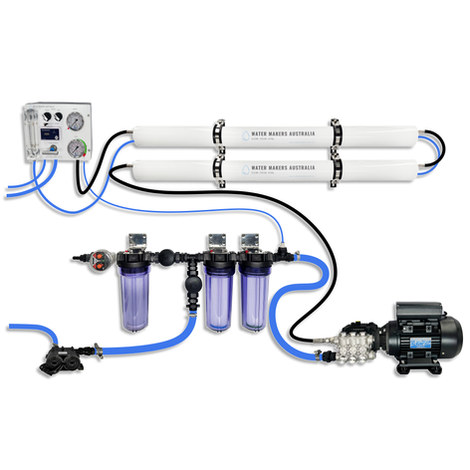
A two-membrane modular watermaker with 140 L/h nominal output, aimed at families and liveaboards that want more water per run.
Explore →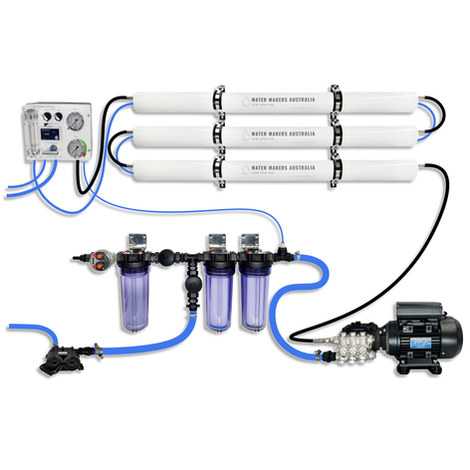
A three-membrane modular watermaker with 200 L/h nominal output and up to 240 L/h family-level marketing, for larger crews and heavy use.
Explore →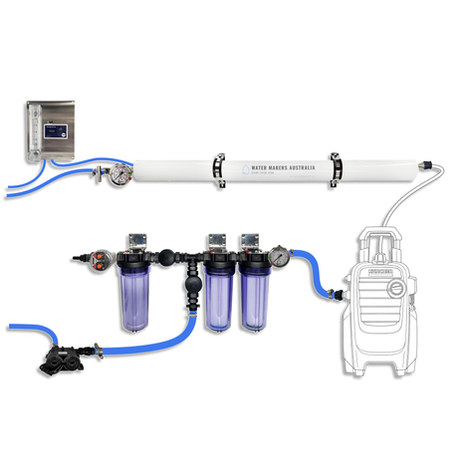
A one-membrane modular marine watermaker with 80 L/h nominal output, remote stainless control panel, standard consumables and direct Australian support.
Explore →