Loading this page…

Loading this page…
Sailing club
Tinaroo Sailing Club is a family-focused dinghy club based on Lake Tinaroo in Far North Queensland. Accredited as an Australian Sailing Discover Sailing Centre, the club runs regular weekend racing, learn-to-sail courses on the Start Sailing pathway, school team-sailing and junior coaching from its Black Gully waterfront site. The club emphasises junior development alongside senior racing and hosts camping-friendly regattas on the Atherton Tablelands freshwater reservoir.
About
Tinaroo Sailing Club is a family-focused dinghy club based on Lake Tinaroo in Far North Queensland. Accredited as an Australian Sailing Discover Sailing Centre, the club runs regular weekend racing, learn-to-sail courses on the Start Sailing pathway, school team-sailing and junior coaching from its Black Gully waterfront site. The club emphasises junior development alongside senior racing and hosts camping-friendly regattas on the Atherton Tablelands freshwater reservoir.
Service area: Lake Tinaroo / Atherton Tablelands, Far North Queensland
Keep exploring
Tinaroo Sailing Club is a family-oriented sailing club on the waterfront at Tinaroo (Queensland). The club describes itself as an accredited Australian Sailing Discover Sailing Centre and runs dinghy-focused activities including Learn to Sail courses, junior and high-school sailing programs, regular racing (typically every second Sunday), and on-race-morning training sessions.
The club also maintains a fleet of training boats (RS Fevas, RS Quests, O'pen Skiffs, Lasers, Nacra 5.0) used for instruction and bringing new members into the sport. Contact email is info@tinaroosailingclub.com.au.
Formal learn-to-sail provision is a point of difference here: the club operates as an accredited Australian Sailing Discover Sailing Centre, its courses delivered by qualified instructors along the national Start Sailing pathway. Start Sailing 1 and Start Sailing 2 are open to adults as well as children from nine years up, with the entry course priced at $165 including GST — unusually transparent pricing that signals eagerness to recruit. Training is woven into the racing rhythm rather than separated from it.
On race days, morning coaching sessions cater for kids from eight years and for adults, taking everyone from raw beginners to experienced hands; a barbecue lunch follows, and then comes the serious business of usually two afternoon races. Racing itself runs on alternate Sundays for most of the year, pausing for school holidays. A high school team sailing program occupies Friday afternoons in Terms 1 and 4, requires no prior experience, and finishes with a sausage sizzle — a recruitment funnel disguised as an afternoon snack.
The boats tell the story of a club balanced between junior development and senior racing. O'pen Skiffs carry the juniors, while Lasers, Tasars and a spread of catamarans make up the senior fleets most commonly seen. The training fleet is correspondingly mixed: RS Fevas and RS Quests for group instruction, O'pen Skiffs and Lasers for individual progression, and a Nacra 5.0 for the catamaran inclined. Events draw campers to the shoreline, with the club taking camping registrations for its bigger weekends.
It adds up to a coherent ladder — from a first Start Sailing course to a state title — run entirely on a Tablelands dam, and the club's honour roll of national and world champions suggests the ladder works.
Lake Tinaroo spreads across the Atherton Tablelands west of Cairns, a large irrigation storage filled in 1959 whose arms reach back into rainforest country — an unusual backdrop for Australian dinghy racing, which so often happens within sight of surf. The club's home is Black Gully, on a shore described on its own website as an absolute waterfront location, positioned, the club records say, three chains to the west of the old Danbulla Road. That site was chosen with care.
Within days of forming in 1963, the club sought land from the irrigation authorities, and the requirements its founders recorded say everything about their intentions: four to five chains — roughly ninety metres — of water frontage sheltered from the south-east, a firm bottom, road access for trailed boats, and a good view across the dam so the clubhouse could watch the racing and double as the start-finish line. The land was officially allocated by early 1964. The sailing water itself behaves nothing like the coast.
There are no tides to calculate, no swell and no salt to corrode fittings; breezes arrive shaped by the Tablelands terrain, and the dam's levels rise and fall with the irrigation season rather than the moon. For visiting sailors accustomed to tidal ramps and sandbars, the lake offers the novelty of simply rigging and launching. The club leans into the bush setting by offering camping registration for its events, turning regatta weekends into lakeside stays.
Mail reaches the club at PO Box 5, Kairi — a Tablelands address that underlines how far this club sits, in every sense, from the seaboard norm of Queensland sailing.
The lake came first. Queensland's first big irrigation dam was finished in 1958 and filled a year later, and by 1960 two sailing boats were already exploring it. On 10 March 1963 twenty enthusiasts with ten boats between them formed Lake Tinaroo Sailing Club, electing as first president Mike Stephens, a former British Merchant Service sailor, with local accountant Les Moody as Secretary-Treasurer.
Nine days later the infant club wrote to Mareeba's Irrigation and Water Supply Commission seeking ground on which to launch and rig boats and, in time, site a clubhouse. The Black Gully site was allocated by early 1964; membership already stood at 69, with twenty boats. By 1967 there were 132 members and 36 boats, and that year's May Day Regatta drew forty to fifty visiting boats. The first club champions, in 1965-66, were Les Moody (Lightweight Sharpie), J. Whebel (Sabot) and Eric Kennedy (Gwen 12).
Class fashions charted the decades: Lightweight Sharpies stayed the senior boat of choice into the 1990s, Gwen 12s filled the main intermediate role until roughly 1983, and windsurfers and open sailboards raced for four years in the late 1980s. Wider sailing history surfaces unexpectedly here: Moody's Sharpie Daring had previously belonged to John Cuneo, who went on to Olympic Dragon-class gold, and international OK Dinghy sailors in town for the 1965 Green Island Classic at Cairns signed the clubhouse rafters — autographs still legible four decades on.
The fiftieth year, 2013, brought some 200 members, over 50 boats and a written history drafted by stalwart Joe Miller and edited by Petrea McCarthy. The honour roll is remarkable for an inland club: the MacGregor family alone accounts for Access 2.3 world titles to Duncan (2007) and Angus (2010, 2012) — Angus adding Yachting Australia's Sailor of the Year with a Disability award in 2010 — plus a Skud 18 national crown, a string of Tasar state championships and an O'pen Bic national title to Aidan; Kristen Wadley added junior world titles in 2012 and 2013.
A practical cruising guide to Lake Burley Griffin, the artificial central lake in Canberra. Covers the lake’s geography, prevailing conditions, main sailing zones, principal anchorages and visitor stops, launch and arrival considerations, onshore facilities and services, local hazards and limitations, rules and environmental responsibilities, suggested sailing experiences and a clear assessment of who benefits most from visiting by boat.

Look for a friendly club with beginner-focused training, accessible facilities and boats, a supportive community, clear safety practices, and opportunities to progress at your own pace.
Explore →
Pick a stable, simple, forgiving dinghy with a single sail or basic sloop rig, affordable handling and easy maintenance—ideally one with a local class or school nearby so you can access coaching and spare parts.
Explore →
Before your first sail in South Australian waters check the weather and tide, make sure the boat and safety equipment are fit for the trip, confirm local rules and any area-specific hazards, and tell someone your plan.
Explore →
Late spring to summer is usually the best time for beginners to start learning to sail in Tasmania because the weather is generally warmer, days are longer and conditions are often more settled. Expect lighter to moderate winds with regular afternoon sea breees in summer, while spring and autumn bring more changeable and sometimes stronger conditions; winter is colder, wetter and typically windier with more fronts and swell.
Explore →
A practical guide for new sailors on picking the right Australian sailing club: training, boat access, racing, social fit, costs and the key questions to ask before joining.
Explore →Practical guide for recreational sailors planning a coastal cruise from Sydney north to the Queensland border. Covers route options, weather and tidal considerations, planning checklists, common hazards, anchorages and practical examples for a safe, enjoyable trip.
Explore →
A concise, practical guide to the points of sail and how to trim sails effectively for common Australian conditions. Learn the basics of wind angles, sail shape, telltales, reefing considerations and simple steps to improve boat speed and balance.
Explore →
A practical guide to Queensland’s top sailing areas, what to expect from each region, seasonal and safety considerations, suggested itineraries and useful planning checklists for recreational sailors.
Explore →Burke Yachtsman Gear Bag 40L - Shop Now Zip Pay | Tamar Marine Skip to content 59 – 63 Holbrook Street, Invermay Online Shop Open 24/7 Products search Contact us 1300 MARINE $ 0.00 0 Cart Burke Yachtsman Gear Bag 40L $ 79.90 Colour Choose an option Black Blue Black Blue Clear - Burke Yachtsman Gear Bag 40L quantity + Add to cart Enquire about this product SKU BAGB-Y24/BLACK* Category Bags - Sail & Gear A Burke classic and customer favourite, the Yachtsman’s Gear Bag is built tough to handle wet, salty conditions while keeping your gear dry and protected. Made from double coated waterproof…
Explore →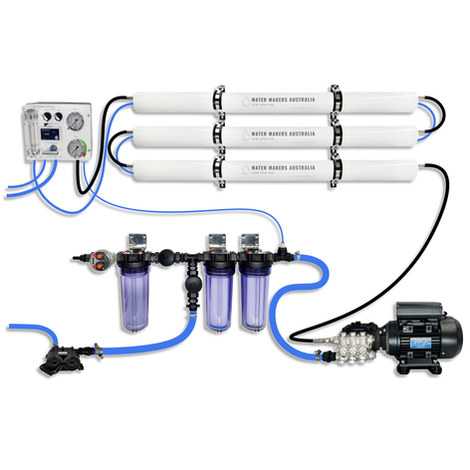
A three-membrane modular watermaker with 200 L/h nominal output and up to 240 L/h family-level marketing, for larger crews and heavy use.
Explore →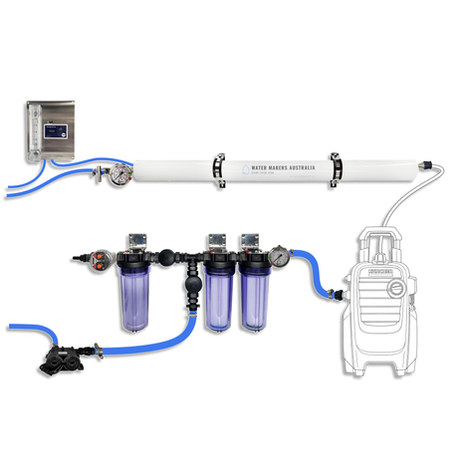
A one-membrane modular marine watermaker with 80 L/h nominal output, remote stainless control panel, standard consumables and direct Australian support.
Explore →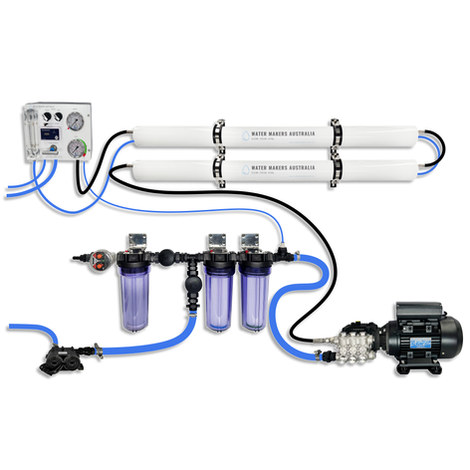
A two-membrane modular watermaker with 140 L/h nominal output, aimed at families and liveaboards that want more water per run.
Explore →