Loading this page…

Loading this page…
Sailing club
Torquay Sailing Club is a volunteer-run community sailing club located on Fisherman's Beach in Torquay, VIC. The club runs organised sailing, racing and social sailing activities, a junior and youth sailing program (including O'Pen Skiff and Hobie Wave catamaran fleets), and adult learn-to-sail lessons. Membership gives access to club racing, training and priority boat storage; the club does not hire or charter boats.
About
Torquay Sailing Club is a volunteer-run community sailing club located on Fisherman's Beach in Torquay, VIC. The club runs organised sailing, racing and social sailing activities, a junior and youth sailing program (including O'Pen Skiff and Hobie Wave catamaran fleets), and adult learn-to-sail lessons. Membership gives access to club racing, training and priority boat storage; the club does not hire or charter boats.
Service area: Torquay, VIC
Keep exploring
Torquay is famous for surfboards, but at the eastern side of town the sailing scene carries a long memory of its own. Torquay Sailing Club operates from Fisherman's Beach — "Fishos" to locals — on Zeally Bay, a volunteer-run community club whose motto, "Sail. Race. Learn. Belong.", doubles as a fair summary of its program. The regular season runs from September through May, and the club holds Australian Sailing affiliation.
Catamarans are part of the club's DNA. The Bill Worrall Memorial Coaster, a Hobie Cat distance race between Torquay and Anglesea, was first sailed in 1975 and celebrated its 50th edition over the Australia Day weekend in January 2025; it is the season highlight for Torquay and for its co-host, the Anglesea Motor Yacht Club, alike. That heritage shapes the teaching fleet, which pairs O'Pen Skiffs for juniors with Hobie Wave catamarans for adults and older teens, and half a century of Coaster history keeps the catamaran identity current.
The current office bearers are Commodore Fletcher Warren-Myers, Secretary Herman Voorhoeve and Treasurer Madeline Gillard. The club backs the national inclusion frameworks Pride in Sport and Play By The Rules, signalling a welcoming culture, and it keeps membership deliberately active: yard storage goes to active members, prioritised for those who race and train, and the club neither hires out nor charters boats to the public. Membership applications close over the winter months and reopen ahead of each September season start, giving the club an annual intake rhythm that matches the calendar of the coast.
The pathway at Torquay runs on skiffs and catamarans rather than the usual single-hander ladder. Junior and youth programs are built around the O'Pen Skiff, a modern, adventure-oriented dinghy, and the Hobie Wave catamaran, with the emphasis, by the club's own account, on adventure and fun. Three squads structure the junior side: the Green Adventure Fleet and the OpenSkiff Squad both cater for children aged eight to fifteen, while the Catamaran Sailing squad takes sailors from fifteen years and up. The Sailing School operates on Sunday mornings during school terms four and one, bracketing the summer.
Practicalities are spelled out plainly for families. The club keeps a small pool of O'Pen Skiffs that families can charter, while those looking to buy their own can expect a purchase price somewhere between $1,500 and $3,000; children need to supply their own wetsuit, life jacket and helmet. For adults, the club arranges intensive two-hour private lessons aboard Hobie Wave catamarans, bookable via the club's email address and pitched at everyone from first-timers to sailors wanting to sharpen their race skills, with group lessons also running through the season.
Ambition does not hibernate here. Race squad members train right through the winter months with State and National Championships in their sights, which says something about the seriousness beneath the fun-first surface. The club's published material shows no Tackers branding or Discover Sailing Centre accreditation; what it offers instead is a focused, fleet-specific program that feeds sailors directly from learn-to-sail into the club's catamaran racing culture and, beyond that, toward signature events like the Coaster.
Fisherman's Beach has been a working fishing and boating hub since the 1860s, and the sailing club shares the strip with the Torquay Angling Club and the Torquay Marine Rescue Service. The Torquay Outrigger Canoe Club, formed in 2005, operates next door and paddles the same stretch of water, making this pocket of Zeally Bay one of the Surf Coast's busiest small-boat precincts.
The club occupies its site under a lease from the Great Ocean Road Coast and Parks Authority — GORCAPA — and the lease terms shape the rhythm of the year: all boats must be removed from the club grounds by 31 May, and the sailing season runs from September to May. Storage space is treated as a privilege of active membership and goes first to members who race and train, a policy that keeps the yard full of boats that actually get sailed. Because the club neither hires nor charters boats to the public, the catamarans and skiffs lined up along the foreshore all belong to the membership.
The sailing itself splits between the relative shelter of Zeally Bay and the open water of the Surf Coast beyond. The bay offers forgiving conditions for junior fleets and Sunday racing, while the Bill Worrall Memorial Coaster shows what lies outside: the course runs from Fisherman's Beach past Point Addis to Point Roadknight at Anglesea and back, an exposed coastal passage in Southern Ocean swell country. That pairing — a protected bay in the front yard and genuinely testing open water a few kilometres along the coast — gives the club unusual range for an off-the-beach operation, letting beginners and hardened Hobie sailors each find their level on the same stretch of coastline.
The precise year Torquay Sailing Club came into being isn't published, but its roots can be traced through its predecessor. The Torquay Motor, Yacht and Angling Club was established at Fisherman's Beach in 1961 by a group of local identities: Torquay Hotel owner John Pawson, J. Poole, Tor-Haven Caravan Park owner Alec McKenzie, professional fisherman Owen Yateman and newsagent Colin Troy, father of surfer Peter Troy. Local history records that the formation of what is now Torquay Sailing Club followed, with the sailors shifting along the beach toward Darian Road; the parent club was dissolved in January 1982, its angling arm continuing on as the Torquay Angling Club.
The early infrastructure was pure volunteer improvisation: first a shed put up for social barbecues, then an old house shifted onto the beach car park and bricked in by local hands to serve as a clubhouse.
The club's proudest continuous thread is the Bill Worrall Memorial Coaster. First sailed in 1975 with only four starters — Worrall aboard a Hobie 16, accompanied by Hickford, Hancock and Stanley sailing Hobie 14s — the Torquay-to-Anglesea race honours Worrall, one of Australia's original Hobie dealers and the man who introduced Hobie Cats to the Surf Coast. Run jointly with the Anglesea Motor Yacht Club, the Coaster grew into the largest event on either club's calendar, and at its height in the early 2000s it drew fleets of forty to fifty boats from across the state.
The 50th edition, sailed over the Australia Day weekend of 25–26 January 2025, confirmed that, half a century on, the race — and the catamaran culture it honours — remains central to sailing at Torquay.
Apollo Bay is a small working harbour on Victoria’s Great Ocean Road where sheltered inshore sailing meets the Southern Ocean. The character is a mix of protected harbour berths and an exposed open coast: pleasant day-sails and sheltered weekend cruising inside the bay, with demanding coastal passages immediately offshore where south‑westerly swell and strong winds from the Southern Ocean dominate. It suits coastal cruisers, trailer sailors who launch at the ramp, and experienced coastal sailors who understand bar and swell behaviour; it is not a casual open‑ocean anchorage for unprepared or

Look for a friendly club with beginner-focused training, accessible facilities and boats, a supportive community, clear safety practices, and opportunities to progress at your own pace.
Explore →
Rig and de-rig a small dinghy by following a consistent, step-by-step sequence: prepare the boat on shore, fit spars and foils in a stable order, control sails and running rigging so lines don’t tangle, check fittings and safety gear, and reverse the process when coming ashore—always working with a partner when possible and staying aware of wind and tide.
Explore →
Pick a stable, simple, forgiving dinghy with a single sail or basic sloop rig, affordable handling and easy maintenance—ideally one with a local class or school nearby so you can access coaching and spare parts.
Explore →
Late spring to summer is usually the best time for beginners to start learning to sail in Tasmania because the weather is generally warmer, days are longer and conditions are often more settled. Expect lighter to moderate winds with regular afternoon sea breees in summer, while spring and autumn bring more changeable and sometimes stronger conditions; winter is colder, wetter and typically windier with more fronts and swell.
Explore →
A practical guide for new sailors on picking the right Australian sailing club: training, boat access, racing, social fit, costs and the key questions to ask before joining.
Explore →A practical guide for recreational sailors planning visits to Albany and King George Sound. Covers the main anchorage areas, typical local weather patterns, tidal and current considerations, navigational hazards, on-the-water etiquette and a pre-departure checklist to help you plan a safe passage and enjoyable stopover
Explore →A practical guide to the coastal weather systems that affect sailing along Western Australia's coast, focusing on the Fremantle Doctor, local sea breezes, and linked coastal phenomena. Explains how these systems form, when they tend to occur, how they influence boat handling and passage planning, common mistakes, and a
Explore →
A practical, Australia‑focused introduction to sailing: key terms, common boat types, basic manoeuvres, where to learn, licence and club options, and planning your first trips with safety and local conditions in mind.
Explore →Burke Yachtsman Gear Bag 40L - Shop Now Zip Pay | Tamar Marine Skip to content 59 – 63 Holbrook Street, Invermay Online Shop Open 24/7 Products search Contact us 1300 MARINE $ 0.00 0 Cart Burke Yachtsman Gear Bag 40L $ 79.90 Colour Choose an option Black Blue Black Blue Clear - Burke Yachtsman Gear Bag 40L quantity + Add to cart Enquire about this product SKU BAGB-Y24/BLACK* Category Bags - Sail & Gear A Burke classic and customer favourite, the Yachtsman’s Gear Bag is built tough to handle wet, salty conditions while keeping your gear dry and protected. Made from double coated waterproof…
Explore →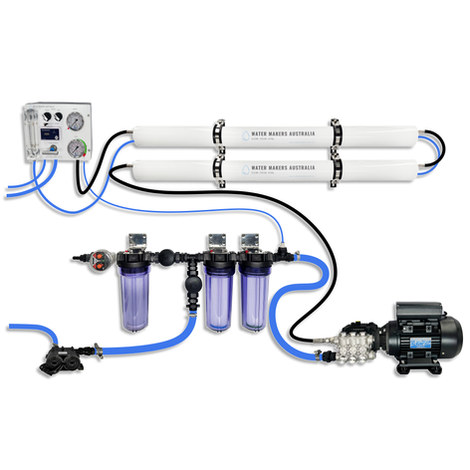
A two-membrane modular watermaker with 140 L/h nominal output, aimed at families and liveaboards that want more water per run.
Explore →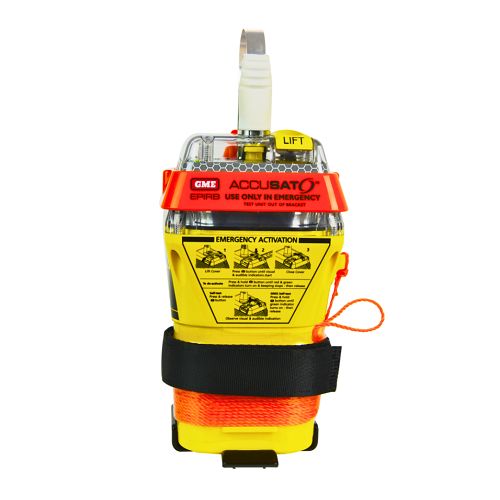
A 10‑year battery EPIRB with integrated GNSS (supports GPS and Galileo), infrared strobe and 121.5 MHz homing signal. Approved for worldwide COSPAS‑SARSAT operation.
Explore →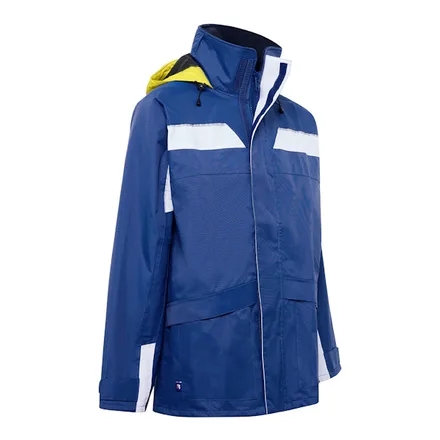
Burke Super Dry Jacket in Blue. Product codes shown: DRY228-XS, DRY228-S, DRY228-M, DRY228-L, DRY228-XL, DRY228-XXL. Available sizes listed: XS, S, M, L, XL, XXL.
Explore →