Loading this page…

Loading this page…
Sailing club
Townsville Sailing Club is a dinghy-focused sailing club based on The Strand in Townsville, Queensland. The club operates from a clubhouse at 3 Mariner Drive (marina land leased from the Breakwater Marina Trust) and runs regular dinghy racing, youth coaching, learn-to-sail courses and community sailing events on Cleveland Bay. It is an Australian Sailing Discover Sailing Centre and presents a long competitive lineage with junior pathways, regattas and social activities.
About
Townsville Sailing Club is a dinghy-focused sailing club based on The Strand in Townsville, Queensland. The club operates from a clubhouse at 3 Mariner Drive (marina land leased from the Breakwater Marina Trust) and runs regular dinghy racing, youth coaching, learn-to-sail courses and community sailing events on Cleveland Bay. It is an Australian Sailing Discover Sailing Centre and presents a long competitive lineage with junior pathways, regattas and social activities.
Service area: Cleveland Bay; The Strand, Townsville, QLD
Keep exploring
Townsville Sailing Club is a community sailing club in Townsville, QLD offering organised sailing programs, club racing and social sailing. The club runs learn-to-sail courses and youth programs (Tackers, teen programs), Sunday morning sessions and other on-water training, plus events and regattas. The club lists contact emails and phone number on its website and advertises boat & venue hire and boat rigging & storage services.
The flagship of the current program is NorthSail, the club's youth coaching and regatta pathway — the clearest expression of a club whose identity has always been built on bringing juniors through the dinghy ranks. Underpinning it is certified training infrastructure: the club operates as an Australian Sailing Discover Sailing Centre, an operation its own site describes as award-winning, and it is accredited to deliver dinghy, keelboat and powerboating courses.
More than a dozen Australian Sailing qualified instructors are on the roster, many of them bringing racing backgrounds and international or offshore experience to their teaching; the most storied of them is John Douglas Byrne, who returned to teach learn-to-sail at the club where he had begun in 1969. School sailing is supported through the national Sporting Schools funding program, keeping the pipeline of young sailors flowing. The on-water calendar mixes competition with adventure.
Club racing runs through the season, joined by an annual Sprints Regatta and a Trailer Sailor Winter Bash that keeps the trailerable fleet active in the cooler months. Adventure Sails take members out to Picnic Bay and West Point, and across to the Townsville Yacht Club — the same Picnic Bay, fittingly, where the club was founded in 1895. A yearly family camp at Paluma Dam has become a club tradition, taking the fleet briefly inland.
The dinghy focus is deliberate and stated, yet the historical fleet list shows breadth: 505s and 29ers, 125s and Hartley 16s, Sharpies and Hornets, VJs and Gwens, Thorpe 12s and OK dinghies, Sabots and Lasers, catamarans, trailer-sailers, sailboards and skiffs of 16 and 18 feet have all raced under the club's burgee at one time or another. Beach clean-ups along The Strand round out a program that treats community as part of the sailing.
The Strand is Townsville's postcard waterfront, and the club's home at 3 Mariner Drive places it right on that strip, on the marina site it has leased from the Breakwater Marina Trust since 1990. The clubhouse that stands there was funded by members — lamington drives and canteen takings feature in the club's own account — and built under master builder George Kimlin.
It was not the club's first address, nor even its second: earlier homes included the old Squadron building on the bank of Ross Creek at Palmer Street in South Townsville, the premises known as Enterprise House, and, in the leanest years, a caravan at Pallarenda. The racing water is Cleveland Bay, the broad open bay on Townsville's doorstep, with Magnetic Island marking the horizon. That was not always so.
In the harbour-centric decades, racing ran inside the harbour; only when the Sabot fleet swelled to forty or fifty boats sailing each Sunday did congestion force courses outside into the bay, a move the club's history records as a safety decision that stuck. The bay offers the open water that modern dinghy and skiff racing demands — room for long beats, consistent breezes through the dry season, and space for the adventure sails that reach Picnic Bay on Magnetic Island and West Point.
The club keeps office hours on Monday, Tuesday and Friday for visiting sailors making contact, and its channels extend to Facebook, Instagram and YouTube. For a club whose entire existence has played out within a few kilometres of this foreshore — from Picnic Bay in 1895 to Ross Creek, The Strand and the waters of Cleveland Bay — the map of its venues is effectively a map of Townsville's own maritime growth.
The founding moment is unusually well documented: the Brisbane Courier of 22 October 1895 reported that a meeting at Picnic Bay the previous day had decided to form a sailing club under the Townsville Sailing Club name. The early fleet ran to big, heavy boats modelled on Brisbane's 22-footers: The Viking, the 24-footer Myra, and Mona, launched in 1903 and later a survivor of Cyclone Leonta.
Rivalry split the town before the First World War: the Ross Islanders broke with the Townies to establish the Ross River Sailing Club; 1919 saw the Townsville Flying Squadron formed with five registered boats, and the Ross River club never revived after the war. A clubhouse begun in 1919 stood complete by 1926 on the Palmer Street bank of Ross Creek, designed by Alf Everett and raised by volunteer working bees; by then sixteen 16-foot skiffs raced alongside 18-footers and a mosquito fleet.
The 1929 Depression cut that to two 18-footers and a handful of skiffs and pushed racing inside the harbour, while VJs and later Thorpe trainers carried the juniors. After the war the OK dinghy arrived, and the club's refusal of prize money sent most skiffs off to found the Cleveland Bay 16ft Skiff Club; Sabots then took over, forty or fifty out every Sunday, until congestion forced courses into Cleveland Bay.
Renamed Townsville Yacht Squadron in the post-war years, the club joined a mid-1970s amalgamation of aquatic bodies under the Townsville Yacht Club banner, moving into a grand two-storey Strand clubhouse in 1979. By 1982 that building was gone — lost, in the history's own words, to "mismanagement, bad luck or whatever" — and the Thorpe, sailboard and Sabot fleets rallied under the surviving Squadron name.
The original name returned in 1985, and a 1990 lease with the Breakwater Marina Trust delivered the present Strand home, built under master builder George Kimlin. The 505 World Championships came to the city in the mid-1990s. The history itself was compiled in 2000 from the recollections of nine long-time members, George Kimlin among them.
Bathurst Harbour (Port Davey system), in south‑west Tasmania, is a vast, almost land‑locked estuarine harbour inside the Southwest National Park and World Heritage Area. It offers a remote, sheltered anchoring environment protected from the Roaring Forties, but demands careful planning, an awareness of marine‑reserve rules, and a willingness to operate in shallow, tannin‑stained waters. Best suited to experienced coastal cruisers and small expedition yachts prepared for self‑sufficiency, Bathurst Harbour is more a place to linger and explore on foot and by tender than a port of call for busy,

Pick a protected bay, estuary or river reach where you can rig, launch and arrive on calm water within a short, sheltered transit; choose a site with a good ramp or jetty, clear recovery options and a nearby sailing club, marina or commercial operator for local knowledge and help.
Explore →
Write a one‑page plan with the who/what/when/where/how of your trip, keep a copy on board and leave the main copy with a responsible person ashore (and optionally with your club, marina office or local volunteer rescue service).
Explore →
Expect light to moderate, thermally-driven sea breezes in summer with afternoon strengthening; more changeable and often stronger winds with frontal systems in autumn and spring; and the windiest, roughest conditions in winter when cold fronts and sou’westers are most frequent. Gulf St Vincent is more sheltered than the exposed coast but can still produce steep chop and sudden changes near Adelaide and headlands.
Explore →
Open the BOM marine forecast and warnings for your specific boating area, check recent observations and gusts, scan radar/lightning for developing cells, and match forecast timing to your planned afternoon so you can reef early or delay if a shift, gusty change or thunderstorm is likely.
Explore →
A practical, Australia-focused guide for planning and sailing around the Whitsunday Islands: weather and seasons, navigation and anchoring, moorings and parks, provisioning and charters, safety and common mistakes, plus checklists and next steps.
Explore →
A practical guide for new sailors on picking the right Australian sailing club: training, boat access, racing, social fit, costs and the key questions to ask before joining.
Explore →
A practical guide to Queensland’s top sailing areas, what to expect from each region, seasonal and safety considerations, suggested itineraries and useful planning checklists for recreational sailors.
Explore →A practical guide for recreational sailors planning visits to Albany and King George Sound. Covers the main anchorage areas, typical local weather patterns, tidal and current considerations, navigational hazards, on-the-water etiquette and a pre-departure checklist to help you plan a safe passage and enjoyable stopover
Explore →Burke Yachtsman Gear Bag 40L - Shop Now Zip Pay | Tamar Marine Skip to content 59 – 63 Holbrook Street, Invermay Online Shop Open 24/7 Products search Contact us 1300 MARINE $ 0.00 0 Cart Burke Yachtsman Gear Bag 40L $ 79.90 Colour Choose an option Black Blue Black Blue Clear - Burke Yachtsman Gear Bag 40L quantity + Add to cart Enquire about this product SKU BAGB-Y24/BLACK* Category Bags - Sail & Gear A Burke classic and customer favourite, the Yachtsman’s Gear Bag is built tough to handle wet, salty conditions while keeping your gear dry and protected. Made from double coated waterproof…
Explore →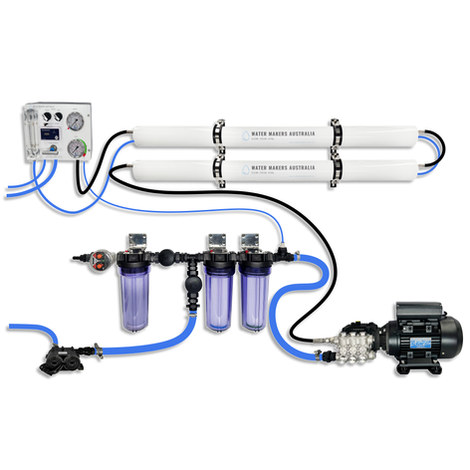
A two-membrane modular watermaker with 140 L/h nominal output, aimed at families and liveaboards that want more water per run.
Explore →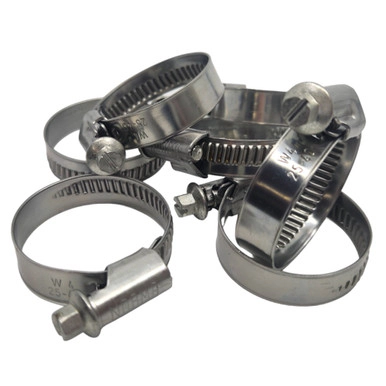
Imported from All Marine Spares. This draft has no editorial summary yet.
Explore →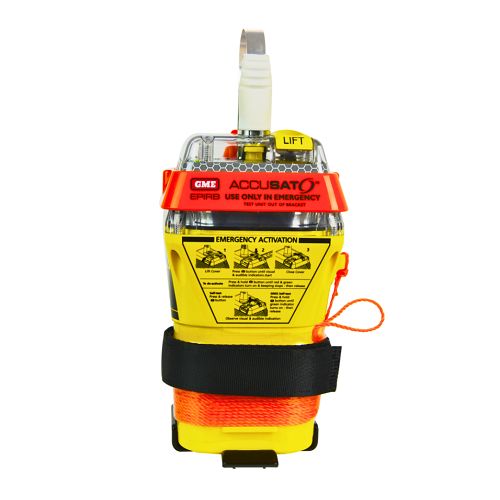
A 10‑year battery EPIRB with integrated GNSS (supports GPS and Galileo), infrared strobe and 121.5 MHz homing signal. Approved for worldwide COSPAS‑SARSAT operation.
Explore →